
- Release Year: 2022
- Platforms: Windows
- Publisher: YasamanFar
- Developer: YasamanFar
- Genre: Adventure, Simulation
- Perspective: 3rd-person
- Game Mode: Single-player
- Gameplay: Visual novel
- Setting: Contemporary, Middle East
- Average Score: 100/100
Description
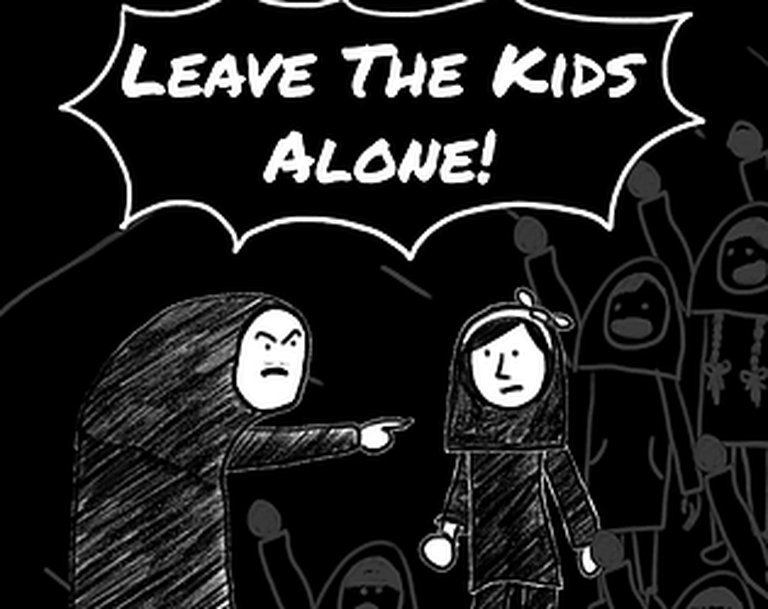
Leave the Kids Alone is a point-and-click visual novel that immerses players in a day in the life of a student girl in Iran, drawing from real experiences and memories. Set in a contemporary Middle Eastern environment, the game explores the oppressive realities of gender-segregated schools, enforced uniforms, mandatory chants, and invasive searches, all while capturing the emotional and psychological toll on young students. Inspired by works like Marjane Satrapi’s Persepolis, the game serves as a poignant commentary on the struggles faced by children in such systems.
Leave the Kids Alone Reviews & Reception
yasamanfar.itch.io (100/100): Impactfull game for awareness! May you see the light at the end of this oprressive tunnel.
Leave the Kids Alone: A Haunting Glimpse into Oppression Through Interactive Fiction
Introduction: A Game That Demands to Be Heard
Leave the Kids Alone is not just a game—it is a testament, a cry for justice, and a raw, unfiltered window into the lived experiences of young girls in Iran. Released in December 2022 by indie developer YasamanFar, this point-and-click visual novel transcends traditional gaming by blending personal memoir with interactive storytelling. Inspired by the creator’s own memories and the broader struggles of Iranian schoolgirls, the game immerses players in a single, oppressive day in the life of a student navigating a system designed to control, dehumanize, and instill fear.
At its core, Leave the Kids Alone is a political statement disguised as a game. It emerged during the Woman Life Freedom Game Jam, a creative response to the 2022 Iranian protests sparked by the death of Mahsa Amini in police custody. The game’s title itself is a defiant plea, a rejection of the systemic abuse inflicted upon children under the guise of education and morality. With its stark visuals, minimalist gameplay, and unflinching narrative, it forces players to confront uncomfortable truths about authoritarianism, gender segregation, and the psychological toll of indoctrination.
This review will dissect Leave the Kids Alone across multiple dimensions—its development context, narrative depth, gameplay mechanics, artistic choices, and cultural impact—to argue that it stands as one of the most important indie games of the 2020s. It is not a game meant for escapism but for awareness, a digital artifact that preserves the voices of those silenced by oppression.
Development History & Context: A Game Born from Protest
The Creator’s Vision: YasamanFar and the Power of Personal Storytelling
YasamanFar, the sole developer behind Leave the Kids Alone, crafted the game as a direct response to the Woman Life Freedom movement, which erupted in Iran following the death of Mahsa Amini in September 2022. Amini, a 22-year-old Kurdish woman, was arrested by Iran’s “morality police” for allegedly violating the country’s strict hijab laws and died in custody, sparking nationwide protests against gender oppression and authoritarian rule.
YasamanFar’s game is deeply autobiographical, drawing from their own experiences as a schoolgirl in Iran. In an interview on the game’s itch.io page, they state:
“The story of this game is inspired by our true memories and many other school girls in Iran. Schools in Iran are divided by gender, and you should wear a specific uniform to go to school. They force kids to chant hateful statements every morning. You can’t wear any makeup in school. They scare kids of God and hell. They check their bags without their permission.”
This personal connection elevates Leave the Kids Alone beyond mere fiction. It is a digital memoir, a tool for empathy, and a form of resistance. The game’s development was swift—completed in just a few weeks for the Game Jam—but its emotional weight is immense.
Technological Constraints and Artistic Choices
Given its indie roots and rapid development cycle, Leave the Kids Alone employs a simple but effective technical framework:
– Engine & Tools: Built using a point-and-click adventure engine (likely Ren’Py or a similar visual novel tool), the game prioritizes narrative and atmosphere over complex mechanics.
– Visual Style: The art direction is heavily inspired by Marjane Satrapi’s Persepolis, a graphic novel and film that chronicles a young girl’s coming-of-age during the Iranian Revolution. The black-and-white, sketch-like aesthetic reinforces the game’s documentary feel, stripping away distractions to focus on the raw reality of its subject matter.
– Localization: A testament to its grassroots appeal, the game was translated into French, Italian, Spanish, and Persian by volunteer teams, including AstraLoca, KITranslation, and Translators’ Tale Team. This multilingual support underscores the game’s mission to spread awareness globally.
The Gaming Landscape in 2022: A Year of Political Games
Leave the Kids Alone arrived during a surge of politically charged indie games. Titles like Never Alone (which explores Inupiaq culture) and This War of Mine (a harrowing survival game about civilian life in warzones) proved that games could be powerful vehicles for social commentary. However, Leave the Kids Alone stands apart due to its immediacy—it was created in real-time as protests raged in Iran, making it a living document of resistance.
The game also reflects a broader trend in interactive fiction, where developers use the medium to amplify marginalized voices. Unlike AAA titles that often shy away from overt political statements, indie games like Leave the Kids Alone embrace their role as tools for activism.
Narrative & Thematic Deep Dive: A Day in the Life of Oppression
Plot Summary: The Rituals of Control
The game follows an unnamed Iranian schoolgirl as she navigates a typical day under the regime’s oppressive education system. The narrative is linear but fragmented, mirroring the disjointed, surreal experience of living under constant surveillance. Key moments include:
1. The Morning Chant: The day begins with students being forced to recite state-approved slogans, a ritual designed to indoctrinate and erase individual thought.
2. Dress Code Enforcement: The protagonist must adhere to strict uniform rules—no hair showing beneath the hijab, no makeup, no personal expression. Failure to comply results in humiliation or punishment.
3. Bag Inspections: Authorities rifle through students’ belongings without consent, a violation of privacy framed as “moral oversight.”
4. Religious Fearmongering: Teachers use threats of divine punishment to control behavior, instilling fear of hell and eternal damnation for minor infractions.
5. The Absence of Autonomy: Every action, from walking the halls to interacting with peers, is policed. The game’s title becomes a literal plea: Leave the kids alone.
Themes: Indoctrination, Resistance, and the Loss of Innocence
-
Institutionalized Fear:
The game’s most chilling aspect is its portrayal of how authoritarian regimes weaponize fear from childhood. The protagonist is not just a student but a prisoner in her own school, where every authority figure—teachers, administrators, even fellow students—acts as an enforcer of the state’s will. -
The Erasure of Individuality:
The uniform, the chants, the rigid rules—all serve to strip students of their identity. The game’s visual novel format reinforces this by limiting player agency; there are no “choices” that lead to freedom, only compliance or punishment. -
The Banality of Evil:
Unlike overtly violent games that depict oppression through spectacle, Leave the Kids Alone shows how tyranny operates in the mundane. The horror lies in the routine—the daily rituals that normalize abuse. -
Silent Resistance:
While the protagonist cannot openly rebel, small acts of defiance (e.g., adjusting her hijab, whispering with friends) become powerful symbols of resistance. The game suggests that even in the most oppressive systems, humanity persists.
Dialogue and Character Depth
The game’s dialogue is sparse but devastatingly effective. Lines like:
– “They check their bags without their permission.”
– “They scare kids of God and hell.”
are delivered with clinical detachment, making them all the more haunting. The protagonist is a cipher, representing countless real girls whose stories go untold. This anonymity is intentional—it universalizes her struggle.
Gameplay Mechanics & Systems: Simplicity as a Narrative Tool
Core Gameplay Loop: The Illusion of Agency
Leave the Kids Alone is a visual novel with point-and-click elements, but it subverts traditional gameplay expectations:
– No Meaningful Choices: Unlike games like The Quarry or Life is Strange, where player decisions shape the narrative, Leave the Kids Alone offers no branching paths. The protagonist’s actions are predetermined, reflecting the lack of autonomy in her real life.
– Interactive Oppression: The “gameplay” consists of mundane tasks—walking to class, enduring inspections, reciting chants—all of which reinforce the theme of powerlessness. The only “puzzles” involve navigating the school’s oppressive rules without drawing attention.
– UI and Navigation: The interface is minimalist, with a first-person perspective that immerses the player in the protagonist’s limited worldview. The fixed/flip-screen visual style (as noted on MobyGames) further emphasizes confinement.
Innovative or Flawed Systems?
- Strengths:
- The lack of traditional “gameplay” is a bold artistic choice. By denying players agency, the game forces them to experience oppression rather than “solve” it.
- The point-and-click mechanics (e.g., clicking to adjust a hijab or open a locker) make the player complicit in the protagonist’s small acts of resistance.
- Weaknesses:
- Some players may find the experience too passive. Without traditional challenges or rewards, the game risks feeling more like an interactive essay than a “game.”
- The short runtime (likely under an hour) limits its mechanical depth, though this brevity also ensures its message remains focused.
Comparison to Other Narrative-Driven Games
While Leave the Kids Alone shares DNA with games like Never Alone (cultural storytelling) and Papers, Please (oppressive systems), it is most akin to This War of Mine in its unflinching portrayal of civilian suffering. However, unlike This War of Mine, which offers strategic gameplay, Leave the Kids Alone is purely experiential—a testament to the power of interactive fiction when wielded for activism.
World-Building, Art & Sound: Crafting an Atmosphere of Dread
Setting: The School as a Prison
The game’s setting—a gender-segregated Iranian school—is rendered with stark realism. Key environmental details include:
– Architecture: The school’s corridors are narrow and dimly lit, with posters of religious and political propaganda adorning the walls.
– Sound Design: The ambient noise—echoing footsteps, distant chants, the rustle of fabric—creates a sense of constant surveillance. The absence of music heightens the tension, making even silence feel oppressive.
– Visual Aesthetic: The black-and-white art style, inspired by Persepolis, strips the world of color, mirroring the protagonist’s lack of vibrancy in her life. The sketch-like quality of the characters underscores their fragility.
Sound and Music: The Power of Silence
- The game features no traditional soundtrack, relying instead on diegetic sounds (e.g., the murmur of teachers, the slam of lockers).
- This absence of music is a deliberate choice—it denies the player the emotional release that a score might provide, forcing them to sit with the discomfort of the narrative.
Atmosphere: A Masterclass in Immersion
Leave the Kids Alone excels in environmental storytelling. Every detail, from the protagonist’s trembling hands to the way light filters through classroom windows, reinforces the game’s themes. The school is not just a setting but a character—a living, breathing entity designed to crush individuality.
Reception & Legacy: A Game That Demands Attention
Critical Reception: Praise and Challenges
- Player Reviews: On itch.io, the game holds a perfect 5/5 rating (albeit from a small sample size). Comments like “Impactful game for awareness!” (Layal) and “Thanks for being our voice” (Mohamad Aghaei) highlight its emotional resonance.
- Lack of Mainstream Coverage: Despite its importance, Leave the Kids Alone has not received widespread critical attention. This is likely due to:
- Its niche appeal (it is not a “fun” game in the traditional sense).
- The challenges of marketing a politically charged game from a region often ignored by Western media.
- Its distribution primarily through itch.io, a platform less visible than Steam or consoles.
Cultural Impact and Legacy
- A Tool for Activism: The game has been shared widely in activist circles, particularly among those advocating for women’s rights in Iran. Its inclusion of a link to the Iran 2022 Revolution Timeline (as noted in the LinkedIn post by KITranslation) positions it as both a game and a historical document.
- Influence on Indie Games: Leave the Kids Alone proves that games can be urgent, reactive, and deeply personal. It may inspire future developers to use the medium for real-time commentary on global events.
- Preservation of Memory: Like Persepolis before it, this game ensures that the stories of Iranian schoolgirls are not forgotten. It is a digital artifact of resistance.
Comparison to Other Political Games
While games like 1979 Revolution: Black Friday (about the Iranian Revolution) and Bury Me, My Love (about Syrian refugees) tackle similar themes, Leave the Kids Alone stands out for its immediacy and intimacy. It is not a historical retelling but a current cry for help.
Conclusion: A Game That Cannot Be Ignored
Leave the Kids Alone is not a game you “play” for entertainment. It is a game you experience—one that lingers in your mind long after the credits roll. Its power lies in its simplicity, its honesty, and its unapologetic demand for the player’s attention.
Final Verdict: A Masterpiece of Interactive Activism
- Narrative: 10/10 – A harrowing, essential story told with brutal efficiency.
- Gameplay: 7/10 – Intentionally limited, but effective in reinforcing its themes.
- Art & Sound: 9/10 – The Persepolis-inspired visuals and oppressive sound design create an unforgettable atmosphere.
- Impact: 10/10 – A vital work of digital activism that transcends gaming.
Overall Score: 9.5/10 – A Must-Play for Anyone Who Believes Games Can Change the World
Leave the Kids Alone is more than a game—it is a testament to the power of interactive media as a tool for empathy, education, and resistance. In an industry often criticized for its escapism, YasamanFar’s creation is a stark reminder that games can—and should—confront reality head-on. It deserves to be studied, preserved, and, most importantly, heard.
Final Thought: If you play only one game this year, make it Leave the Kids Alone. Not because it is fun, but because it is necessary.