
- Release Year: 2023
- Platforms: Windows
- Publisher: Sleeping Eight Studio
- Developer: Sleeping Eight Studio
- Genre: Strategy, Tactics
- Perspective: Diagonal-down
- Game Mode: Single-player
- Gameplay: 4X, Turn-based strategy
- Average Score: 74/100
Description
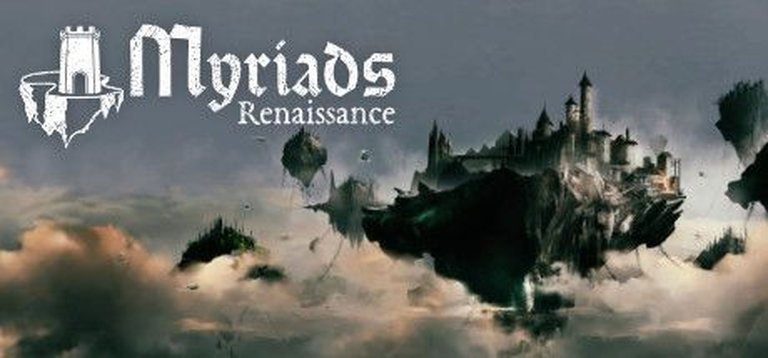
Myriads: Renaissance is a turn-based 4X strategy game set in a reimagined Renaissance era, where players command armies, manage resources, and expand their empire across a dynamic world. Developed by Sleeping Eight Studio and released in 2023, the game blends grand strategy with tactical depth, offering a free-camera perspective and multiple unit control in a visually rich, diagonal-down environment. With a focus on historical inspiration and strategic gameplay, players must navigate diplomacy, warfare, and economic growth to dominate their rivals.
Gameplay Videos
Where to Buy Myriads: Renaissance
PC
Myriads: Renaissance Cracks & Fixes
Myriads: Renaissance Patches & Updates
Myriads: Renaissance Guides & Walkthroughs
Myriads: Renaissance Reviews & Reception
indiegamereviewer.com : Myriads: Renaissance is a tidy 4X game built for smaller campaigns than the titans of the genre offer.
steambase.io (74/100): Myriads: Renaissance has earned a Player Score of 74 / 100.
mobygames.com : Myriads: Renaissance is a turn-based strategy game with city-building and 4X mechanics.
Myriads: Renaissance Cheats & Codes
PC
Use PLITCH software to apply cheats.
| Code | Effect |
|---|---|
| -100 Gold | Reduces gold by 100 |
| -10 Heat | Reduces heat by 10 |
| Add Gold | Increases gold |
| +10 Heat | Increases heat by 10 |
Myriads: Renaissance: A Skybound Strategy Gem
Introduction
In the vast ocean of 4X strategy games, Myriads: Renaissance emerges as a refreshing breeze—a title that dares to defy convention by lifting its world into the skies. Developed by the two-person team at Sleeping Eight Studio, this turn-based strategy game blends city-building, exploration, and tower defense into a compact yet deeply engaging experience. Released on June 1, 2023, Myriads: Renaissance carves its niche by offering a “lite” 4X experience that prioritizes accessibility without sacrificing depth. Its unique premise—floating islands in a post-apocalyptic Renaissance world—serves as both a visual spectacle and a mechanical foundation, challenging players to conquer the skies rather than the earth.
This review will dissect Myriads: Renaissance in exhaustive detail, exploring its development history, narrative and thematic underpinnings, gameplay mechanics, artistic direction, and its place in the broader strategy genre. By the end, we’ll determine whether this skybound adventure soars or stumbles.
Development History & Context
The Studio Behind the Skies
Sleeping Eight Studio, a French indie duo, embarked on the Myriads: Renaissance journey in 2017. The studio’s modest size—just two developers—meant that every design decision had to be deliberate, focusing on scope and polish rather than sprawling ambition. Their goal was clear: create a 4X game that could be completed in a single sitting (3-4 hours) while retaining the genre’s strategic depth. This philosophy is evident in the game’s streamlined systems, which avoid the bloated complexity of titles like Civilization VI or Endless Legend.
The development process was marked by transparency, with the team regularly updating players through devlogs on platforms like Itch.io and Steam. Early demos, released as far back as 2019, allowed the community to shape the game’s direction. Feedback from these demos led to significant overhauls, such as the tutorial system, which was completely redesigned in 2022 to better onboard new players. The final product, released after six years of iterative development, reflects this collaborative approach.
Technological Constraints and Design Choices
Built in Unity, Myriads: Renaissance leverages procedural generation to create its archipelagos of floating islands. The engine’s flexibility allowed the developers to craft a visually distinct world, but it also imposed limitations. The game’s art style—reminiscent of Renaissance-era navigation charts—was a deliberate choice to mask these constraints, using a stylized aesthetic to create immersion rather than relying on high-fidelity graphics.
The turn-based mechanics were designed to be snappy, with each turn resolving quickly to maintain momentum. This was a direct response to the often sluggish pacing of traditional 4X games, where late-game turns can drag on for minutes. By contrast, Myriads keeps the action brisk, ensuring that players remain engaged from start to finish.
The Gaming Landscape at Launch
Myriads: Renaissance entered a crowded market in 2023. The 4X genre was dominated by heavyweights like Civilization VI and Humankind, while indie darlings like Dune: Spice Wars and Old World offered fresh takes on the formula. What set Myriads apart was its focus on brevity and accessibility. In an era where players increasingly seek games that respect their time, Myriads positioned itself as the perfect “lunch break” 4X—a game that could be picked up, played to completion, and set aside in a single afternoon.
Narrative & Thematic Deep Dive
A World Adrift
The premise of Myriads: Renaissance is deceptively simple: the world has shattered, leaving humanity to survive on floating islands suspended in the sky. The cause of this cataclysm is left ambiguous, allowing players to project their own interpretations onto the setting. Is this a post-apocalyptic Earth? A fantasy realm? The game’s narrative is minimalist, relying on environmental storytelling and procedural events to convey its lore.
Players begin by designing their faction’s heraldry—a small but meaningful touch that fosters personal investment. From there, they’re thrust into a world where survival hinges on expansion and defense. The primary antagonists are corsairs, pirate factions that raid the player’s islands with increasing ferocity. These corsairs serve as both a narrative device and a gameplay mechanic, driving the player to fortify their holdings and venture outward to eliminate threats.
Themes of Scarcity and Adaptation
The floating islands are more than just a setting; they’re a metaphor for the game’s central themes: scarcity and adaptation. Space is limited, and every hexagon on the player’s capital island must be used judiciously. This constraint forces players to make tough decisions—do they prioritize food production, military might, or technological advancement?
The corsair raids amplify this tension. As the threat level rises, so too does the urgency to expand and fortify. The game’s tower defense elements—where players must strategically place defensive structures to repel waves of enemies—reinforce the idea that survival is precarious. Unlike traditional 4X games, where expansion is often a matter of “when,” Myriads makes it a matter of “if.”
Characters and Factions
While Myriads: Renaissance lacks the deep character-driven narratives of games like Crusader Kings III, its factions are distinct in their playstyles. The corsairs, for instance, are not just mindless raiders; they adapt to the player’s strategies, sending larger fleets if left unchecked. This dynamic creates a sense of a living, reactive world, even if the interactions are mechanically driven rather than narratively rich.
The player’s faction, meanwhile, is a blank slate—customizable in name and heraldry but devoid of predefined personality. This design choice aligns with the game’s focus on gameplay over storytelling, allowing players to project their own narratives onto their skybound empire.
Gameplay Mechanics & Systems
Core Gameplay Loop
Myriads: Renaissance distills the 4X formula into its most essential components: Build, Explore, Rule, Survive, and Conquer. Each of these pillars is executed with a focus on accessibility and depth.
-
Build: The capital island is the heart of the player’s empire. It’s divided into hexagons, each of which can be developed with structures like farms, barracks, or research facilities. The island’s size is limited, but players can expand it by attaching “shards”—smaller floating landmasses—using tugboats. This mechanic is one of the game’s most innovative, forcing players to constantly evaluate their spatial needs.
-
Explore: The world map is procedurally generated, with islands scattered across the sky. Exploration is key to finding resources, new shards, and corsair strongholds. The fog of war adds tension, as players never know what lies beyond the next island.
-
Rule: Colonies can be established on conquered islands, each specializing in a particular resource (e.g., food, gold, or production). Unlike the capital, colonies are simpler to manage but vulnerable to corsair raids.
-
Survive: The tower defense mechanics are where Myriads diverges most from traditional 4X games. Corsairs launch periodic raids, and players must build defensive towers to repel them. The threat level rises with each turn, escalating the difficulty and forcing players to balance offense and defense.
-
Conquer: Military units are deployed on galleons, which can be sent to destroy corsair strongholds or capture new islands. Combat is automated, with outcomes determined by unit strength and positioning. While this lack of tactical depth may disappoint some, it keeps the focus on macro-strategy.
Combat and Progression
Combat in Myriads is streamlined to the point of abstraction. Battles are resolved automatically, with a power bar indicating the likely outcome. This design choice ensures that the game remains fast-paced, but it also removes the tactical nuance found in games like XCOM or Battle Brothers.
Character progression is tied to research and expansion. The tech tree is modest but impactful, offering upgrades like improved towers, faster ships, and new building types. Unlike deeper 4X games, where research can feel like a chore, Myriads keeps it concise and rewarding.
UI and Accessibility
The user interface is one of Myriads’ strongest suits. The game’s art style—reminiscent of Renaissance maps—extends to the UI, with parchment-like menus and compass roses adorning the screen. Tool tips are abundant, and the tutorial system (revamped in 2022) does an excellent job of easing players into the mechanics.
That said, the UI isn’t without flaws. Some players have noted that the lack of a “undo” button can be frustrating, especially when misplacing a building. Additionally, the automated combat, while efficient, can feel detached for those who prefer hands-on tactical control.
World-Building, Art & Sound
A Skybound Aesthetic
Myriads: Renaissance’s art direction is its most striking feature. The floating islands are rendered in a style that evokes Renaissance-era cartography, with muted colors and intricate linework. The capital island, in particular, is a marvel of verticality, with buildings stacked atop one another in a way that feels both fantastical and grounded.
The world map is equally impressive, with islands drifting lazily across the screen. The procedural generation ensures that no two playthroughs are alike, and the variety of biomes—from lush forests to barren mountains—adds visual diversity.
Sound Design and Atmosphere
The sound design complements the art style perfectly. The ambient soundtrack is understated, with gentle melodies that evoke the tranquility of the skies. Sound effects—like the creaking of ships or the distant thunder of corsair cannons—add immersion without overwhelming the player.
One area where the sound design could improve is in its feedback. Some actions, like constructing a building or researching a technology, lack auditory confirmation, which can make the game feel less responsive.
Reception & Legacy
Critical and Commercial Reception
Myriads: Renaissance launched to a mixed but generally positive reception. On Steam, it holds a “Mostly Positive” rating (74/100), with players praising its accessibility and unique setting. Critics, meanwhile, have highlighted its innovative take on the 4X genre, though some have noted its lack of depth compared to heavier titles.
Commercially, the game has found a niche audience. Its $9.99 price point and frequent discounts have made it an attractive option for strategy fans looking for a shorter experience. The demo, which offers 80 turns of gameplay, has also helped drive interest.
Influence and Future Prospects
While Myriads: Renaissance is unlikely to dethrone Civilization as the king of 4X, its influence is already being felt. The game’s focus on brevity and accessibility has resonated with players weary of bloated strategy epics. Future indie 4X games may well take inspiration from Myriads’ streamlined approach.
As for Sleeping Eight Studio, the team has hinted at future updates, including new game modes and factions. Whether they’ll expand the game’s scope or continue refining its existing systems remains to be seen.
Conclusion
Myriads: Renaissance is a triumph of focused design. By stripping the 4X genre down to its essentials and infusing it with a unique skybound setting, Sleeping Eight Studio has created a game that is both accessible and engaging. Its innovations—like the shard-based expansion and tower defense mechanics—set it apart from its peers, while its brevity ensures that it never overstays its welcome.
That said, the game is not without its flaws. The automated combat lacks depth, and the narrative is minimalist to a fault. For players seeking a deep, story-driven experience, Myriads may feel shallow. But for those who crave a tight, strategic challenge that can be completed in an afternoon, it’s a skybound gem.
Final Verdict: 8/10 – A refreshing take on the 4X genre, perfect for players seeking a shorter, more accessible strategy experience.
Myriads: Renaissance proves that sometimes, less is more. In a genre often defined by sprawling complexity, it dares to be concise—and in doing so, it soars.