
- Release Year: 2019
- Platforms: Nintendo Switch, Windows
- Publisher: Hello There AB, RedDeerGames Sp. z o.o.
- Developer: Hello There AB
- Genre: Driving, Racing
- Perspective: Diagonal-down
- Game Mode: Single-player
- Gameplay: Party game
- Average Score: 44/100
Description
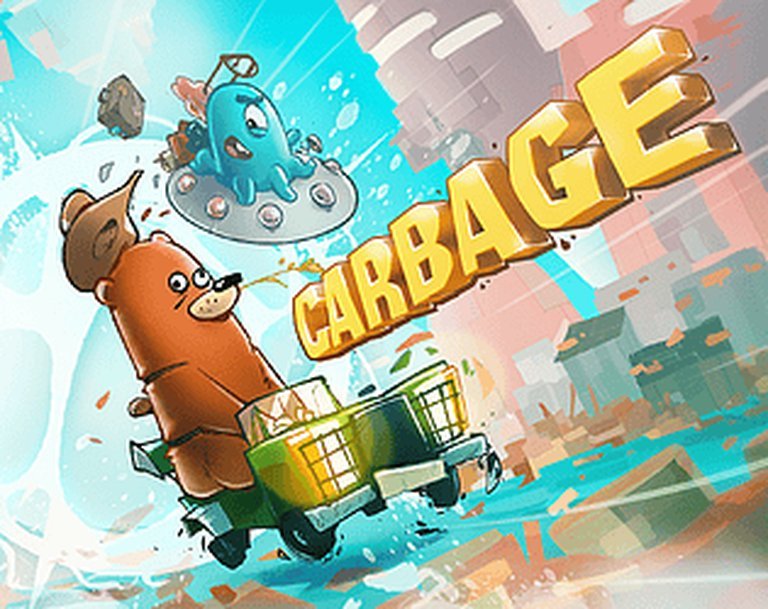
Carbage is a lighthearted, cartoon-style bumper car racing game designed for casual and party play. Players choose from quirky characters like a punk, a teddy bear, or an alien, and compete in four distinct game modes: classic races, survival challenges where the floor disappears, demolition derbies to collect pixel cubes, and a crown-capture mode. With simple controls and vibrant 2D graphics, the game emphasizes fun, fast-paced competition for solo or multiplayer sessions.
Carbage Patches & Updates
Carbage Reviews & Reception
opencritic.com (44/100): There are bad multiplayer games, terrible multiplayer games… and then there’s Carbage
Carbage: A Hidden Gem in the Couch Party Game Pantheon
Introduction
In the vast, often oversaturated landscape of indie party games, Carbage (2019) emerges as a delightful anomaly—a game that eschews the trappings of modern monetization in favor of pure, unadulterated fun. Developed by the Swedish studio Hello There AB, Carbage is a love letter to local multiplayer, a genre that has seen a resurgence in recent years but is frequently overshadowed by online-focused titles. With its charmingly simple premise—bumper cars in a destructible, pixelated playground—Carbage carves out a niche for itself as a game that thrives on chaos, accessibility, and sheer, unfiltered joy.
This review will dissect Carbage in exhaustive detail, exploring its development history, gameplay mechanics, artistic direction, and cultural impact. While it may not have the mainstream recognition of titles like Fall Guys or Mario Kart, Carbage represents something far rarer: a game designed not for algorithms or engagement metrics, but for the simple pleasure of gathering friends on a couch and laughing until your sides hurt.
Development History & Context
The Studio Behind the Chaos: Hello There AB
Hello There AB is a Swedish indie studio with a decade-long history of working on both contracted projects (including collaborations with Volvo and the late musician Avicii) and passion-driven indie titles. Unlike many modern indie developers who chase viral success or early access funding, Hello There AB’s approach to Carbage was refreshingly organic. The game began as a side project—a creative outlet for the team to experiment with physics-based destruction and multiplayer dynamics without the pressures of corporate oversight.
In a 2019 devlog on Itch.io, the studio revealed that Carbage was born from a desire to create something “for ourselves, our friends, and our children.” The team wanted a game that could be enjoyed by all ages, free from microtransactions, loot boxes, or invasive ads. This ethos is increasingly rare in an industry where even indie games often rely on post-launch monetization.
Technological Constraints & Design Philosophy
Carbage was built in Unity, a engine choice that reflects the studio’s indie roots and the game’s modest scope. The diagonal-down, 2D scrolling perspective is reminiscent of classic arcade racers, but the physics-based destruction and real-time multiplayer interactions give it a modern twist. The game’s development was sporadic—Hello There AB worked on it in bursts between larger projects, which explains its polished yet intentionally rough-around-the-edges feel.
The studio’s decision to focus on local multiplayer (with up to four players) was both a creative and practical choice. In an era where online play dominates, Carbage harkens back to the golden age of couch co-op, where physical proximity and shared laughter were as important as the game itself.
The Gaming Landscape at Launch (2019-2023)
When Carbage first released on Windows in June 2019, the party game genre was already crowded with heavyweights like Overcooked! 2, Mario Party, and Jackbox. However, few games in this space prioritized pure, physics-driven chaos over structured competition. Carbage filled a gap by offering a game that was:
– Instantly accessible (no complex controls or tutorials)
– Visually charming (cartoonish, low-poly aesthetics)
– Designed for replayability (multiple game modes encouraging different playstyles)
Its Nintendo Switch port in 2023 (published by RedDeerGames) gave it a second life, aligning with the console’s reputation as the go-to platform for local multiplayer experiences. However, despite its strengths, Carbage remained under the radar, lacking the marketing push of bigger titles.
Narrative & Thematic Deep Dive
The Absence of Story (And Why It Works)
Carbage is not a narrative-driven game. There are no cutscenes, no lore, no overarching plot—just pure, unfiltered gameplay. This minimalist approach is a deliberate design choice, aligning with the studio’s goal of creating a game that anyone can pick up and play without barriers.
However, the game’s character designs and visual storytelling subtly hint at a playful, almost absurdist tone:
– The Screaming Punk – A rebellious, high-energy driver.
– The Redheaded Woman – A no-nonsense competitor.
– The Cute Teddy Bear – A whimsical, unexpected racer.
– The Funny Alien – A nod to retro sci-fi aesthetics.
These characters, while lacking backstories, contribute to the game’s lighthearted, inclusive atmosphere. The absence of dialogue or text ensures that Carbage is universally accessible, transcending language barriers.
Themes: Chaos, Competition, and Camaraderie
While Carbage lacks a traditional narrative, its gameplay mechanics convey several underlying themes:
1. Controlled Chaos – The game thrives on unpredictability, where players must adapt to disappearing floors, crumbling buildings, and last-second bumper car rams.
2. Friendly Rivalry – Unlike hyper-competitive games, Carbage encourages playful sabotage rather than toxic competition.
3. Accessibility Over Complexity – The game’s simplicity is its greatest strength, making it ideal for family gatherings, drunk gaming nights, or casual play sessions.
Gameplay Mechanics & Systems
Core Gameplay Loop: Bump, Survive, Repeat
Carbage’s gameplay is deceptively simple: drive a bumper car, ram opponents, and survive. However, the game’s brilliance lies in how it iterates on this core loop through four distinct modes:
1. Survival Mode
- Premise: The floor disappears beneath players as they drive.
- Objective: Be the last car standing.
- Why It Works: The shrinking arena creates tension and forced interactions, preventing passive play.
2. Capture the Crown
- Premise: A tag-like mode where holding a crown for 30 seconds wins the round.
- Objective: Steal the crown from opponents while avoiding elimination.
- Why It Works: Encourages aggressive chasing and defensive maneuvering, making it the most dynamic mode.
3. Demolition
- Premise: Destroy buildings to collect pixel cubes.
- Objective: The player with the most cubes wins.
- Why It Works: Introduces environmental destruction as a core mechanic, rewarding both precision and recklessness.
4. Race
- Premise: A traditional race to the finish line.
- Objective: Outspeed opponents while navigating obstacles.
- Why It Works: The most structured mode, appealing to players who prefer classic competition.
Controls & Accessibility
- Direct Control Scheme: Simple inputs (accelerate, brake, steer) ensure instant pickup-and-play appeal.
- No Complex Mechanics: Unlike games with deep progression systems, Carbage relies on pure skill and reflexes.
- Local Multiplayer Focus: The lack of online play is both a limitation and a strength—it forces players to engage in physical social interaction, a rarity in modern gaming.
Innovations & Flaws
✅ Strengths:
– Physics-Based Fun: The bumper car collisions feel weighty and satisfying.
– Multiple Modes: Each mode offers a distinct experience, preventing monotony.
– Family-Friendly: No violence, no complex rules—just pure, wholesome chaos.
❌ Weaknesses:
– Limited Depth: Hardcore gamers may find it too simplistic for long-term engagement.
– No Online Multiplayer: A missed opportunity for broader appeal.
– Minimal Progression: No unlockables or customization beyond character selection.
World-Building, Art & Sound
Visual Design: A Pixelated Playground
Carbage’s art style is intentionally retro, blending:
– Low-poly 3D models (characters and cars)
– Pixel-art environments (buildings, tracks)
– Vibrant, cartoonish colors (appealing to both kids and adults)
The diagonal-down perspective gives the game a toy-like aesthetic, as if players are controlling miniature cars on a tabletop. The destruction physics (crumbling buildings, disappearing floors) add a layer of dynamic visual feedback, making every match feel unique.
Sound Design: Minimalist but Effective
While not a standout feature, the game’s audio serves its purpose:
– Upbeat, chiptune-inspired music (fits the arcade vibe)
– Satisfying collision sounds (enhances the bumping mechanics)
– No voice acting (keeps the game universally accessible)
The studio has acknowledged that sound effects are an area for improvement, but the current implementation is functional and unobtrusive.
Reception & Legacy
Critical & Commercial Reception
Carbage has received little mainstream attention, with no Metacritic or OpenCritic scores at launch. However, niche reviews (such as Nindie Spotlight’s 4.4/10) highlight its charm but criticize its lack of depth.
- Praise:
- “A fun, chaotic party game for local multiplayer fans.” (User reviews)
- “Perfect for families and casual gamers.” (Indie game forums)
- Criticism:
- “Too simple for long-term play.” (Hardcore gamers)
- “Needs more content and polish.” (Critics)
Legacy: A Cult Classic in the Making?
While Carbage may never achieve blockbuster status, its design philosophy makes it a standout in the indie party game scene. It proves that:
– Simplicity can be a strength in an era of overcomplicated games.
– Local multiplayer still has a place in a world dominated by online play.
– Indie games don’t need monetization to be enjoyable.
Its Nintendo Switch port (2023) gave it a second chance, but without major updates or marketing, it remains a hidden gem.
Conclusion: A Love Letter to Local Multiplayer
Carbage is not a flawless game, nor is it a revolutionary one. But what it lacks in depth, it makes up for in pure, unadulterated fun. In an industry increasingly obsessed with live-service models, battle passes, and microtransactions, Carbage is a breath of fresh air—a game that exists solely to bring people together.
Final Verdict: 7.5/10 – “A Delightful Chaos Machine”
- For: Families, casual gamers, local multiplayer enthusiasts.
- Against: Hardcore gamers seeking depth, online multiplayer fans.
- Best Enjoyed: On a couch with friends, snacks in hand, and no expectations beyond laughter.
Carbage may not redefine the party game genre, but it perfectly executes its vision—and in today’s gaming landscape, that’s worth celebrating.
Would you like additional sections on potential sequels, modding communities, or comparisons to similar games like Bumper Cars or Wreckfest? Let me know how to expand this review further!