
- Release Year: 2014
- Platforms: Android, iPad, iPhone, Linux, Macintosh, Nintendo Switch, Windows
- Publisher: LKMAD Ltd
- Developer: LKMAD Ltd
- Genre: Adventure
- Perspective: 1st-person
- Game Mode: Single-player
- Gameplay: Graphic adventure, Point and select, Puzzle elements
- Setting: Fantasy
- Average Score: 84/100
Description
Panmorphia is a first-person graphic adventure game set in a dream-like fantasy world, where players embark on a leisurely journey filled with intricate puzzles and exploration. Developed by Lydia Kovalenko, the game draws inspiration from ancient ruins and lost civilizations, blending traditional adventure elements with a casual, immersive experience. With its point-and-click interface and fixed-screen visuals, Panmorphia offers a rich, handcrafted environment that reflects the developer’s architectural background and love for storytelling.
Gameplay Videos
Where to Buy Panmorphia
PC
Panmorphia Free Download
Panmorphia Guides & Walkthroughs
Panmorphia Reviews & Reception
opencritic.com : Panmorphia is a lovely point & click escape room game, trying to find your way out after the door closed with a bang.
steambase.io (89/100): Panmorphia has earned a Player Score of 89 / 100.
ladiesgamers.com : Panmorphia is a lovely point & click escape room game, trying to find your way out after the door closed with a bang.
monstercritic.com (80/100): Panmorphia is a lovely point & click escape room game, trying to find your way out after the door closed with a bang.
Panmorphia: A Dreamlike Odyssey Through Puzzle and Transformation
Introduction: The Sentinel’s Call
Panmorphia (2014) is a rare gem in the adventure genre—a game that feels like a whispered secret, a love letter to the golden age of point-and-click puzzles, yet infused with a modern, almost meditative sensibility. Developed entirely by Lydia Kovalenko under her studio LKMAD, Panmorphia is a testament to the power of solo creativity, blending photorealistic environments, elemental transformation, and intricate puzzle design into a cohesive, dreamlike experience. It is a game that does not shout for attention but instead beckons players into its world with the quiet allure of a forgotten myth.
At its core, Panmorphia is a first-person adventure where players assume the role of a “sentinel,” a chosen one bound to the land of Panmorphia and its four governing elements: fire, earth, air, and water. The narrative is minimalist yet evocative—players begin by reading a legend in their apartment before being transported to a mysterious coastal tower, where an amulet and a closed gate mark the start of their journey. The premise is simple: restore balance to Panmorphia by harnessing the power of the elements, each tied to a unique animal transformation (human for fire, cat for earth, bird for air, and fish for water). Yet, the game’s true magic lies not in its plot but in its atmosphere, its puzzles, and the way it invites players to see the world anew through each metamorphosis.
Panmorphia straddles the line between traditional adventure games and casual puzzle experiences, offering a leisurely, almost therapeutic pace that contrasts sharply with the fast-paced, narrative-driven titles of its era. It is a game that rewards patience, observation, and experimentation, and while it may lack the polish or ambition of AAA adventures, its charm is undeniable. This review will delve deep into the game’s development, narrative, gameplay, artistry, and legacy, exploring why Panmorphia remains a cult favorite among adventure enthusiasts.
Development History & Context: The Architect Turned Game Designer
The Birth of a Solo Vision
Lydia Kovalenko’s journey into game development is as unconventional as Panmorphia itself. Trained as an architect, Kovalenko’s background in spatial design and visual storytelling proved instrumental in shaping the game’s world. Her foray into game creation was not a sudden pivot but a return to a long-held passion. In the late 1990s, she was part of WorldsAway, a 2D virtual world community developed by LucasArts, where she designed scenes, oversaw events, and even created small point-and-click adventures (or “quests”) for players. This experience gave her a front-row seat to what made puzzles and narratives resonate with audiences—a knowledge she would later channel into Panmorphia.
The catalyst for Panmorphia came in 2013 during a trip to Tzelefos Bridge in Cyprus, where Kovalenko encountered a tree that sparked her imagination. Inspired by the island’s landscapes—its ancient ruins, rugged cliffs, and hidden groves—she began photographing locations that would eventually form the backbone of the game’s environments. With no prior programming experience, she turned to GameSalad, a user-friendly engine that allowed her to prototype and iterate without needing to hire a developer. This decision was pivotal; it granted her the creative freedom to evolve the game organically, a process she described as “getting to a point of what feels right.”
Technological Constraints and Creative Workarounds
Panmorphia’s development was not without challenges. GameSalad, while accessible, had limitations in performance and platform support, particularly for more complex interactions. Kovalenko’s solution was to embrace simplicity where necessary and innovate where possible. The game’s art style, for instance, was achieved through digital matte painting—a technique involving the blending of multiple photographs into cohesive scenes, enhanced with filters and effects to create a warm, saturated look. This method allowed her to craft environments that felt both real and otherworldly, a fusion of Cyprus’s natural beauty and Panmorphia’s magical essence.
The puzzles, too, were a product of Kovalenko’s architectural mindset. She used AutoCAD to draft puzzle designs before refining them in Photoshop, ensuring they were visually distinct yet harmonious with the game’s aesthetic. The result is a world where every object, from a rusted machete to a star-filled night sky, feels purposefully placed, as if the environment itself is a puzzle waiting to be unraveled.
The Gaming Landscape of 2014
Panmorphia arrived at a time when the adventure genre was experiencing a renaissance, thanks in part to the success of titles like The Walking Dead (2012) and Gone Home (2013). However, these games leaned heavily into narrative-driven experiences, often at the expense of traditional puzzle-solving. Panmorphia, by contrast, was unapologetically old-school—a throwback to the Myst-like adventures of the 1990s, where exploration and environmental interaction took precedence over dialogue or character development.
The game’s initial release on iOS (December 2014) positioned it within the burgeoning mobile adventure market, where titles like The Room (2012) had proven that touchscreen interfaces could support intricate puzzle design. Panmorphia’s subsequent ports to Windows, Mac, Linux (2015–2016), and later Nintendo Switch (2021) expanded its reach, though it remained a niche title, beloved by those who sought a more contemplative, less hand-holding experience.
Narrative & Thematic Deep Dive: A Myth Without Words
The Minimalist Storytelling Approach
Panmorphia’s narrative is deliberately sparse. Players begin by reading a legend about sentinels and their connection to the elements, only to find themselves abruptly transported to Panmorphia’s shores. There are no NPCs, no lengthy exposition dumps, and no overarching villain—just the player, the amulet, and the silent, crumbling world around them. The story unfolds not through dialogue but through environmental cues: a locked gate, a rusted key, a series of glyphs carved into stone.
This minimalism is both the game’s greatest strength and its most polarizing aspect. For players accustomed to modern adventure games with rich character interactions and branching narratives, Panmorphia may feel hollow. Yet, for those who appreciate ambiguity and atmospheric storytelling, the game’s restraint is a breath of fresh air. The lack of a “smart cursor” (a common feature in adventure games that highlights interactive objects) further reinforces this design philosophy—players must rely on their own curiosity and observation, making each discovery feel earned.
Themes of Transformation and Perspective
At its heart, Panmorphia is a game about seeing the world differently. The sentinel’s ability to transform into a cat, bird, or fish is not merely a gameplay mechanic but a thematic anchor. Each form alters the player’s perspective:
– Human (Fire): The default state, allowing interaction with objects and navigation of the world at a standard scale.
– Cat (Earth): A smaller, ground-level view that reveals hidden details in the environment, such as mouse holes or low-lying objects.
– Bird (Air): The ability to fly and access high perches, offering a bird’s-eye view of the landscape.
– Fish (Water): Underwater exploration, uncovering secrets beneath the surface.
These transformations are more than just puzzle-solving tools; they are metaphors for how perception shapes reality. A path that seems impassable as a human may be easily traversed as a cat, just as a problem that feels insurmountable in one state of mind may yield to a shift in perspective. This theme is subtly reinforced by the game’s art direction, where the same locations take on entirely new characteristics depending on the player’s form. A sunlit forest as a human becomes a shadowy, moonlit thicket as a cat; a quiet stream as a bird reveals a bustling underwater ecosystem as a fish.
The Elemental Puzzle: A Metaphor for Balance
The game’s central conflict—restoring balance to Panmorphia by charging the amulet with the four elements—serves as an allegory for harmony and interconnectedness. Each element is tied to a specific animal and a unique set of puzzles, requiring players to engage with the world in different ways. Fire, for instance, is tied to human ingenuity (lighting torches, forging tools), while earth (the cat) emphasizes patience and close observation. Air (the bird) demands agility and a broader view, and water (the fish) requires adaptability and fluidity.
This elemental framework is not just a gameplay conceit but a reflection of the game’s underlying philosophy: that true understanding comes from embracing multiple perspectives. It’s a theme that resonates deeply in an era where games often prioritize linear progression over exploratory depth.
Gameplay Mechanics & Systems: The Joy of Discovery
Core Gameplay Loop: Exploration and Puzzle-Solving
Panmorphia’s gameplay is built around a classic adventure game loop: explore, observe, collect, and solve. Players navigate through a series of fixed-screen environments, clicking on objects to interact with them or picking up items to use later. The game’s world is relatively small but densely packed with secrets, ensuring that every screen holds potential discoveries.
The puzzles themselves are a mix of traditional adventure game fare and more casual, mini-game-style challenges. These include:
– Inventory-based puzzles: Combining items in logical ways (e.g., sharpening a rusted machete on a whetstone).
– Sliding block puzzles: Classic challenges where players must maneuver blocks into specific configurations.
– Pattern-matching puzzles: Replicating symbols or sequences found in the environment.
– Environmental puzzles: Manipulating the world itself, such as using a mirror to reflect light or digging up hidden objects.
One of the game’s most clever mechanics is its use of transformations to gate progress. Certain puzzles can only be solved in a specific form. For example, a high ledge may require the bird’s flight, while a narrow crevice might only be accessible as a cat. This design encourages players to revisit locations in different forms, reinforcing the game’s themes of perspective and adaptability.
The Hint System: A Double-Edged Sword
Recognizing that some puzzles might prove too obscure, Kovalenko included a hint system that provides gentle nudges toward the next objective. This feature is optional and can be toggled on or off, catering to both casual players and hardcore adventurers. While the hints are generally well-implemented, they occasionally risk undermining the game’s sense of discovery. For instance, the map’s hint feature highlights the next area to visit, which can feel like a crutch for players who prefer to explore organically.
Navigation and UI: A Study in Minimalism
Panmorphia’s interface is stripped down to its essentials. There are no dialogue trees, no complex menus, and no overwhelming HUD elements. The inventory is accessible with a single click, and items can be combined or used with a simple drag-and-drop mechanic. The game’s lack of a smart cursor, however, is a double-edged sword. On one hand, it forces players to engage more deeply with the environment, scanning each screen for interactive elements. On the other, it can lead to frustrating pixel-hunting, where players click aimlessly in search of hidden objects.
The game’s navigation is similarly minimalist. Players move between screens by clicking on the edges of the current view—a design choice that harkens back to early adventure games like Myst. While this approach immerses players in the world, it can also feel disorienting, especially in the game’s more labyrinthine sections. Later ports of the game introduced optional arrow indicators to mitigate this issue, a welcome addition for players who prefer more guidance.
The “Easy Mode” and Accessibility
In response to player feedback, Kovalenko added an “Easy Mode” that highlights interactive objects with sparkles, making it easier to identify clickable areas. This mode is a thoughtful inclusion, broadening the game’s appeal to players who might otherwise be deterred by its more obscure puzzles. However, purists may argue that it dilutes the game’s challenge, turning what was once a test of observation into a more straightforward treasure hunt.
World-Building, Art & Sound: A Living Painting
The Photorealistic Fantasy of Panmorphia
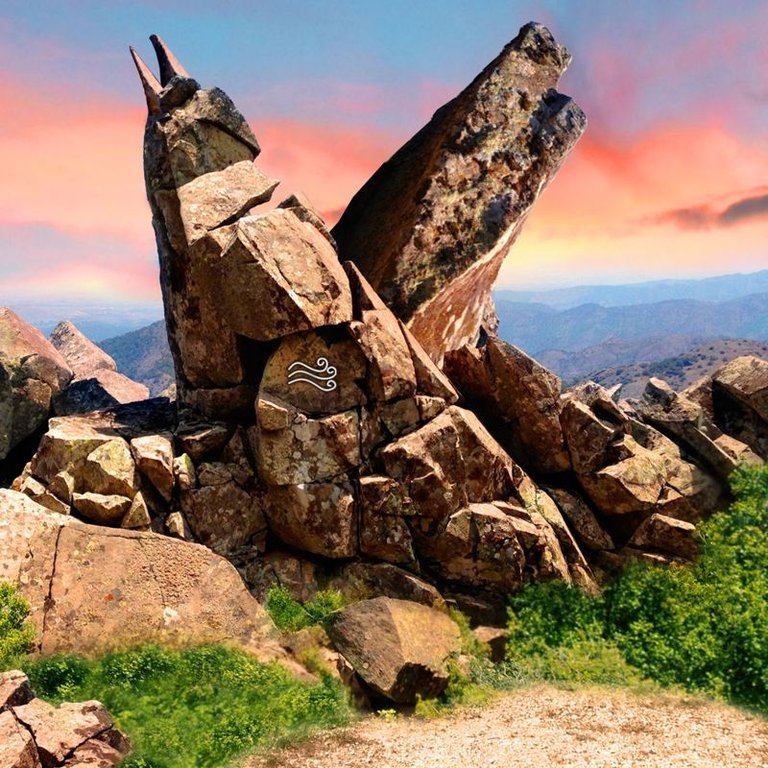
Panmorphia’s most striking feature is its visual design. The game’s environments are not rendered in 3D but are instead digital matte paintings—meticulously crafted composites of real-world photographs taken in Cyprus. This technique lends the game a hyper-realistic quality, where every rock, tree, and ruin feels tangible. Yet, through the use of filters, lighting effects, and subtle animations (such as drifting fireflies or swaying branches), Kovalenko transforms these real-world locations into something magical.
The game’s art direction is a masterclass in atmospheric world-building. The color palette shifts dynamically depending on the player’s form: warm, golden hues dominate the human and bird perspectives, while the cat’s nighttime scenes are bathed in cool blues and purples. The fish’s underwater segments are awash in deep greens and aquamarines, creating a sense of depth and immersion. These visual cues are not just aesthetic choices but narrative tools, reinforcing the idea that each transformation offers a distinct way of seeing the world.
Sound Design: The Symphony of Silence
Panmorphia’s audio design is understated but effective. The game features an original orchestral score by David Decker, whose compositions evoke a sense of wonder and mystery. The music is looped but never feels repetitive, thanks to its dynamic shifts in tone—gentle strings for exploratory moments, more urgent brass during puzzle-solving sequences.
The ambient sounds are equally impressive. The rustle of leaves, the gurgle of water, the distant call of birds—these subtle audio cues bring the world to life, making Panmorphia feel like a living, breathing place. The lack of voice acting is a deliberate choice, one that aligns with the game’s minimalist storytelling. Instead of dialogue, the game relies on environmental sounds and text prompts to guide the player, further immersing them in the sentinel’s solitary journey.
The Illusion of Movement
Despite its static, slideshow-style presentation, Panmorphia creates a surprising sense of dynamism. Small animations—such as bees fluttering between flowers or dust motes swirling in sunlight—add layers of realism to the otherwise still environments. Transitions between screens are seamless, with no loading times, which helps maintain the game’s dreamlike flow. Even the transformations are handled elegantly, with a simple flicker of light signaling the shift from one form to another.
Reception & Legacy: A Cult Classic in the Making
Critical Reception: A Polarizing Gem
Panmorphia’s reception has been mixed but generally positive, with critics praising its artistry and puzzle design while noting its lack of narrative depth. Adventure Gamers awarded it a 3.5/5, calling it “a leisurely, dream-like journey through a puzzle-dazzled world” and highlighting its “lovely photorealistic surroundings” and “intriguing transformations.” However, the review also criticized the game’s thin story and the frustration of pixel-hunting due to the lack of a smart cursor.
Player reactions have been similarly divided. On Steam, the game holds a “Very Positive” rating (89/100 based on user reviews), with many players lauding its relaxing atmosphere and creative puzzles. Others, however, have expressed frustration with its more obscure challenges and the occasional bug (such as items disappearing from the inventory). The game’s niche appeal is evident in its relatively small but dedicated fanbase, who often describe it as a “hidden gem” or a “love letter to classic adventures.”
The Evolution of the Series
Panmorphia’s success led to two sequels:
– Panmorphia: Enchanted (2018): A direct continuation of the original, set in the Lost Temple, where players further develop their elemental powers.
– Panmorphia: Awakened (2022): The latest entry, which expands the lore and introduces new transformations and puzzles.
Both sequels retain the core mechanics of the original while refining the visuals and adding more narrative context. They have been well-received by fans, though they remain niche titles within the broader adventure genre.
Influence and Industry Impact
While Panmorphia may not have revolutionized the adventure genre, its influence can be seen in the growing trend of atmospheric puzzle games that prioritize exploration and environmental storytelling over traditional narratives. Games like The Witness (2016) and Obduction (2016) share Panmorphia’s emphasis on player-driven discovery and minimalist design, though they operate on a larger scale.
More importantly, Panmorphia serves as a testament to the power of solo development. In an industry increasingly dominated by large studios and bloated budgets, Kovalenko’s game proves that a single visionary—armed with creativity, passion, and the right tools—can craft an experience that resonates deeply with players. It is a reminder that games do not need cutting-edge graphics or Hollywood-level storytelling to be memorable; sometimes, all they need is a world that feels alive and a mystery worth unraveling.
Conclusion: A Quiet Masterpiece
Panmorphia is not a game for everyone. It lacks the narrative depth of The Walking Dead, the polish of Firewatch, or the scope of The Witness. What it offers instead is something rarer: a meditative, immersive experience that rewards patience, curiosity, and a willingness to see the world from multiple angles. It is a game that understands the power of silence, the beauty of stillness, and the joy of discovery.
In an era where games are often judged by their length, their graphics, or their cinematic aspirations, Panmorphia stands as a quiet rebellion—a reminder that sometimes, the most profound experiences are the ones that unfold at their own pace, without fanfare or explanation. It is a game that does not demand your attention but earns it, one puzzle, one transformation, one breathtaking vista at a time.
For adventure game enthusiasts, Panmorphia is a must-play—a modern classic that harkens back to the genre’s roots while forging its own path. For casual players, it is a soothing escape, a world to lose oneself in for a few hours. And for aspiring developers, it is proof that passion and creativity can overcome even the most daunting technological constraints.
Final Verdict: 8.5/10 – A Dreamlike Adventure That Lingers Long After the Last Puzzle is Solved
Panmorphia may not be perfect, but it is unforgettable—a testament to the enduring power of exploration, transformation, and the quiet magic of a world waiting to be discovered.