
- Release Year: 2001
- Platforms: Nintendo Switch, PlayStation 2, PlayStation 4, Windows, Xbox One
- Publisher: Akella, Capcom Co., Ltd., Typhoon Games (Hong Kong) Ltd.
- Developer: Capcom Production Studio 2
- Genre: Action, Survival horror
- Perspective: Third-person
- Game Mode: Single-player
- Gameplay: Character Switching, Puzzle elements, Soul absorption, Weapon Upgrades
- Setting: Classical, Fantasy, Japan (Ancient, Medieval)
- Average Score: 85/100
Description
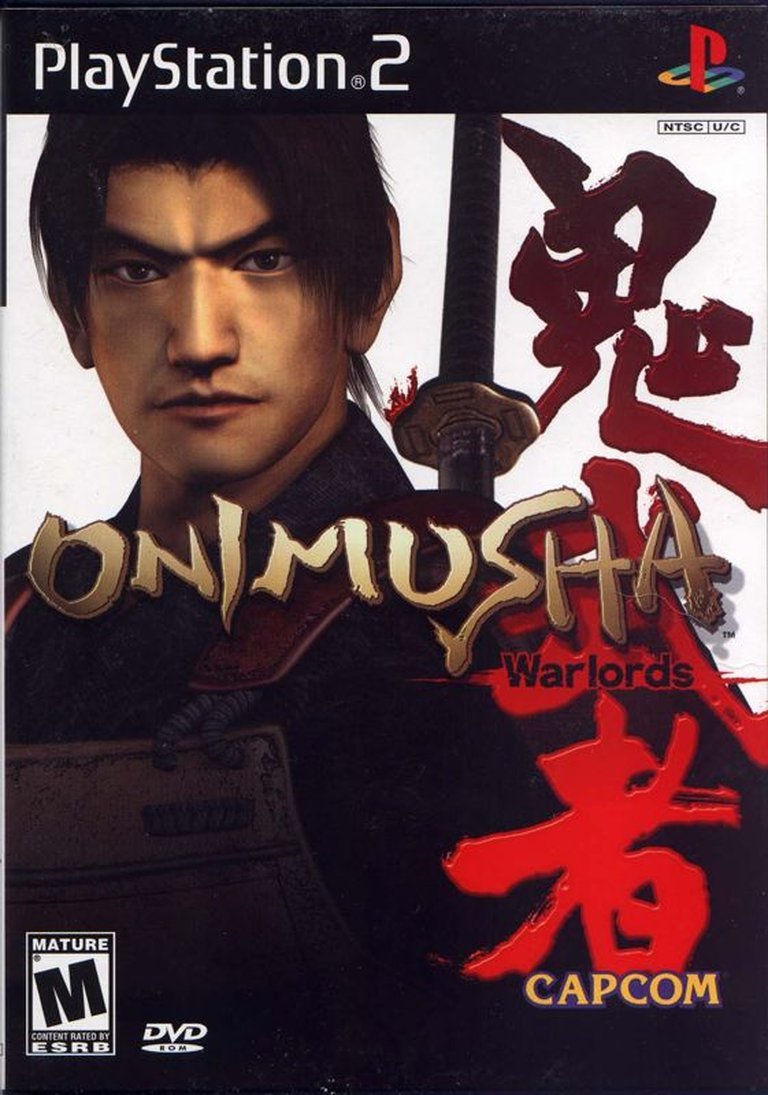
Onimusha: Warlords is a survival horror action game set in 16th-century Japan during the civil war era of Nobunaga Oda. Players take on the role of Samanosuke Akechi, a warrior resurrected with the power of the Ogre gauntlet after failing to prevent the kidnapping of Princess Yuki. Armed with this mystical artifact, Samanosuke battles through the demon-infested halls of Inabayama Castle, absorbing the souls of defeated enemies to enhance his weapons, armor, and abilities. The game blends puzzle-solving, combat, and exploration, with players occasionally controlling Samanosuke’s ally Kaede, who possesses unique skills like lock-picking and kunai-throwing. The 2018 HD remaster introduces modern improvements such as widescreen support and refined controls.
Gameplay Videos
Where to Buy Onimusha: Warlords
PC
Onimusha: Warlords Free Download
Onimusha: Warlords Cracks & Fixes
Onimusha: Warlords Patches & Updates
Onimusha: Warlords Mods
Onimusha: Warlords Guides & Walkthroughs
Onimusha: Warlords Reviews & Reception
metacritic.com (91/100): A solid recommendation as a short and action-packed classic game with some good replay value after your first run.
vg247.com (85/100): A good value remaster of a decent game.
ign.com (65/100): Onimusha: Warlords is exactly how you remember it, and in 2019, that’s not necessarily a good thing.
imdb.com (100/100): Fantastic Game, albeit short. Fantastic. Can’t wait for the sequel.
opencritic.com (85/100): A great return that makes us want a new iteration on this franchise.
Onimusha: Warlords Cheats & Codes
PlayStation 2 (NTSC-U)
Enter codes using a GameShark, Action Replay, or CodeBreaker device.
| Code | Effect |
|---|---|
| EC8562A0 1456E60A | Master Code (Must Be On) – InterAct |
| VF7B-P9J2-QVVK7 | Master Code (Must Be On) – Codejunkies |
| 9Z9Y-CYH2-R9HF6 | Master Code (Must Be On) – Codejunkies |
| Z86D-MDWA-H2REW | Master Code (Must Be On) – Codejunkies |
| VFE7-FK9B-M32EA | Master Code (Must Be On) – Codejunkies |
| KQEK-5ZFB-F8UP9 | Master Code (Must Be On) – Codejunkies |
| F400B96E BC74019C | Master Code (Must Be On) – InterAct |
| DA58A2B8 B27F2996 | 1-Hit Death (Last Boss) |
| 1A29A05A 00000000 | 1-Hit Death (Last Boss) |
| 9DWY-PJZJ-BZTME | 999 Enemies Killed |
| Z204-K9EK-5EPPT | 999 Enemies Killed |
| FA7A006E 32C191A9 | Enable Code (Must Be On) – Code Master |
| 9A644788 18B6FD32 | Enable Code (Must Be On) – Code Master |
| R764-V7WA-5UYT9 | Defeat The Final Boss In 1 Hit |
| QXHB-B3H3-WMB2D | Defeat The Final Boss In 1 Hit |
| 49CB-7W1P-4EDRW | Defeat The Final Boss In 1 Hit |
| 1A633662 00000FFF | Easy Pass-Oni Spirit |
| 24D0A574 B7BC9A40 | Have Bishamon Sword |
| 2450A576 B7BC9AF1 | Have Great Armor |
| 24D0A576 B7BC9AD1 | Have Holy Armor |
| 1440BC7E 37BCDAE8 | Infinite Enhancement Points |
| 14C09D6E 3E34D3C8 | Infinite Fire Magic |
| 4CBF0198 1456E70D | Infinite Fire Magic |
| 1AA9365E 00000080 | Infinite Fire Magic |
| 1480B82E 3EB4C708 | Infinite Health |
| 4CBF06C8 1456E70D | Infinite Health |
| 1AD93655 000000FF | Infinite Health |
| 14C09D6F 3E34D378 | Infinite Lightning Magic |
| 4CBF0192 1456E70D | Infinite Lightning Magic |
| 1AA7365E 00000080 | Infinite Lightning Magic |
| 14C09D6F 3E34D3C8 | Infinite Wind Magic |
| 4CBF0196 1456E70D | Infinite Wind Magic |
| 1AAB365E 00000080 | Infinite Wind Magic |
| 1440BC7E 37BCDAD8 | Lots Of Injected Souls |
| 4P15-BWFT-X9QB4 | Low Time |
| NJQF-AFNE-V2N4Q | Low Time |
| 1AAD365E 000003E7 | Max Enemies Killed |
| 4CBFFFDC 145699EE | Max Enhancement Points |
| 1AED365C 0000270F | Max Enhancement Points |
| 1480BA2F 3EB4C7B8 | Max Health |
| 4CBF06C2 1456E70D | Max Health |
| 1AD73655 000000FF | Max Health |
| 4CBFFFE0 145699EE | Max Injected Souls |
| 1AF1365C 0000270F | Max Injected Souls |
| 14C09C6F 3EB4C3F8 | Max Magic |
| 4CBFF9E2 1456E70D | Max Magic |
| 1AF73666 000000FF | Max Magic |
| 2A07248B 00000000 | Super Low Time |
Onimusha: Warlords – A Masterpiece of Samurai Horror and the Birth of a Legend
Introduction: The Blade That Defined an Era
In the pantheon of early PlayStation 2 classics, few games cut as deep or left as lasting a scar as Onimusha: Warlords. Released in 2001, this action-horror masterpiece was not just Capcom’s bold reinvention of the Resident Evil formula—it was a cultural earthquake, a fusion of feudal Japanese aesthetics, cinematic storytelling, and visceral combat that redefined what a survival-horror game could be. With its haunting orchestral score, groundbreaking motion-captured performances, and a soul-absorbing combat system, Onimusha: Warlords didn’t just set the stage for its sequels—it carved out an entirely new subgenre: samurai survival horror.
This review is not merely an analysis; it is a historical dissection of a game that became a cornerstone of Capcom’s legacy, a title that sold over two million copies, won awards, and inspired future classics like Devil May Cry and Ninja Gaiden. We will explore its development, its narrative depth, its mechanical brilliance, its artistic grandeur, and its enduring influence. By the end, you will understand why Onimusha: Warlords is not just a game—it is a cultural artifact, a bridge between the past and future of action-adventure gaming.
Development History & Context: Forging a Demon Warrior
From “Sengoku Biohazard” to PlayStation 2 Dominance
The seeds of Onimusha were sown in 1997, when Capcom producer Yoshiki Okamoto envisioned a Resident Evil-style game set in feudal Japan—a “ninja version of Biohazard“, as he described it. Originally slated for the Nintendo 64DD, the project was to feature a “ninja house” filled with traps, scrolls, and supernatural horrors, with combat centered around swords and shuriken. However, as the PlayStation 2 loomed on the horizon, Capcom saw an opportunity to push boundaries.
Under the direction of Keiji Inafune (later famous for Mega Man and Dead Rising) and Jun Takeuchi, the game evolved into Onimusha: Warlords, a title that would become the first PlayStation 2 game to sell over one million copies. The shift to PS2 was not just technological—it was philosophical. The team wanted to create a game that wasn’t just Resident Evil with swords, but a cinematic experience that blended historical drama with supernatural horror.
The Technological Leap: Motion Capture, Orchestral Grandeur, and the Birth of a Star
One of the most revolutionary aspects of Onimusha: Warlords was its use of real actors for character models and voice acting. Takeshi Kaneshiro, a renowned Taiwanese-Japanese film star, was cast as Samanosuke Akechi, making Onimusha one of the first games to feature a fully digitized Hollywood-level actor in a leading role. This was not just a marketing gimmick—it was a statement of intent. Capcom wanted Onimusha to feel like a samurai epic film, and Kaneshiro’s performance lent the game an unprecedented level of realism and emotional weight.
The game’s orchestral score, initially credited to Mamoru Samuragochi, was another marvel. Samuragochi, dubbed the “Japanese Beethoven,” reportedly demanded a 200-piece orchestra to record the soundtrack, blending traditional Japanese instruments like the taiko drum and shakuhachi flute with Western orchestration. The result was a haunting, cinematic masterpiece—so much so that the score was later revealed to have been ghostwritten by Takashi Niigaki, a scandal that only added to the game’s mythos.
The Gaming Landscape of 2001: A Console in Need of a Hero
The PlayStation 2 launched in 2000 with a lackluster lineup, and by early 2001, gamers were hungry for a system-seller. Onimusha: Warlords arrived in March 2001 and delivered in spades. It was not just a technical showcase—it was a cultural reset. While Resident Evil and Silent Hill dominated the survival-horror space, Onimusha offered something fresh: a historical setting, a samurai protagonist, and a combat system that rewarded skill over sheer firepower.
The game’s success was immediate. It became the fastest-selling PS2 title in Japan, hitting Platinum status in under a month, and eventually selling over 2 million copies worldwide. Critics and players alike were stunned—here was a game that didn’t just meet the hype; it redefined it.
Narrative & Thematic Deep Dive: A Tale of Blood, Honor, and Demonic Betrayal
Plot Summary: The Fall of a Princess and the Rise of a Demon Warrior
Onimusha: Warlords is set in 1560, during Japan’s Sengoku period, a time of war, betrayal, and supernatural upheaval. The story begins at the Battle of Okehazama, where the warlord Nobunaga Oda—a historical figure reimagined as a demonic puppet—defeats Imagawa Yoshimoto. However, Nobunaga is fatally wounded and presumed dead.
A year later, Samanosuke Akechi, a wandering samurai and cousin to Princess Yuki of the Saitō clan, receives a desperate letter. The princess’s castle, Inabayama, is under siege by Genma demons, and her servants are vanishing. Samanosuke, accompanied by the kunoichi (female ninja) Kaede, arrives too late—Yuki is kidnapped, and Samanosuke is mortally wounded. But fate intervenes: the Oni tribe, ancient demon-slayers, grant him the Oni Gauntlet, a mystical artifact that allows him to absorb the souls of slain demons and wield their power.
What follows is a journey through a cursed castle, a descent into a world of demonic science and dark rituals, and a confrontation with Nobunaga’s resurrected form, now a vessel for the Genma’s god, Fortinbras.
Themes: The Duality of Man and Demon
At its core, Onimusha: Warlords is a meditation on corruption and redemption. The game explores:
- The Cost of Power: Samanosuke’s Oni Gauntlet is both a gift and a curse. The more he uses it, the more he risks losing his humanity—a theme that would later echo in games like Castlevania: Lords of Shadow.
- Historical Revisionism: Nobunaga Oda, a real historical figure, is reimagined as a villain of cosmic proportions, a man so consumed by ambition that he sells his soul to demons. This was a bold creative choice, as Nobunaga is often portrayed as a revolutionary leader in Japanese media.
- The Role of Women in War: Kaede, though a secondary character, is far from a damsel. She is a skilled ninja, capable of holding her own in combat, and her sections of the game offer a refreshing change of pace from Samanosuke’s brute-force approach.
Character Analysis: Heroes, Villains, and the Forgotten
- Samanosuke Akechi: A stoic, honor-bound samurai, Samanosuke is the archetypal lone warrior. His journey is one of self-discovery—he begins as a man seeking to save his cousin but ends as a legendary Onimusha, a demon warrior who transcends mortality.
- Kaede: The ninja with a heart of steel, Kaede is agile, cunning, and deadly. Her sections of the game are faster-paced, emphasizing acrobatics and precision over raw power. She is also one of the first playable female characters in a Capcom action game to be treated as an equal to the male protagonist.
- Nobunaga Oda: The ultimate villain, Nobunaga is a manipulative, power-hungry warlord who has bartered his soul for immortality. His resurrection is not just a physical return—it’s a metaphorical descent into madness, a man who has lost all humanity in pursuit of godhood.
- Fortinbras: The eldritch horror pulling the strings, Fortinbras is a Lovecraftian deity, a being of pure malice who seeks to corrupt the world through Nobunaga’s ambition.
Dialogue and Localization: A Tale of Two Languages
The game’s English localization is… a product of its time. While the Japanese voice acting (especially Kaneshiro’s performance) is nuanced and emotional, the English dub suffers from stiff delivery and occasional cheesiness. However, this has become part of the game’s charm—lines like “I must save the princess!” and “You shall not pass!” (yes, really) have achieved cult status among fans.
Gameplay Mechanics & Systems: The Soul of Combat
Core Gameplay Loop: Slay, Absorb, Upgrade, Repeat
Onimusha: Warlords is, at its heart, a combat-driven action-adventure game with light survival-horror elements. The core loop is elegant in its simplicity:
- Slay Demons: Engage in real-time sword combat against Genma forces.
- Absorb Souls: Use the Oni Gauntlet to siphon souls from fallen enemies.
- Upgrade Weapons: Spend red souls to enhance your arsenal.
- Unlock New Areas: Use elemental weapons to solve puzzles and open sealed doors.
This loop is addictive, rewarding, and strategic—every soul absorbed feels meaningful, and every upgrade tangibly improves your combat effectiveness.
Combat System: Precision, Timing, and Elemental Mastery
The combat in Onimusha: Warlords is deceptively deep. Unlike Resident Evil, which relied on tank controls and slow movement, Onimusha demands precision, timing, and adaptability.
- Weapons and Elemental Affinities:
- Raizan (Lightning Katana): Fast, interrupt-heavy, ideal for quick strikes.
- Enryuu (Fire Broadsword): Slow but devastating, perfect for crowd control.
- Shippuu (Wind Naginata): Long-range, multi-hit, excellent for keeping enemies at bay.
- Magic Attacks: Each weapon has a unique magical finisher, powered by blue souls. These are not just flashy—they’re essential for taking down tougher foes.
- Blocking and Countering: Unlike Resident Evil, where blocking was nonexistent, Onimusha introduces a defensive mechanic that rewards well-timed parries.
Kaede’s Gameplay: A Ninja’s Grace
When Samanosuke is incapacitated, players take control of Kaede, whose gameplay is a radical departure from the samurai’s brute-force approach.
- Acrobatics: Kaede can jump, flip, and dodge with unmatched agility.
- Kunai and Lockpicking: She uses throwing knives for ranged attacks and can pick locks to access new areas.
- No Soul Absorption: Kaede cannot absorb souls, making her sections more tense and resource-dependent.
Her segments are not just filler—they enhance the game’s pacing and offer a refreshing change from Samanosuke’s heavier combat.
Puzzle Design: The Castle as a Living Labyrinth
Onimusha: Warlords is not just a hack-and-slash—it’s a puzzle-heavy adventure, much like Resident Evil. The game’s pre-rendered backgrounds (a holdover from the PS1 era) create a claustrophobic, maze-like castle filled with:
- Environmental Puzzles: Moving statues, rotating platforms, and hidden switches.
- Item-Based Challenges: Finding keys, orbs, and relics to unlock doors.
- Backtracking: The castle is interconnected, requiring players to revisit areas with new abilities.
While some puzzles can be cryptic (the Dark Realm’s trials are particularly brutal), they never feel arbitrary—each solution feels earned.
Difficulty and Accessibility: A Game That Respects Its Players
Onimusha: Warlords is not an easy game. Enemies hit hard, resources are scarce, and the final boss is a true test of skill. However, the game respects its players:
- No Hand-Holding: Unlike modern games, Onimusha doesn’t hold your hand—you must learn enemy patterns, master blocking, and manage resources wisely.
- Easy Mode Unlock: After a few deaths, the game offers an Easy Mode, making it accessible without dumbing it down.
- New Game+: Beating the game unlocks new costumes, weapons, and challenges, encouraging replayability.
Flaws in the System: The Weight of Its Era
While Onimusha: Warlords is a masterpiece, it is not without flaws:
- Fixed Camera Angles: The pre-rendered backgrounds and fixed camera can be disorienting, especially in tight corridors.
- Tank Controls: The original PS2 controls are clunky by modern standards, though the 2018 remaster added analog movement.
- Short Length: The game can be beaten in under 6 hours, a common criticism at launch.
However, these flaws are products of their time—and in many ways, they add to the game’s charm.
World-Building, Art & Sound: A Feast for the Senses
Setting: Inabayama Castle – A Haunted Fortress
The game’s primary setting, Inabayama Castle, is a character in its own right. A labyrinthine fortress filled with demonic experiments, cursed halls, and ancient secrets, the castle is dripping with atmosphere.
- Pre-Rendered Beauty: The backgrounds are stunning, with detailed textures, dynamic lighting, and eerie ambiance.
- Dynamic Environments: From burning halls to flooded dungeons, each area feels distinct and alive.
- The Dark Realm: A nightmarish dimension where time slows, and demons roam freely, this area is one of the game’s highlights.
Visual Design: A Fusion of History and Horror
The game’s art direction is a masterclass in mood-setting:
- Character Models: Samanosuke and Kaede are detailed and expressive, thanks to motion capture.
- Enemy Design: The Genma demons are grotesque yet fascinating, blending Japanese folklore with Lovecraftian horror.
- Cinematic Cutscenes: The FMV sequences are gorgeous, with fluid animation and dramatic framing.
Sound Design: A Symphony of Terror and Triumph
The audio experience in Onimusha: Warlords is unmatched:
- Orchestral Score: The haunting, epic soundtrack elevates every moment, from tense exploration to climactic battles.
- Ambient Sounds: The creaking of wood, distant screams, and demonic whispers create an oppressive atmosphere.
- Voice Acting: While the English dub is cheesy, the Japanese performances are superb, especially Kaneshiro’s Samanosuke.
Reception & Legacy: The Birth of a Franchise
Critical Acclaim: A Game That Defined a Generation
Onimusha: Warlords was universally praised upon release:
- GamePro (100%): “A remarkable action-adventure offering… graphically stunning, with extensive character techniques and an engrossing story.”
- IGN (89%): “A mixture of fantastic visuals… bathed in blood and gore… leaves an indelibly deep impression.”
- Famitsu (35/40): A near-perfect score in Japan’s most prestigious gaming magazine.
The game’s only major criticism was its short length, but even this was overshadowed by its brilliance.
Commercial Success: A Million-Seller in a Month
Onimusha: Warlords was not just a critical darling—it was a commercial juggernaut:
- First PS2 game to sell 1 million copies in Japan.
- Over 2 million copies sold worldwide.
- Platinum status in under a month.
Legacy: The Game That Inspired a Genre
The influence of Onimusha: Warlords cannot be overstated:
- Inspired Devil May Cry: A bug in Onimusha’s combat system led Hideki Kamiya to create DMC’s stylish action.
- Paved the Way for Ninja Gaiden: The precision combat and cinematic storytelling set a new standard.
- Revived Interest in Samurai Games: Titles like Ghost of Tsushima and Nioh owe a debt to Onimusha.
The Remaster: A Flawed but Faithful Revival
The 2018 remaster brought Onimusha: Warlords to modern consoles, with:
- HD Visuals: Upscaled textures and widescreen support.
- Improved Controls: Analog movement and weapon-swapping.
- Re-Recorded Soundtrack: Due to the Samuragochi scandal.
However, the remaster was criticized for:
- Lack of Genma Onimusha Content: The Xbox version’s upgrades were not included.
- Aged Design: Some mechanics feel dated by modern standards.
Conclusion: A Timeless Blade in Gaming’s Pantheon
Onimusha: Warlords is more than a game—it is a monument, a testament to Capcom’s golden age, and a blueprint for action-adventure storytelling. It redefined what a survival-horror game could be, elevated the samurai genre, and inspired a generation of developers.
Final Verdict: 9.5/10 – A Masterpiece with Minor Scars
Pros:
✅ Stunning visuals that still hold up today.
✅ Deep, rewarding combat with elemental variety.
✅ Haunting soundtrack and cinematic storytelling.
✅ Kaede’s sections add much-needed variety.
✅ Influential legacy that shaped modern action games.
Cons:
❌ Fixed camera angles can be disorienting.
❌ Short length may leave some wanting more.
❌ Tank controls feel dated without the remaster’s updates.
Where It Stands in History
Onimusha: Warlords is not just one of the best PS2 games—it is one of the most important action-adventure titles ever made. It proved that samurai games could be mainstream, that cinematic storytelling could coexist with deep gameplay, and that a game could be both beautiful and brutal.
If you have never played it, do yourself a favor—pick up the remaster, sharpen your blade, and step into the shadows of Inabayama Castle. You will not just be playing a game.
You will be witnessing history.
Final Score: 9.5/10 – “A Demon Warrior’s Legacy, Carved in Blood and Steel.”