
- Release Year: 2022
- Platforms: Nintendo Switch, PlayStation 4, Windows, Xbox One, Xbox Series
- Publisher: Assemble Entertainment GmbH
- Developer: Grimbart Tales GmbH
- Genre: Action
- Perspective: Side view
- Game Mode: Single-player
- Gameplay: Metroidvania, Platform, Puzzle elements
- Setting: Fantasy
- Average Score: 73/100
Description
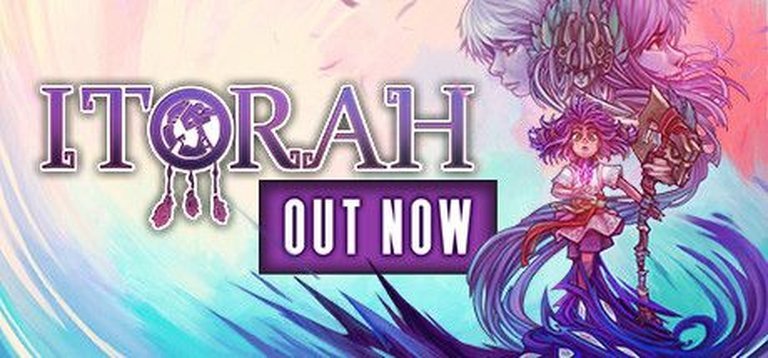
Itorah is a 2D action-platformer with Metroidvania elements, set in a beautifully crafted fantasy world. Players take on the role of a young girl named Itorah, navigating through intricate levels filled with puzzles, enemies, and bosses. The game features side-scrolling gameplay, direct control, and a visually stunning presentation, though it is noted for its relatively straightforward and accessible design, making it suitable for newcomers to the genre.
Gameplay Videos
Where to Buy Itorah
Itorah Free Download
Itorah Cracks & Fixes
Itorah Guides & Walkthroughs
Itorah Reviews & Reception
opencritic.com (80/100): ITORAH is a fantastic Metroidvania and a must buy for those wanting an entry in the genre that tries new things.
metacritic.com (61/100): ITORAH is a fantastic Metroidvania and a must buy for those wanting an entry in the genre that tries new things.
hardcoregamer.com (80/100): ITORAH is a fantastic Metroidvania and a must buy for those wanting an entry in the genre that tries new things.
Itorah Cheats & Codes
PC (Steam) v1.1.0.0
Press F1 at the main menu to activate the trainer. Listen for ‘Trainer Activated’. Press desired hotkey.
| Code | Effect |
|---|---|
| NumPad1 | God Mode |
| NumPad2 | Unlimited Health |
| NumPad3 | Unlimited Stamina |
| NumPad4 | Super Damage |
| NumPad5 | Game Speed |
PC (Steam) v1.0.0.0
Activate the trainer options by checking boxes or setting values from 0 to 1.
| Code | Effect |
|---|---|
| NumPad1 | Invincibility |
| NumPad2 | Infinite Stamina |
| NumPad3 | Infinite Diamonds |
PC (Cheat Engine Table v1.0)
Start Cheat Engine, load the table, and activate the desired scripts.
| Code | Effect |
|---|---|
| Inf Health/Invincible | Immortality |
| Inf Stamina | Unlimited stamina |
| Inf Shards/Gems | Infinite shards/gems |
| Inf DoubleJumps | Endless double jumps |
| Inventory Editor (open inventory) | Inventory editor |
PC (Cheat Engine Table v1.0 by ndck76)
Activate the desired scripts in Cheat Engine.
| Code | Effect |
|---|---|
| One Hit Kill | Instant Kill |
| 1 Billion Crystal Collected | Collect 1 billion crystals |
| Life Points | Edit health attributes |
| Stamina | Edit stamina attributes |
| Heal Charges | Edit medkits |
| Jump Type | Edit jump height |
PC (PLITCH)
Install PLITCH, start the game, and activate the desired cheats.
| Code | Effect |
|---|---|
| Restore Health | Restore Health |
| Refill stamina | Refill stamina |
| Low health | Low health |
| Easy kills | Easy kills |
| Add Shards | Add Shards |
| Reset Shards to 0 | Reset Shards to 0 |
| Godmode: ON | Godmode: ON |
| Godmode: OFF | Godmode: OFF |
| Unlimited Stamina: ON | Unlimited Stamina: ON |
| Unlimited Stamina: OFF | Unlimited Stamina: OFF |
Itorah: A Visual Masterpiece with a Soul of Simplicity
Introduction
In the vast, ever-expanding universe of indie games, Itorah emerges as a breathtaking anomaly—a title that prioritizes aesthetic grandeur and atmospheric immersion over mechanical complexity. Developed by the German indie studio Grimbart Tales and published by Assemble Entertainment, Itorah is a 2.5D action-platformer with light Metroidvania elements, set in the lush, hand-painted world of Nahucan. Released on March 21, 2022, the game invites players into a Mesoamerican-inspired realm where humanity has vanished, leaving only the titular heroine, Itorah, to uncover the mysteries of her past and combat a creeping, ominous plague.
At its core, Itorah is a game of contrasts: its visuals are a vibrant, meticulously crafted tapestry of color and detail, while its gameplay is a streamlined, almost minimalist affair that eschews the punishing difficulty and labyrinthine design of its genre peers. This review will dissect Itorah in its entirety—from its development history and narrative ambitions to its mechanical execution and artistic achievements—ultimately arguing that while the game may not redefine the Metroidvania genre, it carves out a niche as a visually stunning, accessible, and heartfelt homage to the platformers of yesteryear.
Development History & Context
The Birth of Grimbart Tales
Grimbart Tales is a small, independent studio based in Kaiserslautern, Germany, founded in 2018 by creative director Artur Bäcker and managing director Sascha Vogel. The studio’s origins trace back to Bäcker and Vogel’s university days, where they first prototyped the ideas that would eventually blossom into Itorah. Inspired by a shared love for classic platformers like Zelda, Rayman Legends, Secret of Mana, and Donkey Kong Country, as well as the animated films of Studio Ghibli, the duo sought to create a game that would evoke the same sense of wonder and nostalgia they felt as children.
The studio’s mascot and namesake, Grimbart, is a wise, pipe-smoking badger who serves as a fictional overseer of the team’s creative endeavors. According to the developers, Grimbart is an “old vagabond” whose tales and ramblings provide the foundation for their games. This whimsical framing device underscores Grimbart Tales’ commitment to storytelling and world-building, even if Itorah’s narrative ultimately takes a backseat to its visual and mechanical design.
Technological and Creative Challenges
Itorah was developed over four years using the Unity engine, with additional tools like Spine for animation and Photoshop for its hand-drawn assets. The game’s art style is its most defining feature, with every environment, character, and enemy meticulously painted to resemble a living, breathing work of art. Bäcker, who served as the game’s concept artist and art director, described the process as akin to building an amusement park—each area was designed to evoke a specific mood or experience, whether it be the eerie tension of a spider-infested cave or the serene beauty of a sunlit forest.
However, the studio’s ambition was not without its hurdles. One of the most significant challenges was balancing the game’s visual fidelity with its gameplay mechanics. The intricate, highly detailed sprites and backgrounds occasionally clashed with the need for clear, readable hitboxes and enemy telegraphing. Additionally, the team struggled with level design, particularly in ensuring that the game’s platforming sections felt fluid and responsive. As Bäcker noted in an interview with Game World Observer, “Polishing level design while considering all of that was very difficult. It was quite the behemoth to work on!”
The final year of development was particularly grueling, with the team grappling with burnout as they raced to complete the game. Despite these setbacks, Grimbart Tales remained steadfast in their vision, ultimately delivering a title that, while flawed, is undeniably a labor of love.
The Gaming Landscape at Launch
Itorah entered a crowded market dominated by heavyweights like Hollow Knight, Ori and the Blind Forest, and Dead Cells. These games had set a high bar for Metroidvanias, emphasizing tight controls, punishing difficulty, and intricate world design. In contrast, Itorah positioned itself as a more accessible, visually driven experience—a decision that would later divide critics and players alike.
The game’s release in March 2022 was met with modest fanfare. Assemble Entertainment, known for publishing indie titles like Endzone: A World Apart and Leisure Suit Larry: Wet Dreams Dry Twice, promoted Itorah as a “hand-crafted” adventure with a unique Mesoamerican aesthetic. A “Save the World” edition, which included the game’s soundtrack and artbook, was also released, with 10% of proceeds donated to Survival International, a charity supporting indigenous peoples.
Narrative & Thematic Deep Dive
Plot Overview
Itorah begins with its eponymous protagonist awakening on a mysterious altar in the heart of Nahucan, a world teeming with masked beings known as the Nahu. With no memory of her past, Itorah sets out to explore her surroundings, quickly discovering that she is the last human in a land where humanity has seemingly vanished. Her journey is one of discovery, as she uncovers the secrets of Nahucan’s past and the origins of a creeping plague that threatens to consume the world.
Early in her adventure, Itorah encounters Koda, a sentient, talking axe who becomes her companion and primary weapon. Koda, like Itorah, suffers from amnesia, and the two form a bond as they navigate the dangers of Nahucan together. Their relationship is one of the game’s few narrative bright spots, with Koda’s boisterous personality providing a counterpoint to Itorah’s stoic demeanor.
As the duo travels through Nahucan’s diverse biomes—from lush forests to storm-lashed cliffs—they encounter a cast of eccentric characters, each with their own quirks and motivations. These interactions are brief but often charming, though the game’s lack of voice acting (outside of occasional grunts and exclamations) can make the dialogue feel hollow.
Themes and Symbolism
Itorah’s narrative is light on exposition, instead relying on environmental storytelling and visual cues to convey its themes. The game’s central premise—the disappearance of humanity and the encroachment of a mysterious plague—evokes themes of loss, survival, and the cyclical nature of civilization. The masked Nahu, with their exaggerated facial features, serve as a visual metaphor for the duality of nature: some are benevolent, while others are hostile, reflecting the unpredictability of the world Itorah inhabits.
The plague itself is a recurring motif, symbolizing both decay and renewal. As Itorah progresses, she learns that the plague is not merely a force of destruction but a natural part of Nahucan’s ecosystem—a concept that challenges her initial perception of it as an unmitigated evil. This ambiguity is one of the game’s most compelling narrative elements, though it is unfortunately underdeveloped.
Characterizations and Dialogue
Itorah herself is a silent protagonist, with her emotions conveyed primarily through animation and facial expressions. While this approach allows players to project their own interpretations onto her, it also limits her depth as a character. Koda, on the other hand, is a more vibrant presence, though his dialogue can occasionally veer into repetitive territory.
The game’s supporting cast is similarly underutilized. Many characters serve as little more than quest-givers or vendors, with their personalities reduced to a handful of quirky traits. The lack of voice acting further exacerbates this issue, as the small, cramped text boxes (a common complaint among players) make it difficult to engage with the dialogue.
Storytelling Strengths and Weaknesses
Itorah’s narrative is at its best when it embraces ambiguity and environmental storytelling. The world of Nahucan is rich with lore, much of which is conveyed through ruins, murals, and environmental details. However, the game’s reluctance to delve deeper into its mythos leaves many questions unanswered, which may frustrate players seeking a more cohesive narrative.
The game’s pacing also suffers from its linear structure. While Itorah incorporates Metroidvania elements—such as ability-gated areas and backtracking—its world is ultimately more straightforward than those of its genre peers. This linearity, combined with the game’s short runtime (approximately 6-8 hours), can make the experience feel rushed, particularly in its latter half.
Gameplay Mechanics & Systems
Core Gameplay Loop
Itorah is, at its heart, a platformer with light combat and exploration elements. The game’s core loop revolves around traversing Nahucan’s diverse biomes, battling enemies, solving simple puzzles, and acquiring new abilities that grant access to previously inaccessible areas. While this structure is familiar to fans of the Metroidvania genre, Itorah distinguishes itself through its emphasis on fluid movement and visual spectacle.
The game’s controls are straightforward, with Itorah’s primary weapon, Koda, mapped to a single attack button. Directional inputs allow for slight variations in combat, such as overhead slashes or ground spikes, but the system is intentionally simple, catering to players who may be new to the genre. This accessibility is both a strength and a weakness: while it makes Itorah easy to pick up and play, it also limits the depth of its combat.
Combat and Enemy Design
Combat in Itorah is fast-paced but shallow. Enemies are typically dispatched with a few quick combos, and most foes follow predictable attack patterns. The game’s lack of a dedicated dodge mechanic is particularly noteworthy; while Itorah can duck and jump to avoid attacks, the absence of a traditional dodge roll or dash makes combat feel less dynamic than it could be.
Boss battles are the exception to this rule. These encounters are the game’s highlight, featuring screen-filling adversaries with multi-phase attack patterns. While none of the bosses reach the complexity of those in Hollow Knight or Blasphemous, they are nonetheless engaging, with each battle culminating in a satisfying, animated death sequence.
Platforming and Traversal
Platforming is where Itorah truly shines. The game’s movement mechanics are fluid and responsive, with Itorah’s animations selling every jump, dash, and wall-cling with a sense of weight and precision. As players progress, they unlock new abilities—such as a double jump, air dash, and ground spike—that expand their traversal options and allow for creative navigation of Nahucan’s environments.
The game’s level design is a mixed bag. While some sections are brilliantly crafted, with platforming challenges that reward precision and timing, others feel overly simplistic or padded with unnecessary backtracking. The lack of a map system (a curious omission for a Metroidvania) can also make navigation frustrating, particularly in the game’s later stages.
Progression and Upgrades
Itorah features a straightforward progression system. Defeating enemies yields currency, which can be spent at hub areas to upgrade Itorah’s health, stamina, and regeneration. These upgrades are essential for tackling the game’s later challenges, though their implementation is somewhat uninspired. The lack of meaningful gear or weapon upgrades means that combat remains largely unchanged throughout the experience.
The game’s Metroidvania elements are similarly underwhelming. While players will occasionally backtrack to unlock new areas, the world design is ultimately too linear to encourage meaningful exploration. This linearity, combined with the game’s short length, can make Itorah feel more like a traditional platformer than a true Metroidvania.
User Interface and Accessibility
Itorah’s UI is minimalist, with health and stamina bars displayed unobtrusively at the edge of the screen. The game’s lack of a map or fast-travel system is a notable omission, particularly given its Metroidvania aspirations. Additionally, the small text boxes and lack of voice acting can make dialogue difficult to engage with, though this is a minor complaint in the grand scheme of things.
The game supports both keyboard/mouse and gamepad controls, with full button remapping available. While the controls are generally responsive, some players have reported issues with mid-air movement, particularly when using a joystick.
World-Building, Art & Sound
The World of Nahucan
Nahucan is Itorah’s greatest achievement—a sprawling, hand-painted world that draws inspiration from Mesoamerican landscapes and mythology. Each biome is distinct, from the verdant forests of Aracan to the storm-lashed cliffs of the later stages. The game’s art style is a blend of high-definition character models and lush, detailed backgrounds, creating a sense of depth and immersion that is rare in 2D platformers.
The world’s design is heavily influenced by the studio’s love for Studio Ghibli films, with a particular emphasis on natural beauty and environmental storytelling. Ruins, murals, and environmental details hint at Nahucan’s rich history, though the game’s narrative does little to elaborate on these elements.
Visual Design and Animation
Itorah’s visuals are its defining feature. The game’s art style is reminiscent of a living painting, with every sprite and background meticulously crafted to evoke a sense of wonder. Character animations are particularly impressive, with Itorah’s facial expressions and body language conveying a range of emotions without the need for dialogue.
The game’s use of color is equally striking. Bright, vibrant hues dominate the early stages, while later areas adopt a darker, more muted palette. This shift in tone is reflected in the game’s soundtrack, which transitions from melodic, upbeat tracks to more somber, atmospheric compositions.
Sound Design and Music
Itorah’s soundtrack is a blend of melodic and intense, with sharp sound design that complements the game’s visuals. Nature sounds—such as rustling leaves, echoing caves, and howling winds—are integrated into the audio design, creating a sense of immersion that is rare in 2D platformers.
The game’s music is composed by an in-house team, with tracks that range from upbeat, adventurous themes to more somber, reflective pieces. While the soundtrack is not as memorable as those of genre heavyweights like Hollow Knight or Ori and the Blind Forest, it is nonetheless effective in enhancing the game’s atmosphere.
Reception & Legacy
Critical Reception
Itorah received mixed reviews upon release, with critics praising its visuals and atmosphere while criticizing its simplistic gameplay and lack of challenge. On Metacritic, the game holds a score of 61/100 based on seven critic reviews, with a user score of 7.0/10.
Positive reviews highlighted the game’s art style, fluid animations, and charming world design. Hardcore Gamer’s Jeremy Peeples called Itorah “a fantastic Metroidvania and a must-buy for those wanting an entry in the genre that tries new things,” praising its “lush art style” and “forgiving” gameplay. Similarly, Noisy Pixel described the game as “endearingly crafted with clear love that permeates from its breathtaking presentation.”
Negative reviews, on the other hand, criticized the game’s lack of depth and innovation. GameGrin’s Artura Dawn called Itorah “a visual treat in search of better gameplay,” while Cubed3’s Athanasios Aravositas described it as “boring,” with “clunky” controls and a “frame rate [that] will make you nauseous.”
Commercial Performance and Player Feedback
Itorah’s commercial performance was modest, with the game selling at a discounted price of $1.99 on platforms like Steam and GOG within months of its release. Player feedback was similarly mixed, with many praising the game’s visuals while criticizing its short length and lack of challenge.
On Steam, Itorah holds a “Mostly Positive” rating based on 866 reviews, with a Steambase Player Score of 74/100. Common complaints include the game’s linear structure, simplistic combat, and lack of voice acting. However, many players also praised its art style, fluid platforming, and charming world design.
Influence and Legacy
Itorah’s legacy is likely to be that of a visually stunning but mechanically simplistic platformer. While it does not innovate within the Metroidvania genre, it serves as a testament to the power of hand-crafted art and atmospheric design. The game’s unique Mesoamerican aesthetic and fluid animations have drawn comparisons to titles like Ori and the Blind Forest and Afterimage, though it ultimately lacks the depth and polish of these contemporaries.
For Grimbart Tales, Itorah represents a promising debut, albeit one that highlights the challenges of balancing visual ambition with mechanical depth. The studio’s future projects will likely build on the lessons learned from Itorah, particularly in terms of level design and combat systems.
Conclusion
Itorah is a game of contradictions—a visual masterpiece with a soul of simplicity, a Metroidvania that eschews complexity in favor of accessibility, and a narrative-driven adventure that ultimately prioritizes atmosphere over exposition. Its strengths lie in its breathtaking art style, fluid animations, and charming world design, all of which combine to create an experience that is as immersive as it is beautiful.
However, Itorah’s simplistic combat, linear structure, and lack of meaningful progression hold it back from greatness. While it may not appeal to hardcore Metroidvania fans seeking punishing difficulty and intricate world design, it serves as an excellent entry point for players new to the genre or those seeking a more relaxed, visually driven experience.
In the pantheon of indie platformers, Itorah is unlikely to be remembered as a classic. Yet, its unique aesthetic and heartfelt design ensure that it will remain a cult favorite—a game that, despite its flaws, is undeniably a labor of love. For those willing to overlook its mechanical shortcomings, Itorah offers a journey that is as beautiful as it is brief, a testament to the power of art and atmosphere in video games.
Final Verdict: 7.5/10 – A visually stunning, if mechanically simplistic, platformer that prioritizes beauty and accessibility over depth and challenge.