
- Release Year: 2011
- Platforms: Macintosh, Windows
- Publisher: ak tronic Software & Services GmbH, Playrix LLC
- Developer: Stella Games
- Genre: Adventure
- Perspective: 1st-person
- Game Mode: Single-player
- Gameplay: Hidden object, Puzzle elements
- Setting: Fantasy
- Average Score: 86/100
Description
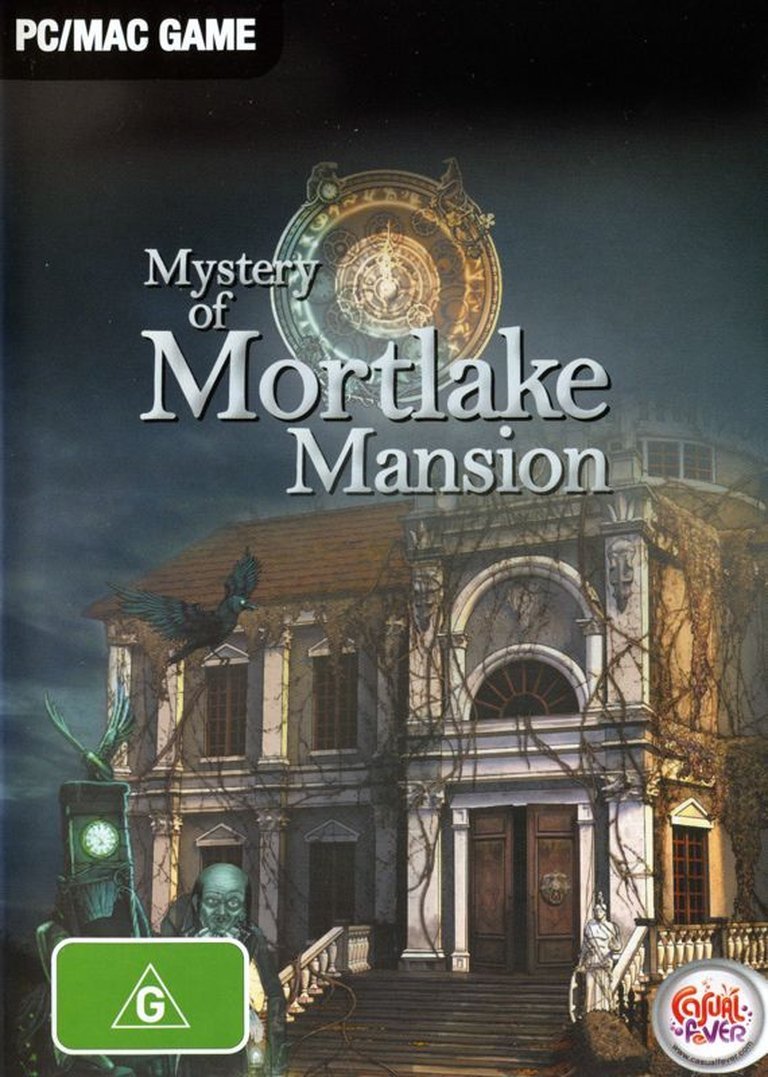
Mystery of Mortlake Mansion is a dark, alchemy-themed adventure game set in a Victorian-style mansion filled with eerie rooms and supernatural encounters. The player, drawn to the estate by a cryptic letter signed only as ‘R,’ must solve puzzles, uncover hidden objects, and interact with mysterious figures like a talking raven and a dark magician to unravel the mansion’s secrets. With two difficulty levels, the game blends hidden object challenges, tile-matching puzzles, and atmospheric exploration, all rendered in oil-painted visuals, as the player pieces together the mansion’s connection to their own fate.
Gameplay Videos
Where to Buy Mystery of Mortlake Mansion
PC
Mystery of Mortlake Mansion Free Download
Mystery of Mortlake Mansion Cracks & Fixes
Mystery of Mortlake Mansion Guides & Walkthroughs
Mystery of Mortlake Mansion Reviews & Reception
steambase.io (88/100): A triumphant return to form for the series.
store.steampowered.com (85/100): A hidden object adventure game with a deep and interesting story.
lillycorner.com : A very enjoyable experience from top to bottom.
mobygames.com : A mystery adventure game with a dark alchemical and magical atmosphere.
Mystery of Mortlake Mansion: A Masterclass in Hidden Object Storytelling
Introduction
Few games in the hidden object genre have left as indelible a mark as Mystery of Mortlake Mansion. Released in 2011 by Stella Games and published by Playrix, this atmospheric adventure weaves a tapestry of gothic intrigue, alchemical mystery, and psychological depth that transcends its casual game roots. At its core, Mortlake Mansion is a love letter to Victorian occultism, wrapped in a puzzle-solving experience that feels both nostalgic and innovative. This review will dissect why, over a decade later, the game remains a benchmark for narrative-driven hidden object adventures.
Development History & Context
Stella Games, a Ukrainian studio, emerged during a period when Eastern European developers were carving a niche in the casual gaming market. The early 2010s saw a boom in hidden object games, but Mortlake Mansion stood out by refusing to be just another “find the teapot” simulator. The team, led by director Artem Kononov and lead designer Oskar Nezhelsky, drew inspiration from classic gothic literature and the works of historical occult figures like Alessandro Cagliostro—the game’s primary antagonist.
Technologically, the game was constrained by the limitations of early 2010s casual gaming. Yet, these constraints birthed creativity. The hand-painted, oil-on-canvas aesthetic wasn’t just a stylistic choice—it was a necessity to mask low-polygon models while creating an immersive atmosphere. The result was a visual style that felt like stepping into a Victorian-era grimoire, with each room of Mortlake Mansion rendered in rich, textured brushstrokes.
The gaming landscape at the time was dominated by titles like Mystery Case Files and Dark Parables, but Mortlake Mansion differentiated itself through its dual-world mechanic. The “shadowy dimension” wasn’t just a gimmick—it was a narrative device that allowed the developers to explore themes of duality and moral ambiguity, setting a new standard for environmental storytelling in the genre.
Narrative & Thematic Deep Dive
The plot begins with a letter—sent in 1963 but received decades later—from a man known only as “R.” This temporal disconnect immediately establishes the game’s central theme: the inescapable weight of the past. The protagonist (whose gender is customizable, a rarity in 2011) arrives at Mortlake Mansion, only to be trapped within its walls, mirroring the fate of R. himself.
As the story unfolds through diary entries, environmental clues, and interactions with supernatural entities, the narrative reveals itself to be a tragic tale of obsession. R., once a scholar of the occult, became entangled in the mansion’s dark magic, ultimately transferring his consciousness into a raven to survive. The mansion itself is revealed to be a living entity, a “heart of the house” that feeds on the vitality of those who enter—a metaphor for the destructive nature of unchecked ambition.
The game’s themes are multilayered:
– The Cost of Knowledge: R.’s pursuit of Cagliostro’s secrets leads to his downfall, echoing Faustian bargains.
– Duality: The contrast between the mansion’s physical and shadowy dimensions reflects the dual nature of magic—both enlightening and corrupting.
– Legacy: The protagonist’s discovery that they are Cagliostro’s descendant forces them to confront inherited sin and the possibility of redemption.
The dialogue, while occasionally hampered by stiff voice acting (a common critique), is elevated by the game’s environmental storytelling. Each room in Mortlake Mansion feels like a chapter in a forgotten history book, with objects and architecture hinting at the lives—and deaths—of those who came before.
Gameplay Mechanics & Systems
Mortlake Mansion excels in its core gameplay loop, which revolves around three pillars: hidden object scenes, puzzle-solving, and inventory management.
Hidden Object Scenes
The game’s hidden object segments are meticulously designed. Unlike many contemporaries that relied on cluttered, nonsensical scenes, Mortlake Mansion grounds its searches in logical contexts. A library scene, for example, might task players with finding items related to alchemy, reinforcing the narrative’s themes. The “dizzy” penalty for random clicking—a feature that punishes players for spamming clicks—was a bold design choice that encouraged thoughtful engagement.
Puzzle Variety
The puzzles are where the game truly shines. From the classic Towers of Hanoi variant in the nursery to the rune-matching challenges in the shadowy hall, each puzzle feels purpose-built for its environment. The tile-matching games, in particular, are integrated seamlessly into the alchemical crafting system, where players must match ingredients to create keys.
Inventory and Progression
The inventory system is intuitive, with items combining logically (e.g., using a crowbar to pry open a locked door). The amulet, which provides hints, is a clever mechanic that prevents frustration without breaking immersion—its cooldown timer ensures players can’t rely on it excessively.
One of the game’s most innovative features is its dual-world progression. The “shadowy dimension” isn’t just a reskin of the mansion; it’s a parallel space with its own physics and challenges. Solving puzzles in one dimension often unlocks progress in the other, creating a satisfying feedback loop.
World-Building, Art & Sound
The mansion itself is the game’s greatest achievement. Each room tells a story:
– The library, with its towering bookshelves and alchemical apparatus, speaks to R.’s scholarly pursuits.
– The observatory, filled with celestial globes and telescopes, hints at his attempts to divine the future.
– The shadowy nursery, with its broken toys and eerie lullabies, suggests a childhood lost to dark magic.
The art direction is a masterclass in mood-setting. The Victorian oil-painting aesthetic isn’t just decorative—it’s functional. The thick brushstrokes and muted palette create a sense of age and decay, while the shadowy dimension’s glowing green hues evoke the uncanny. The contrast between the two worlds is striking: the physical mansion is warm and brown, while its shadowy counterpart is cold and blue, reinforcing the game’s themes of duality.
The sound design is equally immersive. Aleksey Milekhin’s score blends haunting piano melodies with eerie ambient tracks, creating an atmosphere that oscillates between melancholy and dread. The voice acting, while occasionally criticized for its English delivery, is redeemed by the raven’s performance—a raspy, world-weary tone that perfectly captures R.’s tragic arc.
Reception & Legacy
Upon release, Mortlake Mansion received overwhelmingly positive reviews. Critics praised its story, atmosphere, and puzzle design, though some noted minor technical issues and the occasional voice acting misstep. The game’s Steam re-release in 2022 introduced it to a new audience, where it maintains a “Very Positive” rating based on 92 reviews.
Its influence is evident in later titles like Dark Parables and Mystery Trackers, which adopted similar dual-world mechanics and narrative depth. The game’s legacy is also preserved through its inclusion in bundles and its continued availability on platforms like Steam and the Microsoft Store.
Conclusion
Mystery of Mortlake Mansion is more than a hidden object game—it’s a gothic fable about the dangers of obsession and the redemptive power of knowledge. Its strengths lie in its atmospheric world-building, innovative dual-dimension gameplay, and a narrative that respects the player’s intelligence. While its voice acting and occasional technical quirks show its age, the core experience remains as compelling today as it was in 2011.
Final Verdict: A landmark title in the hidden object genre, Mortlake Mansion deserves a place in the pantheon of great adventure games. Its blend of storytelling, puzzle design, and artistic vision sets a standard that few have matched. For fans of gothic horror, alchemical mystery, or simply well-crafted puzzles, this is an essential experience.
Score: 9/10 – A masterpiece of its genre, with only minor flaws holding it back from perfection.