
- Release Year: 2020
- Platforms: Macintosh, Windows
- Publisher: Black Tower Entertainment
- Developer: Code Heretic LLC
- Genre: Strategy, Tactics
- Perspective: Diagonal-down
- Game Mode: Single-player
- Gameplay: Deck Building, Roguelike, RPG elements, Turn-based
- Setting: Fantasy, Futuristic, Post-apocalyptic, Sci-fi
- Average Score: 40/100
Description
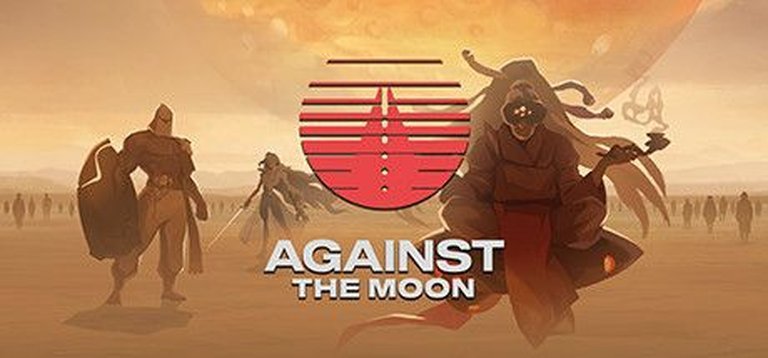
Against the Moon is a turn-based strategy game with RPG and roguelike elements, set in a post-apocalyptic fantasy world. Players engage in lane-based combat, utilizing deck-building mechanics to overcome challenging encounters, though some battles may feel unbalanced due to luck-based draws. The game features a short story mode and a focus on strategic decision-making, with a unique blend of sci-fi and fantasy themes.
Gameplay Videos
Where to Buy Against the Moon
PC
Against the Moon Mods
Against the Moon Guides & Walkthroughs
Against the Moon Reviews & Reception
opencritic.com (30/100): Against the Moon is full of befuddling design and a shocking lack of content that makes it hard to recommend when so many better versions of this concept already exist.
metacritic.com (50/100): Against the Moon should be exactly what I’m looking for in a game. It’s got some deckbuilding, some tactical combat, and a cool setting. Unfortunately, none of it fits together as well as it could, and it feels incredibly short.
geekyhobbies.com : Against the Moon is a fun and challenging digital card game that while not perfect is a game that fans of the genre should enjoy.
gameshedge.com : Against the Moon is a decent card-battler that requires some balancing.
thirdcoastreview.com : Against the Moon fails to grab. It suffers in terms of variety, and that limits experimentation.
Against the Moon Cheats & Codes
PC (Cheat Engine Table v2.0)
Use Cheat Engine to activate the following features.
| Code | Effect |
|---|---|
| Unlimited Research Points | Grants infinite research points. |
| Unlimited Luma | Grants infinite Luma. |
| Unlimited Energy | Grants infinite energy. |
| Unlimited Arx HP | Grants infinite Arx HP. |
| 7 Cards Draw Per Turn | Draws 7 cards per turn (activate by ending turn once). |
| Force Pause | Toggles pause (Pause Break). |
| Speedhack | Adjusts game speed (Ctrl+/Ctrl-). |
PC (Cheat Engine Table [158])
Use Cheat Engine to activate the following features.
| Code | Effect |
|---|---|
| Unlimited Research Points | Grants infinite research points. |
| Unlimited Luma | Grants infinite Luma. |
| Unlimited Energy | Grants infinite energy. |
| Unlimited Arx HP | Grants infinite Arx HP. |
| 7 Cards Draw Per Turn | Draws 7 cards per turn (activate by ending turn once). |
PC (Cheat Engine Table [d83 09/08/2020])
Use Cheat Engine to activate the following features.
| Code | Effect |
|---|---|
| Unlimited Research Points | Grants infinite research points. |
| Unlimited Luma | Grants infinite Luma. |
| Unlimited Energy | Grants infinite energy. |
| Unlimited Arx HP | Grants infinite Arx HP. |
| 7 Cards Draw Per Turn | Draws 7 cards per turn (activate by ending turn once). |
Against the Moon: A Flawed but Fascinating Fusion of Deckbuilding and Strategy
Introduction: A Moonlit Gambit
Against the Moon (2020) is a game that dares to ask: What if Slay the Spire met XCOM in a post-apocalyptic wasteland? Developed by Code Heretic and published by Black Tower Entertainment, this turn-based strategy deckbuilder carves a niche in the oversaturated roguelike card-battler genre. It’s a game of contradictions—ambitious yet unfinished, innovative yet derivative, visually striking yet narratively opaque. At its core, Against the Moon is a tactical duel between humanity’s last hope, the Ultori, and the monstrous Furos, creatures birthed from human hubris and now controlled by a malevolent lunar entity.
The game’s premise is undeniably compelling: humanity clings to survival in the sentient city of Arx, a bastion of civilization in a world overrun by bio-mechanical horrors. Players assume the role of a commander leading squads of Ultori—superhuman warriors—through a series of turn-based battles, deckbuilding, and resource management. The fusion of lane-based combat, deckbuilding, and roguelike progression is where Against the Moon shines, but its execution is uneven, leaving it stranded between brilliance and mediocrity.
This review will dissect Against the Moon in exhaustive detail, exploring its development, narrative, gameplay, aesthetics, reception, and legacy. By the end, we’ll determine whether it’s a hidden gem or a cautionary tale of ambition outpacing polish.
Development History & Context: The Birth of a Hybrid
The Studio and Vision
Code Heretic, a relatively unknown indie studio, emerged with Against the Moon as their debut title. The team, led by Ilya Antipin, Egor Myasnikov, and Nikita Konochkin, sought to blend the strategic depth of turn-based tactics with the addictive progression of deckbuilders. Their vision was clear: create a game that appealed to fans of Slay the Spire, Hand of Fate, and Talisman, while introducing fresh mechanics like lane-based combat and a branching narrative.
The game’s development was not without challenges. The studio’s inexperience shows in certain design choices, particularly in the game’s balance and UI. However, their ambition is evident in the sheer volume of systems they attempted to integrate: a deep card upgrade system, multiple game modes, and a post-apocalyptic narrative with sci-fi and fantasy undertones.
Technological Constraints and Era
Released in September 2020, Against the Moon entered a market already dominated by established deckbuilders. Games like Slay the Spire (2019) and Monster Train (2020) had set high standards for the genre, making it difficult for newcomers to stand out. The Unity engine, while versatile, was pushed to its limits to accommodate the game’s intricate animations and particle effects, resulting in occasional performance hiccups.
The gaming landscape of 2020 was also shaped by the COVID-19 pandemic, which saw a surge in indie game releases as developers worked remotely. Against the Moon benefited from this boom, but it also faced stiff competition from other titles vying for attention in an increasingly crowded space.
Influences and Inspirations
The game wears its influences on its sleeve. The lane-based combat is reminiscent of Plants vs. Zombies, while the deckbuilding mechanics draw heavily from Slay the Spire. The post-apocalyptic setting and superhuman warriors evoke XCOM and Darkest Dungeon, and the branching narrative paths are akin to Hand of Fate. Despite these borrowings, Against the Moon attempts to carve its own identity through its unique card evolution system and the dual-currency resource management (Luma for units, Energy for hero abilities).
Narrative & Thematic Deep Dive: A Story Shrouded in Moonlight
Plot Overview
Against the Moon is set in a dystopian future where humanity’s arrogance has led to its near-extinction. The Furos, grotesque creatures created through forbidden experiments, now serve the Moon, a sentient entity that seeks to eradicate the last remnants of human civilization. The survivors have retreated to Arx, a sentient city that acts as both a sanctuary and a character in its own right.
Players take on the role of a commander leading the Ultori, a group of genetically enhanced warriors, in a desperate bid to reclaim Earth. The narrative unfolds through a series of missions, each with branching paths that offer different rewards and challenges. The story is delivered via text-heavy cutscenes and in-game dialogue, which, while atmospheric, often suffers from overly cryptic language and a lack of clarity.
Characters and Dialogue
The Ultori are the game’s primary characters, each with distinct personalities and abilities. However, their development is minimal, with most of their backstories relegated to brief snippets of dialogue. The voice acting, while serviceable, is uneven, with some lines delivered with melodramatic flair that undermines the game’s otherwise grim tone.
The game’s antagonist, the Moon, is an intriguing concept—a cosmic entity that manipulates the Furos to achieve its goals. However, its motivations remain vague, and its presence is felt more through the creatures it controls than through direct interaction.
Themes: Hubris, Survival, and Sacrifice
Against the Moon explores themes of human hubris, the consequences of unchecked scientific experimentation, and the struggle for survival in a hostile world. The Furos are a literal manifestation of humanity’s sins, creatures born from the same arrogance that led to the downfall of civilization. The Ultori, meanwhile, represent humanity’s last hope, but their superhuman abilities come at a cost—both physically and morally.
The game also delves into the idea of sacrifice. Many missions require players to make tough choices, such as abandoning allies or risking their own units to achieve victory. These moments are where the narrative shines, offering glimpses of the moral complexity that could have been further explored.
Narrative Weaknesses
The game’s biggest narrative flaw is its reliance on esoteric terminology and convoluted lore. Terms like “Furos,” “Ultori,” and “Arx” are thrown at the player with little explanation, making the story difficult to follow. The lack of a proper tutorial or lore compendium exacerbates this issue, leaving players to piece together the world’s history through fragmented dialogue.
Additionally, the story’s pacing is uneven. The prologue is voiced and relatively engaging, but subsequent missions rely on text-only delivery, which can feel disjointed. The absence of a strong central villain or clear narrative arc further weakens the game’s storytelling.
Gameplay Mechanics & Systems: A Deckbuilder’s Dilemma
Core Gameplay Loop
Against the Moon is, at its heart, a turn-based strategy game with deckbuilding elements. Players engage in battles across a grid divided into three lanes, each with four slots. The goal is to defeat the enemy leader by reducing their health to zero, while protecting your own leader from taking fatal damage.
Each turn, players are granted a set amount of Luma, the game’s primary resource, which is used to summon units (Minions) and cast spells (Magicas). Units attack automatically at the end of each turn, dealing damage to opposing units in their lane. If a lane is left undefended, the enemy’s attacks will carry over to the player’s leader.
Deckbuilding and Card Evolution
The game’s deckbuilding system is one of its strongest features. Players start with a basic deck of Minions and Magicas, which can be upgraded and evolved as they progress. Each card can be upgraded along two different paths, allowing for a high degree of customization. For example, a basic soldier might evolve into either a tanky defender or a high-damage attacker, depending on the player’s needs.
This dual-path upgrade system is a standout feature, offering meaningful choices that impact gameplay. However, the game’s limited initial card pool restricts early-game experimentation, making the first few hours feel repetitive.
Heroes and Ultori
The Ultori are the game’s hero units, each with unique abilities and ultimate attacks. Players can field up to three Ultori in battle, and their abilities can turn the tide of a fight. For instance, one Ultori might specialize in healing, while another excels at dealing area-of-effect damage.
The heroes are well-balanced, but their abilities are often underutilized due to the game’s steep Energy costs. This can make them feel underpowered in the early game, where Luma is scarce and every resource must be carefully managed.
Game Modes
Against the Moon offers three primary game modes:
1. Story Mode: A linear campaign with branching paths and unique missions.
2. Luma Run: A roguelike mode with procedurally generated maps and randomized encounters.
3. Monster Hunt: A boss-rush mode where players face off against increasingly powerful enemies.
The Story Mode is the most fleshed-out, with each mission offering unique challenges and rewards. However, only two of the six planned missions were available at launch, leaving the mode feeling incomplete. Luma Run, while fun, suffers from repetitive encounters and a lack of variety in enemy types.
Combat and Strategy
Combat in Against the Moon is a mix of positioning, resource management, and deck synergy. Players must carefully balance offense and defense, ensuring that their lanes are adequately protected while also pressuring the enemy leader.
The game’s difficulty is uneven. Some battles are trivial, while others feel unfairly punishing, particularly when the enemy employs overpowered units or abilities. The lack of a proper difficulty curve makes progression feel inconsistent, with players either steamrolling enemies or being overwhelmed by them.
UI and UX Issues
The game’s user interface is one of its biggest weaknesses. Key information, such as unit stats and ability descriptions, is often buried in menus or displayed in unclear ways. The game’s reliance on abstract symbols (e.g., circles for health, shields for attack) can be confusing, and the lack of tooltips exacerbates this issue.
The deckbuilding screen is particularly cumbersome, with cards arranged in a way that makes it difficult to compare upgrades or plan strategies. These UX flaws make the game feel less accessible than it should be, particularly for newcomers to the genre.
World-Building, Art & Sound: A Bleak Beauty
Setting and Atmosphere
Against the Moon’s post-apocalyptic world is one of its strongest assets. The game’s setting—a Earth ravaged by bio-mechanical horrors and ruled by a malevolent Moon—is rich with potential. The city of Arx, a sentient fortress that acts as both a character and a base of operations, is a particularly compelling concept.
The game’s art style is a mix of dark fantasy and sci-fi, with detailed character designs and eerie creature models. The Furos, in particular, are a highlight, with their grotesque, Lovecraftian aesthetics. The game’s environments, while limited in variety, are atmospheric, with ruined cities and lunar landscapes that reinforce the game’s themes of decay and desperation.
Visual Design
The game’s visuals are a mixed bag. The character sprites and animations are well-crafted, with fluid movements and expressive designs. However, the game’s UI is cluttered and unintuitive, with important information often obscured or difficult to parse.
The game’s use of color is effective, with a muted palette that emphasizes the bleakness of the setting. The Furos’ designs are particularly striking, with their biomechanical forms and unsettling features. However, the game’s environments lack variety, with many battles taking place in similar-looking ruins or lunar landscapes.
Sound Design and Music
The game’s soundtrack is one of its standout features. The score is a mix of brooding, atmospheric tracks and intense battle themes, with a sound that blends organic and synthetic elements. The music effectively reinforces the game’s themes of horror and desperation, with tracks that evoke both the grandeur of Arx and the terror of the Furos.
The sound design is less impressive. The game’s voice acting is uneven, with some lines delivered with melodramatic flair that undermines the game’s tone. The lack of voice acting in later missions is also a missed opportunity, as the text-only delivery can feel disjointed.
Reception & Legacy: A Game Caught Between Potential and Execution
Critical Reception
Against the Moon received mixed reviews upon release, with critics praising its innovative mechanics but criticizing its lack of polish and content. The game’s Metacritic score is not available due to insufficient reviews, but the few critiques that exist highlight its strengths and weaknesses.
- NoobFeed (70/100): Praised the game’s challenging deckbuilding but noted its lack of content and frustrating encounters.
- The Indie Game Website (50/100): Criticized the game’s balance issues and short length, but expressed hope for future updates.
- GameStar (Germany): Commended the game’s strategic depth but noted its rudimentary animations and lack of visual polish.
Player reception was similarly mixed, with many praising the game’s core mechanics but criticizing its balance and UI issues.
Commercial Performance
The game’s commercial performance is difficult to gauge, but its presence on platforms like Steam and GOG suggests a modest but dedicated fanbase. The game’s price point ($19.99) and lack of multiplayer may have limited its appeal, but its unique blend of genres has earned it a niche following.
Post-Launch Support and Updates
Code Heretic has continued to support Against the Moon post-launch, with updates adding new content and addressing balance issues. The game’s Halloween event, which introduced new enemies and puzzle-like battles, was a highlight, offering a glimpse of the game’s potential.
However, the game’s slow pace of updates and lack of a clear roadmap have left some players frustrated. The absence of additional story missions and heroes, despite promises of future content, has further dampened enthusiasm.
Legacy and Influence
Against the Moon’s legacy is that of a flawed but ambitious experiment. It attempted to blend multiple genres in a way that few games have, and while it didn’t always succeed, its innovations—particularly its card evolution system—have left a mark on the deckbuilding genre.
The game’s influence can be seen in later titles that have adopted similar mechanics, such as Monster Train’s lane-based combat and Griftlands’ narrative-driven deckbuilding. However, Against the Moon’s lack of polish and content has prevented it from achieving the same level of acclaim as its inspirations.
Conclusion: A Moonlit Promise, Partially Fulfilled
Against the Moon is a game of contradictions—a bold experiment that stumbles in its execution. Its fusion of deckbuilding, turn-based strategy, and post-apocalyptic storytelling is ambitious, but its lack of polish, uneven balance, and cryptic narrative hold it back from greatness.
Strengths:
– Innovative card evolution system with meaningful choices.
– Atmospheric world-building and striking visual design.
– Strategic depth in combat and deckbuilding.
Weaknesses:
– Cryptic narrative and esoteric terminology.
– Uneven balance and frustrating difficulty spikes.
– Cluttered UI and lack of accessibility.
Final Verdict:
Against the Moon is a game that will appeal to fans of deckbuilders and turn-based strategy, but its rough edges and lack of content make it difficult to recommend wholeheartedly. It’s a title with immense potential, but one that feels incomplete—a moonlit promise that was only partially fulfilled.
Score: 6.5/10 – A Flawed Gem Worth Polishing
For those willing to overlook its flaws, Against the Moon offers a unique and challenging experience. But for the broader audience, it remains a cautionary tale of ambition outpacing execution—a game that could have been great, but ultimately falls short of its lofty goals.