
- Release Year: 2014
- Platforms: Linux, Macintosh, Nintendo Switch, PlayStation 4, Windows, Xbox One
- Publisher: Elefantopia, Grip Digital, s.r.o.
- Developer: Elefantopia
- Genre: Strategy, Tactics
- Perspective: Diagonal-down
- Game Mode: Single-player
- Gameplay: Tower defense
- Setting: Futuristic, Sci-fi
- Average Score: 65/100
Description
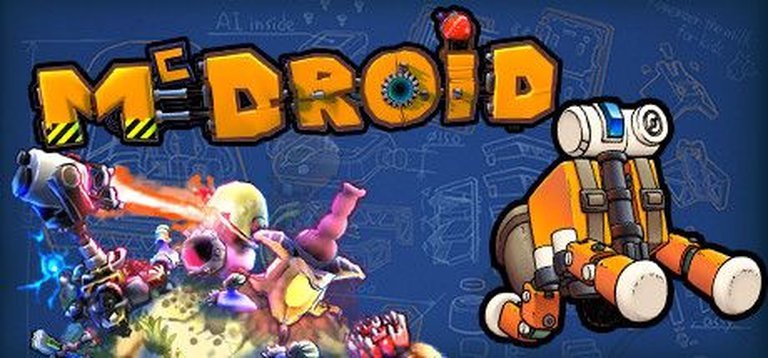
McDroid is a tower defense game set in a sci-fi world where players control a robot named McDroid, who returns to his home planet, Planet M, only to find it overrun by giant insect enemies. The game features cel-shaded graphics and a mix of real-time strategy and direct control, as players must strategically place defensive emplacements to fend off waves of invaders while navigating the planet’s chaotic environment. Developed by Elefantopia, the game offers a unique twist on the tower defense genre with its engaging storyline and challenging gameplay.
Where to Buy McDroid
PC
McDroid Patches & Updates
McDroid Guides & Walkthroughs
McDroid Reviews & Reception
metacritic.com (57/100): McDroid is a game with plenty of charisma and sweet ideas. It takes a tired genre and throws it together with elements from elsewhere to create an engaging and charming hybrid.
thevideogamebacklog.com : McDROID is one of the two most imaginative tower defense games I’ve played in a long time. It’s a timeless story about you (a puppy-like robot named McDROID) and your friend SHUTTLE crash-landing on the dying Planet M.
gamewatcher.com : McDROID manages to do that by stripping back the autonomy and keeping you on your toes throughout each mission, as you attempt to juggle a multitude of tasks (building, repairing, planting, harvesting, upgrading and shooting) to overcome your assailants.
store.steampowered.com : McDroid is the most boisterous and unique tower-defense title to ever miss your video game radar.
steambase.io (73/100): McDROID has earned a Player Score of 73 / 100. This score is calculated from 215 total reviews which give it a rating of Mostly Positive.
McDroid: A Tower Defense Game That Defies Convention
Introduction
In the crowded landscape of tower defense games, McDroid stands out as a unique and imaginative entry. Developed by Elefantopia, a Franco-Californian indie studio, McDroid blends elements of arcade action, strategy, and tower defense into a cohesive and engaging experience. Released in 2014, the game has since been ported to multiple platforms, including Windows, macOS, Linux, PlayStation 4, Xbox One, and Nintendo Switch. This review will delve into the game’s development history, narrative, gameplay mechanics, world-building, reception, and legacy, providing a comprehensive analysis of McDroid‘s place in video game history.
Development History & Context
Elefantopia, the studio behind McDroid, is a relatively small indie developer with a vision to create games that blend different genres and offer unique experiences. The development of McDroid began with a Kickstarter campaign, which, although unsuccessful, did not deter the team from pursuing their vision. The game was initially released on Windows, macOS, and Linux in September 2014, with console versions following in 2016 and a Nintendo Switch port in 2021.
The technological constraints of the era played a significant role in shaping McDroid. The game was developed using the Unity engine, which allowed for cross-platform compatibility and a relatively smooth development process. However, the team faced challenges in optimizing the game for different platforms, particularly the Nintendo Switch, which required significant effort to achieve a smooth 60 FPS performance.
The gaming landscape at the time of McDroid‘s release was dominated by a variety of genres, with tower defense games being a popular but somewhat saturated market. McDroid managed to carve out its own niche by combining tower defense mechanics with arcade action and strategy elements, offering a fresh take on the genre.
Narrative & Thematic Deep Dive
McDroid tells the story of a robotic-spider-dog hybrid named McDROID, who returns to his home planet, Planet M, only to find it ravaged by a virulent swarm of alien species. The planet has been corrupted by the Somanto Corporation, a company known for its questionable products, including the “whale dental bleaching laser” and “chromosomic DRM.” McDROID’s mission is to heal the planet by planting trees, fending off mutated fauna, and restoring the planet’s vitality.
The narrative is light-hearted and humorous, with a touch of satire aimed at corporate greed and environmental destruction. The game’s dialogue and characters are quirky and endearing, with McDROID and his friend SHUTTLE providing a constant stream of witty banter. The underlying themes of environmentalism and corporate responsibility are woven into the gameplay, as players must balance resource management with combat to restore the planet.
Gameplay Mechanics & Systems
McDroid is a tower defense game at its core, but it incorporates elements of arcade action and strategy to create a unique gameplay experience. Players take on the role of McDROID, who must defend his shuttle from waves of alien creatures by building and upgrading turrets, harvesting resources, and engaging in direct combat.
The game’s core gameplay loop involves planting and harvesting strawberries, which serve as the primary currency for building and upgrading turrets. Players must also collect diamonds, which are used to research and unlock new weapons and upgrades. The balance between resource management and combat is crucial, as neglecting either aspect can lead to failure.
The game features a variety of turrets, each with its own strengths and weaknesses. Players must strategically place these turrets to maximize their effectiveness against different types of enemies. The game also includes a unique “Bloom” mechanic, where planting trees can enhance the growth of strawberries and strengthen turrets.
McDroid offers both single-player and multiplayer modes, with drop-in/drop-out co-op allowing friends to join in the fun. The game’s difficulty curve is steep, with later levels requiring careful planning and execution to succeed. The game also includes a variety of challenge modes and survival levels, offering additional content for players seeking a greater challenge.
World-Building, Art & Sound
McDroid features a vibrant and colorful world, with a cel-shaded art style that gives the game a unique and appealing visual identity. The game’s setting, Planet M, is a lush and diverse environment, with various biomes and landscapes to explore. The game’s art direction is whimsical and charming, with a touch of sci-fi aesthetic that fits well with the game’s narrative.
The game’s sound design is equally impressive, with a variety of sound effects and musical tracks that enhance the gameplay experience. The game’s soundtrack is a mix of upbeat and energetic tracks, with a touch of sci-fi influence that complements the game’s setting. The voice acting is also well-done, with McDROID and SHUTTLE providing a constant stream of witty banter that adds to the game’s charm.
Reception & Legacy
McDroid received mixed reviews upon its release, with critics praising its unique gameplay mechanics and charming presentation but criticizing its steep difficulty curve and repetitive nature. The game has a Metacritic score of 57 based on five critic reviews, indicating “mixed or average” reception. However, the game has since developed a cult following, with many players appreciating its unique blend of genres and engaging gameplay.
The game’s legacy is one of innovation and creativity, as it managed to carve out its own niche in the crowded tower defense genre. McDroid has influenced subsequent games in the genre, with its unique blend of arcade action and strategy elements serving as a blueprint for future tower defense games.
Conclusion
McDroid is a unique and imaginative tower defense game that defies convention. With its engaging narrative, innovative gameplay mechanics, and charming presentation, the game offers a fresh take on the genre. While it may not be for everyone, McDroid is a game that deserves recognition for its creativity and innovation. Its place in video game history is secure as a game that pushed the boundaries of the tower defense genre and offered a unique and engaging experience for players.