
- Release Year: 2020
- Platforms: Windows
- Publisher: PixeLabor
- Developer: PixeLabor
- Genre: Idle
- Perspective: Side view
- Game Mode: Single-player
- Gameplay: Arena fights, Gladiator management, Prestige system, Training
- Setting: Gladiatorial combat, Historical
- Average Score: 76/100
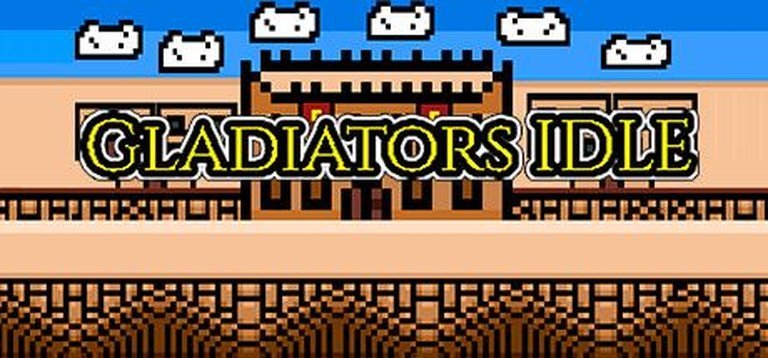
Description
Gladiators Idle is a gladiator simulator where players purchase and manage fighters to compete in arena battles. Gladiators earn rewards like stat boosts, gold, and training points from fights, with more expensive fighters lasting longer. Players can train multiple gladiators against each other, but all fighters eventually die of old age and must be replaced. As players win fights, they can prestige, unlocking higher ranks and challenges.
Where to Buy Gladiators Idle
PC
Gladiators Idle Guides & Walkthroughs
Gladiators Idle Reviews & Reception
steambase.io (76/100): Gladiators IDLE has earned a Player Score of 76 / 100.
store.steampowered.com : All Reviews: Positive (92% of 14)
Gladiators Idle Cheats & Codes
PC
Type ‘IAmACheater’ on any screen except the main screen to enable cheats.
| Code | Effect |
|---|---|
| K | Instant kills while fighting |
| CTRL, SHIFT, V | Instant victory |
| CTRL, U, P | Training points (on training screen) |
Gladiators Idle: A Minimalist Ode to the Grind
Introduction: The Allure of the Arena
In the vast, often overwhelming landscape of modern gaming, where triple-A blockbusters vie for attention with their cinematic spectacle and open-world sprawl, Gladiators Idle (2020) emerges as a quiet rebellion—a game that embraces simplicity, automation, and the meditative rhythm of incremental progress. Developed by the one-person studio PixeLabor (also known as Kadragon), this unassuming title carves out a niche in the burgeoning “idle” genre, offering players a stripped-down, almost zen-like experience of managing a ludus (gladiator school) in ancient Rome. But beneath its pixelated veneer and minimalist design lies a fascinating study in game design philosophy, player psychology, and the evolving tastes of the gaming audience.
Gladiators Idle is not a game that will dominate headlines or win awards for narrative depth or graphical fidelity. Instead, it is a game that thrives in the background—a digital companion for those who find solace in the slow, steady accumulation of power. It is, in many ways, a love letter to the grind, a celebration of the journey rather than the destination. Yet, its very existence raises important questions about the nature of engagement in games. Can a game be compelling without constant player input? Can simplicity be a virtue in an era of complexity? And what does it mean for a game to be “addictive” when its core mechanic is passivity?
This review will dissect Gladiators Idle from every angle, exploring its development context, its mechanical elegance (or lack thereof), its thematic resonance, and its place in the broader tapestry of gaming history. We will examine why it resonates with some players while leaving others cold, and how it reflects the shifting paradigms of game design in the 2020s. By the end, we will determine whether Gladiators Idle is a forgotten gem, a curious footnote, or a harbinger of things to come.
Development History & Context: The Rise of the Idle Genre
The Studio Behind the Sword: PixeLabor/Kadragon
Gladiators Idle is the brainchild of Renan Miguelote Vianna, a solo developer operating under the monikers PixeLabor and Kadragon. Vianna’s work is emblematic of the indie development scene in the late 2010s and early 2020s—a period marked by an explosion of small-scale, often experimental games that leveraged digital distribution platforms like Steam and itch.io to reach audiences without the need for traditional publishing deals.
Vianna’s portfolio is heavily skewed toward the “idle” and “incremental” genres, with titles like Gladiators Idle sharing DNA with other projects such as Autocraft (2023). His approach to game development is refreshingly pragmatic. In interviews and FAQs, he openly acknowledges the limitations of his games, framing them not as flawed but as intentionally minimalist. For Vianna, the appeal of idle games lies in their accessibility and their ability to hook players without demanding excessive time or cognitive load. As he states in the game’s Steam description:
“I am making IDLE games because I believe they are the new trend. IDLE games are very easy to learn, and they can also keep you hooked for hours. There are so many games on Steam I don’t want people to bypass my game because it is too long or too difficult.”
This philosophy is a direct response to the growing fatigue among players who feel overwhelmed by the sheer volume of content in modern games. In an era where a single open-world RPG can demand 100+ hours of playtime, Vianna’s games offer a counterpoint: experiences that can be picked up and put down in minutes, with progress continuing even when the player is away.
The Idle Genre: A Brief History
To understand Gladiators Idle, one must first grasp the evolution of the idle genre. The roots of idle games can be traced back to Progress Quest (2002), a satirical RPG that automated every aspect of gameplay, from combat to loot collection. However, the genre truly gained traction in the 2010s with the rise of browser-based games like Cookie Clicker (2013) and Adventure Capitalist (2014). These games introduced the core mechanics that define the genre:
– Passive progression: Players earn rewards even when not actively playing.
– Incremental upgrades: Small, continuous improvements that compound over time.
– Minimal interaction: Most actions are automated, with player input limited to strategic decisions.
By the late 2010s, the idle genre had fragmented into numerous subcategories, from clicker games (Clicker Heroes) to auto-battlers (Firestone Idle RPG). Gladiators Idle fits squarely into the “auto-battler” and “management simulator” subgenres, blending the passive combat of games like Firestone Idle with the resource management of titles like Realm Grinder.
Technological and Market Constraints
Gladiators Idle was developed using relatively simple tools, likely leveraging game engines like Unity or Godot, which are popular among solo developers for their accessibility and cross-platform capabilities. The game’s visual style—pixel art with a side-view perspective—is a deliberate choice that aligns with both the developer’s skills and the aesthetic trends of indie games in the 2020s. Pixel art is not only easier to produce for small teams but also evokes a nostalgic charm that resonates with players weary of hyper-realistic graphics.
The game’s release in December 2020 was strategically timed to capitalize on the holiday Steam sale, a period when indie developers often see a surge in visibility. Priced at $1.99 (with a free version available on itch.io), Gladiators Idle was positioned as an impulse buy—a low-risk experiment for players curious about the idle genre.
The Gaming Landscape in 2020
The year 2020 was a pivotal one for gaming. The COVID-19 pandemic led to a surge in player numbers as people sought entertainment during lockdowns. This period also saw the rise of “cozy games” and low-stress experiences, as players gravitated toward titles that offered comfort rather than challenge. Gladiators Idle arrived at the perfect moment, catering to an audience that wanted engagement without the pressure of high-stakes gameplay.
However, the game also faced stiff competition. The idle genre was already crowded, with established titles like Idle Champions of the Forgotten Realms and Melvor Idle dominating the market. Gladiators Idle differentiated itself through its Roman theme and its extreme simplicity, but this also limited its appeal to players seeking deeper mechanics.
Narrative & Thematic Deep Dive: The Blood and Gold of Rome
Plot and Setting: A Gladiator’s Life
Gladiators Idle is not a narrative-driven game in the traditional sense. There is no overarching story, no character arcs, and no dialogue to speak of. Instead, the game’s “narrative” is procedural, emerging from the player’s interactions with its systems. The setting is ancient Rome, a time and place synonymous with spectacle, violence, and social hierarchy. Players take on the role of a lanista—the owner of a gladiator school—tasked with buying, training, and fielding gladiators in arena battles.
The game’s world is abstracted to its most essential elements:
– The Market: Where gladiators are purchased.
– The Arena: Where battles take place.
– The Ludus: Where gladiators train and rest.
– The Armory: Where equipment is upgraded.
This minimalist approach to world-building is both a strength and a weakness. On one hand, it allows players to project their own narratives onto the experience. The lack of explicit story means that the game becomes a sandbox for the player’s imagination. On the other hand, the absence of any contextual depth—no lore, no historical accuracy, no character personalities—can make the world feel hollow.
Themes: Mortality, Exploitation, and the Illusion of Progress
Despite its simplicity, Gladiators Idle touches on several profound themes, albeit unintentionally. The most striking of these is mortality. Gladiators in the game have a finite lifespan; they grow old, weaken, and eventually die, forcing the player to constantly replenish their ranks. This mechanic is a rare acknowledgment of death in a genre that typically focuses on endless growth. It introduces a melancholic rhythm to the gameplay, where the player must accept that their investments are temporary.
The game also grapples with exploitation. The player, as the lanista, is essentially a slave owner, buying and selling gladiators for profit. The gladiators themselves have no agency; they are tools to be used and discarded. This dynamic mirrors the historical reality of gladiatorial combat, where enslaved or condemned individuals were forced to fight for the entertainment of the masses. Gladiators Idle does not critique this system—it merely presents it as a given, leaving players to confront their role in perpetuating it.
Finally, the game explores the illusion of progress. While players can prestige (reset their progress in exchange for permanent bonuses), the core loop remains unchanged. The numbers grow larger, the gladiators become stronger, but the experience is fundamentally the same. This reflects the cyclical nature of idle games, where the promise of “getting better” is often a mirage, and the real reward is the act of playing itself.
Characters and Dialogue: The Silence of the Arena
Gladiators Idle features no named characters, no dialogue, and no personality. Gladiators are differentiated only by their classes (e.g., Dimas, Thraex, Hoplos) and their stats. This lack of characterization is a deliberate choice, aligning with the game’s minimalist ethos. However, it also means that there is no emotional connection to the gladiators. They are mere data points, which can make their deaths feel inconsequential.
The absence of dialogue is particularly notable. In a game about gladiators, one might expect at least some flavor text or battle cries, but Gladiators Idle offers none. This silence can be interpreted as a commentary on the dehumanization of gladiators in ancient Rome, but it is more likely a result of the developer’s focus on mechanics over narrative.
Gameplay Mechanics & Systems: The Art of the Grind
Core Gameplay Loop: Buy, Fight, Repeat
At its heart, Gladiators Idle is a game about resource management and optimization. The core loop is as follows:
1. Purchase Gladiators: Players buy gladiators from the market using gold. More expensive gladiators have better stats and longer lifespans.
2. Send to Arena: Gladiators automatically fight in the arena, earning gold, training points, and stat boosts based on the type of fight.
3. Train and Upgrade: Players can spend training points to improve gladiators’ stats or gold to upgrade their equipment.
4. Prestige: Once a certain rank is achieved, players can prestige, resetting their progress in exchange for permanent bonuses that make subsequent playthroughs easier.
This loop is repeated ad infinitum, with the player’s role limited to occasional decision-making (e.g., which gladiator to buy, which upgrades to prioritize). The majority of the gameplay is automated, making Gladiators Idle a true “idle” experience.
Combat and Progression: The Illusion of Strategy
Combat in Gladiators Idle is entirely automated. Gladiators fight in the arena without any player input, and the outcome is determined by their stats. This lack of tactical depth is a double-edged sword. On one hand, it makes the game accessible to anyone, regardless of skill level. On the other hand, it removes any sense of agency or excitement from the battles. There is no tension, no drama—just numbers increasing over time.
Progression is similarly straightforward. Gladiators gain stats through fights and training, but there is no branching path or meaningful customization. The player’s choices are limited to which stats to upgrade, but since all stats are beneficial, there is no real strategy involved. This lack of depth is the game’s most significant flaw, as it makes the experience feel shallow and repetitive.
UI and UX: Functional but Uninspired
The user interface of Gladiators Idle is functional but unremarkable. The game uses a menu-driven system, with players navigating between the market, arena, ludus, and armory via simple button presses. The visual design is clean but bland, with a color palette dominated by earthy tones and a pixel art style that lacks personality.
One of the game’s most glaring issues is its lack of tutorials or tooltips. New players are thrown into the experience with little guidance, forcing them to experiment or consult external resources to understand the mechanics. This is a missed opportunity, as even a basic tutorial could have made the game more welcoming to newcomers.
Innovative or Flawed Systems?
Gladiators Idle does not introduce any groundbreaking mechanics, but it does refine the idle formula in a few notable ways:
– Gladiator Lifespan: The mortality mechanic is a rare feature in idle games, adding a layer of realism and forcing players to think long-term.
– Prestige System: While not unique, the prestige system is well-implemented, offering meaningful rewards for resetting progress.
– Training Points: The dual-currency system (gold and training points) adds a minor strategic element, as players must decide how to allocate their resources.
However, the game also suffers from several flaws:
– Lack of Depth: The absence of meaningful choices or customization makes the gameplay feel repetitive.
– Poor Onboarding: The lack of tutorials or explanations can be confusing for new players.
– Technical Issues: Some players have reported bugs, such as training not working or prestige not unlocking, which can disrupt the experience.
World-Building, Art & Sound: The Aesthetics of Minimalism
Setting and Atmosphere: Rome Without the Romance
Gladiators Idle takes place in a highly abstracted version of ancient Rome. There are no bustling cities, no grand coliseums, no political intrigue—just the arena and the ludus. This minimalist approach to world-building is consistent with the game’s design philosophy, but it also means that the setting feels underutilized. The Roman theme is little more than window dressing, with no attempt to evoke the culture, history, or atmosphere of the era.
The game’s atmosphere is similarly sparse. There is no music, no ambient sound, and no voice acting. The only sounds are the occasional clinks of combat, which are so understated that they barely register. This silence can be interpreted as a deliberate choice to emphasize the isolation of the gladiator’s life, but it also makes the game feel lifeless.
Visual Direction: Pixel Art with Purpose
The visual style of Gladiators Idle is simple but effective. The game uses pixel art with a side-view perspective, evoking the aesthetic of classic 16-bit RPGs. The gladiators are designed with clear silhouettes, making it easy to distinguish between classes, and the animations are smooth and fluid.
However, the art lacks personality. The gladiators are generic, the environments are bland, and there is little visual variety. This is a shame, as a more distinctive art style could have elevated the game’s appeal. For example, Firestone Idle RPG uses a similar pixel art style but infuses it with charm and character, making its world feel more alive.
Sound Design: The Silence of the Arena
As mentioned earlier, Gladiators Idle is a nearly silent experience. There is no music, no ambient noise, and no voice acting. The only sounds are the occasional combat noises, which are so quiet that they are easily overlooked. This lack of audio design is a missed opportunity, as even a simple soundtrack could have added atmosphere and immersion.
The absence of sound also makes the game feel less engaging. In idle games, audio cues are often used to signal progress or rewards, providing feedback that keeps players invested. Gladiators Idle offers none of this, making the experience feel passive and detached.
Reception & Legacy: A Niche Success
Critical and Commercial Reception
Gladiators Idle received little critical attention upon release, with no major reviews from gaming outlets. This is not surprising, given the game’s niche appeal and the crowded nature of the idle genre. However, the game has garnered a small but dedicated fanbase, as evidenced by its “Mostly Positive” rating on Steam (76/100 based on 33 reviews).
Player feedback has been mixed. Some praise the game’s simplicity and addictive nature, while others criticize its lack of depth and technical issues. Common complaints include:
– Repetitive Gameplay: Many players find the core loop too shallow to sustain long-term engagement.
– Lack of Content: The game’s minimalist design is seen as a weakness by those seeking more features.
– Bugs: Some players have reported issues with training, prestige, and other mechanics.
Despite these criticisms, Gladiators Idle has found an audience among fans of idle games who appreciate its no-frills approach. The game’s low price point and availability on itch.io (for free) have also contributed to its accessibility.
Evolution of Reputation
Since its release, Gladiators Idle has not undergone significant updates or expansions. The developer, Renan Miguelote Vianna, has moved on to other projects, such as Autocraft (2023), leaving Gladiators Idle as a static artifact of its time. This lack of post-launch support has likely limited the game’s longevity, as idle games often rely on regular content updates to retain players.
However, the game’s reputation has not suffered significantly. It remains a cult favorite among those who enjoy its particular brand of minimalism, and its legacy is secure as a representative of the idle genre’s early 2020s boom.
Influence on Subsequent Games
Gladiators Idle has not had a major impact on the gaming industry, but it is part of a broader trend toward simplified, accessible experiences. Its success (or lack thereof) demonstrates the challenges of standing out in a crowded genre, as well as the importance of balancing simplicity with depth.
The game’s most significant contribution may be its honesty. Unlike many idle games that masquerade as deep RPGs or strategy titles, Gladiators Idle makes no pretenses about what it is: a straightforward, no-frills grind. This transparency is refreshing in an era where many games overpromise and underdeliver.
Conclusion: A Game of Quiet Obsession
Gladiators Idle is not a game for everyone. It lacks the depth, polish, and narrative ambition of mainstream titles, and its appeal is narrowly focused on players who enjoy the meditative rhythm of incremental progress. Yet, within its limited scope, it achieves a kind of purity—a game that knows exactly what it is and makes no apologies for it.
For those who find joy in the slow, steady accumulation of power, Gladiators Idle offers a satisfying, if repetitive, experience. Its minimalist design, while lacking in personality, is functional and effective, and its core mechanics are well-tuned for the idle genre. The game’s greatest strength is its honesty: it is a grind, and it embraces that identity wholeheartedly.
However, for players seeking depth, challenge, or emotional engagement, Gladiators Idle will likely fall flat. Its lack of narrative, character, and strategic complexity makes it feel shallow compared to more ambitious idle games like Melvor Idle or Idle Champions of the Forgotten Realms. The absence of sound and the generic visual design further detract from its appeal, making it a forgettable experience for many.
Ultimately, Gladiators Idle is a game that thrives in the background—a digital companion for those who enjoy the act of playing more than the rewards of victory. It is not a masterpiece, nor is it a failure. It is, simply, a game that exists for a very specific audience, and for that audience, it delivers exactly what it promises: a quiet, unassuming grind.
Final Verdict: 6.5/10 – A Niche Delight for Idle Enthusiasts
Gladiators Idle is a competent but unremarkable entry in the idle genre. It excels in its simplicity and accessibility but suffers from a lack of depth and polish. For fans of incremental games, it is a solid, if forgettable, experience. For everyone else, it is a curiosity—a reminder that sometimes, the journey is the destination.