
- Release Year: 2018
- Platforms: Windows
- Publisher: Intelligent Decision Systems, Inc.
- Developer: idsibidsi games
- Genre: Action
- Perspective: 1st-person
- Game Mode: Single-player
- Gameplay: Motion control
- Setting: Fantasy, Futuristic, Sci-fi
- Average Score: 100/100
- VR Support: Yes
Description
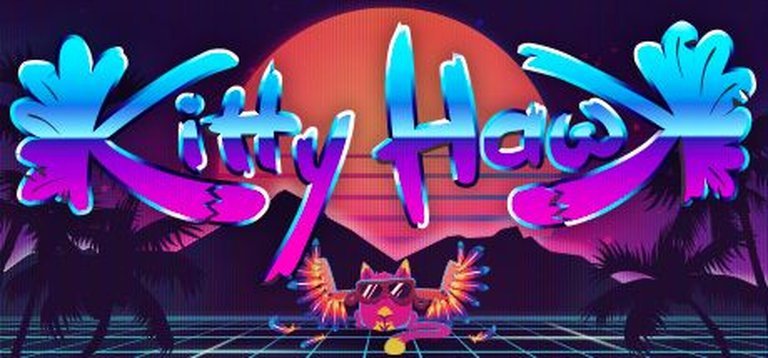
Kitty Hawk is a first-person action game set in a neon-lit, virtual reality paradise where players take on the role of an inter-dimensional voyager. Navigate through surreal structures, dodge fireball-hurling monkeys and ravenous space bats, and collect gems for points while surviving as long as possible. The game features simple motion controls—flap your arms to fly and use a trigger for a boost—blending fantasy and sci-fi elements in a fast-paced, immersive experience.
Where to Buy Kitty Hawk
PC
Kitty Hawk Mods
Kitty Hawk Guides & Walkthroughs
Kitty Hawk Reviews & Reception
steambase.io (100/100): Kitty Hawk has earned a Player Score of 100 / 100.
Kitty Hawk Cheats & Codes
PC
Press the backtick (`) and tilde (~) key to open the console, then enter the code and press Enter.
| Code | Effect |
|---|---|
| aspirine | Get a free battery |
| panzer | Get 50 free shells |
| richmore | Get three balloons |
| doraemon | Get the ticket and the tram controller |
| comeflywithme | Baggy’s happy gravity |
| shanghaied | Teleport to Archipelago |
| link | Teleport to Snow Mountain Temple |
| tothemoon | Teleport to the Rocket |
Kitty Hawk: A Neon-Drenched Flight into VR Purgatory
Introduction: The Allure of the Unknown
In the vast, ever-expanding cosmos of indie games, few titles dare to be as unapologetically bizarre as Kitty Hawk. Released in 2018 by the obscure studio idsibidsi games and published by Intelligent Decision Systems, Inc., this first-person, motion-controlled VR experience is a fever dream of neon-lit corridors, interdimensional voyaging, and surreal, almost sadistic gameplay. It’s a game that defies conventional classification, existing somewhere between an endless runner, a survival horror experiment, and a psychedelic art installation. Kitty Hawk is not just a game—it’s an experience, one that lingers in the mind like a half-remembered nightmare.
At its core, Kitty Hawk is a study in minimalism and maximalism simultaneously. The premise is deceptively simple: you play as Kitty Hawk, an interdimensional voyager navigating a neon paradise filled with fireball-hurling monkeys, ravenous space bats, and an endless barrage of obstacles. Your goal? Survive as long as you can while collecting precious gems for points. The controls are equally straightforward—flap your arms to soar, hit the trigger for a boost—but the execution is anything but. What begins as a whimsical flight through a virtual wonderland quickly devolves into a punishing endurance test, a relentless gauntlet of trial and error that demands precision, patience, and a masochistic streak.
Yet, beneath its garish exterior and brutal difficulty lies a game that is oddly compelling. Kitty Hawk is a testament to the power of VR as a medium for immersion, even when that immersion is rooted in frustration. It’s a game that doesn’t just challenge the player—it taunts them, dares them to keep going, to push further, to endure just a little longer. In an era where games are increasingly designed to be accessible and forgiving, Kitty Hawk is a defiant throwback to the punishing arcade games of yesteryear, wrapped in a neon-drenched, VR-enhanced package.
This review will dissect Kitty Hawk in its entirety, exploring its development history, narrative (or lack thereof), gameplay mechanics, artistic direction, and its place in the broader gaming landscape. We’ll examine why this game, despite its obscurity and niche appeal, deserves to be remembered as a fascinating, if flawed, experiment in VR game design.
Development History & Context: A Game Born from Obscurity
The Studio Behind the Madness
Kitty Hawk was developed by idsibidsi games, a studio so obscure that it barely registers a blip on the radar of the gaming industry. Little is known about the team behind the game, but their lack of mainstream recognition doesn’t detract from the ambition of their creation. Instead, it adds to the mystique. Kitty Hawk feels like a passion project, a labor of love (or perhaps obsession) from developers who wanted to push the boundaries of what VR could do, even if that meant alienating a broader audience.
The game was published by Intelligent Decision Systems, Inc., a company that, much like the developer, remains shrouded in mystery. Their involvement in Kitty Hawk seems to be more of a financial or logistical nature, as the game’s creative vision is unmistakably that of its developers. This lack of corporate interference is both a blessing and a curse. On one hand, it allowed the developers to craft a game that is uncompromising in its vision. On the other, it meant that Kitty Hawk lacked the polish and marketing push that could have elevated it beyond its niche status.
The VR Landscape in 2018
Kitty Hawk arrived at a pivotal moment in the evolution of virtual reality gaming. By 2018, VR had moved beyond its initial hype cycle and was settling into a more mature, if still niche, phase. The Oculus Rift and HTC Vive had been on the market for a couple of years, and developers were beginning to experiment with the medium in earnest. Games like Beat Saber, Superhot VR, and Job Simulator had already demonstrated the potential of VR, but the market was still hungry for innovation.
Into this landscape stepped Kitty Hawk, a game that defied easy categorization. It wasn’t a narrative-driven experience like The Vanishing of Ethan Carter VR, nor was it a straightforward action game like DOOM VFR. Instead, it was a surreal, almost abstract experience that prioritized atmosphere and challenge over traditional gameplay conventions. In many ways, Kitty Hawk was a reaction against the growing trend of VR games that sought to replicate traditional gaming experiences in a virtual space. It was a game that could only exist in VR, a fact that both elevated and limited its appeal.
Technological Constraints and Creative Ambitions
The development of Kitty Hawk was undoubtedly shaped by the technological constraints of the time. VR development in 2018 was still a relatively new frontier, and developers were grappling with issues like motion sickness, control schemes, and performance optimization. Kitty Hawk’s use of motion controls—flapping your arms to fly—was a bold choice, one that leveraged the unique capabilities of VR but also introduced a steep learning curve.
The game’s visual style, a neon-drenched fever dream of geometric shapes and vibrant colors, was likely a deliberate choice to mask some of the technical limitations of early VR hardware. The abstract, almost surreal aesthetic allowed the developers to create a visually striking world without the need for hyper-realistic graphics. This approach also served to enhance the game’s otherworldly atmosphere, making the player feel as though they were truly traversing an interdimensional paradise (or purgatory, depending on your perspective).
Narrative & Thematic Deep Dive: The Absence of Story as a Story
A Game Without a Plot
Kitty Hawk is, at its core, a game without a traditional narrative. There are no cutscenes, no dialogue, no characters to interact with beyond the fireball-hurling monkeys and space bats that serve as obstacles. The game’s Steam description provides the barest of premises: “Fly through a neon, virtual reality paradise as Kitty Hawk, the inter-dimensional voyager. Navigate through strange structures, avoid fireball-hurling monkeys, dodge ravenous space bats, and most importantly—never give up.”
This lack of narrative might seem like a glaring omission, but in the context of Kitty Hawk, it’s a deliberate choice. The game is not about storytelling; it’s about experience. The player is dropped into a surreal, almost dreamlike world and left to their own devices. There are no objectives beyond survival, no lore to uncover, no characters to develop. The game’s world is a canvas, and the player’s journey through it is the story.
Themes of Endurance and Futility
If Kitty Hawk has a thematic throughline, it’s one of endurance in the face of futility. The game is brutally difficult, with obstacles that seem designed to frustrate and punish the player. Death is frequent, and progress is measured in seconds rather than minutes or hours. Yet, the game’s mantra—”never give up”—is repeated ad nauseam, a constant reminder that persistence is the only path forward.
This theme of endurance is reinforced by the game’s visual and auditory design. The neon-lit corridors stretch on endlessly, a labyrinthine nightmare that seems to shift and change with each playthrough. The soundtrack, a pulsating electronic score, drives the player forward, its relentless rhythm mirroring the game’s punishing difficulty. There’s a sense of inevitability to it all, a feeling that no matter how far you progress, the game will always find a way to knock you down.
In this way, Kitty Hawk becomes a metaphor for the human condition. Life, like the game, is a series of obstacles to be overcome, a relentless march forward in the face of adversity. The game’s lack of narrative allows the player to project their own meanings onto the experience, turning it into a deeply personal journey.
The Surreal and the Absurd
Kitty Hawk’s world is one of surreal absurdity. The neon paradise is filled with strange structures that defy logic, obstacles that seem to appear out of nowhere, and enemies that are as bizarre as they are deadly. Fireball-hurling monkeys? Ravenous space bats? These aren’t just random obstacles—they’re deliberate choices that contribute to the game’s dreamlike atmosphere.
This surrealism is further enhanced by the game’s lack of context. There’s no explanation for why Kitty Hawk is traversing this neon world, no backstory to explain the fireball-hurling monkeys or the ravenous space bats. The game exists in a vacuum, a self-contained universe where the rules are made up and the points don’t matter. This absence of context allows the player to fully immerse themselves in the experience, to accept the game’s world on its own terms rather than trying to rationalize it.
Gameplay Mechanics & Systems: A Punishing Dance of Precision and Frustration
The Core Gameplay Loop: Survive, Die, Repeat
Kitty Hawk’s gameplay is deceptively simple. The player takes on the role of Kitty Hawk, an interdimensional voyager navigating a neon-lit obstacle course. The controls are minimalistic: flap your arms to fly, hit the trigger for a boost. The objective is equally straightforward: survive as long as you can while collecting gems for points.
In practice, however, the game is anything but simple. The obstacles are relentless, the controls are finicky, and the margin for error is razor-thin. Death comes quickly and often, and each failure sends the player back to the beginning, forcing them to start over from scratch. This punishing difficulty is the game’s defining feature, a deliberate choice that turns Kitty Hawk into a test of endurance as much as skill.
Motion Controls: A Double-Edged Sword
One of the most distinctive aspects of Kitty Hawk is its use of motion controls. Unlike traditional VR games that rely on button presses or analog sticks, Kitty Hawk requires the player to physically flap their arms to stay aloft. This control scheme is both innovative and frustrating, a double-edged sword that enhances immersion while also introducing a steep learning curve.
On one hand, the motion controls make the player feel truly embodied in the game’s world. Flapping your arms to fly is an intuitive, almost primal action, one that taps into the player’s physicality in a way that traditional controls cannot. It’s a brilliant use of VR’s unique capabilities, a mechanic that could only work in a virtual space.
On the other hand, the motion controls are imprecise and often unresponsive. The game requires a level of physical coordination that many players may not possess, and the lack of tactile feedback makes it difficult to gauge the effectiveness of your movements. This can lead to moments of frustration, where the player feels as though the game is working against them rather than with them.
Obstacles and Enemies: A Gauntlet of Pain
The obstacles in Kitty Hawk are designed to test the player’s reflexes and patience. From fireball-hurling monkeys to ravenous space bats, each enemy is a unique challenge that requires a different approach. Some obstacles can be dodged with a well-timed boost, while others require precise maneuvering to avoid.
The game’s difficulty is further compounded by its procedural generation. Each playthrough is slightly different, with obstacles appearing in different configurations and at different intervals. This ensures that no two runs are the same, but it also means that the player can never fully master the game’s layout. There’s always an element of unpredictability, a sense that the game is constantly shifting beneath your feet.
Progression and Rewards: The Illusion of Growth
Kitty Hawk offers little in the way of traditional progression. There are no upgrades, no new abilities, no unlockable content. The only reward for survival is a higher score, a number that serves as a testament to the player’s skill and endurance.
This lack of progression might seem like a missed opportunity, but in the context of Kitty Hawk, it’s a deliberate choice. The game is not about growth or improvement—it’s about the struggle itself. Each run is a self-contained challenge, a test of the player’s ability to adapt and overcome. The absence of traditional rewards forces the player to find satisfaction in the act of playing itself, to derive meaning from the journey rather than the destination.
UI and Feedback: Minimalism to a Fault
Kitty Hawk’s user interface is as minimalistic as its gameplay. There’s no health bar, no ammo counter, no map or objective marker. The only feedback the player receives is the sound of their flapping wings, the occasional chime of a collected gem, and the jarring crash of a failed run.
This minimalism is in keeping with the game’s overall aesthetic, but it also makes the experience feel somewhat hollow. There’s no sense of accomplishment beyond the sheer act of survival, no tangible rewards for the player’s efforts. This can make the game feel repetitive and unrewarding, especially for players who are accustomed to more traditional progression systems.
World-Building, Art & Sound: A Neon Nightmare
The Neon Paradise: A Visual Feast
Kitty Hawk’s world is a neon-drenched fever dream, a surreal landscape of geometric shapes and vibrant colors. The game’s visual style is reminiscent of Tron or Rez, with its glowing corridors and abstract obstacles. The neon aesthetic is both striking and disorienting, a deliberate choice that enhances the game’s otherworldly atmosphere.
The game’s environments are procedurally generated, ensuring that no two playthroughs are the same. This procedural generation is a double-edged sword—it keeps the game fresh and unpredictable, but it also means that the player can never fully master the layout. There’s always a sense of discovery, a feeling that the game is constantly shifting and evolving.
The Sound of Survival: A Pulsating Score
Kitty Hawk’s soundtrack is a pulsating electronic score that drives the player forward. The music is relentless, its rhythm mirroring the game’s punishing difficulty. There’s a sense of urgency to the soundtrack, a feeling that the player is always on the brink of failure.
The sound design is equally impressive. The flap of Kitty Hawk’s wings, the crash of a failed run, the chime of a collected gem—each sound is crisp and distinct, adding to the game’s immersive atmosphere. The lack of voice acting or dialogue further enhances the game’s surrealism, allowing the player to fully immerse themselves in the experience.
Atmosphere: A Dreamlike Purgatory
Kitty Hawk’s atmosphere is one of its strongest assets. The game’s world is a dreamlike purgatory, a place where the rules of reality don’t apply. The neon-lit corridors stretch on endlessly, a labyrinthine nightmare that seems to shift and change with each playthrough. The obstacles are bizarre and unpredictable, from fireball-hurling monkeys to ravenous space bats.
This surrealism is further enhanced by the game’s lack of context. There’s no explanation for why Kitty Hawk is traversing this neon world, no backstory to explain the fireball-hurling monkeys or the ravenous space bats. The game exists in a vacuum, a self-contained universe where the rules are made up and the points don’t matter. This absence of context allows the player to fully immerse themselves in the experience, to accept the game’s world on its own terms rather than trying to rationalize it.
Reception & Legacy: A Cult Classic in the Making?
Critical Reception: A Polarizing Experience
Kitty Hawk’s reception was, perhaps unsurprisingly, mixed. The game’s punishing difficulty and lack of traditional narrative alienated many players, while its surreal atmosphere and innovative use of motion controls earned it a dedicated following. On Steam, the game holds a “Very Positive” rating, a testament to its ability to resonate with a niche audience.
Critics praised the game’s visual style and immersive atmosphere, but many found the motion controls to be frustrating and unresponsive. The lack of traditional progression and rewards was also a point of contention, with some players feeling that the game was more of a tech demo than a fully realized experience.
Commercial Performance: A Niche Success
Kitty Hawk was never destined to be a commercial juggernaut. Its niche appeal and punishing difficulty ensured that it would remain a cult classic rather than a mainstream hit. The game’s $0.99 price tag on Steam made it accessible to a wide audience, but its lack of marketing and mainstream recognition meant that it flew under the radar for many players.
Despite its obscurity, Kitty Hawk found a dedicated fanbase. The game’s surreal atmosphere and innovative gameplay mechanics resonated with players who were looking for something different, something that pushed the boundaries of what VR could do. In many ways, Kitty Hawk was a game ahead of its time, a bold experiment that challenged the conventions of VR game design.
Legacy: A Bold Experiment in VR
Kitty Hawk’s legacy is one of innovation and defiance. The game refused to conform to the expectations of traditional VR experiences, instead forging its own path with a unique blend of surrealism, punishment, and motion-controlled gameplay. It was a game that could only exist in VR, a fact that both elevated and limited its appeal.
In the years since its release, Kitty Hawk has remained a cult classic, a game that is remembered fondly by those who experienced it but largely forgotten by the broader gaming community. Its influence can be seen in later VR games that embraced surrealism and experimental gameplay, but few have matched its sheer audacity.
Conclusion: A Flawed Masterpiece
Kitty Hawk is a game that defies easy classification. It’s a surreal, punishing, and often frustrating experience that pushes the boundaries of what VR can do. Its lack of traditional narrative and progression may alienate some players, but its innovative use of motion controls and immersive atmosphere make it a standout in the VR landscape.
At its best, Kitty Hawk is a triumph of experimental game design, a bold statement that challenges the conventions of the medium. At its worst, it’s a frustrating, repetitive slog that tests the player’s patience to its limits. But regardless of its flaws, Kitty Hawk is a game that demands to be experienced, a neon-drenched flight into VR purgatory that lingers in the mind long after the headset is removed.
Final Verdict: 7.5/10 – A Flawed but Fascinating Experiment in VR
Kitty Hawk is not a game for everyone. Its punishing difficulty and lack of traditional rewards will turn off many players, but for those willing to embrace its surrealism and endure its challenges, it offers a unique and unforgettable experience. It’s a game that could only exist in VR, a bold experiment that pushes the medium forward even as it frustrates and confounds. In a world of safe, accessible VR experiences, Kitty Hawk stands as a defiant reminder of the power of innovation and the importance of taking risks.