
- Release Year: 2018
- Platforms: Macintosh, PlayStation 4, Windows, Xbox One
- Publisher: Playniac Limited
- Genre: Compilation
- Average Score: 83/100
Description
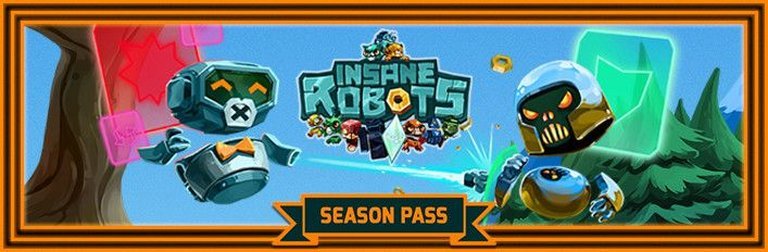
Insane Robots: Season Pass is a compilation that includes six Robot Packs for the base game, Insane Robots. The game itself is a rogue-lite, turn-based strategy title where players engage in tactical battles with a variety of robots, blending elements of deck-building and strategic combat. Set in a futuristic world, players must navigate through challenging scenarios, utilizing unique robot abilities and upgrades to outmaneuver opponents in a high-stakes, single-player experience.
Insane Robots: Season Pass Cracks & Fixes
Insane Robots: Season Pass Patches & Updates
Insane Robots: Season Pass Guides & Walkthroughs
Insane Robots: Season Pass Reviews & Reception
metacritic.com (87/100): With its near-flawless design, Insane Robots is one of the best indie titles of this generation without a doubt.
store.steampowered.com (77/100): Mostly Positive (77% of 18 user reviews for this game are positive).
operationrainfall.com : Insane Robots is a turn based board/card game.
vg-reloaded.com (85/100): Insane Robots is a nice twist on the card-battle genre, mixing up the formula to stand out from the crowd.
Insane Robots: Season Pass – A Comprehensive Retrospective
Introduction: The Rise of a Cult Classic
In the crowded landscape of digital card battlers, Insane Robots: Season Pass (2018) emerged as a bold, if underappreciated, contender. Developed by UK indie studio Playniac, this compilation bundled the base game with six post-launch Robot Packs, offering a complete, content-rich experience in a genre dominated by microtransactions and fragmented DLC. While it never achieved mainstream acclaim, Insane Robots carved out a niche as a mechanically refined, visually charming, and narratively playful take on turn-based strategy. This review explores its development, design, reception, and legacy, arguing that it stands as a testament to indie ambition—flawed yet fascinating, overlooked yet influential in its own quiet way.
Development History & Context: A David Among Goliaths
The Studio & Vision
Playniac, a small UK-based developer, conceived Insane Robots as a response to the oversaturation of fantasy-themed card games like Hearthstone (2014). Their goal was accessibility without sacrificing depth, wrapping strategic combat in a vibrant, robot-gladiator aesthetic. The game’s director, Rob Davis, and the team leveraged the Unity engine to create a cross-platform experience (PC, PS4, Xbox One, macOS) that balanced console-friendly controls with PC precision.
Market Challenges & Release Strategy
2018 was a pivotal year for digital card games, with Artifact (Valve) and Magic: The Gathering Arena (Wizards of the Coast) looming large. Playniac’s counter was simplicity: Insane Robots eschewed deck-building complexity in favor of a fixed 22-card “battle deck” system, where players drew randomly from a shared pool. The Season Pass (released alongside the base game in July 2018) was a savvy move—bundling all six Robot Packs (24 additional characters) to avoid the pitfalls of piecemeal DLC. This consumer-friendly approach mirrored trends in AAA gaming (e.g., Destiny 2’s expansions) but remained rare in indie spaces.
Technological Constraints
The game’s modest system requirements (2GB RAM, 1GB storage) reflected its indie roots, but this also limited visual fidelity. The Unity engine, while versatile, constrained the game’s scope to 2D arenas and simplified animations—a trade-off for broad accessibility.
Narrative & Thematic Deep Dive: A Rebellion of Steel and Satire
Plot & Setting
Insane Robots casts players as a memory-wiped robot thrust into a brutal tournament orchestrated by the tyrannical AI overlord, The Kernel. The premise—robots fighting for survival in a decaying dystopia—draws from Battle Royale and Robot Wars, but with a self-aware, humorous edge. The 15+ hour campaign unfolds across eight tournaments, each set in hazardous environments (jungles, moonscapes, industrial wastelands). Over 150 branching story events add replayability, though the narrative remains lightweight, prioritizing spectacle over depth.
Characters & Dialogue
The game’s 46+ robots are its heart, each with distinct personalities and quirks. From the hulking Baron to the nimble F0-X1, their designs blend Team Fortress 2’s cartoonish charm with WALL-E’s mechanical expressiveness. Dialogue leans into robotic puns and trash-talking, reinforcing the game’s irreverent tone. However, the lack of voice acting (outside of battle grunts) limits immersion.
Themes
- Mechanized Individuality: The robots’ “insanity” (a euphemism for free will) critiques conformity, mirroring themes in Portal or NieR: Automata.
- Spectacle of Violence: The tournament’s gladiatorial structure satirizes competitive gaming culture, where victory is commodified.
- Decay & Rebellion: The crumbling arenas and rogue robots reflect societal collapse, a nod to cyberpunk tropes.
Gameplay Mechanics & Systems: Hacked Card Battling
Core Loop
Insane Robots strips deck-building to its essence:
– Fixed Deck: Players draw from a shared 22-card pool (attack, defense, hacks, glitches).
– Energy System: Cards cost “time energy” (1–3 per turn), forcing tactical prioritization.
– Combat: Turn-based duels on hexagonal grids, where positioning and card combos determine victory.
Innovations & Flaws
- Hacks & Glitches: Unique mechanics like Lock (preventing opponent interference) or Switch (swapping cards mid-battle) add depth.
- Augments: Over 100 upgrades (e.g., +1 attack, terrain traversal) customize robots, but their random distribution can feel unbalanced.
- Multiplayer: Local/online PvP modes (Quick Battle, Max the Cash) suffer from a small player base, a common indie pitfall.
UI & Accessibility
The interface is clean but sparse. Card probabilities and augment effects lack clear tooltips, a recurring criticism in reviews. The absence of a “help” section frustrates newcomers, though the core mechanics are intuitive enough for casual players.
World-Building, Art & Sound: A Dystopia of Color
Visual Design
The game’s art style is its strongest asset—a vibrant, cel-shaded aesthetic that contrasts with its grim setting. Robots are exaggerated caricatures (e.g., DUM-E’s clunky frame vs. Myuuz’s sleek agility), and arenas burst with neon hues and environmental hazards. The lack of 3D animation is offset by expressive sprite work.
Sound & Music
- Sound Effects: Metallic clangs, laser blasts, and robotic taunts sell the combat’s weight.
- Music: A synth-heavy soundtrack evokes Transistor’s electronic pulse, though it lacks memorable motifs.
Reception & Legacy: The Cult of the Overlooked
Critical Reception
- Metacritic: 87 (Xbox One, “Generally Favorable”), but user scores averaged 6.9 (“Mixed”).
- Praise: Critics lauded its accessibility (Xbox Tavern: “A vibrant journey that never loses its charm”) and strategic depth (TrueAchievements: “Highly accessible yet intellectually stimulating”).
- Criticism: The lack of deck-building alienated hardcore fans (Operation Rainfall: “Feels like the winner comes down to luck”).
Commercial Performance & Influence
The Season Pass’s bundling strategy was ahead of its time, predating trends like Hades’ all-inclusive DLC. However, its niche appeal and limited marketing relegated it to cult status. Its legacy lies in proving that indie card games could thrive outside fantasy tropes, paving the way for titles like Slay the Spire’s roguelike hybrids.
Conclusion: A Hidden Gem in the Scrapheap
Insane Robots: Season Pass is a paradox—a game that excelled in mechanics and charm but faltered in visibility. Its fixed-deck system, while divisive, offered a refreshing alternative to the deck-building arms race. The Season Pass’s completeness (46 robots, 100+ augments) remains a model for indie DLC strategy.
Final Verdict: 8/10 – A mechanically brilliant, visually delightful cult classic that deserved a wider audience. For fans of tactical card games with a twist, it’s a must-play; for the broader industry, it’s a reminder that innovation doesn’t always require reinvention.
Place in History: A footnote in the card-battler genre, but a shining example of indie ambition. Its influence is subtle but enduring, echoing in games that dare to simplify without dumbing down.