
- Release Year: 2016
- Platforms: PlayStation 4, Windows
- Publisher: CCP Games
- Developer: CCP Newcastle
- Genre: Action
- Perspective: 1st-person
- Game Mode: Online PVP, Single-player
- Gameplay: Shooter, Space flight
- Setting: Futuristic, Sci-fi
- Average Score: 72/100
- VR Support: Yes
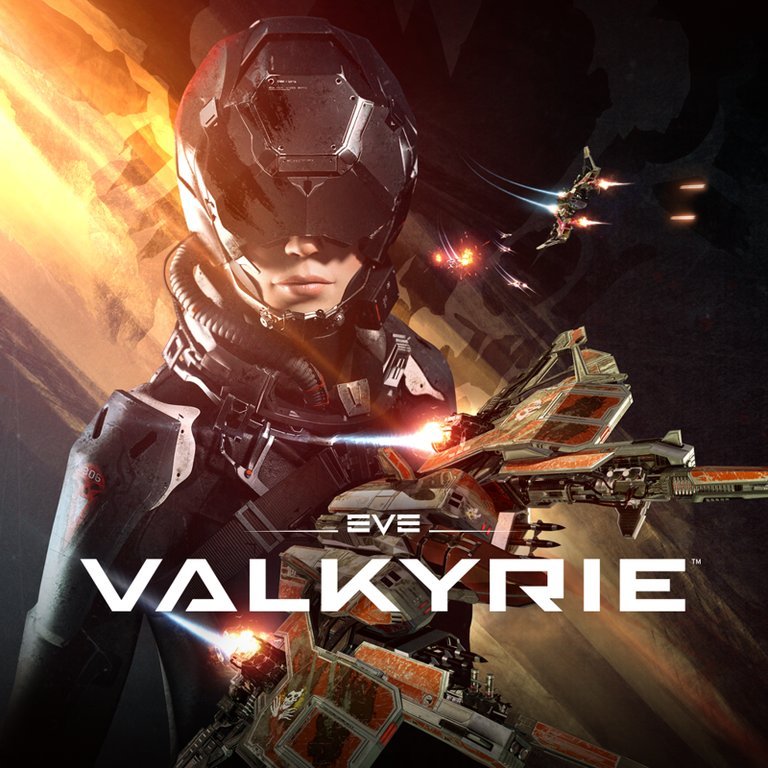
Description
EVE: Valkyrie is a first-person space combat shooter set in the sci-fi universe of EVE Online, designed for virtual reality (VR) gameplay. Players take on the role of elite pilots, engaging in intense dogfights and team-based battles across immersive, futuristic environments. With support for up to 100+ players online, the game emphasizes strategic space flight, precision shooting, and competitive multiplayer action, delivering a polished and thrilling VR experience.
Gameplay Videos
EVE: Valkyrie Cracks & Fixes
EVE: Valkyrie Patches & Updates
EVE: Valkyrie Guides & Walkthroughs
EVE: Valkyrie Reviews & Reception
metacritic.com (71/100): Story issues aside, EVE: Valkyrie is an excellent game and the most-polished of the bunch for the PlayStation VR’s launch lineup.
ign.com (79/100): EVE Valkyrie is a great example of how a traditional game genre can be made much better when it’s designed to be played in virtual reality.
opencritic.com (74/100): EVE: Valkyrie (VR) is ranked in the 60th percentile of games scored on OpenCritic.
steambase.io (64/100): EVE: Valkyrie has earned a Player Score of 64 / 100.
EVE: Valkyrie: A Pioneering VR Space Combat Experience
Introduction
EVE: Valkyrie stands as a landmark title in the history of virtual reality gaming, offering an unparalleled space combat experience that leveraged the immersive potential of early VR technology. Developed by CCP Games, the studio behind the sprawling EVE Online universe, Valkyrie was designed from the ground up to exploit the unique affordances of VR headsets like the Oculus Rift and PlayStation VR. While its legacy is marked by both innovation and controversy, the game remains a pivotal moment in the evolution of VR gaming, demonstrating how traditional genres could be transformed by the technology.
This review will dissect EVE: Valkyrie in exhaustive detail, exploring its development history, narrative and thematic depth, gameplay mechanics, world-building, reception, and lasting impact on the industry. By synthesizing critical reviews, player feedback, and historical context, we aim to provide a definitive analysis of a game that was both a triumph of VR design and a cautionary tale about the challenges of early VR adoption.
Development History & Context
The Birth of a VR Pioneer
EVE: Valkyrie began its life as EVE-VR, a humble tech demo created by a small team of CCP developers in their spare time. Unveiled at EVE Fanfest in April 2013, the demo showcased the potential of VR in space combat, capturing the imagination of players and developers alike. At the time, VR was still in its infancy, with the Oculus Rift development kit (DK1) representing the cutting edge of consumer-accessible VR technology. CCP’s decision to pivot this demo into a full-fledged game was a gamble, but one that positioned Valkyrie as a flagship title for the emerging VR market.
The game’s development was shaped by the technological constraints of the era. Early VR headsets suffered from limited resolution, latency issues, and a lack of standardized input methods. CCP’s solution was to design Valkyrie around the strengths of VR—namely, its ability to create a sense of presence and immersion—while mitigating its weaknesses. The game’s cockpit-centric perspective, for instance, helped reduce motion sickness by providing a stable reference point for players, while the use of head-tracking for targeting and situational awareness leveraged VR’s unique capabilities.
Engine and Platform Evolution
Initially developed using the Unity engine, EVE: Valkyrie underwent a significant technical overhaul in 2014 when CCP transitioned to Unreal Engine 4. This shift allowed for more detailed environments, improved lighting, and better performance optimization, all of which were critical for delivering a smooth VR experience. The move to Unreal Engine 4 also facilitated cross-platform development, enabling CCP to target multiple VR platforms, including the Oculus Rift, HTC Vive, and PlayStation VR.
The game’s multiplatform strategy was ambitious for its time. CCP announced plans for cross-platform play between the Oculus Rift, HTC Vive, and PlayStation VR, a feature that was still rare in 2016. While the initial releases did not support cross-play, the later Warzone expansion in 2017 fulfilled this promise, allowing PC and PlayStation players to compete against each other. This commitment to cross-platform compatibility reflected CCP’s belief in VR as a unifying force in gaming, transcending traditional platform barriers.
The VR Landscape in 2016
EVE: Valkyrie launched into a VR market that was both exciting and uncertain. The Oculus Rift and HTC Vive had just released their consumer versions, while the PlayStation VR was poised to bring VR to a broader audience with its more affordable price point and integration with the PlayStation 4. However, the VR ecosystem was still fragmented, with each platform offering different hardware capabilities and software ecosystems.
For Valkyrie, this fragmentation presented both opportunities and challenges. On the one hand, the game’s status as a launch title for the Oculus Rift and PlayStation VR ensured it would receive significant attention from early adopters. On the other hand, the limited install base of VR headsets meant that the game’s potential audience was inherently constrained. CCP’s decision to bundle Valkyrie with Oculus Rift pre-orders was a savvy move to maximize its reach, but it also meant that many players experienced the game as a freebie rather than a premium purchase.
Narrative & Thematic Deep Dive
The Valkyrie and the Schism: A Tale of Clones and Conflict
EVE: Valkyrie is set within the expansive EVE Online universe, a sci-fi setting renowned for its player-driven narratives and complex political intrigue. The game’s story revolves around the Valkyrie, a faction of cloned pilots who operate as mercenaries in the lawless regions of space. These pilots are not mere clones but rather “recovered” consciousnesses, illegally resurrected from the DNA of fallen warriors. This premise allows the game to explore themes of identity, mortality, and the ethical implications of resurrection technology.
The central conflict in Valkyrie pits the eponymous faction against the Schism, a rival group of pirates led by the enigmatic Jirai “Fatal” Laitanen. The Valkyrie are led by Rán Kavik, a charismatic and ruthless commander voiced by Battlestar Galactica alum Katee Sackhoff. Rán’s leadership is both a narrative and thematic anchor, embodying the game’s exploration of loyalty, survival, and the cost of immortality. The Schism, by contrast, represents a more chaotic and opportunistic force, serving as a foil to the Valkyrie’s disciplined mercenary ethos.
The Chronicles: A Missed Opportunity
While EVE: Valkyrie’s multiplayer mode was its primary focus, the game included a single-player component known as the “Chronicles.” These missions served as a tutorial of sorts, introducing players to the game’s mechanics and lore through a series of scripted encounters. However, the Chronicles were widely criticized for their brevity and lack of depth. Many reviewers noted that the single-player content felt more like an extended tutorial than a fully realized campaign, with enemy AI that was often described as “tinfoil-thin.”
The Chronicles’ failure to deliver a compelling narrative experience was a significant missed opportunity. Given the richness of the EVE Online universe, there was ample potential to craft a story that delved deeper into the Valkyrie’s origins, their conflict with the Schism, and the broader political landscape of the EVE setting. Instead, the game’s narrative was relegated to briefings and lore snippets, leaving players to piece together the story from scattered fragments.
Themes of Immortality and Identity
At its core, EVE: Valkyrie grapples with the implications of its cloned protagonists. The Valkyrie pilots are not merely respawned avatars but rather consciousnesses that retain memories of their past deaths. This premise raises intriguing questions about the nature of identity and the psychological toll of repeated resurrection. How does a pilot reconcile their past failures with their current existence? What does it mean to be “alive” when death is merely a temporary setback?
These themes are explored primarily through the game’s lore and character interactions, particularly in the interactions between Rán Kavik and the player character. Rán’s leadership style—charismatic yet ruthless—reflects the Valkyrie’s pragmatic approach to survival. She is a survivor, and her willingness to exploit the Valkyrie’s resurrection technology underscores the faction’s moral ambiguity. The Schism, by contrast, represents a more nihilistic perspective, embracing chaos and destruction as ends in themselves.
While Valkyrie’s narrative is not as fully realized as it could have been, its thematic underpinnings provide a compelling backdrop for its multiplayer battles. The game’s focus on team-based combat and tactical coordination mirrors the Valkyrie’s reliance on unity and discipline, while the Schism’s more chaotic playstyle reflects their anarchic philosophy.
Gameplay Mechanics & Systems
Core Gameplay Loop: Dogfighting in VR
EVE: Valkyrie’s gameplay is built around fast-paced, team-based space combat, with a strong emphasis on dogfighting and objective-based modes. The game’s core mechanics are designed to leverage the immersive potential of VR, particularly through the use of head-tracking for targeting and situational awareness. Players control their ships using a combination of traditional flight controls (throttle, pitch, yaw) and VR-specific inputs, such as looking around the cockpit to track enemies and lock onto targets.
The game’s combat is divided into several modes, each offering a distinct gameplay experience:
-
Team Deathmatch (Furballs): The most straightforward mode, Team Deathmatch pits two teams of eight players against each other in a battle to accumulate the most kills. This mode is ideal for players looking to hone their dogfighting skills and experiment with different ship loadouts.
-
Carrier Assault: A more strategic mode, Carrier Assault tasks players with capturing control points to lower the enemy carrier’s shields, culminating in a “trench run” to destroy the carrier’s core. This mode is reminiscent of Star Wars’ iconic Death Star trench run, offering a thrilling mix of objective-based gameplay and high-stakes dogfighting.
-
Control/Capture Modes: These modes introduce additional objectives, such as capturing and holding strategic points on the map. These modes encourage teamwork and coordination, as players must balance offensive and defensive strategies to secure victory.
Ship Classes and Customization
EVE: Valkyrie features three primary ship classes, each with distinct roles and playstyles:
-
Fighter Class: The most balanced and versatile class, Fighters excel in dogfighting and are equipped with forward-facing guns and homing missiles. These ships are ideal for players who prefer a direct, aggressive playstyle.
-
Heavy Class: Heavies are slower but more durable, with powerful weapons like flak cannons and short-range warp drives. These ships are designed for players who prefer a more methodical, tank-like approach to combat.
-
Support Class: Supports are equipped with healing beams, repair bots, and other utility-based abilities. These ships are essential for team coordination, providing critical support to allies and disrupting enemy formations.
Each ship class can be further customized with different weapons, modules, and cosmetic upgrades. However, the game’s progression system was a frequent point of criticism. Unlocking new ships and upgrades required significant time investment, and the inclusion of microtransactions allowed players to accelerate their progression with real-world currency. This “pay-to-win” dynamic was particularly contentious, as it created an uneven playing field where players who spent more money could gain a competitive advantage.
VR-Specific Mechanics: Head-Tracking and Immersion
One of EVE: Valkyrie’s most innovative features is its use of head-tracking for targeting and situational awareness. Unlike traditional space combat games, which rely on mouse or joystick inputs for targeting, Valkyrie allows players to lock onto enemies simply by looking at them. This mechanic not only enhances immersion but also adds a layer of tactical depth, as players must constantly scan their surroundings to track multiple targets.
The game’s VR implementation also extends to its cockpit design. Each ship features a detailed interior, complete with functional instruments, damage indicators, and interactive elements. This attention to detail reinforces the sense of presence, making players feel as though they are truly piloting a starship. The ability to lean forward to inspect the cockpit or glance over one’s shoulder to check for pursuers further enhances the immersive experience.
Multiplayer and Community
EVE: Valkyrie’s multiplayer mode was its primary draw, offering fast-paced, competitive gameplay that showcased the potential of VR. However, the game’s multiplayer experience was not without its flaws. The lack of in-game voice chat and clan support was a frequent complaint, as it hindered team coordination and community building. Many players resorted to external communication tools like Discord to fill this gap, but the absence of native support remained a notable oversight.
The game’s player base was also a concern. While Valkyrie enjoyed a surge of popularity at launch, its long-term viability was hampered by the limited install base of VR headsets. The game’s reliance on a dedicated community of players meant that matchmaking times could be lengthy, particularly for less popular modes. CCP attempted to address this issue with regular updates and new content, but the game’s niche appeal ultimately limited its longevity.
World-Building, Art & Sound
The EVE Online Universe: A Rich Backdrop
EVE: Valkyrie is set within the vast and intricate EVE Online universe, a setting renowned for its depth and player-driven narratives. The game’s environments are drawn from this universe, featuring iconic locations such as the Shipyard, a former Caldari facility now controlled by the Guristas pirate clan, and the Necropolis, a graveyard of ships destroyed during the battle at Esmes III. These environments are not merely backdrops but rather integral to the game’s lore, reflecting the political and historical context of the EVE setting.
The game’s art direction is a standout feature, blending futuristic aesthetics with a gritty, industrial sensibility. The Valkyrie’s ships are sleek and functional, while the Schism’s vessels are more rugged and improvised, reflecting their respective factions’ philosophies. The game’s environments are equally impressive, with detailed space stations, asteroid fields, and capital ships that create a sense of scale and immersion.
Visual Design: A Feast for the Eyes
EVE: Valkyrie’s visual design is optimized for VR, with a focus on clarity and readability. The game’s environments are rendered in high detail, with dynamic lighting and particle effects that enhance the sense of immersion. The use of color is particularly effective, with the Valkyrie’s ships featuring a distinctive blue-and-white palette, while the Schism’s vessels are adorned in red and black. This color-coding not only aids in team identification but also reinforces the factions’ visual identities.
The game’s cockpit interiors are equally impressive, with functional instruments, damage indicators, and interactive elements that create a sense of realism. The ability to look around the cockpit and interact with its various components further enhances the immersive experience, making players feel as though they are truly piloting a starship.
Sound Design: The Symphony of Space Combat
EVE: Valkyrie’s sound design is a critical component of its immersive experience. The game’s audio is meticulously crafted, with dynamic sound effects that respond to the player’s actions and environment. The roar of engines, the hum of weapons, and the explosions of enemy ships create a visceral soundscape that complements the visual spectacle.
The game’s voice acting is also noteworthy, particularly the performance of Katee Sackhoff as Rán Kavik. Sackhoff’s portrayal of the Valkyrie leader is both commanding and nuanced, capturing the character’s charisma and ruthlessness. The supporting cast, including Marco Snow as Fatal and Melanie Schouw as the Ship’s Computer, deliver similarly strong performances, adding depth to the game’s narrative.
Reception & Legacy
Critical Reception: A Mixed but Promising Debut
EVE: Valkyrie received generally positive reviews upon release, with critics praising its innovative use of VR and thrilling space combat. The game’s Metacritic scores of 72/100 (PS4) and 69/100 (PC) reflect a consensus that Valkyrie was a promising but flawed experience. Reviewers lauded the game’s immersive VR mechanics, intuitive controls, and exhilarating dogfighting, but criticized its limited single-player content, repetitive multiplayer modes, and aggressive microtransactions.
Many critics highlighted Valkyrie as one of the best VR experiences available at launch, particularly for its ability to leverage VR’s unique affordances. IGN’s Dan Stapleton, for instance, noted that “after a VR stint in EVE Valkyrie, I don’t think I’ll ever be able to go back to playing a dogfighting game on a regular screen.” Similarly, Push Square praised the game as “one of the better PlayStation VR experiences out there at the moment,” describing it as “a true Top Gun.”
However, the game’s shortcomings were equally apparent. Critics frequently cited the lack of depth in the single-player Chronicles, the repetitive nature of multiplayer matches, and the grind-heavy progression system. The inclusion of microtransactions was a particularly contentious issue, with many reviewers arguing that it created an uneven playing field and detracted from the game’s overall appeal.
Player Feedback: A Divided Community
Player reactions to EVE: Valkyrie were similarly mixed. While many players praised the game’s immersive VR experience and thrilling combat, others criticized its lack of content and aggressive monetization. On Steam, the game holds a “Mixed” rating, with 64% of reviews being positive. Players frequently cited the game’s short single-player campaign, repetitive multiplayer modes, and steep learning curve as major drawbacks.
Despite these criticisms, Valkyrie developed a dedicated community of players who appreciated its unique blend of VR immersion and competitive gameplay. The game’s multiplayer mode, in particular, was praised for its tactical depth and team-based dynamics. Many players also highlighted the game’s visual and audio design, noting that it created a sense of presence that was unmatched by traditional space combat games.
Legacy: A Pioneering but Flawed Experience
EVE: Valkyrie’s legacy is that of a pioneering but flawed VR experience. The game demonstrated the potential of VR to transform traditional genres, particularly space combat, by leveraging the technology’s unique affordances. Its use of head-tracking for targeting and situational awareness, along with its detailed cockpit interiors, set a new standard for immersion in VR gaming.
However, Valkyrie also highlighted the challenges of early VR adoption. The game’s limited install base, fragmented multiplayer community, and aggressive monetization strategies underscored the difficulties of developing for a niche market. The game’s eventual shutdown in 2022, following CCP’s decision to cease VR development, serves as a reminder of the risks inherent in pioneering new technologies.
Despite its flaws, EVE: Valkyrie remains an important milestone in the history of VR gaming. Its innovations in VR design and space combat mechanics have influenced subsequent titles, and its legacy continues to resonate with developers and players alike. As VR technology continues to evolve, Valkyrie stands as a testament to the potential—and pitfalls—of early VR experimentation.
Conclusion
EVE: Valkyrie is a game of contradictions: a pioneering VR experience that was both thrilling and flawed, innovative yet repetitive, immersive but shallow. Its strengths—particularly its use of VR to create a sense of presence and its exhilarating space combat—are undeniable. The game’s ability to leverage head-tracking for targeting and situational awareness, along with its detailed cockpit interiors, set a new standard for immersion in VR gaming.
However, Valkyrie’s weaknesses are equally apparent. The game’s limited single-player content, repetitive multiplayer modes, and aggressive microtransactions detracted from its overall appeal. The lack of in-game voice chat and clan support further hindered its multiplayer experience, while its niche audience limited its long-term viability.
Ultimately, EVE: Valkyrie is a game that will be remembered as much for its innovations as for its shortcomings. It stands as a testament to the potential of VR to transform traditional genres, but also as a cautionary tale about the challenges of early VR adoption. For those who experienced it, Valkyrie offered a glimpse into the future of gaming—a future where immersion and presence are paramount. Yet, its legacy is also a reminder that pioneering new technologies requires not only innovation but also a commitment to depth, community, and fairness.
In the annals of video game history, EVE: Valkyrie will be remembered as a bold experiment, a game that dared to push the boundaries of what was possible in VR. Its influence can be seen in subsequent VR titles, and its lessons continue to inform the development of VR experiences today. While it may not have achieved the longevity or acclaim of other EVE Online spin-offs, Valkyrie remains a pivotal moment in the evolution of VR gaming—a moment that demonstrated both the promise and the perils of this transformative technology.