
- Release Year: 2022
- Platforms: Windows
- Publisher: Gamera Interactive Srl
- Developer: Gamera Interactive Srl
- Genre: Action RPG, Role-playing (RPG)
- Perspective: Diagonal-down
- Game Mode: Hotseat, Single-player
- Gameplay: Character customization, Exploration, Real-time combat, Skill progression
- Setting: Fantasy
- Average Score: 79/100
Description
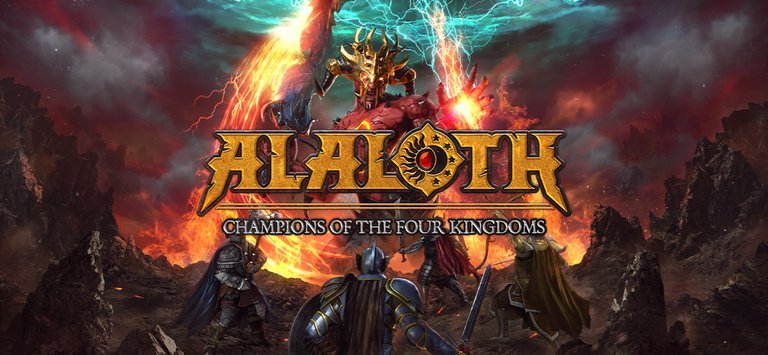
Alaloth: Champions of the Four Kingdoms is an action RPG set in the fantasy realm of Plamen, blending retro-inspired visuals with challenging, skill-based combat. Players explore a richly detailed world, customize their champions, and engage in intense real-time battles, with a focus on strategic use of abilities rather than button-mashing. The game features a cooperative multiplayer mode, a deep progression system, and a narrative that pays homage to classic RPGs while offering a fresh, demanding experience for fans of the genre.
Gameplay Videos
Where to Buy Alaloth: Champions of the Four Kingdoms
Alaloth: Champions of the Four Kingdoms Free Download
Alaloth: Champions of the Four Kingdoms Mods
Alaloth: Champions of the Four Kingdoms Guides & Walkthroughs
Alaloth: Champions of the Four Kingdoms Reviews & Reception
metacritic.com (79/100): A bold, heartfelt tribute to classic isometric action-RPGs.
steamcommunity.com : It’s a good game I’d say. It’s solid.
progameguides.com : A new and interesting take on classic CRPGs.
gazettely.com : An RPG Love Letter to Classic Adventures
Alaloth: Champions of the Four Kingdoms Cheats & Codes
PC (Trainer +5) [1.0]
Press the corresponding Numpad keys during gameplay.
| Code | Effect |
|---|---|
| Numpad 1 | Unlimited Health |
| Numpad 2 | Unlimited Stamina |
| Numpad 3 | Unlimited Money |
| Numpad 4 | All Items |
| Numpad 5 | Load Weight 0 |
PC (Trainer +8) [1.01]
Press the corresponding Numpad keys during gameplay.
| Code | Effect |
|---|---|
| Numpad 1 | Infinite Health |
| Numpad 2 | Infinite Stamina |
| Numpad 3 | Infinite Money |
| Numpad 4 | Infinite Weight |
| Numpad 5 | Super Damage / One Hit Kill |
| Numpad 6 | Infinite Item |
| Pause Break | Force Pause (Toggle) |
| Ctrl+/Ctrl- | Speedhack |
PC (Trainer +11) [1.01]
Press the corresponding Numpad keys during gameplay.
| Code | Effect |
|---|---|
| Numpad 1 | Infinite Consumables |
| Numpad 2 | Maximum Durability |
| Numpad 3 | Ignore Ingot Crafting Costs |
| Numpad 4 | Ignore Reagent Crafting Costs |
| Numpad 5 | Infinite Stamina |
| Numpad 6 | Infinite Health |
| Numpad 7 | Consumables Panel Pointer |
| Numpad 8 | Maximum Ability Points |
| Numpad 9 | Maximum Trait Points |
| Numpad 0 | Maximum Stat Points |
PC (Trainer +8) [1.0]
Press the corresponding Numpad keys during gameplay.
| Code | Effect |
|---|---|
| Numpad 1 | health |
| Numpad 2 | stamina |
| Numpad 3 | gold |
| Numpad 4 | items |
| Numpad 5 | zero weight |
| Numpad 6 | mana |
| Numpad 7 | focus |
| Numpad 8 | super damage |
PC (Trainer +5) [1.0]
Press the corresponding Numpad keys during gameplay.
| Code | Effect |
|---|---|
| Numpad 1 | infinite health |
| Numpad 2 | infinite stamina |
| Numpad 3 | infinite gold |
| Numpad 4 | infinite weight |
| Numpad 5 | instant kill |
PC (Trainer +8) [WeMod]
Press the corresponding hotkeys during gameplay.
| Code | Effect |
|---|---|
| Hotkey 1 | Unlimited HP |
| Hotkey 2 | Unlimited Stamina |
| Hotkey 3 | 0 Weight |
| Hotkey 4 | Unlimited Item |
| Hotkey 5 | Unlimited Money |
| Hotkey 6 | Edit Money |
| Hotkey 7 | Instant Kill |
| Hotkey 8 | Game Speed |
PC (PLITCH)
Use the PLITCH client to activate cheats.
| Code | Effect |
|---|---|
| Unlimited Poise | Unlimited Poise |
| Restore Health | Restore Health |
| Godmode | Godmode |
| Unlimited Stamina | Unlimited Stamina |
| Easy kills | Easy kills |
| Add Gold | Add Gold |
| Add Stashed Gold | Add Stashed Gold |
| Reset gold to 0 | Reset gold to 0 |
| Reset Stashed Gold To 0 | Reset Stashed Gold To 0 |
| Reset Inventory Weight To 0 | Reset Inventory Weight To 0 |
PC (Cheat Happens Trainer)
Use the trainer to activate cheats.
| Code | Effect |
|---|---|
| Unlimited Health | Unlimited Health |
| Unlimited Stamina | Unlimited Stamina |
| Unlimited Poise | Unlimited Poise |
| Invincible Player | Invincible Player |
| Unlimited Use or Collect or Drop Items | Unlimited Use or Collect or Drop Items |
| Unlimited Weight | Unlimited Weight |
| Game Speed | Game Speed |
| Edit: Gold | Edit: Gold |
| Edit: Stashed Gold | Edit: Stashed Gold |
| Edit: Duration Time Date of Game Value | Edit: Duration Time Date of Game Value |
| Edit: Amount of Selected Item | Edit: Amount of Selected Item |
Alaloth: Champions of the Four Kingdoms – A Modern Love Letter to Classic RPGs
Introduction: A Bold Fusion of Past and Present
Alaloth: Champions of the Four Kingdoms is a game that defies easy categorization. At its core, it is an isometric action RPG that boldly merges the tactical depth of Dark Souls with the exploratory freedom of Baldur’s Gate, all wrapped in a visual style that pays homage to the golden age of CRPG classics. Developed by Gamera Interactive, a studio with a clear passion for the genre’s history, Alaloth is not just a game—it’s a manifesto, a declaration of what modern RPGs can learn from their predecessors while still innovating.
From the moment you boot up the game, it’s evident that Alaloth is a labor of love. The opening cinematic, rich with lore and foreboding, sets the stage for a world on the brink of annihilation. The titular Alaloth, a fallen god imprisoned in the mortal realm, spreads corruption across the Four Kingdoms of Plamen, and it falls to you—a champion of one of these kingdoms—to rally the fragments of a shattered divine weapon and put an end to his reign. It’s a premise that feels familiar yet fresh, evoking the epic stakes of The Lord of the Rings while grounding itself in the gritty, morally ambiguous world-building of Game of Thrones.
But Alaloth is more than just its story. It’s a game that demands your attention, your patience, and your skill. It’s unapologetically difficult, rewarding mastery over button-mashing, and it’s all the better for it. In an era where many RPGs prioritize accessibility and streamlined gameplay, Alaloth dares to be challenging, to be complex, and to trust players to rise to the occasion.
This review will dissect Alaloth piece by piece, exploring its development history, narrative depth, gameplay mechanics, world-building, and legacy. By the end, you’ll understand why this game is not just a throwback but a vital evolution of the RPG genre.
Development History & Context: A Game Forged in Passion and Adversity
Gamera Interactive, the studio behind Alaloth, is a relatively small but ambitious team based in Italy. Their previous works, such as Unit 4 and Midnight Caravan, hinted at their affinity for deep mechanics and rich narratives, but Alaloth is their magnum opus—a game that has been in development for years and has undergone significant transformations.
The game’s journey began with a clear vision: to create an RPG that bridged the gap between classic isometric CRPGs like Baldur’s Gate and modern action RPGs like Dark Souls. The developers, many of whom grew up playing pen-and-paper RPGs and classics like Ultima and Diablo, wanted to craft something that felt both nostalgic and fresh. They drew inspiration from a wide array of sources, including Warhammer for its dark fantasy tone, The Lord of the Rings for its epic scale, and even Moonstone: A Hard Days Knight, a lesser-known but beloved action RPG from the ’90s.
However, the road to release was far from smooth. The COVID-19 pandemic disrupted development, forcing the team to adapt to remote work and delaying key milestones. In a 2021 production update, the developers admitted that they were unhappy with the game’s state and chose to go radio silent to focus on fixing its core issues. This period of introspection led to significant overhauls, including a complete redesign of the world map, expanded lore, and refinements to the combat system.
One of the most fascinating aspects of Alaloth’s development is its commitment to player feedback. Even during Early Access, which launched in June 2022, the team was actively iterating based on community input. They added new features, balanced mechanics, and even introduced a competitive multiplayer mode that pits players against AI-controlled champions in a race to defeat Alaloth. This willingness to evolve is rare in modern game development, where many studios stick rigidly to their initial vision regardless of player reception.
Technologically, Alaloth is built on the Unity engine, which allows for its detailed isometric visuals and smooth performance. While it may not push the boundaries of graphical fidelity, the art style is deliberately retro, evoking the hand-painted aesthetics of classic CRPGs while benefiting from modern lighting and animation techniques.
Narrative & Thematic Deep Dive: A World Worth Saving
Alaloth’s narrative is a tapestry of high fantasy tropes woven into something uniquely compelling. The game’s lore, co-written by industry veteran Chris Avellone (Planescape: Torment, Fallout: New Vegas), is dense and immersive, spanning millennia of divine conflict, political intrigue, and cultural evolution.
The Mythos of Plamen
The world of Plamen is divided into four kingdoms, each with its own distinct identity:
- The Republic of Larastir: A verdant elven realm where ancient secrets are guarded with zeal.
- Karak-Hohn: The dwarven stronghold nestled in the Fangs of Kemot, a mountain range rich with mineral wealth and steeped in tradition.
- The Desolation of Baga: A harsh, arid wasteland ruled by orcish warlords, where only the strong survive.
- The Blessed Kingdom of Edherest: A human civilization that has achieved a golden age of commerce and culture, though not without its dark underbelly.
At the heart of Plamen lies the Valley of Storms, where Alaloth, the Great Betrayer, is imprisoned. Once a god of the pantheon, Alaloth turned against his kin and sought to reshape the world in his image. Though he was defeated and bound to the mortal realm, his influence continues to spread, corrupting the land and its inhabitants.
The game’s timeline is rich with history, from the primordial chaos that birthed the All-Father to the rise and fall of empires. The lore is delivered through a combination of in-game texts, NPC dialogues, and environmental storytelling, rewarding players who take the time to explore and engage with the world.
The Champion’s Journey
You play as a champion, a warrior chosen by one of the Four Kingdoms to gather the fragments of Vaizmil, a divine weapon capable of defeating Alaloth. Your journey is not just a physical one but a moral and political odyssey. The choices you make—whether to ally with certain factions, spare or slay key figures, or pursue side quests—shape the world around you.
One of the most intriguing aspects of Alaloth’s narrative is its “world-centered” design. Unlike many modern RPGs, where the story revolves entirely around the player, Alaloth presents a living, breathing world where events unfold with or without your intervention. Miss a quest? A faction might rise or fall. Ignore a plea for help? A village could be wiped out. This design philosophy harkens back to older CRPGs, where the world felt vast and indifferent to the player’s presence.
The companions you recruit along the way are another highlight. Each of the 12 available companions has a unique backstory, personality, and combat role. However, your alignment—good, evil, or neutral—dictates who will join you. This system adds a layer of depth to character creation, as your moral choices have tangible consequences.
Themes of Power and Corruption
At its core, Alaloth is a story about the corrupting influence of power. Alaloth’s betrayal of the pantheon mirrors the moral dilemmas faced by the player. Do you wield your power for the greater good, or do you succumb to the temptation of dominance? The game doesn’t provide easy answers, instead presenting a spectrum of choices that blur the lines between heroism and villainy.
The themes are reinforced by the game’s factions, each with its own agenda. The Ver’Quintiss, for example, are elven paladins who once sought purity but have become ruthless inquisitors in their quest to eradicate Alaloth’s influence. The orcish clans, meanwhile, are locked in a brutal struggle for survival, where strength is the only currency.
Gameplay Mechanics & Systems: A Dance of Steel and Strategy
Alaloth’s gameplay is where the game truly shines—and where it occasionally stumbles. The developers have ambitious goals: to merge the tactical depth of Dark Souls with the exploratory freedom of Baldur’s Gate, all within an isometric perspective. The result is a game that feels both familiar and fresh, though not without its quirks.
Combat: Precision Over Button-Mashing
The combat system is the heart of Alaloth, and it’s clear that the developers have put a tremendous amount of thought into it. Unlike many action RPGs, where spamming attacks can carry you through most encounters, Alaloth demands precision, timing, and strategy.
- Stamina Management: Every action—attacking, dodging, blocking—consumes stamina. Run out, and you’re left vulnerable. This system forces players to think carefully about their engagements, balancing aggression with defense.
- Weapon Variety: From swords and axes to staves and bows, each weapon type has its own move set, weight, and combat rhythm. Heavy weapons deal massive damage but leave you open to counterattacks, while lighter weapons allow for quicker, more evasive playstyles.
- Enemy AI: Enemies are aggressive and unpredictable. They’ll flank you, feint attacks, and exploit openings. This makes every encounter feel like a duel rather than a mindless slog.
However, the combat system isn’t without its flaws. The isometric perspective, while visually striking, can sometimes obscure enemy attacks, leading to cheap hits. Additionally, the game’s Souls-like mechanics don’t always mesh well with its Diablo-like enemy encounters. Facing off against a single, powerful foe is exhilarating, but getting swarmed by lesser enemies can feel overwhelming and unfair.
Character Progression: Depth Without Overwhelm
Alaloth offers a robust character progression system that avoids the pitfalls of excessive complexity. Players choose from four races (human, elf, dwarf, orc), each with its own strengths and weaknesses. From there, you select a “Way of Power”—Arms, Gods, or Nature—each of which branches into three distinct professions.
- Arms: Focuses on martial prowess, with professions like the Berserker (high damage, low defense) and the Knight (balanced offense and defense).
- Gods: Centers on divine magic, with professions like the Paladin (holy damage and healing) and the Necromancer (dark magic and summoning).
- Nature: Emphasizes primal forces, with professions like the Druid (healing and nature magic) and the Ranger (archery and traps).
What’s impressive about Alaloth’s progression is how it avoids overwhelming players with excessive stats and skills. There are only four primary attributes (Strength, Dexterity, Constitution, Luck), and each can be upgraded a limited number of times. Additional stat points are hidden throughout the world in “Hero Books,” encouraging exploration.
The game also features a unique “reputation” system, where your actions influence how factions perceive you. Help a village, and they’ll offer better prices and quests. Betray them, and they’ll turn hostile. This system adds a layer of depth to the world, making your choices feel meaningful.
Crafting and Survival Mechanics
Crafting in Alaloth is more involved than in many RPGs. To forge weapons and armor, you’ll need to gather materials, find a blacksmith, and pay for their services. Each kingdom has its own unique materials, encouraging trade and exploration. For example, elven armor requires rare ingredients found only in Larastir, while dwarven gear is crafted from metals mined in Karak-Hohn.
The game also features a cooking system, where you can prepare meals that grant temporary buffs before battles. It’s a small but welcome addition that adds immersion to the world.
One of the more divisive mechanics is the game’s weight system. Your character can only carry so much gear, forcing you to make tough choices about what to bring into battle. This adds a layer of strategy but can also be frustrating if you’re unprepared for a sudden encounter.
Multiplayer: A Unique Twist
Alaloth’s multiplayer mode is one of its most innovative features. In the Competitive Campaign, you race against three AI-controlled champions to gather Vaizmil’s fragments and defeat Alaloth. The AI is aggressive and will actively hunt you down, adding a layer of tension to the experience.
The game also supports local co-op for up to three players, allowing friends to team up and tackle the game’s challenges together. It’s a great way to experience the game’s tougher dungeons and boss fights.
World-Building, Art & Sound: A Living, Breathing Fantasy
Alaloth’s world is a masterclass in environmental storytelling. The continent of Plamen is vast and varied, with each kingdom offering a distinct visual and cultural identity. The Goldwood Forest is lush and mysterious, while the Desolation of Baga is a harsh, sun-scorched wasteland. The cities are bustling with life, filled with NPCs who have their own routines and dialogues.
The art style is deliberately retro, evoking the hand-painted aesthetics of classic CRPGs like Baldur’s Gate and Icewind Dale. The isometric perspective gives the game a timeless feel, while modern lighting and particle effects add depth and immersion.
The sound design is equally impressive. The game’s soundtrack is a mix of orchestral and ambient tracks that perfectly capture the mood of each location. The combat sounds are weighty and impactful, making every swing of your sword feel satisfying.
Reception & Legacy: A Game That Defies Expectations
Alaloth has received generally favorable reviews, with critics praising its ambitious blend of classic and modern RPG mechanics. On Metacritic, the game holds a score of 79, with many reviewers highlighting its deep combat system, rich world-building, and innovative multiplayer mode.
However, the game is not without its detractors. Some players have criticized its steep learning curve, occasional technical issues, and the fact that its Souls-like combat doesn’t always mesh well with its Diablo-like enemy encounters. Others have pointed out that the game’s story, while rich in lore, can feel somewhat thin in terms of character development and narrative payoff.
Despite these criticisms, Alaloth has carved out a niche for itself as a game that dares to be different. It’s a love letter to classic RPGs, but it’s not content to simply mimic the past. Instead, it takes the best elements of those games and reimagines them for a modern audience.
Conclusion: A Triumph of Ambition and Passion
Alaloth: Champions of the Four Kingdoms is a game that demands to be experienced. It’s not perfect—its combat can be frustrating, its story can feel uneven, and its learning curve is steep. But for those willing to put in the time, it offers a deeply rewarding experience that few modern RPGs can match.
What makes Alaloth special is its ambition. It’s a game that refuses to be pigeonholed, blending elements of Dark Souls, Baldur’s Gate, and Diablo into something uniquely its own. It’s a game that trusts players to rise to its challenges, to explore its world, and to shape its story.
In an era where many RPGs prioritize accessibility and streamlined gameplay, Alaloth is a breath of fresh air. It’s a game that reminds us why we fell in love with the genre in the first place: for the thrill of victory, the agony of defeat, and the joy of discovery.
Final Verdict: 8.5/10 – A modern classic in the making.
Alaloth: Champions of the Four Kingdoms is not just a game—it’s an experience. And for fans of deep, challenging RPGs, it’s an experience worth having.