
- Release Year: 2007
- Platforms: Linux, Macintosh, PlayStation 3, Windows, Xbox 360
- Publisher: 1C Company, Activision Publishing, Inc., Aspyr Media, Inc., Cenega Poland Sp. z o.o., id Software, Inc., Noviy Disk
- Developer: Splash Damage, Ltd
- Genre: Action
- Perspective: 1st-person
- Game Mode: Online PVP, Single-player
- Gameplay: Class-based, Objective-driven, Shooter, Vehicular combat
- Setting: Futuristic, Sci-fi
- Average Score: 84/100
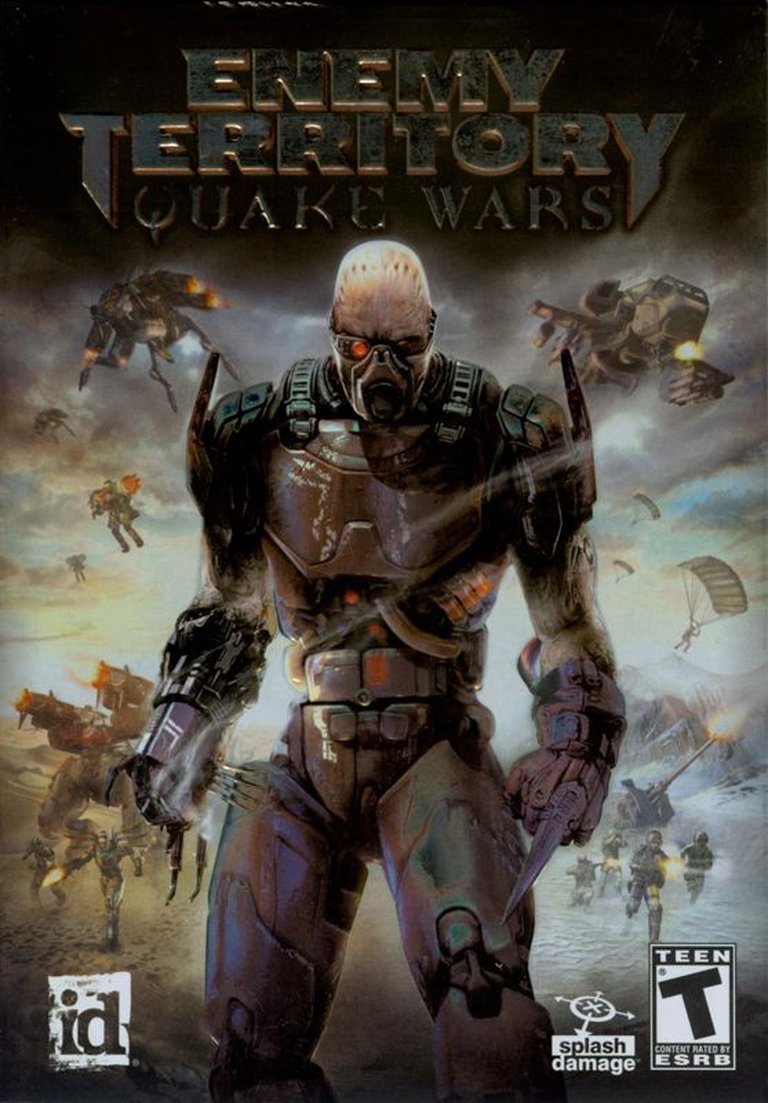
Description
Enemy Territory: Quake Wars is a sci-fi first-person shooter set in 2060, where the Strogg, a technologically advanced alien race, invades Earth after conquering their homeworld. Players join the Global Defense Force (GDF) or the Strogg in a large-scale, objective-driven multiplayer battle for planetary control. The game emphasizes asymmetrical team-based gameplay, with each faction featuring unique classes, weapons, and vehicles. Missions involve completing objectives like building structures, hacking systems, or destroying enemy installations, requiring coordination and strategic use of class abilities. With expansive maps and vehicular combat, the game blends intense action with tactical depth, serving as a prequel to Quake II.
Gameplay Videos
Enemy Territory: Quake Wars Free Download
Enemy Territory: Quake Wars Cracks & Fixes
Enemy Territory: Quake Wars Patches & Updates
Enemy Territory: Quake Wars Mods
Enemy Territory: Quake Wars Guides & Walkthroughs
Enemy Territory: Quake Wars Reviews & Reception
metacritic.com (84/100): A triumphant return to form for the series.
ign.com : Not quite ready to take back the home front.
empireonline.com : The most immersive and exhilarating way to enjoy digital squad warfare.
trustedreviews.com : With Quake Wars, iD Software and the Quake franchise are back innovating in the online gaming arena.
Enemy Territory: Quake Wars Cheats & Codes
PC
Open the console during a single player game by pressing [Ctrl] + [Alt] + [~] at the same time. Then type ‘net_allowcheats 1’ to enable cheat mode.
| Code | Effect |
|---|---|
| god | God mode (must enter this code every time you respawn) |
| give ammo | More ammo |
| give health | More health |
| noclip | No-clipping mode |
| g_maxproficiency 1 | Maximum rank and everything unlocked (use g_maxproficiency 0 to disable) |
| pm_thirdperson 1 | Third person view (enter pm_thirdperson 0 to disable) |
| spawn_vehicle husky | Spawns a husky vehicle |
| spawn_vehicle titan | Spawns a titan vehicle |
| spawn_vehicle anasai | Spawns an anasai vehicle |
| spawn_vehicle bumbelbee | Spawns a bumbelbee vehicle |
| spawn_vehicle mcp | Spawns a mcp vehicle |
| spawn_vehicle platpus | Spawns a platpus vehicle |
| spawn_deployable X | Spawns a deployable (replace X with the deployable name, e.g., radar jammer) |
Enemy Territory: Quake Wars: A Tactical Masterpiece or a Missed Opportunity?
Introduction
In the annals of first-person shooter history, few games have attempted to blend the frenetic pace of Quake with the strategic depth of Wolfenstein: Enemy Territory as ambitiously as Enemy Territory: Quake Wars (ET:QW). Released in 2007 by Splash Damage and published by Activision, ET:QW was a bold experiment—a prequel to Quake II that sought to redefine team-based multiplayer shooters. But was it a triumphant evolution or a flawed relic of its time? This review dissects ET:QW’s legacy, mechanics, and cultural impact to answer that question.
Development History & Context
The Studio and Vision
Splash Damage, a UK-based developer known for Wolfenstein: Enemy Territory, was tasked with merging the Quake universe’s sci-fi brutality with the objective-driven gameplay of Enemy Territory. The result was a game that emphasized teamwork, asymmetrical factions (the human GDF and alien Strogg), and large-scale battles. The studio’s vision was clear: create a tactical shooter where every class and vehicle played a pivotal role in victory.
Technological Constraints
ET:QW ran on a modified id Tech 4 engine (the same used in Doom 3 and Quake 4), enhanced with MegaTexture technology. This allowed for sprawling, detailed maps with minimal texture repetition—a technical marvel at the time. However, the engine’s limitations (e.g., lack of destructible environments) and the game’s demanding hardware requirements (even for mid-2000s PCs) became points of contention.
The Gaming Landscape
2007 was a crowded year for multiplayer shooters. Team Fortress 2, Call of Duty 4, and Battlefield 2142 dominated the scene, each offering distinct flavors of team-based combat. ET:QW entered this fray as a niche hybrid, appealing to fans of both Quake’s speed and Enemy Territory’s strategy. Its commercial success (topping UK and US PC sales charts briefly) was overshadowed by mixed critical reception, particularly for its console ports.
Narrative & Thematic Deep Dive
Plot and Setting
ET:QW serves as a prequel to Quake II, depicting the Strogg’s initial invasion of Earth in 2060. The GDF, humanity’s last line of defense, battles the cybernetic horde across four global campaigns (Africa, North America, Northern Europe, and the Pacific). The narrative is minimalist, delivered through mission briefings and environmental storytelling. While lacking the depth of Half-Life or Halo, the game’s lore—expanded in Quake II and Quake IV—provides a grim backdrop for its battles.
Themes
- Asymmetrical Warfare: The GDF’s conventional arsenal (assault rifles, tanks) contrasts with the Strogg’s alien tech (railguns, hover tanks), reinforcing the game’s core theme of adaptability.
- Teamwork Over Individualism: Unlike Quake III Arena’s deathmatch chaos, ET:QW rewards coordination. A lone wolf is useless; victory hinges on medics reviving allies, engineers repairing vehicles, and covert ops hacking enemy defenses.
- Humanity’s Last Stand: The Strogg’s genocidal intent (harvesting humans for biomass) frames the conflict as existential, adding weight to each objective.
Characters and Dialogue
The game’s cast is faceless, defined by their roles rather than personalities. The Strogg’s grotesque designs (e.g., the Infiltrator’s flesh-camouflage ability) and the GDF’s militaristic aesthetic reinforce their ideological divide. Voice acting is functional but unremarkable, with most dialogue limited to battlefield chatter.
Gameplay Mechanics & Systems
Core Gameplay Loop
ET:QW’s objectives are dynamic and map-specific. For example:
– Valley: The GDF must build a bridge, escort an MCP (Mobile Command Post), and hack a Strogg shield to fire a missile.
– Sewer: The Strogg must sabotage a GDF dam while defending their slipgate.
Each objective chain requires class synergy:
– Engineers build bridges and repair vehicles.
– Medics revive teammates (GDF) or convert corpses into spawn points (Strogg).
– Field Ops/Oppressors call in artillery or orbital strikes.
– Covert Ops/Infiltrators hack terminals or disguise as enemies.
Combat and Movement
- GDF: Feels grounded, with traditional FPS mechanics (e.g., sprinting, crouching).
- Strogg: More agile, with hover packs and regenerative health (via Stroyent harvested from corpses).
- Vehicles: Range from the GDF’s Titan tank to the Strogg’s Cyclops walker, each requiring crew coordination.
Progression and UI
- XP System: Players earn XP for completing objectives, unlocking perks (e.g., faster reloads) and weapons. However, progression resets after each campaign, limiting long-term investment.
- UI: Functional but dated, with clunky menus and minimal HUD customization.
Innovations and Flaws
- Asymmetrical Balance: A double-edged sword. While the factions play differently, some classes (e.g., Strogg Technician) feel underpowered compared to their GDF counterparts.
- Vehicle Spawns: Overly frequent respawns trivialized vehicle combat, reducing tactical depth.
- Lack of Voice Chat: A glaring omission for a team-based game, forcing players to rely on text chat or external tools.
World-Building, Art & Sound
Visual Design
- MegaTexture: The engine’s standout feature, enabling vast, detailed environments (e.g., Yosemite-inspired Valley). However, the game’s color palette (browns, grays) and repetitive textures grew monotonous.
- Character Models: The GDF’s generic soldiers pale beside the Strogg’s grotesque, biomechanical designs—a missed opportunity for visual storytelling.
Atmosphere
ET:QW’s tone is bleak but lacks the oppressive dread of Doom 3 or the cinematic scale of Battlefield. The Strogg’s invasion feels more like a backdrop than a living threat.
Sound Design
- Weapons: Satisfying but unexceptional. The Strogg’s railgun and GDF’s LAW rocket launcher stand out.
- Music: Bill Brown’s score is forgettable, failing to match the intensity of Quake II’s industrial metal.
- Voice Acting: Serviceable but lacks the charm of Team Fortress 2’s characters.
Reception & Legacy
Critical Reception
- PC (84% Metacritic): Praised for its objective-driven gameplay and teamwork mechanics but criticized for repetitive maps and lack of innovation.
- Consoles (60–69% Metacritic): Hampered by technical issues (e.g., frame rate drops, reduced player counts) and clunky controls.
Commercial Performance
ET:QW topped PC sales charts briefly but faded quickly, overshadowed by Call of Duty 4 and Team Fortress 2. Its console ports were commercial disappointments.
Influence
- Class-Based Shooters: ET:QW’s asymmetrical factions and objective chains influenced later games like Dirty Bomb and Battlefield Hardline.
- Quake Champions: The Strogg Infiltrator’s inclusion in Quake Champions (2017) revived interest in ET:QW’s lore.
Conclusion: A Flawed Gem
Enemy Territory: Quake Wars is a game of contradictions. Its ambitious blend of Quake’s speed and Enemy Territory’s strategy remains unmatched, but its execution is uneven. The asymmetrical factions and objective-driven gameplay are brilliant in theory but marred by repetitive maps and balance issues. Its MegaTexture engine was groundbreaking but visually underwhelming.
Verdict: A cult classic that deserves recognition for its innovations but falls short of greatness. For fans of tactical shooters, it’s a must-play; for casual gamers, it’s a relic of a bygone era.
Final Score: 7.5/10 – A bold experiment that didn’t quite stick the landing.