
- Release Year: 2011
- Platforms: Windows
- Publisher: Electronic Arts, Inc.
- Genre: Special edition
- Game Mode: Single-player
- Average Score: 80/100
Description
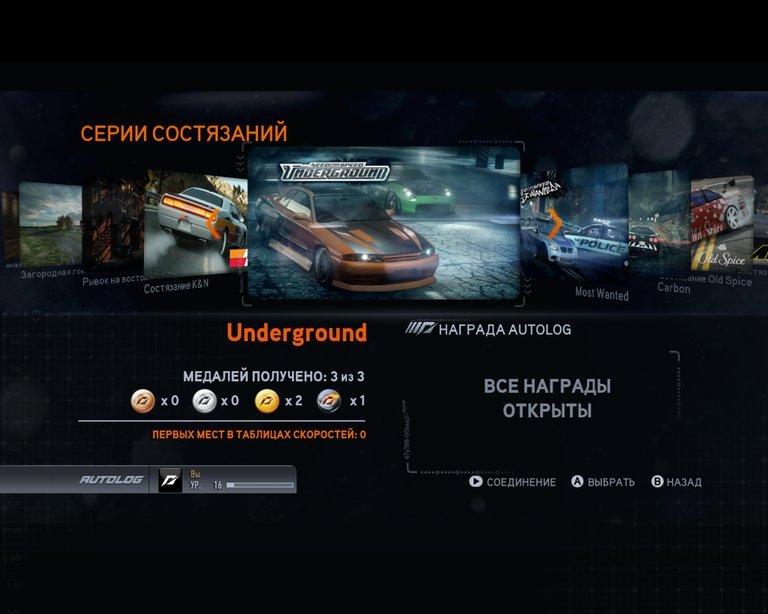
Need for Speed: The Run (Limited Edition) – Origin.com Pre-Order Version is a special edition of the high-speed racing game, offering exclusive content for pre-order customers. Set in a cross-country race from San Francisco to New York, the game features intense street racing, police chases, and a variety of exotic cars. This limited edition includes additional DLC packs inspired by classic Need for Speed titles, such as Underground, Most Wanted, and Carbon, along with unique vehicles like the Nissan Skyline GT-R R32 and BMW M3 GTS.
Need for Speed: The Run (Limited Edition) – Origin.com Pre-Order Version Cracks & Fixes
Need for Speed: The Run (Limited Edition) – Origin.com Pre-Order Version Guides & Walkthroughs
Need for Speed: The Run (Limited Edition) – Origin.com Pre-Order Version Reviews & Reception
mobygames.com (80/100): Average score: 4.0 out of 5
Need for Speed: The Run (Limited Edition) – Origin.com Pre-Order Version: A Comprehensive Retrospective
Introduction: The Cross-Country Gamble
Need for Speed: The Run (Limited Edition) – Origin.com Pre-Order Version (2011) stands as one of the most ambitious—and polarizing—entries in the long-running Need for Speed franchise. Developed by EA Black Box and published by Electronic Arts, this iteration attempted to fuse the series’ signature high-octane racing with a cinematic narrative, out-of-car sequences, and the raw power of the Frostbite 2 engine. The Limited Edition, specifically the Origin.com Pre-Order Version, offered a tantalizing package of exclusive cars, challenge series, and bonus content, positioning itself as the definitive way to experience The Run.
Yet, beneath its glossy exterior lay a game torn between innovation and identity crisis. Was it a racing sim? An action-adventure hybrid? A return to the underground roots of the series? This review dissects The Run in its most premium form, exploring its development, narrative ambitions, gameplay mechanics, and lasting legacy.
Development History & Context: Frostbite Meets the Open Road
The Studio & Vision
EA Black Box, known for Need for Speed: Carbon (2006) and Need for Speed: ProStreet (2007), faced immense pressure to revitalize the franchise. By 2011, the series was fragmented—Hot Pursuit (2010) had reignited interest with its cop vs. racer dynamic, while Shift (2009) catered to simulation enthusiasts. The Run sought to carve a new path: a narrative-driven, transcontinental race with Hollywood-style set pieces.
The decision to use DICE’s Frostbite 2 engine—previously reserved for Battlefield and Mirror’s Edge—was a bold gamble. Frostbite 2 promised unprecedented environmental destruction, dynamic lighting, and physics, but it was untested in racing games. The engine’s strengths (e.g., realistic debris, weather effects) clashed with the arcadey handling model, creating a tension between spectacle and gameplay.
The Gaming Landscape of 2011
The Run launched into a crowded market:
– Arcade Racers: Forza Motorsport 4 (Turn 10) and Gran Turismo 5 (Polyphony Digital) dominated the sim space, while Burnout Crash! (Criterion) offered pure arcade chaos.
– Open-World Racing: Driver: San Francisco (Ubisoft) redefined storytelling in racing games with its “shift” mechanic.
– Narrative Experiments: LA Noire (Rockstar) proved games could blend driving with cinematic storytelling, raising expectations for The Run’s ambitious cutscenes.
EA’s marketing positioned The Run as “the most dangerous race in Need for Speed history”, emphasizing its $25 million prize, 300 competitors, and a 3,000-mile journey from San Francisco to New York. The Limited Edition, with its pre-order bonuses, was designed to capitalize on fan nostalgia while offering tangible rewards.
Narrative & Thematic Deep Dive: Jack Rourke’s Desperate Run
Plot Summary
Players assume the role of Jack Rourke, a street racer entangled in a high-stakes, illegal cross-country race known simply as “The Run”. Framed for a crime he didn’t commit, Jack must outrace 200 competitors, evade corrupt cops, and survive assassination attempts by the mob—all while navigating a diverse, ever-changing American landscape.
The story unfolds through:
– In-car radio chatter (e.g., rival taunts, police dispatches).
– Cinematic cutscenes (including on-foot sequences, a series first).
– Dynamic mid-race events (e.g., avalanches, train collisions).
Themes & Tone
- Survival & Redemption: Jack’s journey is one of desperation and atonement, mirroring classic road movies like Vanishing Point (1971) or The Cannonball Run (1981).
- The American Dream (Corrupted): The race’s $25 million prize symbolizes capitalism’s dark side—competitors will kill for it, and the police are as corrupt as the criminals.
- Man vs. Machine vs. Nature: The game pits Jack against rival drivers, law enforcement, and the environment itself (e.g., blizzards, rockslides).
Characters & Dialogue
- Jack Rourke (Voiced by an uncredited actor): A stoic, gritty protagonist with a mysterious past. His dialogue is minimal but effective, conveying urgency.
- Sam Harper (Jack’s ally): A former cop turned informant, providing exposition and mission briefings.
- Antagonists: The mob boss Marcus Blackwell and rival racer Darius (a nod to NFS: Carbon) serve as primary foils.
Critique: The narrative’s ambition outpaces its execution. While the premise is gripping, the on-foot sections feel jarring, and Jack’s character lacks depth. The dialogue often veers into B-movie territory, undermining the game’s cinematic aspirations.
Gameplay Mechanics & Systems: A Race of Contradictions
Core Gameplay Loop
The Run is structured as a linear, stage-based race divided into 10 segments, each with:
– Checkpoint sprints
– Time trials
– Pursuit evasion sequences
– Boss battles (e.g., racing Darius in a canyon)
Handling & Physics
- Arcadey but weighty: Cars handle like heavy, drift-prone projectiles, favoring powerslides over precision.
- Frostbite 2’s impact: The engine enables realistic crashes and debris, but the physics often feel inconsistent (e.g., cars bouncing unpredictably off guardrails).
- Nitro system: A boost mechanic tied to a cooldown meter, encouraging risky overtakes.
Progression & Customization
- No traditional garage: Unlike previous NFS games, The Run locks players into predefined cars for each segment, limiting customization.
- Upgrade system: Minimal—players can tweak handling, speed, and nitro efficiency but cannot swap parts or paint jobs.
- Autolog integration: EA’s social competition system tracks friend rivalries and leaderboards, adding replay value.
Multiplayer & Challenges
- Limited Edition Exclusives:
- Carbon Challenge Series: 3 races inspired by NFS: Carbon, featuring the Audi R8 “Darius” and Corvette Z06 “Cross”.
- Most Wanted/Underground Series: Bonus cars like the BMW M3 GTS and Nissan Skyline GT-R R32.
- Online modes: Playlists, matchmaking, and co-op races, though the community dwindled post-launch.
Flaws:
– Linear design: The lack of open-world freedom clashes with the game’s “cross-country” premise.
– Scripted sequences: Some races force crashes or near-misses, disrupting player agency.
– Difficulty spikes: Later stages (e.g., Alaska’s icy roads) punish mistakes harshly.
World-Building, Art & Sound: A Visual Spectacle
Setting & Atmosphere
The Run’s greatest strength is its diverse, meticulously crafted environments:
– San Francisco’s urban sprawl (tight alleys, Golden Gate Bridge).
– Nevada deserts (dust storms, abandoned highways).
– Colorado mountains (avalanches, cliffside roads).
– Chicago’s industrial zones (rain-slicked streets, train crossings).
– New York’s finale (Times Square chaos).
The Frostbite 2 engine delivers:
– Dynamic weather (blizzards, rainstorms).
– Destruction physics (collapsing bridges, exploding gas stations).
– Lighting effects (neon reflections, sun flares).
Sound Design & Music
- Engine roars: Authentic audio recording for each car, enhancing immersion.
- Radio stations: A mix of licensed rock, electronic, and hip-hop (e.g., Black Rebel Motorcycle Club, The Chemical Brothers).
- Voice acting: Serviceable but unremarkable, with some over-the-top villain monologues.
Critique: The visuals remain impressive even by modern standards, but the soundtrack lacks memorability compared to NFS: Underground’s iconic hip-hop beats.
Reception & Legacy: A Flawed but Bold Experiment
Critical Reception (2011)
- Metacritic: 70/100 (PC), 68/100 (PS3), 65/100 (Xbox 360) – “Mixed or average reviews.”
- Praised:
- Gorgeous graphics (IGN: “One of the best-looking racers ever”).
- High-stakes narrative (GameSpot: “A fresh take on the genre”).
- Varied environments (Eurogamer: “A love letter to American landscapes”).
- Criticized:
- Clunky on-foot sections (Destructoid: “Feels like a bad Uncharted knockoff”).
- Linear progression (Kotaku: “More Cannonball Run than Forza“).
- Inconsistent physics (PC Gamer: “Cars handle like soap on ice”).
Commercial Performance
- Sales: Moderate success—outpaced by Forza 4 but sold enough to justify the Most Wanted reboot (2012).
- Limited Edition Impact: The pre-order bonuses (especially the Lamborghini Aventador) drove early adoption, but the DLC was later bundled in the Heroes & Villains Pack.
Legacy & Influence
- Narrative Racing: Paved the way for NFS: Rivals (2013) and NFS: Payback (2017), which embraced story-driven gameplay.
- Frostbite in Racing: Proved the engine could handle high-speed action, influencing later EA racers like NFS: Heat (2019).
- Cult Following: Despite flaws, The Run developed a niche fanbase who appreciate its ambition and spectacle.
Conclusion: A Flawed Masterpiece or a Missed Opportunity?
Need for Speed: The Run (Limited Edition) – Origin.com Pre-Order Version is a game of contradictions:
– ✅ Stunning visuals and diverse environments that still impress.
– ✅ A bold narrative experiment that (mostly) works.
– ✅ Exclusive content (cars, challenges) that adds value.
But it’s also:
– ❌ Hamstrung by linear design and jarring on-foot sections.
– ❌ Plagued by inconsistent physics and difficulty spikes.
– ❌ A victim of its own ambition, caught between arcade and cinematic aspirations.
Final Verdict: 7.5/10 – “A Flawed but Essential Detour”
The Run is not the best Need for Speed, but it’s one of the most interesting. The Limited Edition’s bonuses sweeten the deal, making it the definitive way to experience this audacious, imperfect race. For fans of high-stakes storytelling and visual spectacle, it’s a journey worth taking—just be prepared for a few bumps along the way.
Where It Stands in History:
– A bold but flawed experiment that pushed the franchise in new directions.
– A cult classic beloved for its ambition and set pieces.
– A cautionary tale about balancing narrative and gameplay in racing games.
For those who dare to take The Run, the Limited Edition remains the ultimate pit stop. 🚗💨