
- Release Year: 2023
- Platforms: Windows
- Genre: Puzzle
- Perspective: 1st-person
- Game Mode: Single-player
- Gameplay: Real-time tactics (RTT), Turn-based
- Setting: Fantasy
- Average Score: 74/100
Description
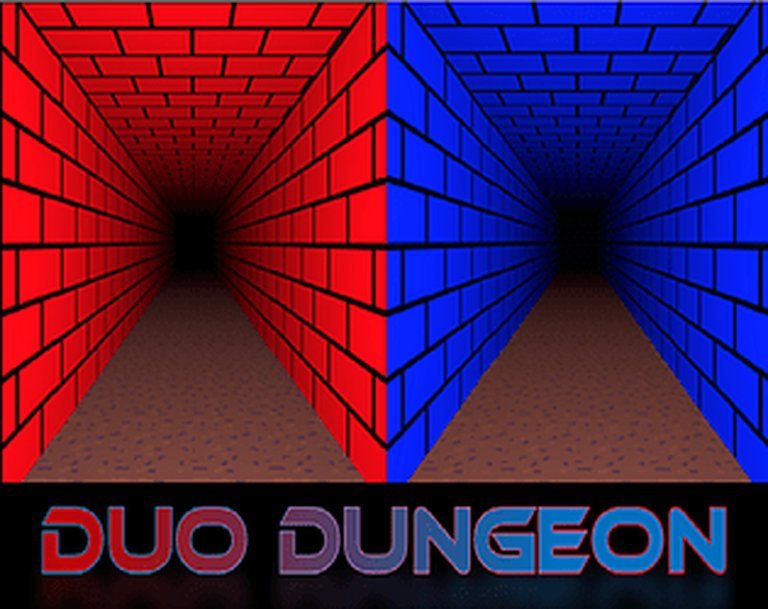
Duo Dungeon is a unique puzzle game set in a fantasy world where players control two characters simultaneously, split apart by a broken magic mirror. Navigating through a perilous dungeon filled with traps, enemies, and puzzles, the goal is to reunite the duo by repairing the mirror. The game blends turn-based strategy with real-time tactics, offering a first-person perspective and direct control over both characters, challenging players to coordinate their actions to overcome obstacles and restore their fractured bond.
Duo Dungeon Reviews & Reception
itch.io (74/100): This one’s really good! The intro was super charming and the duality mechanics are immediately apparent and super interesting.
Duo Dungeon: A Mirrored Masterpiece of Cooperative Puzzle-Crawling
Introduction: The Allure of the Split Screen
In the vast, labyrinthine history of dungeon crawlers, few games dare to redefine the genre’s core mechanics. Duo Dungeon, released in 2023 by indie developer Umbreon117, is one such rarity—a game that takes the familiar tropes of fantasy exploration and puzzles and fractures them, quite literally, into two. At its heart, Duo Dungeon is a first-person, turn-based puzzle adventure where players control two characters simultaneously, each trapped in separate halves of a shattered magical mirror. The premise is deceptively simple: navigate twin protagonists through a treacherous dungeon, solving puzzles and battling foes in tandem to restore the mirror and reunite the fractured souls.
Yet, beneath this elegant conceit lies a game that is as much a testament to indie ingenuity as it is a love letter to classic dungeon crawlers. Duo Dungeon emerges at a fascinating crossroads in gaming history—an era where retro aesthetics and modern design philosophies collide, where the legacy of Dungeons & Dragons and its digital offspring looms large, and where indie developers are increasingly pushing the boundaries of what a “dungeon crawler” can be. This review will dissect Duo Dungeon with surgical precision, exploring its development, mechanics, narrative, and legacy, while situating it within the broader tapestry of gaming history.
Development History & Context: The Indie Alchemy of Umbreon117
The Studio and the Vision
Duo Dungeon is the brainchild of Umbreon117, a solo developer whose work reflects the ethos of the modern indie scene: small in scale but ambitious in scope. The game was born from the Dungeon Crawler Jam 2023, a community-driven event that challenged creators to reimagine the dungeon-crawling genre. Umbreon117’s submission stood out not just for its technical polish but for its bold mechanical innovation—the dual-character control scheme.
The developer’s vision was clear: to craft a dungeon crawler that emphasized cooperation, not just between players in multiplayer settings, but within the mind of a single player. The game’s official description on itch.io succinctly captures this intent: “A unique dungeon crawling experience where you control two characters simultaneously!” This wasn’t merely a gimmick; it was a fundamental rethinking of how players interact with dungeon environments. By splitting the protagonist into two distinct entities, Duo Dungeon forces players to engage in a constant mental juggling act, where the success of one character is inextricably tied to the other.
Technological Constraints and Creative Solutions
Built in Unity, Duo Dungeon leverages the engine’s flexibility to create a seamless first-person experience that feels both retro and modern. The game’s visual style is reminiscent of early 3D dungeon crawlers like Eye of the Beholder or Dungeon Master, but with a contemporary indie twist—clean lines, vibrant colors, and a focus on readability. The turn-based, real-time tactics (RTT) hybrid gameplay ensures that players can deliberate over their moves without the pressure of twitch reflexes, a design choice that harkens back to the golden age of CRPG dungeon delving.
One of the most striking aspects of Duo Dungeon’s development is its sound design, which is almost entirely sourced from open-game art repositories and Creative Commons-licensed works. The game’s audio is a patchwork of contributions from artists like Kevin MacLeod (whose Lightless Dawn sets the atmospheric tone), Ben Wenzel (artisticdude), and Iwan Gabovitch (qubodup), among others. This collaborative approach to sound design is emblematic of the indie spirit—resourceful, community-driven, and unburdened by the need for AAA polish.
The Gaming Landscape in 2023
Duo Dungeon arrived at a time when dungeon crawlers were experiencing a renaissance. The success of Baldur’s Gate 3 (2023) had reignited mainstream interest in CRPG mechanics, while indie titles like Darkest Dungeon and Legend of Grimrock had proven that there was still a hunger for grid-based, first-person exploration. Additionally, the Dungeons & Dragons franchise was riding a wave of cultural relevance, thanks to the popularity of actual-play streams like Critical Role and the release of the Honor Among Thieves film.
Yet, Duo Dungeon carves its own niche. Unlike the narrative-driven epics of Baldur’s Gate or the roguelike brutality of Darkest Dungeon, Duo Dungeon is a puzzle-first experience. It strips away the bloated inventories and sprawling dialogue trees of modern RPGs, distilling the dungeon crawl to its purest form: navigation, cooperation, and problem-solving.
Narrative & Thematic Deep Dive: A Tale of Two Halves
Plot: The Shattered Mirror
The narrative of Duo Dungeon is minimalist but effective. The game opens with a magical mirror—an artifact of unknown origin—shattering into two halves, each trapping a fragment of the protagonist’s soul. The player’s goal is to guide both halves through a labyrinthine dungeon, solving puzzles and overcoming obstacles to reunite the fractured pieces and restore the mirror.
While the story is light on exposition, it is rich in symbolism. The shattered mirror is a potent metaphor for duality—the push and pull of opposing forces, the need for balance, and the idea that wholeness can only be achieved through cooperation. This theme is reinforced by the game’s mechanics, where progress is impossible unless both characters work in harmony.
Characters and Dialogue
Duo Dungeon eschews traditional character customization in favor of a fixed duo. The two protagonists are unnamed, their personalities defined not by dialogue but by their roles in the puzzle-solving dynamic. One might be the “leader,” while the other is the “follower”; one might be the “key,” while the other is the “lock.” This lack of traditional characterization is a bold choice, shifting the focus from narrative to mechanical storytelling.
That said, the game’s environmental storytelling is subtle but effective. The dungeon itself feels alive, with traps, mechanisms, and enemy placements that hint at a larger history. The absence of NPCs or lore dumps forces players to piece together the world’s backstory through gameplay alone—a refreshing departure from the hand-holding of modern RPGs.
Themes: Duality, Cooperation, and the Illusion of Control
At its core, Duo Dungeon is a meditation on duality and interdependence. The game’s central mechanic—controlling two characters at once—is a masterclass in forcing players to confront the limitations of their own cognition. The brain is not wired to multitask effectively, and Duo Dungeon exploits this by demanding constant attention to both characters. A mistake with one can doom the other, creating a tense, almost Schrödinger’s cat-like dynamic where both halves of the protagonist exist in a state of simultaneous success and failure.
The game also explores the illusion of control. In most dungeon crawlers, the player is the omnipotent puppeteer, pulling the strings of their party with godlike precision. Duo Dungeon subverts this by making the player’s control explicitly limited. You can only move one character at a time, and the other remains static—a vulnerability that enemies and puzzles exploit ruthlessly.
Gameplay Mechanics & Systems: The Dance of the Dual
Core Gameplay Loop
Duo Dungeon’s gameplay revolves around a turn-based, real-time tactics hybrid system. Players take turns moving each character, with the ability to rotate their view, attack, interact with objects, or wait. The dungeon is filled with pressure plates, switches, locked doors, and enemies, all of which require the coordinated effort of both characters to overcome.
The game’s genius lies in its puzzle design. Unlike traditional dungeon crawlers, where puzzles are often isolated challenges, Duo Dungeon’s puzzles are systemic—they emerge naturally from the interaction between the two characters and the environment. For example:
– A locked door might require one character to stand on a pressure plate while the other turns a distant lever.
– A chasm might necessitate one character to lower a bridge for the other.
– A group of enemies might need to be lured into a trap by one character while the other ambushes them from behind.
This creates a feedback loop of experimentation and discovery, where players are constantly testing the limits of what their duo can achieve.
Combat: A Delicate Ballet
Combat in Duo Dungeon is turn-based but tactical, with a focus on positioning and timing. Enemies are not mere HP sponges; they have patterns, weaknesses, and environmental interactions that must be exploited. For example:
– Goblins might flee if one character gets too close, forcing the player to corner them with the other.
– Skeletal archers might only fire when both characters are in their line of sight, requiring careful movement to avoid double damage.
– Traps can be triggered by one character to damage enemies, but only if the other is positioned safely.
The combat system is forgiving but punishing—mistakes are rarely fatal, but they can set the player back significantly, forcing them to rethink their approach.
Character Progression and UI
Duo Dungeon keeps progression minimalist. There are no experience points, level-ups, or skill trees. Instead, progression is environmental—new areas unlock new mechanics, such as:
– Teleportation pads that swap the positions of the two characters.
– Mirror portals that allow one character to see through the eyes of the other.
– Time-limited switches that require precise coordination.
The UI is similarly streamlined, with a direct control scheme that avoids the clutter of modern RPGs. Movement is handled with WASD or arrow keys, rotation with Q/E, and actions with dedicated buttons. The lack of inventory management or complex menus keeps the focus squarely on the puzzle-solving and cooperation.
Innovations and Flaws
Duo Dungeon’s greatest innovation is its dual-character control scheme, which is both its strongest asset and its most significant challenge. The mechanic is brilliant in theory but can be frustrating in practice, especially for players unaccustomed to multitasking. The learning curve is steep, and the game’s difficulty spikes can feel arbitrary at times.
Another potential flaw is the lack of a save system. Duo Dungeon is designed to be played in short bursts, but the absence of manual saves means that progress can be lost if the game crashes or the player quits unexpectedly. This is a minor but notable oversight in an otherwise polished experience.
World-Building, Art & Sound: The Dungeon as a Character
Setting and Atmosphere
Duo Dungeon’s world is a self-contained labyrinth, a dungeon that feels both ancient and alive. The game’s fantasy setting is deliberately vague, allowing players to project their own interpretations onto the environment. The dungeon’s architecture is a mix of crumbling stone, arcane machinery, and eerie organic growths, creating a sense of a place that has been both built and grown.
The atmosphere is claustrophobic yet expansive. The first-person perspective limits the player’s field of view, but the knowledge that their other half is exploring a parallel path creates a sense of dual exploration. The dungeon is not just a series of rooms; it is a living puzzle box, one that reacts to the player’s actions in unexpected ways.
Visual Direction
Visually, Duo Dungeon is a love letter to retro dungeon crawlers, with a modern indie sensibility. The game’s low-poly aesthetics and blocky environments evoke the early 3D dungeon crawlers of the 1990s, but with a cleaner, more deliberate design. The color palette is muted but vibrant, with blues, greens, and purples dominating the dungeon’s corridors, punctuated by the occasional splash of red from enemies or environmental hazards.
The game’s lighting is particularly effective, casting long shadows and creating a sense of depth that belies its simple geometry. The use of dynamic lighting—where torches flicker and magical runes pulse—adds a layer of immersion that elevates the experience beyond mere nostalgia.
Sound Design: The Symphony of the Dungeon
Duo Dungeon’s sound design is a collaborative masterpiece, stitching together contributions from over a dozen artists. The game’s soundtrack, led by Kevin MacLeod’s Lightless Dawn, is moody and atmospheric, blending ambient drones with subtle melodies that evoke a sense of mystery and danger.
The sound effects are equally impressive, with each action—from the clank of a lever to the whoosh of an arrow—feeling tactile and weighty. The game’s use of spatial audio is particularly noteworthy, with sounds emanating from the direction of the player’s other half, reinforcing the duality of the experience.
Reception & Legacy: A Mirror Held Up to the Indie Scene
Critical and Commercial Reception
As of this writing, Duo Dungeon has yet to receive widespread critical attention. The game’s MobyGames page lists no critic reviews, and its Moby Score is marked as “n/a.” However, its presence on itch.io—where it is available for free—suggests that it has found an audience among indie enthusiasts and puzzle aficionados.
The lack of mainstream coverage is not necessarily a reflection of the game’s quality but rather a symptom of the oversaturated indie market. With thousands of games released each year, even innovative titles like Duo Dungeon can struggle to break through the noise. That said, the game’s cult following is evident in its itch.io comments and social media presence, where players praise its unique mechanics and challenging puzzles.
Influence and Future Prospects
Duo Dungeon’s legacy may ultimately lie in its mechanical innovation. The dual-character control scheme is a bold experiment in player agency, one that could inspire future dungeon crawlers to explore similar concepts. Imagine a Legend of Grimrock sequel where players control two parties simultaneously, or a Darkest Dungeon spin-off where stress management is tied to the interplay between two separate groups.
The game also serves as a testament to the power of game jams and indie collaboration. Born from the Dungeon Crawler Jam 2023, Duo Dungeon is proof that constraints breed creativity. The game’s use of open-source assets and Creative Commons licenses demonstrates how indie developers can create compelling experiences without the backing of major publishers.
Conclusion: A Fractured Gem in the Dungeon Crawler Crown
Duo Dungeon is not a perfect game. Its steep learning curve, lack of saves, and minimalist narrative may deter some players. But for those willing to engage with its unique mechanics and challenging puzzles, it offers an experience unlike any other in the dungeon-crawling genre.
At its best, Duo Dungeon is a masterclass in mechanical storytelling, a game that uses its core systems to explore themes of duality, cooperation, and the illusion of control. It is a testament to indie ingenuity, a reminder that innovation in gaming does not always require AAA budgets or cutting-edge graphics.
In the grand tapestry of dungeon crawlers—from the grid-based labyrinths of Eye of the Beholder to the narrative depth of Planescape: Torment—Duo Dungeon carves out its own niche. It is a small but brilliant fragment, a shard of a larger mirror that reflects the endless possibilities of the genre.
Final Verdict: 8.5/10 – A bold, innovative dungeon crawler that redefines cooperation in gaming. Not without its flaws, but a must-play for puzzle enthusiasts and fans of retro-inspired indie gems.
Post-Script: The Mirror’s Reflection
Duo Dungeon is more than just a game; it is a metaphor for the indie development scene itself. Like the shattered mirror at the heart of its narrative, the indie world is a fractured but vibrant ecosystem, where small pieces come together to create something greater than the sum of their parts. Umbreon117’s creation is a reminder that greatness does not require grandeur—sometimes, all it takes is a bold idea, a willingness to experiment, and the courage to see it through.
As the gaming industry continues to grapple with monetization controversies, corporate overreach, and the homogenization of AAA titles, Duo Dungeon stands as a beacon of creativity. It is a game that dares to be different, and in doing so, it reflects the very best of what indie gaming has to offer.
So, take up the challenge. Step into the dungeon. Control the halves. Restore the whole. And remember: sometimes, the most profound experiences come from the most unexpected places.