
- Release Year: 2019
- Platforms: Windows
- Publisher: Space Horse
- Developer: Space Horse
- Genre: Action
- Perspective: Diagonal-down
- Game Mode: Single-player
- Gameplay: RPG elements
- Setting: Fantasy
- Average Score: 61/100
Description
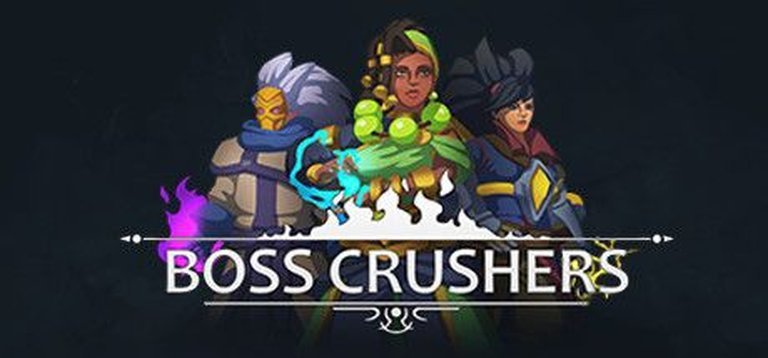
Boss Crushers is a multiplayer rogue-lite action game set in a fantasy world where players navigate procedurally generated dungeons, battle unique bosses, and adapt to random challenges. The game blends RPG elements with real-time combat, encouraging strategic teamwork and iterative learning, as players unlock new skills and items to strengthen their mercenary guild. Its dynamic gameplay mirrors the unpredictability of volatility trading, rewarding adaptability and calculated risk-taking.
Where to Buy Boss Crushers
PC
Boss Crushers Guides & Walkthroughs
Boss Crushers Reviews & Reception
steambase.io (61/100): Boss Crushers has earned a Player Score of 61 / 100.
store.steampowered.com : All Reviews: Mixed (63% of 47)
Boss Crushers: A Roguelite Odyssey of Risk, Reward, and Relentless Challenge
Introduction: The Unforgiving Allure of the Dungeon Crawl
Boss Crushers (2019) is a game that thrives on contradiction. It is a multiplayer roguelite that punishes failure yet rewards persistence, a dungeon crawler that demands both individual skill and teamwork, and a fantasy adventure that doubles as a metaphor for financial volatility. Developed by the obscure but ambitious studio Space Horse, Boss Crushers emerged in a crowded indie landscape, offering a brutal, procedurally generated gauntlet where players assume the roles of mercenaries battling against an onslaught of bosses and minions. Its premise is simple: die, learn, adapt, and return stronger. Yet beneath this familiar roguelite framework lies a game that is as much about strategic collaboration as it is about reflexes—a rare blend of chaos and method that mirrors the unpredictability of real-world risk management.
This review will dissect Boss Crushers in exhaustive detail, exploring its development, narrative subtleties, mechanical depth, artistic identity, and legacy. By the end, we will determine whether it stands as a forgotten gem, a flawed experiment, or a cult classic waiting for its moment in the sun.
Development History & Context: The Birth of a Niche Challenger
The Studio Behind the Slaughter: Space Horse’s Ambition
Space Horse, the developer and publisher of Boss Crushers, is a studio that remains shrouded in mystery. With no prior high-profile releases, their debut into the competitive roguelite market was a gamble. The game’s development appears to have been driven by a desire to merge two dominant trends of the late 2010s:
1. The Roguelite Renaissance – Games like Dead Cells (2018), Hades (2020), and Slay the Spire (2019) had proven that procedural death and permadeath could be both punishing and addictive.
2. The Rise of Multiplayer Roguelites – Titles such as Risk of Rain 2 (2020) and Streets of Rogue (2019) demonstrated that the genre could thrive in cooperative play.
Boss Crushers attempted to carve its niche by emphasizing multiplayer synergy and financial allegory, a bold creative choice that set it apart from its peers.
Technological Constraints & Design Philosophy
Built in Unity, Boss Crushers leveraged the engine’s flexibility to create a diagonal-down 2D scrolling perspective, a stylistic choice that evoked classic dungeon crawlers like Gauntlet while maintaining modern fluidity. The game’s procedural generation system was designed to ensure that no two runs felt identical, with:
– Randomly generated dungeon layouts
– Dynamic enemy spawns
– Bosses with unique, unpredictable mechanics
However, the game’s technical limitations became apparent post-launch. Reports of server authorization issues and multiplayer connectivity problems plagued early players, hinting at a development cycle that may have prioritized ambition over polish.
The Gaming Landscape of 2019: A Crowded Dungeon
Boss Crushers launched on May 15, 2019, into an indie market already saturated with roguelites. Competitors like:
– Hades (Early Access, December 2018)
– Risk of Rain 2 (March 2019)
– Blasphemous (September 2019)
dominated conversations, leaving little room for lesser-known titles. Despite this, Boss Crushers found a small but dedicated audience, particularly among players who appreciated its multiplayer focus and unconventional thematic depth.
Narrative & Thematic Deep Dive: More Than Just a Dungeon Crawl
The Premise: Mercenaries, Guilds, and the Cycle of Failure
At its core, Boss Crushers is about a guild of mercenaries battling against an endless horde of bosses and minions. The narrative is minimalist, relying on environmental storytelling and procedural events rather than cutscenes or dialogue-heavy exposition. However, the game’s true narrative brilliance lies in its metaphorical layer.
The Financial Allegory: Trading, Volatility, and “Dying to Win”
The game’s official website and promotional materials explicitly frame Boss Crushers as a metaphor for volatility trading strategies. This is not mere marketing fluff—it is woven into the game’s DNA:
– Procedural dungeons = Unpredictable markets
– Random character traits (e.g., “Drunken Master,” “Pyromancer”) = Trading strategies with varying risk profiles
– “Die to win” mechanics = Learning from market losses to refine future approaches
This thematic depth is rare in roguelites, which typically focus on pure gameplay loops rather than real-world parallels. Whether intentional or not, Boss Crushers positions itself as a gamified simulation of risk management, where every death is a lesson and every victory is the result of adaptive strategy.
Characters & World-Building: The Guild as a Living Entity
While individual mercenaries are procedurally generated, the guild itself persists across runs, growing stronger with each failure. This creates a meta-narrative of resilience, where the player’s journey is not about a single hero but about an organization’s evolution.
The game’s bosses are not just obstacles—they are embodiments of challenge, each with distinct personalities and mechanics. Some notable examples include:
– “The Peterman” – A boss that relies on summoning minions, forcing players to prioritize targets.
– “The Horsepower” – A brute-force enemy that tests raw combat skill.
– “The Pyromancer” – A ranged threat that demands positioning and timing.
These designs reinforce the game’s philosophy of adaptability—just as traders must adjust to market shifts, players must rethink their strategies with each new boss encounter.
Gameplay Mechanics & Systems: The Brutal Dance of Combat and Progression
Core Gameplay Loop: Run, Die, Improve
Boss Crushers follows the classic roguelite structure:
1. Select a mercenary (with random traits).
2. Enter a procedurally generated dungeon.
3. Fight through rooms of enemies and bosses.
4. Die (inevitably) and unlock permanent upgrades for the guild.
However, the game distinguishes itself through multiplayer integration and deep combat mechanics.
Combat: A Test of Reflexes and Synergy
The game’s real-time combat is fast-paced and unforgiving, requiring:
– Precision dodging (enemies have telegraphed attacks but punishing hitboxes).
– Resource management (health, stamina, and cooldowns are critical).
– Team coordination (in multiplayer, roles like tank, DPS, and support emerge organically).
The diagonal-down perspective creates a tactical overhead view, allowing players to see enemy patterns clearly—a design choice that rewards spatial awareness.
Character Progression: The Guild as a Persistent Entity
Unlike traditional roguelites where progression resets entirely, Boss Crushers introduces a guild-wide advancement system:
– Unlockable items, skills, and artifacts persist across runs.
– Failed attempts contribute to the guild’s strength, making future runs slightly easier.
– Random character traits (e.g., “Drunken Master” grants high risk/reward bonuses) encourage experimentation.
This system ensures that no run feels wasted, a crucial psychological hook for a game that deliberately overwhelms new players.
Multiplayer: The Game’s Greatest Strength and Weakness
Boss Crushers shines brightest in cooperative play, where:
– Roles naturally emerge (e.g., one player tanks while another focuses on ranged attacks).
– Boss fights become strategic puzzles requiring coordination.
– The “die to win” philosophy is mitigated by teamwork.
However, multiplayer connectivity issues (as seen in Steam forums) plagued the experience at launch, with players reporting server authorization failures and lag in online co-op. These technical hurdles likely contributed to the game’s mixed reception.
UI & Accessibility: Functional but Unpolished
The game’s user interface is minimalist and functional but lacks the polish of contemporaries like Hades or Dead Cells. Key issues include:
– Cluttered inventory management (items can be hard to parse mid-combat).
– Unintuitive multiplayer menus (joining friends requires unnecessary steps).
– Limited tutorialization (new players are thrown into the deep end).
While these flaws do not break the game, they hinder accessibility, making the learning curve steeper than necessary.
World-Building, Art & Sound: A Fantasy Realm of Chaos and Color
Visual Design: A Love Letter to Classic Dungeon Crawlers
Boss Crushers adopts a 2D pixel-art aesthetic with a diagonal-down perspective, evoking:
– 16-bit dungeon crawlers (Gauntlet, Golden Axe).
– Modern roguelites (Enter the Gungeon, Nuclear Throne).
The procedurally generated dungeons are visually distinct, with:
– Varied biomes (from dark caverns to fiery hellscapes).
– Dynamic lighting that affects visibility and mood.
– Boss arenas designed for spectacle and strategy.
However, the art style lacks the polish of AAA indies, with some sprites feeling generic or repetitive.
Sound Design: A Symphony of Slaughter
The game’s audio design is punctuated and impactful:
– Crunchy combat sounds (weapons, spells, and enemy deaths feel weighty).
– Boss themes that escalate in intensity, reinforcing the high-stakes nature of fights.
– Ambient dungeon noises (dripping water, distant growls) that enhance immersion.
While the soundtrack is not memorable, it serves its purpose—keeping players engaged without becoming distracting.
Atmosphere: A World Built on Failure and Triumph
The game’s tonal balance is its greatest atmospheric achievement:
– Failure is expected, but progress is inevitable.
– The guild’s persistence creates a sense of legacy.
– Multiplayer chaos turns defeat into shared stories.
This emotional resonance elevates Boss Crushers beyond a mere dungeon crawler—it becomes a test of endurance and camaraderie.
Reception & Legacy: A Cult Classic in the Making?
Critical Reception: Mixed but Promising
Boss Crushers received no formal critic reviews (per Metacritic), but user reception on Steam has been mixed (63% positive). Common praises include:
✅ Addictive multiplayer gameplay
✅ Deep combat mechanics
✅ Innovative “die to win” progression
Common criticisms include:
❌ Technical issues (multiplayer bugs, server problems)
❌ Steep learning curve
❌ Lack of polish in UI and art
Commercial Performance: A Niche Success
With no sales data publicly available, Boss Crushers appears to have found a small but dedicated audience. Its Steam price ($14.99) and lack of major marketing suggest it was never intended to be a blockbuster—rather, a passion project for hardcore roguelite fans.
Influence & Legacy: A Blueprint for Future Roguelites?
While Boss Crushers did not revolutionize the genre, its multiplayer focus and financial allegory make it a unique case study. Future games may draw from:
– Its “guild progression” system (seen later in Risk of Rain 2’s unlockables).
– Its multiplayer roguelite design (a trend that continues in Gunfire Reborn and Core Keeper).
– Its thematic depth (proving that roguelites can be more than just gameplay loops).
Conclusion: A Flawed Gem Worth Unearthing
Boss Crushers is not a perfect game. Its technical issues, steep learning curve, and lack of polish prevent it from reaching the heights of Hades or Dead Cells. However, its innovative multiplayer design, deep combat mechanics, and unexpected thematic depth make it a hidden gem for those willing to endure its brutality.
Final Verdict: 7.5/10 – A Cult Classic for the Patient and the Bold
- For Roguelite Veterans: A challenging but rewarding experience, especially in co-op.
- For Casual Players: Likely too punishing without a dedicated group.
- For Game Historians: A fascinating experiment in merging financial metaphor with dungeon crawling.
Boss Crushers may not have conquered the mainstream, but it carved its niche—a testament to the power of adaptive strategy, teamwork, and the willingness to fail forward. In a genre defined by permadeath and persistence, Boss Crushers stands as a monument to the idea that every defeat is a lesson in disguise.
Should you play it? If you crave a roguelite that demands both skill and synergy, then yes—but bring friends, and prepare to die. A lot.
Final Thought:
“In the dungeons of Boss Crushers, as in the markets of Wall Street, survival belongs to those who learn fastest—not those who never fall.”