
- Release Year: 2022
- Platforms: Windows
- Publisher: Lockdown Escape
- Developer: Zoom Games
- Genre: Puzzle
- Perspective: 1st-person
- Game Mode: Single-player
- Gameplay: Motion control, Puzzle-solving
- Setting: Detective, Mystery
- Average Score: 100/100
- VR Support: Yes
Description
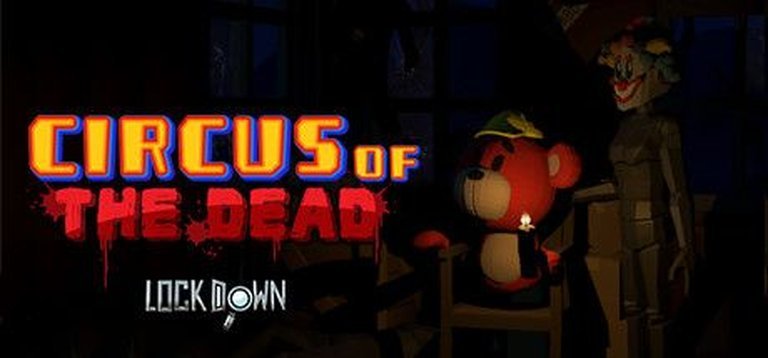
Lockdown VR: Circus of the Dead is a first-person puzzle and escape room game where players take on the role of Detective iBrow and a group of aspiring performers trapped in an abandoned dressing room of a sinister circus. As strange events unfold, players must solve puzzles, uncover secrets, and escape within a 60-minute time limit, either solo or with up to six friends. Developed by Zoom Games and published by Lockdown Escape, the game blends detective/mystery elements with immersive VR gameplay, offering a thrilling challenge inspired by real-life escape room experiences.
Gameplay Videos
Where to Buy Lockdown VR: Circus of the Dead
PC
Lockdown VR: Circus of the Dead Guides & Walkthroughs
Lockdown VR: Circus of the Dead Reviews & Reception
steambase.io (100/100): Lockdown VR: Circus of the Dead has earned a Player Score of 100 / 100.
Lockdown VR: Circus of the Dead: A Masterclass in Virtual Escape Room Design
Introduction: The Evolution of Escape Rooms in VR
Lockdown VR: Circus of the Dead (2022) represents a fascinating convergence of physical escape room design and virtual reality innovation. Developed by Singapore-based Zoom Games and published by Lockdown Escape—a company with nearly a decade of experience crafting real-world escape experiences—this title transcends the limitations of traditional puzzle games by leveraging VR’s immersive potential. At its core, it is a 60-minute, first-person escape room adventure set within the eerie confines of an abandoned circus dressing room, where players must unravel mysteries, solve intricate puzzles, and escape before time runs out.
What makes Circus of the Dead particularly compelling is its dual identity: it is both a standalone VR experience and a digital extension of Lockdown Escape’s physical escape rooms, which have earned acclaim in Singaporean attractions like the Singapore Zoo and Haw Par Villa. The game’s premise—trapping players in a decaying circus backdrop—taps into a rich vein of horror-adjacent nostalgia, evoking the unsettling allure of carnivals past their prime. Yet, unlike many horror-themed escape games, Circus of the Dead balances tension with whimsy, thanks in part to its cartoonish art style and the presence of Detective iBrow, the company’s mascot, who serves as a playful guide.
This review will dissect Lockdown VR: Circus of the Dead across seven critical dimensions: its development history, narrative and themes, gameplay mechanics, world-building and aesthetics, reception and legacy, and ultimately, its place in the pantheon of VR escape experiences. By the end, we will determine whether it succeeds as a faithful adaptation of physical escape rooms or if it stumbles under the weight of its own ambitions.
Development History & Context: From Physical to Virtual
The Birth of Lockdown Escape
Lockdown Escape was founded in 2013 in Singapore, quickly establishing itself as a leader in themed escape room experiences. Their real-world games are renowned for their meticulous set design, narrative depth, and integration with cultural landmarks, such as the Battlebox at Fort Canning (a WWII bunker) and the National Gallery. The company’s philosophy revolves around immersion through storytelling, a principle that would later define their foray into VR.
The Shift to Virtual Reality
The transition to VR was not merely a pivot but a necessity. The COVID-19 pandemic forced Lockdown Escape to rethink its business model, as physical escape rooms became untenable. According to a 2022 press release from Media OutReach, the development of Circus of the Dead was conducted entirely remotely, with team members collaborating via video calls and VR prototypes. This unconventional approach introduced unique challenges, particularly in playtesting and spatial design, but also allowed for iterative refinement in ways that physical rooms could not.
Technological Foundations
Built using the Unity engine, Circus of the Dead leverages SteamVR for compatibility with major headsets like the Valve Index, HTC Vive, and Oculus Rift. The game’s system requirements are modest by modern VR standards:
– Minimum: Intel Core i5-4590, GTX 1050 Ti, 4GB RAM
– Recommended: GTX 1060, 8GB RAM
This accessibility ensures a broad audience, though the 1GB storage footprint belies the game’s dense environmental detailing.
The VR Escape Room Landscape in 2022
By 2022, VR escape rooms were no longer a novelty. Titles like The Room VR (2016) and I Expect You To Die (2016) had already set high bars for puzzle design and interactivity. However, Circus of the Dead distinguished itself through:
1. Multiplayer Focus: Supporting up to 6 players in online co-op, a rarity in VR escape games.
2. Time Pressure: The 60-minute limit mirrors real escape rooms, adding urgency.
3. Physical Fidelity: Puzzles are designed to mimic real-world interactions, such as manipulating objects with 1:1 hand tracking.
Narrative & Thematic Deep Dive: A Circus of Madness and Mystery
Plot Overview
Players assume the role of aspiring performers invited to a circus as backups. Due to a lack of facilities, they are relegated to an abandoned dressing room, where supernatural events begin unfolding. The premise is simple but effective: escape before the performance starts in one hour, or suffer the fate of those who came before.
The narrative is minimalist, relying on environmental storytelling rather than exposition. Clues are embedded in props, notes, and eerie audio logs, hinting at the circus’s dark history. The game’s Steam description teases that players may “lose their mind like the others before you,” suggesting a psychological horror undercurrent.
Themes: Decay, Performance, and Trapped Ambition
- The Decay of Spectacle: The circus setting is a metaphor for faded glory. Once a place of wonder, it is now a prison of forgotten performers, reflecting themes of obsolescence and abandonment.
- The Pressure of Performance: The 60-minute timer is not just a gameplay mechanic but a narrative device, reinforcing the anxiety of failing under scrutiny.
- Collective Trauma: The dressing room’s history—hinted at through scattered artifacts—suggests a cycle of entrapment, where each new group of performers meets the same fate.
Character and Tone: Detective iBrow and the Cartoony Horror
The game’s tone is uniquely bifurcated:
– Visuals: The cartoonish, almost Scooby-Doo-esque art style softens the horror, making it accessible to families and casual players.
– Atmosphere: The sound design (creaking floors, distant laughter) and environmental details (peeling wallpaper, broken mirrors) create an uncanny, liminal space.
Detective iBrow, the company’s bear mascot, serves as a meta-narrative guide, breaking the fourth wall to offer hints. This choice undercuts immersion but aligns with Lockdown Escape’s brand identity, blending gameplay with marketing.
Gameplay Mechanics & Systems: Puzzles, Progression, and Pitfalls
Core Gameplay Loop
Circus of the Dead adheres to the classic escape room formula:
1. Exploration: Players scour the dressing room for clues, hidden compartments, and interactive objects.
2. Puzzle-Solving: Riddles range from logic-based (e.g., cipher wheels) to spatial (e.g., arranging objects in a specific order).
3. Collaboration: In multiplayer, dividing tasks (e.g., one player deciphers a code while another searches for a key) is essential.
Puzzle Design: Strengths and Weaknesses
Strengths:
– Tactile Interaction: VR allows for naturalistic puzzle-solving, such as:
– Turning knobs with precise hand tracking.
– Manipulating 3D objects (e.g., fitting shapes into slots).
– Hint System: A non-intrusive hint mechanism prevents frustration without breaking immersion.
– Puzzle Reset: A fail-safe for bugs ensures progress isn’t lost.
Weaknesses:
– Linear Progression: Some puzzles lack alternative solutions, which can feel restrictive.
– Limited Replayability: Once solved, the 60-minute experience offers little incentive to replay.
– Multiplayer Sync Issues: Occasional desynchronization in co-op can disrupt flow.
UI and Controls
The VR interface is minimalist, with:
– Radial menus for hints and inventory.
– Direct hand interaction for object manipulation.
– Voice chat integration for multiplayer coordination.
However, the lack of a physical movement system (players are confined to the dressing room) may feel claustrophobic to some.
World-Building, Art & Sound: Crafting an Unsettling Playground
Visual Design: A Haunting Carnival Aesthetic
The dressing room is a masterclass in environmental storytelling:
– Props: Vintage circus posters, broken makeup mirrors, and rusted cages hint at the room’s history.
– Lighting: Flickering bulbs and shadow play create a dynamic, eerie atmosphere.
– Color Palette: Muted reds and golds evoke a decayed opulence, contrasting with the cartoonish character models.
Sound Design: The Symphony of Dread
- Ambient Noise: Distant circus music, whispers, and creaking wood build tension.
- Puzzle Feedback: Auditory cues (e.g., a click when a puzzle piece fits) reinforce interactivity.
- Voice Acting: Limited but effective, with Detective iBrow’s playful tone balancing the horror.
Atmosphere: The Uncanny Valley of Fun
The game’s greatest achievement is its duality:
– It is whimsical enough for families (earning tags like “Family Friendly” on Steam).
– Yet, its underlying themes and sound design cater to horror enthusiasts.
Reception & Legacy: A Niche Gem with Room to Grow
Critical and Commercial Reception
- Steam Reviews: As of 2026, the game holds a 100% positive rating from 5 user reviews, though the small sample size makes this metric less reliable.
- Media Coverage: Coverage was limited, with outlets like Kotaku focusing on screenshots rather than analysis.
- Arcade Distribution: The game was rolled out to 30+ VR arcades in North America and Europe, suggesting strong B2B appeal.
Influence and Future Prospects
Circus of the Dead is not a revolutionary title, but it refines the VR escape room formula by:
1. Proving that physical escape room designers can transition to VR.
2. Demonstrating the viability of multiplayer VR puzzles.
3. Showing that horror-lite experiences can appeal to broad audiences.
Lockdown Escape’s third VR game (slated for a November 2022 release) suggests a commitment to the medium, though it remains to be seen if they can expand beyond niche appeal.
Conclusion: A Flawed but Fascinating Experiment
Lockdown VR: Circus of the Dead is not a perfect game, but it is a remarkable experiment in translating physical escape rooms into VR. Its strengths—immersive puzzles, clever sound design, and multiplayer synergy—are offset by limitations in replayability and narrative depth. Yet, its charm lies in its contradictions: it is both a family-friendly romp and a creepy psychological tease, a marketing tool for Lockdown Escape and a standalone experience.
Final Verdict: 7.5/10 – A Must-Play for VR Escape Enthusiasts, but Not a Genre Redefiner
For those seeking a short, engaging VR puzzle experience—especially in co-op—Circus of the Dead delivers. However, players expecting deep storytelling or revolutionary mechanics may leave wanting more. Its true legacy may lie in paving the way for more hybrid physical-VR escape experiences, a frontier Lockdown Escape is uniquely positioned to explore.
Post-Script: As VR technology advances, one can only hope that future iterations will expand the scope—perhaps with larger environments, branching narratives, or even AI-driven puzzles. For now, Circus of the Dead remains a quaint, clever, and occasionally chilling diversion—a circus worth visiting, if only for an hour.