
- Release Year: 2023
- Platforms: Windows
- Publisher: Digital Eclipse Entertainment Partners Co.
- Developer: Digital Eclipse Entertainment Partners Co.
- Genre: Action
- Perspective: Side view
- Game Mode: Single-player
- Gameplay: Arcade, Platform
- Average Score: 100/100
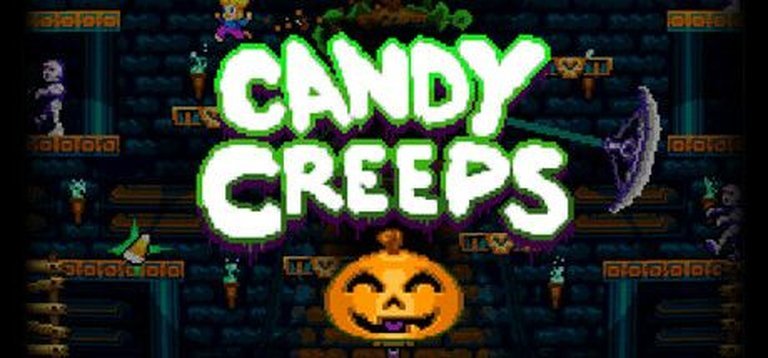
Description
Digital Eclipse Arcade: Candy Creeps is a retro-inspired arcade game where players take on the roles of Elma and Harper, two mischievous kids who must reclaim their stolen Halloween candy from the evil Pumpking. Set in a vibrant, side-scrolling world reminiscent of 1980s arcade classics, players smash pumpkins to collect candy, power up with sugar, and battle the Pumpking across four unique levels. The game features both single-player and two-player modes, offering a nostalgic yet fresh take on classic arcade action.
Gameplay Videos
Where to Buy Digital Eclipse Arcade: Candy Creeps
PC
Digital Eclipse Arcade: Candy Creeps Guides & Walkthroughs
Digital Eclipse Arcade: Candy Creeps Reviews & Reception
steambase.io (100/100): Digital Eclipse Arcade: Candy Creeps has earned a Player Score of 100 / 100.
Digital Eclipse Arcade: Candy Creeps – A Sweet, Spooky Love Letter to the Golden Age of Arcades
Introduction: The Pumpking’s Wrath and the Power of Sugar
In an era where retro revivalism often feels like a hollow cash grab, Digital Eclipse Arcade: Candy Creeps emerges as a rare gem—a game that doesn’t just look like an ’80s arcade classic but feels like one, too. Released on October 25, 2023, this Halloween-themed platformer is the inaugural title in Digital Eclipse’s ambitious Digital Eclipse Arcade series, a line of original games designed to evoke the purity of classic arcade gameplay. With its pixel-perfect aesthetics, tight mechanics, and a premise that blends childhood mischief with supernatural horror, Candy Creeps is a delightful throwback that manages to feel both nostalgic and fresh.
At its core, Candy Creeps is a love letter to the golden age of arcades, a time when games were built around high scores, quarter-munching difficulty, and the simple joy of smashing things with a friend. But it’s also a testament to Digital Eclipse’s deep understanding of what made those games tick. The studio, known for its meticulous preservation work on compilations like Atari 50 and The Disney Afternoon Collection, has now turned its expertise toward crafting something new—yet undeniably old-school.
Development History & Context: From Preservation to Creation
Digital Eclipse’s journey from preservationist to creator is a fascinating one. Founded in 1992 by Andrew Ayre, the studio initially made its name by developing emulations of classic arcade titles for platforms like the Game Boy Color and early home computers. After a series of mergers and rebrandings—including a stint as Backbone Entertainment and a revival under Other Ocean Interactive—Digital Eclipse reemerged in 2015 with a renewed focus on video game preservation. Their Gold Master Series, which includes interactive documentaries like The Making of Karateka, showcases their dedication to celebrating gaming history.
With Candy Creeps, Digital Eclipse takes a bold step forward: instead of merely preserving the past, they’re recreating it. The game is part of the Digital Eclipse Arcade initiative, a series of original titles designed to mimic the look, feel, and design philosophy of ’80s arcade games. This isn’t just about aesthetics—it’s about capturing the essence of an era where games were built for short, intense bursts of play, where every pixel counted, and where the goal was to rack up the highest score possible.
The decision to launch the series with a Halloween-themed game is no accident. Halloween has always been a rich source of inspiration for arcade and console games, from Ghosts ‘n Goblins to Castlevania. Candy Creeps taps into that tradition while adding its own twist: a story about two kids fighting to reclaim their stolen Halloween candy from a monstrous Pumpking. It’s a premise that’s equal parts whimsical and eerie, perfectly suited to the arcade sensibilities of the ’80s.
Narrative & Thematic Deep Dive: The Pumpking’s Curse
At first glance, Candy Creeps might seem like a simple, lighthearted romp. But beneath its colorful, cartoonish exterior lies a surprisingly rich narrative framework—one that draws on classic Halloween folklore while injecting a healthy dose of modern humor.
The Story: A Tale of Mischief and Revenge
The game’s premise is established through a delightfully macabre poem:
Beware the Pumpking’s wrath, my child
Each darkened Halloween
On Mischief Night, he watches all
And should your pranks be seen
A hefty toll he will exact
While naughty children sleep
He’ll steal your candy, every piece
And give it to his creeps!
This sets the stage for the adventure of Elma and Harper, two fourth-graders who—despite their best efforts to be considerate trick-or-treaters (using cage-free eggs and 2-ply toilet paper for their pranks)—find themselves on the wrong side of the Pumpking, a monstrous entity who steals their hard-earned candy haul. Armed with nothing but their wits, the power of sugar, and “several very sharp knives,” the duo sets out to reclaim their loot.
The narrative is simple but effective, tapping into universal childhood fears (the loss of Halloween candy) and framing it within a classic horror trope (the vengeful supernatural entity). The Pumpking himself is a brilliant creation—a towering, jack-o’-lantern-headed monstrosity who rules over an army of “creeps” (small, pumpkin-like minions). His design is reminiscent of classic arcade bosses like Ghosts ‘n Goblins’ Death or Castlevania’s Dracula, but with a uniquely whimsical twist.
Themes: Childhood, Consumption, and the Power of Sugar
At its heart, Candy Creeps is a game about consumption—both literal and metaphorical. The core gameplay loop revolves around collecting candy, which grants the player temporary superpowers (“Sweet Revenge” mode). This mechanic isn’t just a clever nod to the sugar rush of Halloween night; it’s a commentary on the transformative power of indulgence. In Sweet Revenge mode, Elma and Harper become unstoppable, smashing through enemies with reckless abandon—much like kids on a sugar high.
There’s also an underlying theme of justice. The Pumpking isn’t just a mindless villain; he’s a punitive force, stealing candy from children who’ve engaged in “mischief.” But Elma and Harper’s mischief is framed as harmless—they’re not vandals, just kids having fun. The Pumpking, then, becomes a symbol of authoritarian overreach, a figure who punishes children for the crime of being children. Their quest to reclaim their candy is, in a way, a rebellion against unjust authority.
Characters: The Unlikely Heroes
Elma and Harper are a refreshing change from the typical arcade protagonists. They’re not muscle-bound warriors or space marines—they’re kids, armed with nothing but their Halloween costumes and a determination to get their candy back. Their designs are simple but expressive, with exaggerated animations that emphasize their youthful energy.
The Pumpking, meanwhile, is a masterclass in arcade boss design. He’s imposing, grotesque, and just a little bit silly—perfect for a game that balances horror and humor. His army of “creeps” (small, pumpkin-headed minions) adds to the game’s charm, turning the Pumpking’s lair into a surreal, Halloween-themed wonderland.
Gameplay Mechanics & Systems: Pure Arcade Perfection
Candy Creeps is, at its core, a platformer with arcade sensibilities. The gameplay is simple to learn but difficult to master, with a focus on high scores, quick reflexes, and cooperative play.
Core Gameplay Loop: Smash, Collect, Power Up
The game’s structure is built around a tight, repetitive loop that never grows stale:
- Smash Pumpkins: The player moves through a series of fixed screens, stomping on pumpkins to release candy.
- Collect Candy: The candy that pops out must be collected before it disappears.
- Power Up: Once three pieces of candy are collected, the player enters Sweet Revenge mode, gaining temporary invincibility and enhanced attack power.
- Defeat the Pumpking: In Sweet Revenge mode, the player can attack the Pumpking directly, whittling down his health until he explodes.
This loop is deceptively simple, but it’s executed with precision. The controls are tight and responsive, with a jump-and-stomp mechanic that feels satisfyingly weighty. The fixed-screen design (a hallmark of ’80s arcade games) ensures that the action is always contained and intense, with no room for downtime.
Combat and Enemy Design
Combat in Candy Creeps is straightforward but strategic. The player’s primary attack is a stomp, which can be used to smash pumpkins and defeat smaller enemies. Larger enemies, however, require more finesse—some must be avoided, while others can be used to the player’s advantage (as the game’s hints suggest, enemies can smash pumpkins too, releasing candy for the player to collect).
The Pumpking himself is a multi-phase boss, with each phase requiring the player to adapt their strategy. In the early stages, he’s relatively passive, releasing waves of minions and occasional projectiles. As his health depletes, however, he becomes more aggressive, forcing the player to stay on their toes.
Character Progression and Scoring
Unlike modern platformers, Candy Creeps doesn’t feature traditional character progression. There are no experience points, no skill trees, and no permanent upgrades. Instead, progression is tied to the score—a pure arcade mechanic that rewards players for speed, efficiency, and risk-taking.
The game’s scoring system is designed to encourage replayability. High scores are awarded for:
– Speed: Clearing levels quickly.
– Efficiency: Collecting all candy in a level.
– Risk: Defeating the Pumpking in Sweet Revenge mode as quickly as possible.
This focus on scoring is a deliberate throwback to the arcade era, where the goal wasn’t just to beat the game but to master it.
Multiplayer: Cooperative Chaos
One of Candy Creeps’ standout features is its local co-op mode, which allows two players to team up and take on the Pumpking together. The cooperative gameplay is chaotic but exhilarating, with players working together to smash pumpkins, collect candy, and unleash Sweet Revenge at the same time.
The lack of online multiplayer is a deliberate choice—Digital Eclipse wanted to evoke the feeling of standing side-by-side in an arcade, sharing a single screen and a single goal. It’s a refreshing approach in an era dominated by online play, and it harkens back to the golden age of couch co-op.
UI and Accessibility
The game’s UI is minimalist, with a focus on clarity and functionality. The score is displayed prominently at the top of the screen, while the player’s candy count and Sweet Revenge meter are easily visible. The lack of a pause menu or traditional options screen is a deliberate design choice—one that reinforces the arcade aesthetic but has drawn some criticism from players (as seen in the Steam community discussions).
The game does, however, include a few modern conveniences:
– CRT Filters: Players can toggle CRT-style screen effects to enhance the retro feel.
– Volume Controls: Adjustable via the F keys.
– Reset Function: F9 resets the game, allowing for quick restarts.
World-Building, Art & Sound: A Halloween Wonderland
Candy Creeps’ world is a surreal, Halloween-themed dreamscape, filled with pumpkins, candy, and eerie, flickering lights. The game’s art style is a loving homage to ’80s arcade graphics, with chunky pixels, vibrant colors, and exaggerated animations.
Visual Design: Pixel Perfection
The game’s visuals are a masterclass in retro aesthetics. The pixel art is crisp and detailed, with a color palette that’s both vibrant and moody. The Pumpking’s lair is a particular standout, filled with glowing jack-o’-lanterns, swirling fog, and eerie, flickering lights.
The character designs are equally impressive. Elma and Harper are expressive and animated, with exaggerated movements that emphasize their youthful energy. The Pumpking, meanwhile, is a towering, grotesque figure, his jagged grin and glowing eyes making him a memorable villain.
Sound Design: Spooky Synths and Crunchy Effects
The game’s sound design is equally evocative. The soundtrack is a mix of eerie synths and upbeat chiptunes, perfectly capturing the game’s Halloween theme. The sound effects are equally impressive, with crunchy stomps, satisfying explosions, and the eerie laughter of the Pumpking.
The lack of voice acting is a deliberate choice—Candy Creeps relies on visual storytelling and text to convey its narrative, much like the arcade games of the ’80s.
Atmosphere: A Hauntingly Fun Halloween
The game’s atmosphere is one of its strongest suits. The combination of eerie visuals, spooky sound design, and a whimsical narrative creates a world that’s equal parts charming and unsettling. It’s a Halloween wonderland, filled with the thrill of childhood mischief and the terror of supernatural horror.
Reception & Legacy: A Niche Hit with a Bright Future
Candy Creeps has been warmly received by players, with a perfect 100/100 score on Steambase and overwhelmingly positive reviews on Steam. Critics, however, have been slower to weigh in—likely due to the game’s niche appeal and lack of traditional marketing.
Critical Reception: A Love Letter to the Past
While Candy Creeps hasn’t yet garnered widespread critical attention, the reviews that do exist are overwhelmingly positive. Players praise the game’s tight controls, charming aesthetics, and faithful recreation of ’80s arcade gameplay. The cooperative mode, in particular, has been highlighted as a standout feature.
Some criticisms have been leveled at the game’s lack of modern conveniences (such as a pause menu or online multiplayer), but these are largely seen as minor quibbles in an otherwise polished experience.
Commercial Performance: A Small but Dedicated Audience
Candy Creeps is not a blockbuster—it’s a niche title designed for a specific audience: retro gaming enthusiasts, arcade purists, and fans of Halloween-themed games. Its commercial performance reflects this, with modest sales but a dedicated fanbase.
The game’s inclusion in the Digital Eclipse Arcade series suggests that Digital Eclipse sees it as the first step in a larger initiative. If future entries in the series can capture the same magic, Digital Eclipse Arcade could become a beloved franchise in its own right.
Legacy: A New Classic in the Making?
Candy Creeps is more than just a retro throwback—it’s a testament to the enduring appeal of arcade gameplay. In an era dominated by open-world epics and live-service games, Candy Creeps stands out as a reminder of the simple joy of smashing pumpkins, collecting candy, and chasing high scores.
Its influence on future games remains to be seen, but it’s already carved out a place for itself as a modern classic—a game that captures the spirit of the ’80s while feeling fresh and exciting.
Conclusion: A Sweet, Spooky Masterpiece
Digital Eclipse Arcade: Candy Creeps is a triumph—a game that perfectly captures the magic of ’80s arcade gameplay while adding its own unique twist. With its tight controls, charming aesthetics, and addictive scoring system, it’s a love letter to a bygone era of gaming.
But Candy Creeps is more than just nostalgia. It’s a game that understands what made the classics great and builds on that foundation to create something new. It’s a game that rewards skill, encourages replayability, and—most importantly—is fun.
In a world where retro revivalism often feels like a hollow imitation, Candy Creeps stands out as the real deal. It’s not just a game that looks like an ’80s arcade classic—it feels like one, too. And that’s a rare and precious thing.
Final Verdict: 9/10 – A modern classic that captures the spirit of the ’80s arcades with precision and charm.
Post-Script: The Future of Digital Eclipse Arcade
With Candy Creeps setting the stage, the future of Digital Eclipse Arcade looks bright. The series has already seen follow-ups like Invasion of the Buffet Snatchers and Jollyball, each with its own unique twist on classic arcade gameplay. If Digital Eclipse can maintain the same level of polish and passion, Digital Eclipse Arcade could become a defining franchise in the retro revival movement.
For now, though, Candy Creeps stands as a testament to what’s possible when a studio with a deep love for gaming history turns its hand to creation. It’s a sweet, spooky masterpiece—and one that deserves a place in any retro gaming enthusiast’s collection.