
- Release Year: 2015
- Platforms: Macintosh, Windows
- Publisher: Tales of the Renegade Sector
- Developer: Tales of the Renegade Sector
- Genre: Action
- Perspective: Diagonal-down
- Game Mode: Single-player
- Gameplay: Shooter
- Setting: Fantasy, Futuristic, Sci-fi
- Average Score: 75/100
Description
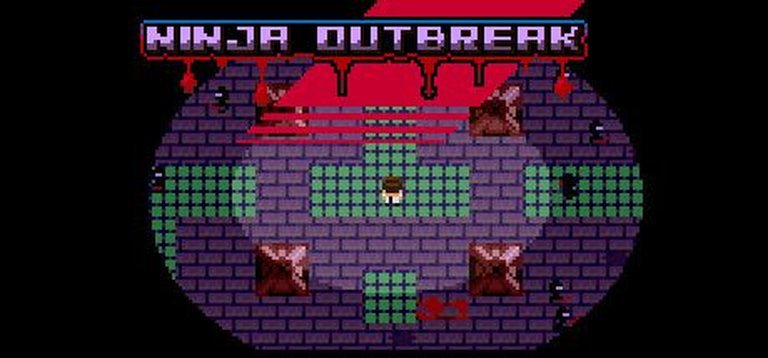
Ninja Outbreak is a retro-style survival horror game set in 196X on a Soviet research facility on Venus, where a failed super-soldier experiment, ‘Project RASPUTIN,’ has unleashed an outbreak of infected ‘ninjas’ with enhanced combat abilities and violent tendencies. As the sole survivor, the player must navigate the locked-down facility, solve puzzles, and fight through hordes of infected to escape. The game features 8-bit visuals, chiptune music, and a top-down perspective, blending action and horror in a sci-fi setting.
Where to Buy Ninja Outbreak
PC
Ninja Outbreak Guides & Walkthroughs
Ninja Outbreak Reviews & Reception
steambase.io (75/100): Ninja Outbreak has earned a Player Score of 75 / 100.
Ninja Outbreak Cheats & Codes
PC
While playing the game, press ~ to display the console window. Then, enter one of the following codes to activate the corresponding cheat function.
| Code | Effect |
|---|---|
| xenux | Health boost |
Ninja Outbreak: A Retro Survival Horror Gem in the Shadows of Venus
Introduction: The Ninja Apocalypse You Never Saw Coming
In the vast, often homogenized landscape of indie horror games, Ninja Outbreak (2015) emerges as a bizarre, brilliant anomaly—a game that defies genre conventions with its audacious premise, retro aesthetic, and relentless adherence to survival horror mechanics. Developed by Alec Stamos under the banner of Tales of the Renegade Sector, this top-down, 8-bit survival horror experience transplants the player into a Soviet research facility on Venus, where a failed super-soldier experiment has unleashed an outbreak not of zombies, but of ninjas. Yes, ninjas.
At first glance, the concept seems like a joke, a parody of the overused zombie trope. But Ninja Outbreak is no mere gag. It is a meticulously crafted love letter to survival horror, a game that understands the genre’s core tenets—scarcity, tension, exploration—and executes them with a level of precision that many modern horror games lack. It is a game that dares to ask: What if the monsters weren’t shambling corpses, but hyper-aggressive, acrobatic assassins? The answer is a game that is as challenging as it is unique, as tense as it is absurd, and as memorable as it is overlooked.
This review will dissect Ninja Outbreak in exhaustive detail, exploring its development history, narrative depth, gameplay systems, artistic direction, and legacy. By the end, it will be clear that Ninja Outbreak is not just a quirky indie experiment, but a vital, if underappreciated, entry in the survival horror canon.
Development History & Context: The Birth of a Retro Nightmare
The Vision of Alec Stamos
Ninja Outbreak is the brainchild of Alec Stamos, a developer whose work is deeply rooted in retro aesthetics and genre experimentation. Stamos is the creative force behind Tales of the Renegade Sector, a studio (or more accurately, a one-man army) responsible for a series of games set in a shared sci-fi universe known as the Renegade Sector. This universe, as Stamos describes it, is a sprawling, millennia-spanning setting where humanity has lost and rediscovered space travel, leading to a fractured, often bizarre galaxy.
Stamos’ previous work, Venusian Vengeance, laid the groundwork for Ninja Outbreak. In Venusian Vengeance, players encountered a tongue-in-cheek scenario where a research station was quarantined due to a “ninja virus”—a joke that Stamos decided to explore in earnest with Ninja Outbreak. The game was conceived as both a spiritual successor and a standalone experience, one that would take the absurdity of its premise and treat it with the utmost seriousness.
The Retro Revolution
Ninja Outbreak was released in 2015, a time when retro-styled indie games were experiencing a renaissance. Titles like Shovel Knight (2014), Undertale (2015), and Hyper Light Drifter (2016) proved that pixel art and chiptune music could coexist with modern game design sensibilities. Stamos, however, was not content to simply mimic the past. Instead, he sought to reinterpret it, blending the aesthetic of 8-bit and 16-bit era games with the mechanical depth of survival horror.
The game’s development was a solitary endeavor. Stamos handled everything from programming to level design to sound design, a testament to his versatility and dedication. In an interview with GameSkinny, Stamos revealed that Ninja Outbreak was born out of a desire to explore resource scarcity in game design. He had been working on a series of articles about level design, and the game served as a practical extension of those theories. The result is a game that feels both nostalgic and fresh, a paradox that defines much of the indie scene.
The Gaming Landscape of 2015
The year 2015 was a pivotal one for horror games. Until Dawn and SOMA pushed narrative-driven horror to new heights, while Bloodborne redefined action-horror. Indie horror, meanwhile, was dominated by titles like Layers of Fear and The Park, which focused on psychological terror and atmospheric dread.
Ninja Outbreak arrived in this crowded field with little fanfare. It lacked the marketing budget of AAA titles and the viral appeal of games like Five Nights at Freddy’s. Yet, it carved out a niche for itself by embracing a premise so audacious that it couldn’t be ignored. The game’s Steam Greenlight campaign (a now-defunct platform for indie developers to gain visibility) was a modest success, and upon release, it found a small but dedicated audience.
Narrative & Thematic Deep Dive: The Ninja Virus and the Inverse Law of Ninjutsu
Plot Summary: A Soviet Nightmare on Venus
Ninja Outbreak is set in the year 196X, in an alternate timeline where the Soviet Union has won the Space Race and established a research facility on Venus. The facility is home to Project RASPUTIN, a top-secret super-soldier program aimed at creating the ultimate warrior. The project, however, has gone catastrophically wrong. Subjects injected with the RASPUTIN serum develop enhanced reflexes, strength, and combat prowess, but they also become irrationally violent. Worse still, the virus is contagious—anyone attacked by an infected subject begins to exhibit the same symptoms.
The infected are dubbed “Ninjas” by the facility’s staff, a term that reflects their newfound agility, stealth, and lethality. The entire station is placed under lockdown to prevent the outbreak from spreading, but it’s too late. The facility is overrun, and the player takes on the role of a lone scientist who must escape the nightmare.
Themes: Scarcity, Paranoia, and the Absurd
At its core, Ninja Outbreak is a game about survival in the face of overwhelming odds. The narrative is minimalist, delivered primarily through environmental storytelling and scattered Apocalyptic Logs—audio recordings and notes left behind by doomed scientists. These logs provide glimpses into the facility’s descent into chaos, as well as the psychological toll the outbreak has taken on its inhabitants.
One of the most fascinating aspects of the game’s narrative is its embrace of the absurd. The idea of a “ninja virus” is inherently ridiculous, yet the game treats it with deadpan seriousness. This tonal dissonance is deliberate, a nod to the schlocky B-movies of the 1980s, particularly the works of Godfrey Ho, a Hong Kong director known for his ninjaploitation films. Stamos has cited Ho’s work as a major influence, and Ninja Outbreak can be seen as a video game equivalent of those films—campy, over-the-top, but with an underlying sincerity.
The game also explores the Inverse Law of Ninjutsu, a trope popularized by Ho’s films. The trope posits that the strength of a ninja is inversely proportional to the number of ninjas present. A lone ninja is an unstoppable force of nature, but an army of ninjas is little more than cannon fodder. Ninja Outbreak incorporates this idea into its gameplay, with early encounters featuring lone, deadly ninjas, while later stages are overrun by hordes of weaker, but still dangerous, assassins.
Characters: The Faceless Hero and the Ninja Menace
The protagonist of Ninja Outbreak is a nameless scientist, a deliberate choice by Stamos to enhance immersion. The player is not a trained soldier or a seasoned adventurer, but an ordinary person thrust into an extraordinary situation. This vulnerability is central to the game’s horror. The player is not a hero; they are a survivor, and survival is never guaranteed.
The ninjas themselves are the game’s true stars. They come in a variety of types, each with unique behaviors and abilities:
– Crawlers: Slow-moving but deadly in close quarters.
– Stalkers: Ninjas that follow the player from a distance before striking.
– Thieves: Ninjas that steal items from the player’s inventory.
– Saboteurs: Ninjas that disable environmental hazards or traps.
– Master Ninja: The final boss, a towering, hyper-aggressive warrior that embodies the pinnacle of the RASPUTIN virus.
Each enemy type forces the player to adapt their strategy, adding layers of complexity to the gameplay.
Gameplay Mechanics & Systems: Survival Horror Perfected
Core Gameplay Loop: Scarcity and Exploration
Ninja Outbreak is, at its heart, a survival horror game in the vein of Resident Evil and Silent Hill. The player must navigate a labyrinthine research facility, solving puzzles, collecting keys, and battling ninjas while managing limited resources. The game’s core loop is built around three pillars: scarcity, exploration, and risk versus reward.
-
Scarcity of Resources
Ammunition is extremely limited. The player begins with a wrench (a nod to Half-Life’s crowbar) and must scavenge for weapons like pistols, shotguns, and experimental lab equipment. Every bullet counts, and the player is often forced to flee rather than fight. This scarcity creates a constant sense of tension—do you use your last few bullets to clear a room, or do you save them for a potential boss fight? -
Exploration and Non-Linearity
The facility is divided into multiple areas, each with its own set of challenges and rewards. The game encourages exploration, but it never forces the player down a specific path. Want to rush to the final boss? You can—but you’ll likely die. Want to scour every corner for hidden weapons and upgrades? You can—but you’ll face more ninjas. The choice is yours, and every decision carries weight. -
Risk vs. Reward
The game’s design philosophy is best encapsulated by its Lock and Key Puzzle system. Different colored doors require corresponding keys, and these keys are often hidden in dangerous areas. Do you risk venturing into a ninja-infested corridor for a potential shortcut, or do you play it safe and take the long way around? The game constantly forces the player to weigh the benefits of exploration against the very real threat of death.
Combat: A Dance of Death
Combat in Ninja Outbreak is deliberate and punishing. The player’s movements are slow, and enemies are fast and aggressive. The game’s top-down perspective (a Three-Quarters View) limits visibility, forcing the player to rely on sound cues and environmental awareness. Ninjas can strike from any direction, and a single mistake can be fatal.
The game’s weapon variety adds depth to the combat. In addition to standard firearms, the player can find experimental weapons like the Ninja Heart, a device that temporarily turns the player into a ninja, granting enhanced speed and strength. These weapons are rare, however, and must be used strategically.
Progression and Save System
Progression in Ninja Outbreak is tied to exploration. The player’s health is represented by a Life Meter with four segments, and there are no health pickups—only save points (Save Points marked by red and green circles on the floor) can restore health. This design choice ensures that the player is always on edge, as death is permanent until the next save.
The save system itself is a throwback to classic survival horror. Save points are scattered throughout the facility, and the player must manually activate them. This creates a constant tension—do you push forward to the next save point, or do you backtrack to safety?
UI and Feedback
The game’s UI is minimalist, with health and ammo displays taking up minimal screen space. This design choice enhances immersion, but it also means that the player must pay close attention to their surroundings. Sound design plays a crucial role in feedback—ninjas emit distinct noises, and the player’s footsteps change depending on the surface they’re walking on.
World-Building, Art & Sound: A Retro Nightmare on Venus
Setting: The Soviet Facility on Venus
The game’s setting is one of its strongest assets. The Soviet research facility is a masterclass in environmental storytelling, with each area telling a story of scientific hubris and inevitable doom. The facility is divided into distinct zones:
– Laboratories: Pristine but now overrun, filled with broken equipment and bloodstains.
– Living Quarters: A once-orderly space now in chaos, with personal effects scattered about.
– Industrial Areas: Dark, claustrophobic corridors filled with machinery and hazards.
– The North Lab: The final area, home to the Master Ninja and the game’s climax.
The facility’s design is reminiscent of System Shock and Dead Space, with a focus on verticality and interconnected spaces. The Suspiciously Cracked Walls and Crate Expectations (breakable crates that hide secrets) add to the exploration, rewarding players who take the time to search every nook and cranny.
Art Direction: Retro Meets Horror
Ninja Outbreak’s visual style is a deliberate throwback to 8-bit and 16-bit era games. The pixel art is detailed and atmospheric, with a color palette dominated by dark blues, reds, and grays. The game’s Retraux aesthetic is not just a stylistic choice—it’s a functional one. The limited visual fidelity forces the player to rely on imagination, filling in the gaps with their own fears.
The ninjas themselves are designed to be unsettling. Their sprites are simple but effective, with exaggerated movements that convey their supernatural agility. The Master Ninja, in particular, is a towering, grotesque figure, a far cry from the sleek assassins of popular culture.
Sound Design: The Symphony of Fear
The game’s sound design is a standout feature. The chiptune soundtrack, composed by Stamos himself, is a mix of eerie ambient tracks and pulse-pounding action themes. The music dynamically shifts based on the player’s situation—calm when exploring, frantic during combat.
Sound effects are equally important. Ninjas emit distinct growls and shrieks, and their footsteps can be heard echoing through the facility’s corridors. The player’s own movements are accompanied by subtle audio cues, such as the clanking of the wrench or the click of a pistol’s hammer. These details create a sense of immersion that is rare in retro-styled games.
Reception & Legacy: The Cult of the Ninja Outbreak
Critical Reception: A Niche Masterpiece
Ninja Outbreak was released to little fanfare in 2015. It lacked the marketing push of larger indie titles, and its premise—while intriguing—was easy to dismiss as a joke. However, those who took the time to play it found a game that was far more than the sum of its parts.
On Steam, the game holds a Mostly Positive rating, with players praising its tense gameplay, clever level design, and unique premise. Critics, however, were slower to take notice. Major gaming outlets largely ignored Ninja Outbreak, and it remains one of those rare games that is beloved by its fans but unknown to the wider public.
Legacy: Influencing the Indie Horror Scene
Despite its obscurity, Ninja Outbreak has had a subtle but noticeable influence on the indie horror scene. Its blend of retro aesthetics and modern survival horror mechanics has inspired other developers to experiment with similar concepts. Games like Ninja Senki and The Night Way Home owe a debt to Ninja Outbreak, even if they don’t explicitly cite it as an influence.
The game’s legacy is also tied to its developer. Alec Stamos has continued to work on projects within the Renegade Sector universe, and Ninja Outbreak remains a cult favorite among those who appreciate its unique blend of horror, humor, and challenge.
Conclusion: A Hidden Gem in the Survival Horror Canon
Ninja Outbreak is a game that defies easy categorization. It is a survival horror game with ninjas, a retro throwback with modern mechanics, and a serious take on an absurd premise. It is a game that understands the core tenets of horror—scarcity, tension, exploration—and executes them with a level of precision that many modern horror games lack.
Its legacy may be niche, but its impact is undeniable. Ninja Outbreak is a testament to the power of indie development, a game that proves that innovation doesn’t require a massive budget or a AAA studio. It is a game that deserves to be remembered, not just as a quirky experiment, but as a vital entry in the survival horror genre.
Final Verdict: 8.5/10 – A Masterclass in Retro Survival Horror
Ninja Outbreak is not for everyone. Its punishing difficulty, minimalist storytelling, and retro aesthetics will turn off some players. But for those willing to embrace its challenges, it offers an experience that is as rewarding as it is unique. It is a game that lingers in the memory, a nightmare on Venus that refuses to fade.
In the words of Alec Stamos himself: “The dragon’s fire burns hot.” And so does Ninja Outbreak.