
- Release Year: 2015
- Platforms: Macintosh, PlayStation 4, Windows, Xbox One
- Publisher: Bethesda Softworks LLC
- Developer: Bethesda Softworks LLC
- Genre: Special edition
- Perspective: Third-person
- Game Mode: MMO, Online Co-op, Online PVP
- Gameplay: Crafting, Moral choices, Open World
- Setting: Fantasy
- Average Score: 74/100
Description
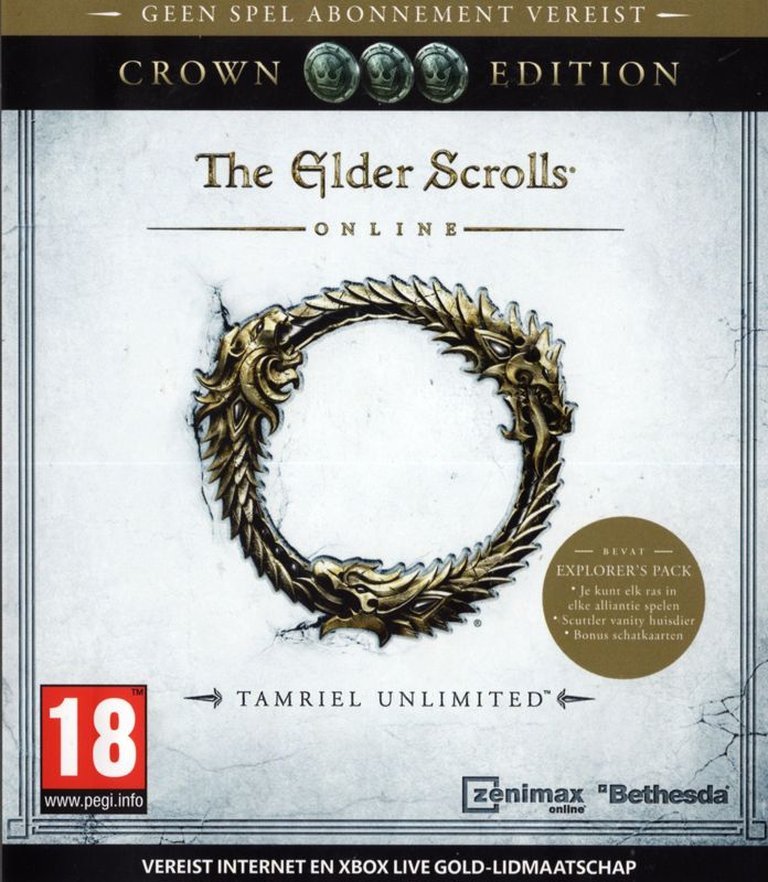
The Elder Scrolls Online: Tamriel Unlimited – Crown Edition is a special edition of the massively multiplayer online role-playing game set in the vast, open world of Tamriel. This edition includes the base game, which allows players to explore the entire continent without restrictions, along with additional content such as the Explorer’s Pack, which offers the ability to play as any race in any alliance, a vanity pet, and bonus treasure maps. It also includes 750 Crowns, the in-game currency used to purchase cosmetic and convenience items from the Crown Store. The game features a rich, immersive world filled with quests, dungeons, and a dynamic storyline, all set in the beloved Elder Scrolls universe.
Gameplay Videos
The Elder Scrolls Online: Tamriel Unlimited – Crown Edition Mods
The Elder Scrolls Online: Tamriel Unlimited – Crown Edition Guides & Walkthroughs
The Elder Scrolls Online: Tamriel Unlimited – Crown Edition Reviews & Reception
ign.com : The Elder Scrolls Online feels at home on the Xbox One and PS4, as though it were made for them from the start.
metacritic.com (74/100): For console RPG fans like me, this game scratches a huge itch for an Elder Scrolls adventure on the PS4 and Xbox One.
The Elder Scrolls Online: Tamriel Unlimited – Crown Edition: A Comprehensive Retrospective
Introduction: The Evolution of a Controversial Masterpiece
The Elder Scrolls Online: Tamriel Unlimited – Crown Edition (2015) stands as one of the most fascinating case studies in modern MMORPG history—a game that stumbled at launch, reinvented itself through bold business model shifts, and ultimately carved out a unique niche in the pantheon of The Elder Scrolls franchise. This review dissects the Crown Edition not merely as a repackaged product, but as a pivotal moment in the game’s transformation from a subscription-based failure to a thriving, player-friendly ecosystem.
At its core, Tamriel Unlimited was a radical rebranding, stripping away the reviled monthly fee that had alienated fans and critics alike. The Crown Edition sweetened the deal with bonus content, but its true significance lies in how it symbolized ZeniMax Online Studios’ willingness to listen, adapt, and embrace a hybrid monetization model that prioritized accessibility. This review will explore how the Crown Edition served as both a lifeline for the game’s reputation and a blueprint for future MMORPGs balancing single-purchase integrity with optional microtransactions.
Development History & Context: A Phoenix Rising from Subscription Ashes
The Tumultuous Birth of ESO
The development of The Elder Scrolls Online (2014) was fraught with skepticism from the outset. Announced in 2012, the game faced immediate backlash from fans who questioned whether the solitary, immersive magic of The Elder Scrolls could survive translation into a massively multiplayer format. ZeniMax Online Studios, a newly formed division under Bethesda’s parent company, bore the unenviable task of proving that Tamriel could thrive as a shared world.
The original 2014 launch was, by most accounts, a disaster. Critics lambasted its rigid class system, lackluster combat, and—most damningly—its mandatory $15 monthly subscription in an era where free-to-play and buy-to-play models were gaining dominance. Player counts plummeted, and the game’s future seemed uncertain. Yet, beneath the surface, ESO had laid a foundation of rich lore, meticulous world-building, and a surprisingly robust questing system that hinted at untapped potential.
The Pivot to Tamriel Unlimited
The shift to Tamriel Unlimited in March 2015 (with console releases following in June) was a Hail Mary pass that saved the game. By eliminating the subscription fee and adopting a buy-to-play model with optional ESO Plus memberships, ZeniMax effectively reset the game’s public perception. The Crown Edition, released alongside the console versions, was a strategic masterstroke—bundling the base game with the Explorer’s Pack (unlocking all races for all alliances) and a starter sum of Crowns (the premium currency) to ease players into the new economy.
This transition was not merely financial but philosophical. Tamriel Unlimited embraced the Elder Scrolls ethos of player freedom, allowing gamers to explore Tamriel at their own pace without the pressure of a ticking subscription clock. The introduction of the Crown Store was a carefully calibrated balance: cosmetic items, convenience upgrades, and DLC zones were available for purchase, but nothing that granted outright gameplay advantages. This approach stood in stark contrast to the pay-to-win models plaguing other MMOs at the time.
Technological and Market Context
The Crown Edition arrived at a pivotal moment in gaming history. In 2015, consoles were finally becoming viable platforms for MMORPGs, thanks to improved hardware and internet infrastructure. Final Fantasy XIV: A Realm Reborn had proven that a subscription MMO could thrive on PlayStation, but ESO’s buy-to-play model was a gamble. The Crown Edition’s success on Xbox One and PS4 demonstrated that console players were hungry for deep, persistent worlds—so long as they weren’t nickel-and-dimed.
Technologically, Tamriel Unlimited was a marvel of optimization. The game’s megaserver architecture (a single, unified server per region) eliminated the fragmentation of traditional MMO sharding, ensuring that players could always find allies for dungeons or adversaries in Cyrodiil’s sprawling PvP battles. The One Tamriel update later in 2016 would further refine this by removing level restrictions on zones, but the Crown Edition laid the groundwork for a truly open-world MMO experience.
Narrative & Thematic Deep Dive: A Tale of Souls, Betrayal, and Redemption
The Main Quest: A Daedric Heist Gone Wrong
The Elder Scrolls Online’s main storyline is a rare gem in the MMO landscape—a cohesive, voice-acted epic that rivals single-player RPGs in scope and emotional weight. The Crown Edition includes this narrative in its entirety, making it a cornerstone of the experience.
The player character, the Vestige, begins their journey not in Tamriel, but in Coldharbour, the nightmarish realm of Molag Bal, the Daedric Prince of domination and enslavement. Your soul has been stolen in a botched ritual orchestrated by Mannimarco, the King of Worms, leaving you a hollow Soul-Shriven—a puppet for Molag Bal’s grand design: the Planemeld, a cataclysmic merging of Nirn (the mortal world) and Coldharbour.
This premise is Elder Scrolls at its most Elder Scrolls: a high-stakes, esoteric conflict where gods and mortals scheme against one another, and the fate of the world hinges on arcane rituals and ancient artifacts. The writing shines in its portrayal of Molag Bal as a genuinely terrifying villain—his voice, a guttural growl laced with condescension, echoes through Coldharbour like a malevolent chorus. The Prophet (later revealed to be Varen Aquilarios, the deposed Emperor of Cyrodiil), serves as your guide, his cryptic prophecies and moral ambiguity adding layers of intrigue.
The Three Alliances: War for the Ruby Throne
The Crown Edition’s narrative brilliance extends to its faction system. Unlike most MMOs, where factions are little more than arbitrary team colors, ESO’s three alliances—the Aldmeri Dominion, Daggerfall Covenant, and Ebonheart Pact—are deeply rooted in Tamriel’s lore and political tensions.
- Aldmeri Dominion: Led by the idealistic Queen Ayrenn, this alliance of Altmer (High Elves), Bosmer (Wood Elves), and Khajiit seeks to restore the glory of the First Dominion. Their storylines explore themes of elven supremacy, cultural clashes, and the cost of progress.
- Daggerfall Covenant: A union of Bretons, Redguards, and Orcs under High King Emeric, this faction’s narrative delves into themes of honor, tradition, and the struggle to unite disparate cultures under a single banner.
- Ebonheart Pact: The most unlikely alliance, uniting Nords, Dunmer (Dark Elves), and Argonians under Jorunn the Skald-King. Their quests tackle themes of survival, mistrust, and the fragile bonds forged in the face of existential threats.
Each alliance’s main questline is a self-contained epic, culminating in a climactic battle for the Ruby Throne. The Crown Edition’s Explorer’s Pack allows players to experience all three narratives on a single character, a feature that was revolutionary at the time and remains a testament to the game’s commitment to player freedom.
Themes: Identity, Sacrifice, and the Cost of Power
At its heart, Tamriel Unlimited is a story about identity—both personal and political. The Vestige’s journey to reclaim their soul mirrors Tamriel’s own struggle to reclaim its destiny from the clutches of Molag Bal and Mannimarco. The game’s themes resonate deeply with the Elder Scrolls franchise’s recurring motifs:
- The Illusion of Control: Molag Bal’s Planemeld is a literal manifestation of tyranny, but the game subtly critiques the ways in which power corrupts even well-intentioned leaders (e.g., Varen Aquilarios’s desperate bid for the Dragonfires).
- Unity in Diversity: The alliances, though fraught with internal strife, demonstrate that survival often requires unlikely coalitions—a reflection of Tamriel’s fractured political landscape.
- The Price of Immortality: Mannimarco’s necromantic ambitions and Molag Bal’s soul-harvesting underscore the franchise’s fascination with the ethical dilemmas of defying death.
The Crown Edition’s inclusion of the Mages Guild and Fighters Guild questlines further enriches these themes, offering morally ambiguous choices (e.g., the Fighters Guild’s descent into Daedra-hunting fanaticism) that force players to confront the consequences of their actions.
Gameplay Mechanics & Systems: A Hybrid of Tradition and Innovation
Combat: Action-Meets-Tab-Targeting
The Elder Scrolls Online’s combat system is one of its most polarizing yet innovative features. Eschewing the static, auto-attack-heavy combat of traditional MMOs, ESO adopts a hybrid model that blends The Elder Scrolls’ action-RPG roots with MMO mechanics.
- Active Blocking and Dodging: Unlike World of Warcraft or Final Fantasy XIV, where blocking is a passive stat, ESO requires players to manually hold the block button (or trigger, on consoles) to mitigate damage. Dodging is similarly skill-based, tied to stamina consumption.
- Weapon Swapping: At level 15, players unlock the ability to swap between two weapon sets mid-combat, effectively doubling their available skills. This system encourages dynamic, adaptive playstyles—e.g., switching from a bow (for ranged DPS) to a restoration staff (for healing) in group content.
- No Auto-Attacks: Every attack, from light strikes to heavy power attacks, must be manually executed. This makes combat feel visceral and engaging, though it can be exhausting during prolonged sessions.
The Crown Edition’s console release refined these mechanics further, with intuitive gamepad controls that made ESO one of the few MMOs to feel designed for controllers rather than clumsily ported.
Character Progression: The Champion System
One of the Crown Edition’s most significant improvements was the overhaul of endgame progression. The original Veteran Ranks system (which required players to re-level from VR1 to VR14 after hitting level 50) was universally reviled. Tamriel Unlimited replaced it with the Champion Point system, a horizontal progression model that allowed players to customize their characters beyond the level cap.
- Champion Points (CP): Earned after reaching level 50, CP can be allocated across three constellations—Warrior (defensive), Mage (offensive), and Thief (utility)—each offering passive bonuses. This system ensures that all players, regardless of their level, can contribute meaningfully to endgame content.
- No Gear Treadmill: Unlike World of Warcraft, where new expansions invalidate old gear, ESO’s Champion Points and item sets (gear with unique bonuses) create a more forgiving gearing curve. A well-optimized CP 160 (the soft cap) character can hold their own in most content.
Crafting and Economy: A Crafter’s Paradise
The Elder Scrolls Online boasts one of the most robust crafting systems in any MMO, and the Crown Edition includes all of its intricacies:
- Six Crafting Professions: Blacksmithing, Clothing, Woodworking, Alchemy, Enchanting, and Provisioning (cooking) are all fully fleshed out, with Jewelry Crafting added later.
- Research and Traits: Weapons and armor can be researched to unlock special traits (e.g., Divines for spell critical, Infused for enchantment potency), adding depth to gear customization.
- Player-Driven Economy: Guild traders, scattered across Tamriel, allow players to buy and sell goods without an auction house. This creates a thriving, organic marketplace where supply and demand dictate prices.
PvP: The Alliance War and Cyrodiil
The Alliance War, ESO’s large-scale PvP mode, is a standout feature that the Crown Edition highlights. Set in the sprawling province of Cyrodiil, this persistent conflict pits the three alliances against one another in a battle for control of keeps, resources, and ultimately, the Ruby Throne.
- Siege Warfare: Players can construct ballistae, catapults, and trebuchets to assault enemy fortifications, adding a layer of strategy rarely seen in MMOs.
- Emperor System: The player who deals the most damage in the capture of the Imperial City is crowned Emperor, granting them powerful buffs and a coveted title.
- Campaigns: Different Cyrodiil instances (Campaigns) cater to various playstyles, from no-CP battles to hardcore PvP.
The Crown Edition’s console release made Cyrodiil accessible to a wider audience, though the lack of text chat (a controversial omission) initially hampered coordination.
World-Building, Art & Sound: A Living, Breathing Tamriel
A Continent Reborn
The Elder Scrolls Online’s greatest achievement is its recreation of Tamriel during the Second Era (roughly 800 years before The Elder Scrolls V: Skyrim). The Crown Edition includes the entire base game world, a sprawling, handcrafted continent that feels alive in ways few MMOs achieve.
- Regional Diversity: From the sun-scorched dunes of Alik’r Desert to the mist-shrouded forests of Rivenspire, each zone has a distinct identity, reinforced by unique architecture, flora, and NPC cultures.
- Dynamic Weather and Day/Night Cycle: The world changes with the time of day, with Coldharbour’s perpetual twilight and Auridon’s golden sunsets creating immersive atmospheres.
- Lore and Books: Over 2,500 in-game books (many of which are fully voice-acted) deepen the world’s history, making Tamriel feel like a place with millennia of stories.
Visual Design: Aesthetic Fidelity to the Franchise
The Crown Edition’s art direction is a love letter to The Elder Scrolls’ legacy. Character models, while not as detailed as Skyrim’s, capture the essence of each race—Khajiit with their feline grace, Argonians with their reptilian poise, and Orcs with their hulking brutality.
- Armour and Weapons: The game’s gear is meticulously designed, with racial styles (e.g., Dwemer, Daedric, Ancient Elf) that evoke nostalgia for longtime fans.
- Dungeons and Delves: From the Elden Hollow’s vampire-infested caves to the Banished Cells’ Daedric ruins, each dungeon is a visual feast, dripping with atmosphere.
Sound Design and Music: A Symphony of Tamriel
Jeremy Soule’s iconic Elder Scrolls themes are absent (a point of contention for some fans), but ESO’s original score by Brad Derrick is a masterclass in dynamic composition. The Crown Edition includes:
- Adaptive Music: Combat, exploration, and PvP each have distinct musical themes that shift seamlessly based on the player’s actions.
- Ambient Soundscapes: The howling winds of The Rift, the chirping insects of Khenarthi’s Roost, and the eerie whispers of Coldharbour create an auditory tapestry that enhances immersion.
- Voice Acting: With 12,000+ fully voiced NPCs (a record at the time), ESO sets a new standard for MMO storytelling. Notable performances include Lyris Titanborn (voiced by Lynda Carter) and Molag Bal (a chilling turn by John Noble).
Reception & Legacy: From Redemption to Reverence
Critical Reception: A Second Chance
The Crown Edition’s reception was a stark contrast to the original 2014 launch. Critics praised the removal of the subscription fee, the refined combat, and the sheer breadth of content. IGN’s Leif Johnson noted that the console version “feels like it was made for them from the start,” highlighting the intuitive controls and the game’s newfound accessibility.
- Metacritic Scores:
- PS4: 74 (Mixed or Average)
- Xbox One: 77 (Generally Favorable)
- PC: 80 (Generally Favorable)
- User Scores: A 7.5 on Metacritic, with many players citing the Crown Edition as their entry point into a game they’d previously dismissed.
Commercial Success and Longevity
The shift to Tamriel Unlimited and the Crown Edition’s release marked a turning point for ESO’s commercial fortunes. By 2016, the game had surpassed 7 million copies sold, and its player base continued to grow steadily. The ESO Plus subscription (an optional premium tier) became a major revenue driver, offering DLC access and monthly Crown stipends.
The game’s longevity is a testament to ZeniMax’s commitment to post-launch support. Major expansions like Morrowind (2017), Summerset (2018), and Elsweyr (2019) kept the world fresh, while the One Tamriel update (2016) removed level restrictions, making the Crown Edition’s content more accessible than ever.
Influence on the Genre and Franchise
The Elder Scrolls Online’s evolution from a flawed subscription MMO to a thriving buy-to-play juggernaut has had a ripple effect across the industry:
- Monetization Models: ESO proved that a hybrid model—single purchase + optional subscriptions + cosmetic microtransactions—could succeed where pure subscriptions failed. Games like Guild Wars 2 and Final Fantasy XIV took note, refining their own approaches.
- Console MMOs: The Crown Edition’s success on Xbox One and PS4 demonstrated that MMOs could thrive on consoles if designed with controllers in mind. Later games like Black Desert Online and Neverwinter followed suit.
- The Elder Scrolls’ Future: While ESO was initially seen as a stopgap before The Elder Scrolls VI, its success has cemented its place as a vital part of the franchise’s future. The game’s lore expansions (e.g., Morrowind, Elsweyr) have even retroactively influenced the main series’ canon.
Conclusion: A Definitive Edition of a Redemption Arc
The Elder Scrolls Online: Tamriel Unlimited – Crown Edition is more than just a repackaged MMO—it is a testament to the power of reinvention. By shedding its most reviled mechanics (the subscription fee, Veteran Ranks) and embracing player freedom, ESO transformed from a cautionary tale into a triumphant underdog story.
The Crown Edition’s inclusion of the Explorer’s Pack and Crowns was a savvy move, but its true value lies in how it symbolized a new era for the game. For newcomers, it offered a low-risk entry point into a vast, living world. For veterans, it was a vindication—a sign that ZeniMax had listened and adapted.
Final Verdict: 9/10 – A Masterclass in MMO Redemption
The Elder Scrolls Online: Tamriel Unlimited – Crown Edition is not just one of the best Elder Scrolls games—it is one of the most important MMORPGs of the 2010s. Its blend of deep lore, flexible gameplay, and player-friendly monetization sets a standard that few have matched. While its console limitations (e.g., lack of text chat at launch) and occasional jankiness hold it back from perfection, its strengths far outweigh its flaws.
For fans of The Elder Scrolls, it is an essential journey through Tamriel’s past. For MMO enthusiasts, it is a rare example of a game that learned from its mistakes and emerged stronger. And for gamers at large, it is a reminder that even the most maligned titles can rise from the ashes—given enough Crowns, courage, and conviction.
Post-Script: The Legacy Continues
As of 2025, The Elder Scrolls Online shows no signs of slowing down. With the shift to Seasons (replacing annual Chapters) and expansions like Gold Road (2024), the game continues to evolve. The Crown Edition, now a relic of 2015, remains a pivotal moment—a bridge between ESO’s troubled past and its luminous future. In the annals of MMO history, it stands as proof that sometimes, the greatest adventures begin with a second chance.