
- Release Year: 2013
- Platforms: Windows
- Publisher: Iceberg Interactive B.V.
- Genre: Compilation
- Game Mode: Single-player
- Average Score: 46/100
Description
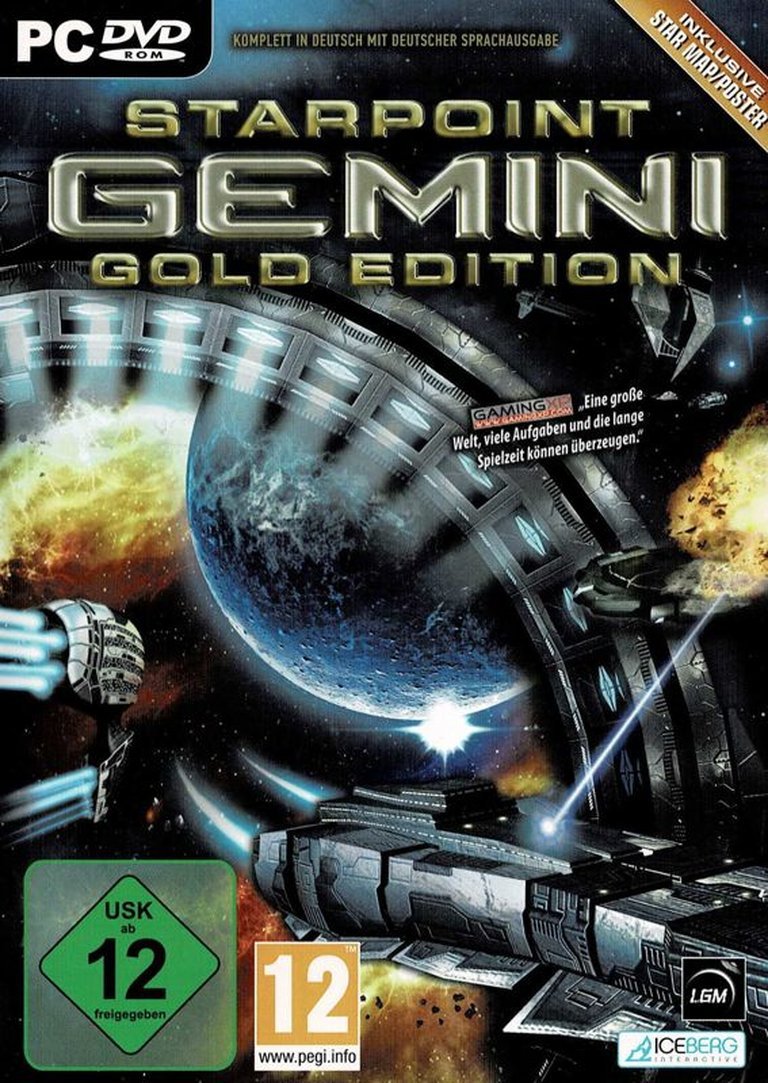
Starpoint Gemini: Gold Edition is a compilation that includes the original Starpoint Gemini and its expansion, Timebreach. Set in a rich sci-fi universe, the game follows the aftermath of the A’Shriari devastation of the Solar System, where remnants of the Earth Empire flee to the Gemini star system. Players navigate a politically fractured galaxy, engaging in space combat, faction diplomacy, and exploration as they carve out their place among rival groups like the Solari Concord, the 51st Legion, and the Yxaril Conglomerate. The game blends action, strategy, and RPG elements in a dynamic, open-world environment.
Starpoint Gemini: Gold Edition Patches & Updates
Starpoint Gemini: Gold Edition Reviews & Reception
steamcommunity.com : I had a good time playing Starpoint Gemini 1, which was a lot like Starfleet Command. It was very relaxing.
metacritic.com (46/100): It could have used more variety in the mission area, a bit more content and definitely multiplayer, but it remains a game that gives a player freedom to explore, trade or fight as he sees fit, with little restrictions.
gamespot.com : Caught between being a space sim, a real-time strategy game, and a role-playing game, Starpoint Gemini tries to do a little bit of everything, and fails to do anything well.
gamepressure.com : Starpoint Gemini is a game created by Little Green Men studio, a combination of space flight simulator, RPG and real-time strategy.
Starpoint Gemini: Gold Edition Cheats & Codes
PC
Press the specified key during gameplay.
| Code | Effect |
|---|---|
| F11 | Grants a Cassiopeia Destroyer ship. |
Starpoint Gemini: Gold Edition – A Flawed but Ambitious Spacefaring Odyssey
Introduction: A Star System in Turmoil
Starpoint Gemini: Gold Edition (2013) is a compilation of Starpoint Gemini (2010) and its standalone expansion, Timebreach (2012), offering players a sprawling, if uneven, journey through the eponymous star system. Developed by Croatian indie studio Little Green Men Games and published by Iceberg Interactive, the series blends space combat, trading, exploration, and RPG mechanics into a hybrid experience that aspires to the grandeur of Freelancer and EVE Online but often stumbles under the weight of its ambitions. This review dissects the game’s legacy, its narrative and thematic depth, its mechanical intricacies, and its place in the pantheon of spacefaring RPGs.
Development History & Context: A Croatian Indie Dream
Little Green Men Games, founded in 2009, emerged from Croatia’s burgeoning indie scene with a vision to craft a spacefaring RPG that emphasized tactical ship combat and player agency. The original Starpoint Gemini (2010) was built on the proprietary IC Whale Engine, a tool designed to handle the game’s real-time strategy and RPG elements. The studio’s modest budget and small team size constrained its scope, yet the game’s release on Steam in 2012 and subsequent updates (including a 2020 patch restoring Windows 10 compatibility) demonstrated a commitment to refinement.
The Gold Edition arrived in 2013 as a retail compilation, bundling the base game with Timebreach, which expanded the lore and introduced new factions and missions. The series’ evolution—culminating in Starpoint Gemini 3 (2019)—reflects a gradual shift toward more polished mechanics and narrative cohesion, but the Gold Edition remains a fascinating time capsule of the franchise’s early, rough-around-the-edges charm.
Narrative & Thematic Deep Dive: A Galaxy of Intrigue and Conflict
The Setting: Gemini’s Fractured Politics
The Starpoint Gemini universe is a tapestry of political intrigue, corporate espionage, and interstellar warfare. The Gemini system, a binary star system rich in resources and strategic value, became a battleground after the collapse of the Earth Empire—a totalitarian regime that once dominated human-colonized space. The Empire’s fall, precipitated by the telepathic A’Shriari aliens, left Gemini in chaos, with factions like the Gemini Protectorate, Baeldor Republic, and Solari Concord vying for dominance.
The Gold Edition weaves two interconnected narratives:
1. Starpoint Gemini (2010): Players assume the role of a captain awakened from a 20-year stasis rift, thrust into a system where old alliances have crumbled and new powers rise. The campaign explores themes of survival, loyalty, and the cost of war, as players navigate the treacherous waters of Gemini’s factional conflicts.
2. Timebreach (2012): Set immediately after the reopening of the Starpoint (a wormhole linking Gemini to the Sol system), this expansion introduces the Imperial remnants’ desperate bid to reclaim their lost territory. The narrative delves into the moral ambiguity of the Solari Concord—human refugees fleeing the A’Shriari—and the lingering specter of the Empire’s ideology.
Themes: Power, Survival, and the Burden of History
The game’s lore, expanded in the Starpoint Gemini Wiki, paints a grim picture of humanity’s struggle for survival. Key themes include:
– The Cycle of Empire: The Earth Empire’s collapse mirrors historical imperial declines, with factions like the Royalists and Black Oath clinging to its legacy.
– Telepathy and Fear: The A’Shriari’s telepathic dominance forces factions to adapt, with the Lens in the Soreen region acting as a rare countermeasure.
– Corporate and Factional Warfare: Entities like MultiOps Industries and Nexus embody the cutthroat capitalism of Gemini, where economic power translates directly into military might.
Characters and Dialogue: A Mixed Bag
The game’s dialogue, while rich in lore, suffers from repetitive voice acting and stiff localization. The heavily accented English (often Russian or Eastern European) becomes grating over time, undermining immersion. However, the factional ambassadors and key NPCs—such as Manfred Beck of the Gladius Group—add depth to the world, offering players meaningful choices in diplomacy and warfare.
Gameplay Mechanics & Systems: A Hybrid of Promise and Frustration
Core Gameplay Loop: Trading, Combat, and Progression
Starpoint Gemini positions itself as a space combat simulator/RPG hybrid, with players controlling a single ship (or fleet in later missions) across a seamless star system. The core loop involves:
1. Exploration: Traversing Gemini’s sectors, discovering anomalies, and uncovering hidden lore.
2. Combat: Engaging in real-time, tactical ship battles with a focus on shield management and weapon arcs.
3. Trading and Mining: Acquiring resources to upgrade ships or sell for profit.
4. Reputation and Faction Relations: Aligning with factions to unlock missions, allies, and enemy fleets.
Combat: A Dance of Shields and Weapon Arcs
Combat is the game’s strongest suit, drawing comparisons to Starfleet Command and Freelancer. Ships are divided into four shield quadrants (front, rear, left, right), requiring players to maneuver strategically to exploit weaknesses. Weapon variety—from plasma cannons to shockwave generators—adds tactical depth, though the lack of a true 3D movement system (ships are confined to a 2D plane) limits immersion.
Progression and Customization
Players upgrade their ship’s officers, equipment, and maneuvers via a skill tree, though the system feels shallow compared to contemporaries like EVE Online. The absence of multiplayer (a staple of the genre) further restricts long-term engagement.
UI and Technical Issues
The game’s interface is clunky, with menus that feel outdated even by 2010 standards. Frequent crashes (especially during warp transitions) and unskippable cutscenes mar the experience, though patches have mitigated some issues.
World-Building, Art & Sound: A Star System Alive with Conflict
Visual Design: A Binary Star’s Beauty
Gemini’s dual suns cast a golden hue over the system, with nebulae, asteroid fields, and derelict stations adding atmospheric depth. Ship designs, while functional, lack the polish of later entries in the series.
Sound Design: A Symphony of War
The game’s soundtrack blends orchestral grandeur with electronic pulses, evoking the tension of interstellar conflict. However, the repetitive voice lines and poor localization detract from the audio experience.
Reception & Legacy: A Divisive but Enduring Cult Classic
Critical Reception: A Tale of Two Scores
- Metacritic: 46 (critics) vs. 8.4 (users).
- GameSpot: 4.5/10, citing “scant RPG elements” and “horrible voice-overs.”
- User Reviews: Praised for its ambition and combat but criticized for technical flaws.
Legacy: Paving the Way for Sequels
Despite its flaws, Starpoint Gemini laid the groundwork for its sequels, which refined its mechanics and expanded its lore. The Gold Edition remains a curiosity—a flawed but fascinating snapshot of indie spacefaring ambition.
Conclusion: A Flawed Gem in the Cosmos
Starpoint Gemini: Gold Edition is a game of contradictions: ambitious yet uneven, immersive yet janky, and rich in lore but hamstrung by execution. For fans of space combat and factional intrigue, it offers a unique (if frustrating) experience. However, its technical limitations and repetitive design relegate it to the realm of cult classics rather than genre-defining masterpieces.
Final Verdict: 6.5/10 – A rough diamond in need of polishing, best appreciated by hardcore space sim enthusiasts or those curious about the franchise’s origins.
For modern players, Starpoint Gemini 2 or 3 may offer a more refined experience, but the Gold Edition stands as a testament to indie ambition in the face of adversity.