
- Release Year: 2024
- Platforms: Quest, Windows
- Publisher: Wenkly Studio Sp. z o.o.
- Developer: Wenkly Studio Sp. z o.o.
- Genre: Action
- Perspective: 1st-person
- Game Mode: Online PVP
- Gameplay: Shooter
- Average Score: 62/100
- VR Support: Yes
Description
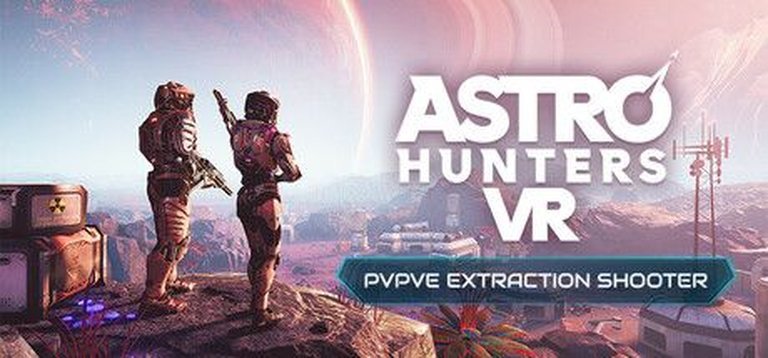
Astro Hunters VR is a first-person PvPvE extraction shooter set in a sci-fi universe, where players engage in intense combat and resource extraction missions. Developed by Wenkly Studio, the game blends action-packed shooter mechanics with VR motion controls, offering a mix of cooperative and competitive gameplay. Players must navigate hazardous environments, complete quests, and outmaneuver both AI enemies and rival hunters to survive and thrive. While the game shows promise with its core mechanics, reviews highlight the need for further polish, content expansion, and bug fixes to fully realize its potential as a standout VR experience.
Gameplay Videos
Where to Buy Astro Hunters VR
PC
Astro Hunters VR Guides & Walkthroughs
Astro Hunters VR Reviews & Reception
store.steampowered.com (61/100): Mixed (61% of the 63 user reviews for this game are positive).
steambase.io (63/100): Astro Hunters VR has earned a Player Score of 63 / 100.
Astro Hunters VR: A Bold but Flawed Foray into VR Extraction Shooters
Introduction: The Promise and Peril of a New VR Frontier
Astro Hunters VR arrives at a fascinating crossroads in the evolution of virtual reality gaming. As the extraction shooter genre—popularized by titles like Escape from Tarkov and Hunt: Showdown—continues to dominate the flat-screen market, VR developers are racing to adapt its high-stakes, loot-driven gameplay to immersive headsets. Astro Hunters VR, developed by Poland’s Wenkly Studio, attempts to carve out its niche by transplanting this formula into a sci-fi universe, where players scavenge alien planets, battle AI foes, and outmaneuver rival hunters in a tense, persistent-world sandbox.
Yet, as with many ambitious VR projects, Astro Hunters VR stumbles under the weight of its own aspirations. Early reviews and player feedback paint a picture of a game brimming with potential but hamstrung by technical rough edges, underdeveloped systems, and a lack of polish. This review dissects Astro Hunters VR in exhaustive detail, examining its strengths, weaknesses, and whether it stands as a pioneering step forward for VR shooters or a cautionary tale of overreach.
Development History & Context: A Studio’s Gamble on VR’s Future
Wenkly Studio: From Survival Nation to Sci-Fi Extraction
Wenkly Studio, a relatively small indie developer based in Poland, first gained attention with Survival Nation, a VR survival game that showcased their knack for immersive mechanics but struggled with longevity. Astro Hunters VR represents their most ambitious project to date—a full-fledged PvPvE extraction shooter designed for cross-platform VR play (SteamVR, Meta Quest, and PSVR2).
The game’s development was shaped by several key influences:
– The Rise of Extraction Shooters: The genre’s surge in popularity on PC (Escape from Tarkov, Dark and Darker) and console (The Cycle: Frontier, before its shutdown) created a clear demand for a VR equivalent.
– The Cancelled Legacy of The Cycle: Frontier: Many players and critics have noted Astro Hunters VR’s striking similarities to The Cycle, particularly in its mothership hub, mission structure, and sci-fi aesthetic. Whether intentional or coincidental, this comparison has colored perceptions of the game.
– VR’s Unique Challenges: Developing a competitive multiplayer shooter in VR requires overcoming motion control limitations, netcode stability, and the inherent difficulty of precise aiming without traditional input methods.
Launch and Early Reception: A Rocky Start
Released on August 8, 2024, Astro Hunters VR entered the market with a $19.99 price tag and a bold roadmap promising future content, including:
– Cross-play between Quest and SteamVR (implemented post-launch).
– New planets, bosses, and weapon attachments.
– Improved AI, armor systems, and inventory management.
However, initial reviews were mixed at best, with critics and players alike highlighting:
– Technical instability (bugs, crashes, and synchronization issues).
– Shallow progression systems.
– A lack of compelling reasons to engage with its open-world design.
The game’s Steam rating sits at “Mixed” (61% positive from 63 reviews), while its Meta Quest reception has been similarly lukewarm, with critics like MIXED calling it “a mediocre extraction shooter… but still has potential.”
Narrative & Thematic Deep Dive: A Thin Veneer of Sci-Fi Mercenary Life
Plot and Setting: The Mothership’s Call
Astro Hunters VR drops players into the role of a Hunter, a mercenary employed by a sprawling mothership to scavenge resources from hostile alien planets. The narrative is minimalist, serving primarily as a framework for gameplay rather than a driving force. Key elements include:
– The Mothership as Hub: A central social and progression hub where players equip gear, craft items, and accept missions. Its design evokes The Cycle: Frontier’s orbital station, complete with traders, workbenches, and landing pods.
– Procedurally Generated Planets: The game’s sole planet at launch, Volcano, is a barren, resource-rich wasteland teeming with AI enemies and rival players. Future updates promise additional biomes.
– Faction Conflict: While not deeply explored, the game hints at larger factions vying for control of the planet’s resources, though this remains underdeveloped.
Themes: Survival, Betrayal, and the Lure of Loot
The game’s themes are familiar to extraction shooter fans:
– High-Risk, High-Reward Gameplay: Every expedition is a gamble—die, and you lose all unsaved loot.
– Player-Driven Narratives: The lack of a strong scripted story means player interactions (alliances, betrayals, ambushes) define the experience.
– Capitalist Dystopia: The mothership’s corporate tone reinforces the idea that Hunters are expendable assets in a larger economic machine.
Dialogue and Character Depth: A Missed Opportunity
Unfortunately, Astro Hunters VR squanders its potential for immersive world-building:
– NPC interactions are perfunctory, with traders and mission-givers offering little personality.
– No voice acting (a common VR cost-cutting measure) further flattens the experience.
– Lore is delivered through text logs, which feel tacked-on rather than integral.
Verdict: The game’s narrative is functional but forgettable, serving as little more than a backdrop for its core gameplay loop.
Gameplay Mechanics & Systems: A Foundation with Cracks
Core Gameplay Loop: Scavenge, Shoot, Survive
Astro Hunters VR follows the extraction shooter blueprint:
1. Accept a Mission (or go in blind) from the mothership.
2. Land on the Planet and scavenge resources (metals, gases, liquids) using specialized tools.
3. Fight AI Enemies (alien creatures, armed drones, and turrets).
4. Engage (or Avoid) Other Players—cooperate, compete, or betray.
5. Extract via evacuation points before time runs out.
Combat: Satisfying but Unrefined
- Weapon Handling: VR’s greatest strength—physicality—shines here. Reloading, aiming, and swapping weapons feel tactile and immersive.
- Elemental Modifications: Weapons can be customized with fire, plasma, electricity, or acid effects, adding strategic depth.
- AI Enemies: Unfortunately, enemy AI is predictable and unchallenging, often standing still or moving in easily exploitable patterns.
Progression & Crafting: A Work in Progress
- Resource Gathering: Players collect materials using specialized tools (e.g., gas extractors, metal drills), which adds a layer of realism but can feel tedious.
- Crafting System: Workbenches allow for weapon upgrades, ammo crafting, and consumable production. However, the system lacks depth—recipes are limited, and endgame gear feels unrewarding.
- Inventory Management: A persistent pain point. The backpack system is clunky, with items frequently misplacing or requiring tedious menu navigation.
Multiplayer: The Heart of the Experience (When It Works)
- PvPvE Dynamics: The tension of encountering other players is the game’s strongest selling point. Will you team up or turn on each other?
- Netcode Issues: Early reviews cite desync, lag, and hit registration problems, undermining competitive play.
- Player Base Concerns: With only 2 players tracked on Steambase at times, matchmaking can be sparse, raising questions about long-term viability.
UI & Controls: A VR Interface Nightmare
- Radial Menus and Quick Actions: While functional, they lack intuitiveness, forcing players to memorize button layouts.
- Watch Mechanic: A unique but poorly implemented feature—checking your watch causes stuttering, breaking immersion.
Verdict: The gameplay loop is solid in theory but marred by execution flaws. Combat feels good, but progression, AI, and UI drag the experience down.
World-Building, Art & Sound: A Barren Beauty with Technical Limits
Visual Design: Sci-Fi Aesthetic on a Budget
- Planet Volcano: The game’s sole map is a visually striking but repetitive landscape of rocky outcrops, abandoned bunkers, and alien flora. The lack of variety makes exploration feel samey.
- Mothership Hub: A highlight, with detailed interiors and a cohesive sci-fi industrial design. However, it lacks the bustling life of similar hubs in Destiny or Warframe.
- Enemy Design: AI foes are generic sci-fi tropes—drones, turrets, and blob-like aliens—with little visual distinctiveness.
Atmosphere & Immersion: The VR Edge
- Scale and Presence: VR’s strength is embodiment, and Astro Hunters VR leverages this well. Standing on an alien planet, hearing distant gunfire, and physically ducking behind cover create genuine tension.
- Sound Design: Underwhelming. Gunshots lack punch, ambient sounds are sparse, and there’s no dynamic music to heighten moments of danger.
Technical Performance: A Mixed Bag
- Quest 2/3 Optimization: The game runs adequately on standalone headsets but suffers from pop-in textures and occasional frame drops.
- PC VR (SteamVR): More stable but still plagued by bugs like flickering UI elements and physics glitches.
Verdict: The art direction is competent but unremarkable, while sound design fails to elevate the experience. VR immersion carries the atmosphere, but technical limitations hold it back.
Reception & Legacy: A Game Caught Between Potential and Obscurity
Critical Reception: “A Diamond in the Rough” or “A Mess”?
- Gameplay (Benelux) – 57/100: “The ideas are there, but the developers have clearly taken on too much. A lot of patchwork is still needed.”
- MIXED – Unscored (Quest): “The basic structure is successful and can be expanded… With more content and fine-tuning, it could become a real VR highlight.”
- Steam User Reviews – Mixed (61%): Players praise the core concept and VR gunplay but criticize bugs, lack of content, and shallow progression.
Commercial Performance: A Niche Within a Niche
- Low Player Counts: With only 63 Steam reviews and minimal visibility, Astro Hunters VR struggles to compete in a crowded VR market.
- Roadmap Concerns: The promised updates (new planets, bosses, armor systems) have yet to materialize, leading to player frustration.
Influence & Future Prospects
- A Cautionary Tale for VR Extraction Shooters: Astro Hunters VR proves that even a strong concept can falter without polish and content.
- Potential for a Comeback? If Wenkly Studio delivers on their roadmap, the game could evolve into something special. However, time is running out—player patience is thin in the fast-moving VR space.
Conclusion: A Flawed but Fascinating Experiment
Astro Hunters VR is a game of contradictions:
✅ What It Gets Right:
– Immersive VR combat with satisfying weapon handling.
– A promising PvPvE framework that could thrive with more content.
– A strong sci-fi aesthetic in its hub and core premise.
❌ What It Gets Wrong:
– Technical instability (bugs, crashes, netcode issues).
– Shallow progression and crafting systems.
– Lack of enemy variety and intelligent AI.
– A barren, repetitive open world with little incentive to explore.
Final Verdict: 6.5/10 – “Worth Watching, Not Yet Worth Mastering”
Astro Hunters VR is not a bad game, but it’s far from a great one. It stands as a proof of concept—a demonstration that extraction shooters can work in VR, but only if executed with more polish, depth, and player investment.
For Whom Is This Game?
– VR enthusiasts hungry for new multiplayer experiences may find enjoyment in its tense PvPvE moments.
– Patients gamers willing to wait for updates could see it blossom into something special.
– Hardcore extraction shooter fans will likely find it too shallow compared to Escape from Tarkov or Hunt: Showdown.
The Future of Astro Hunters VR Hinges on One Question:
Can Wenkly Studio deliver the content and fixes needed to transform this rough diamond into a VR gem?
As it stands, Astro Hunters VR is a bold swing that misses more than it connects—but in the rapidly evolving VR landscape, it’s a swing worth taking.
Final Score Breakdown:
– Gameplay: 7/10
– Narrative/Themes: 5/10
– Visuals/Sound: 6/10
– Technical Performance: 5/10
– Replayability: 6/10
– Overall: 6.5/10 – “Flawed but Promising”
Astro Hunters VR is not a must-play, but it’s a game to watch—one that could either fade into obscurity or rise as a defining VR shooter. The choice is now in the developers’ hands.