
- Release Year: 2017
- Platforms: PlayStation 4, Windows Apps, Windows
- Publisher: Beijing IceWorld Technology Co.,Ltd., Gamepoch, Inc.
- Developer: Beijing IceWorld Technology Co.,Ltd.
- Genre: Action
- Perspective: 1st-person
- Game Mode: Single-player
- Gameplay: Shooter
- Setting: Fantasy, Futuristic, Sci-fi
- Average Score: 20/100
- VR Support: Yes
Description
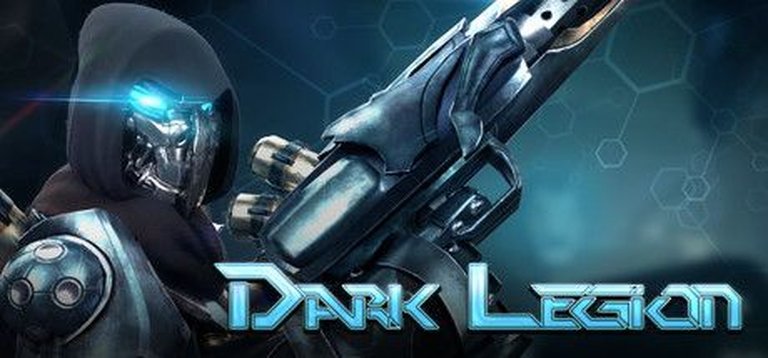
Dark Legion is a first-person shooter set in a dark fantasy and sci-fi universe, where players engage in action-packed combat against corrupted forces. Developed by Beijing IceWorld Technology Co., Ltd., the game blends direct control mechanics with immersive gameplay, offering a mix of fantasy and futuristic elements. Released in 2017 for Windows and later expanded to PlayStation 4, it features a commercial business model and supports motion controllers for an enhanced experience.
Gameplay Videos
Where to Buy Dark Legion
PC
Dark Legion Guides & Walkthroughs
Dark Legion Reviews & Reception
opencritic.com (20/100): Dark Legion is generic at best. At worst it makes no sense, has mechanics that aren’t explained, some absolutely ugly graphics, inconsistent art, and sound effects that are either annoying or stolen.
Dark Legion Cheats & Codes
PC
Press [CTRL]+[SHIFT]+[M] then type any of the following cheat codes for the desired effect.
| Code | Effect |
|---|---|
| gimme fuel, gimme fire | 100,000 units of each resource |
| kill’em all | 200 melee damage to the selected unit(s) or destroys the selected building |
| the thing that should not be | All tech |
| …and justice for all | All tech for all players |
| i’m you |
Control any team |
| #player points | Display points for all players |
| eye of the beholder | Full map |
| osszes faszom | Full map, 100,000 of each resource, all tech, reduced build, train, research, and repair time |
| #show alarm blocks | Highlight area centered on unit that attacks or noticed by enemy forces |
| osszes bazmeg | Maximum technology |
| #gimme |
Place indicated unit at the center of the map |
| your life burns faster | Reduce building and repair time |
| master of puppets | Reduce time to train/build units and research |
| harvester of sorrow | Remove selected gold mine or stone mine |
| king nothing | Set all objectives on Mission maps to complete |
| kick ass | Set current team’s rush attack target to selected building |
| #show blocked | Toggle display of unavailable grid blocks |
| #show fps | Toggle frame rate display |
| #show grid | Toggle grid lines on map |
| #show timer | Toggle timer |
| the house jack built | Unlock all buildings |
| metal militia | Unlock all units |
Dark Legion: A Forgotten VR Experiment in Sci-Fi Horror
Introduction
Dark Legion (2017) is a curious artifact of the mid-2010s VR boom—a game that attempted to merge first-person shooting, magic-based combat, and sci-fi horror into a cohesive experience. Developed by Beijing IceWorld Technology Co., Ltd. and published by Gamepoch, Inc., it arrived during a period when virtual reality was still finding its footing, and developers were experimenting with how to best utilize the technology. While not a commercial or critical success, Dark Legion offers a fascinating case study in ambition, technical limitations, and the challenges of designing for an emerging medium.
This review will dissect Dark Legion in its entirety, exploring its development context, narrative structure, gameplay mechanics, and legacy. We’ll examine why it failed to resonate with audiences and how its flaws and innovations reflect the broader struggles of early VR game design.
Development History & Context
The Studio and Vision
Beijing IceWorld Technology Co., Ltd. is a relatively obscure developer with a portfolio that includes Dark Legion and a handful of other titles, none of which achieved significant mainstream recognition. The studio’s work on Dark Legion appears to have been an attempt to capitalize on the growing interest in VR gaming, particularly following the release of the Oculus Rift, HTC Vive, and PlayStation VR in 2016.
The game’s premise—a sci-fi horror FPS with magical elements—suggests an effort to differentiate itself from the wave of generic VR shooters flooding the market at the time. The inclusion of magic alongside traditional firearms was a bold choice, aiming to create a hybrid combat system that would stand out. However, as we’ll explore later, this ambition was not fully realized in execution.
Technological Constraints
Dark Legion was developed using the Unity engine, a popular choice for indie and mid-tier developers due to its accessibility and flexibility. However, Unity’s capabilities in 2017 were still limited when it came to optimizing for VR, particularly in terms of performance and immersion. The game’s technical shortcomings—such as inconsistent art design, clunky controls, and underwhelming AI—can be partially attributed to these constraints.
The game was released across multiple platforms, including Windows, Windows Apps, and PlayStation 4, with VR support for Oculus Rift, HTC Vive, and PlayStation VR. This multi-platform approach may have stretched the development team thin, leading to compromises in polish and optimization.
The Gaming Landscape in 2017
2017 was a pivotal year for VR gaming. While the technology was no longer in its infancy, it was still far from mainstream adoption. Games like Resident Evil 7: Biohazard and Superhot VR demonstrated the potential of VR for immersive horror and innovative gameplay, but many titles struggled to justify the high cost of entry for consumers.
Dark Legion entered this landscape as a niche product, competing against more polished and better-marketed experiences. Its lack of a strong marketing push or recognizable IP further hindered its ability to stand out in an already crowded market.
Narrative & Thematic Deep Dive
Plot Overview
Dark Legion casts the player as a chief officer on a space mission whose ship malfunctions, forcing an emergency landing on a mysterious planet. The protagonist’s goal is to find an energy source to repair the ship and return to Earth. However, they soon discover a sinister conspiracy: a rogue military faction on the planet is secretly engineering mutant creatures, posing a catastrophic threat to humanity.
The narrative is straightforward, leaning heavily on sci-fi and horror tropes. The premise is reminiscent of classic survival horror games like Dead Space or System Shock, where the player uncovers a dark conspiracy while battling grotesque creatures. However, Dark Legion lacks the depth and atmospheric tension of those titles, instead opting for a more action-oriented approach.
Themes and Tone
The game’s themes revolve around survival, discovery, and the dangers of unchecked scientific experimentation. The mutant creatures serve as a metaphor for the consequences of playing god, a common trope in sci-fi horror. However, the execution of these themes is underwhelming, with little in the way of meaningful character development or emotional stakes.
The tone is consistently dark and foreboding, with the planet’s eerie landscapes and the presence of the mutant creatures creating a sense of isolation and dread. However, the game’s technical limitations—such as repetitive environments and lackluster enemy designs—prevent it from achieving the same level of immersion as its inspirations.
Dialogue and Character Interaction
One of Dark Legion’s most glaring weaknesses is its lack of meaningful dialogue or character interaction. The protagonist is a silent cipher, and the game’s narrative is conveyed primarily through environmental storytelling and brief text prompts. This minimalist approach to storytelling may have been a deliberate choice to emphasize immersion, but it ultimately leaves the player feeling disconnected from the world and its stakes.
Gameplay Mechanics & Systems
Core Gameplay Loop
Dark Legion is, at its core, a first-person shooter with light RPG and magic elements. The player explores the planet’s environments, battles mutant creatures, and collects resources to progress. The game features a mix of linear and open-ended levels, with some areas allowing for free movement and exploration.
The combat system is the game’s primary focus, blending traditional firearms with magical abilities. Players can wield pistols, machine guns, shotguns, rifles, RPGs, grenades, and even bows and shields. The inclusion of magic adds a unique twist, allowing players to cast spells and use magical traps to gain an advantage in combat.
Combat and Enemy AI
The combat in Dark Legion is serviceable but unremarkable. The gunplay feels weighty enough, with reloading and aiming mechanics that attempt to simulate realism. However, the enemy AI is inconsistent, with creatures often exhibiting predictable or illogical behavior. Enemies may dodge and duck erratically, making combat feel more like a chore than a strategic challenge.
The magical elements of combat are underdeveloped. While the idea of combining spells with firearms is intriguing, the execution feels tacked on. Spells are often situational, and their use is not well-integrated into the game’s overall combat flow. This lack of synergy between the two systems prevents Dark Legion from achieving the unique identity it aspires to.
Progression and Upgrades
Dark Legion features a basic progression system, allowing players to upgrade their weapons and abilities as they collect resources. However, the system is shallow, with little in the way of meaningful customization or depth. Upgrades feel more like incremental stat boosts rather than transformative enhancements to gameplay.
The game also includes a collection system, where players can scavenge for health packs, ammunition, and clues to unlock new areas. While this adds a layer of exploration, the rewards are often underwhelming, and the system lacks the depth seen in similar games like Metroid or Castlevania.
VR Controls and Movement
One of the most critical aspects of any VR game is its control scheme, and Dark Legion struggles in this regard. The game supports both free movement and teleportation, depending on the player’s preference and available space. However, the movement mechanics feel clunky and imprecise, particularly in larger environments.
The use of motion controllers for aiming and reloading is a highlight, as it adds a layer of immersion that traditional controllers cannot match. However, the lack of haptic feedback and the occasional tracking issues detract from the experience. The game’s VR implementation feels more like a proof of concept than a fully realized experience.
World-Building, Art & Sound
Setting and Atmosphere
Dark Legion’s planet is a bleak and desolate place, filled with ruined structures, eerie landscapes, and the ever-present threat of mutant creatures. The game’s environments are designed to evoke a sense of isolation and dread, but the execution is inconsistent. Some areas are atmospheric and immersive, while others feel repetitive and uninspired.
The game’s art direction is a mixed bag. The mutant creatures are appropriately grotesque, but their designs lack the creativity and detail seen in other sci-fi horror titles. The environments suffer from a similar issue, with textures and models that feel dated even by 2017 standards.
Sound Design and Music
The sound design in Dark Legion is functional but unremarkable. Weapon sounds are serviceable, and the ambient noise of the planet’s environments helps to create a sense of atmosphere. However, the game’s soundtrack is forgettable, failing to enhance the tension or immersion of the experience.
One of the most notable flaws in the sound design is the lack of voice acting. The protagonist’s silence, combined with the absence of meaningful dialogue, makes the world feel hollow and lifeless. This is a missed opportunity to deepen the player’s connection to the narrative and the game’s themes.
Reception & Legacy
Critical and Commercial Reception
Dark Legion was met with overwhelmingly negative reviews upon release. Critics praised its ambitious premise but condemned its execution, citing clunky controls, inconsistent art design, and a lack of polish. Samuel Guglielmo of TechRaptor gave the game a scathing 2/10, describing it as “generic at best” and criticizing its ugly graphics, stolen sound effects, and poorly explained mechanics.
Commercially, the game was a non-starter, failing to gain traction in a market already saturated with higher-quality VR experiences. Its lack of marketing and recognizable IP further hindered its ability to attract players.
Evolution of Reputation
In the years since its release, Dark Legion has faded into obscurity, remembered primarily as a cautionary tale of VR game development. It is occasionally discussed in retrospectives about the early days of VR gaming, but it has had little to no influence on subsequent titles.
Influence on the Industry
Dark Legion’s legacy is one of missed potential. Its attempt to blend sci-fi horror, magic, and VR shooting was ambitious, but its execution was flawed. The game serves as a reminder of the challenges faced by developers in the early days of VR, particularly in terms of technical limitations and the need for strong design principles.
While Dark Legion did not directly influence later games, its failures highlight the importance of polish, immersion, and player engagement in VR experiences. Modern VR titles like Half-Life: Alyx and Boneworks have learned from these early missteps, delivering more refined and immersive experiences.
Conclusion
Dark Legion is a fascinating relic of the early VR era—a game that dared to experiment but ultimately failed to deliver on its promises. Its blend of sci-fi horror, magic, and first-person shooting was ambitious, but its execution was hampered by technical limitations, clunky controls, and a lack of polish.
While it is not a game worth revisiting for most players, Dark Legion serves as a valuable case study in the challenges of VR game development. It reminds us that innovation alone is not enough; execution, immersion, and player engagement are equally critical to a game’s success.
In the grand tapestry of video game history, Dark Legion is a footnote—a forgotten experiment that highlights both the potential and pitfalls of early VR gaming. It is a game that could have been great but instead serves as a cautionary tale for developers and players alike.
Final Verdict: 4/10 – A flawed experiment with moments of promise, but ultimately a forgettable entry in the VR canon.