
- Release Year: 2017
- Platforms: Macintosh, Windows
- Genre: Adventure, Educational, Puzzle
- Perspective: Diagonal-down
- Game Mode: Single-player
- Average Score: 73/100
Description
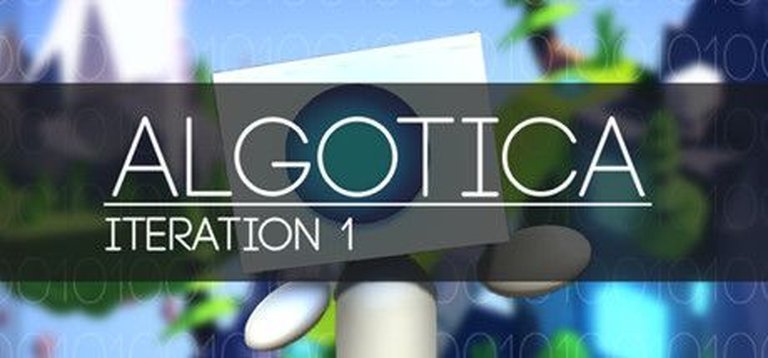
Algotica: Iteration 1 is an educational puzzle-adventure game designed to teach programming fundamentals through engaging gameplay. Players guide a program named Lony through various levels using logic and formal rules, with each stage introducing new obstacles and mechanics that mirror real-world programming concepts. The game features cute low-poly graphics and a story that breaks the fourth wall, making it an accessible and fun introduction to algorithms and coding for beginners.
Gameplay Videos
Algotica: Iteration 1 Cracks & Fixes
Algotica: Iteration 1 Patches & Updates
Algotica: Iteration 1 Guides & Walkthroughs
Algotica: Iteration 1 Reviews & Reception
metacritic.com (73/100): Algotica – Iteration 1 is a fun puzzle game that effectively uses the basics of programming logic alongside a colorful world.
opencritic.com (73/100): Algotica – Iteration 1 is a fun puzzle game that effectively uses the basics of programming logic alongside a colorful world.
saveorquit.com : Vivid, colourful graphics and engaging gameplay but spoiled by sloppy execution.
newgamenetwork.com (73/100): While it may not necessarily achieve its lofty goal of being an educational game, it is nonetheless an entertaining and occasionally challenging adventure.
Algotica: Iteration 1: A Flawed but Fascinating Foray into Programming Puzzles
Introduction
Algotica: Iteration 1 is a game that dares to blend education with entertainment, attempting to teach the fundamentals of programming logic through a vibrant, isometric puzzle-adventure. Released in 2017 by solo developer Alexander Khoroshavin, the game positions itself as a gateway for beginners to grasp coding concepts while offering a playful narrative that breaks the fourth wall. However, beneath its charming exterior lies a title riddled with technical shortcomings and design quirks that hinder its potential. This review dissects Algotica’s ambitious vision, its execution, and its place in the pantheon of educational games.
Development History & Context
Alexander Khoroshavin, the sole developer behind Algotica, embarked on a mission to demystify programming for novices. The game was built using the Unity engine, a choice that allowed for cross-platform compatibility (though Linux support was notably absent at launch, much to the chagrin of fans). Released on March 23, 2017, Algotica entered a gaming landscape already populated by titles like Human Resource Machine and TIS-100, which also explored programming mechanics. However, Khoroshavin’s approach was distinct: rather than simulating real coding languages, Algotica abstracted programming into a series of intuitive commands, aiming to ease players into algorithmic thinking.
The game’s development was a solo endeavor, a fact Khoroshavin frequently references in-game, sometimes as a plea for understanding regarding its flaws. This transparency, while endearing, also underscores the limitations of a one-person team. The lack of polish in certain areas—such as the clunky UI and occasional bugs—can be attributed to this constraint.
Narrative & Thematic Deep Dive
Algotica’s narrative is a meta-commentary on game development itself. The story unfolds through a trio of perspectives: Lony, the robotic protagonist; the player; and Khoroshavin, who directly addresses the audience via text dialogues. This fourth-wall-breaking approach is refreshing, though the writing often stumbles due to awkward translations and grammatical errors. The humor, intended to be lighthearted, frequently misses the mark, feeling more like a developer’s inside joke than a polished comedic experience.
Thematically, Algotica explores the relationship between creator and creation. Lony, a program within the game’s digital world, begins to question his purpose, mirroring the player’s own journey from novice to (theoretically) proficient coder. The game’s world, a colorful digital realm filled with quirky NPCs and hidden secrets, reinforces this theme of discovery and growth.
Gameplay Mechanics & Systems
At its core, Algotica is a puzzle game where players guide Lony through levels by inputting commands into “memory cells.” These commands—such as “forward,” “turn-left,” or “jump”—are executed sequentially, with the goal of reaching the level’s exit in the fewest steps possible. The game introduces new mechanics gradually, including loops, conditional statements, and functions, which allow for more complex algorithms.
Strengths:
- Accessible Learning Curve: The game’s gradual introduction of programming concepts is well-paced, making it approachable for beginners.
- Creative Puzzle Design: Later levels require players to think critically about optimization, encouraging efficient problem-solving.
- Open-World Exploration: The “Free Memory” levels offer a break from linear puzzles, allowing players to explore a dynamic environment with day/night cycles and hidden collectibles.
Weaknesses:
- Clunky UI: The interface lacks intuitiveness, with essential functions like “Quit” buried in submenus. The absence of numbered memory cells makes debugging typos frustrating.
- Technical Issues: Bugs, such as Lony getting stuck or walking through walls, disrupt the experience. The lack of customizable hotkeys is a glaring oversight.
- Repetitive Trial-and-Error: Some puzzles devolve into tedious guesswork, particularly those involving algebraic conditions with multiple solutions.
World-Building, Art & Sound
Algotica’s visual design is a standout feature. The low-poly aesthetic is vibrant and inviting, with glowing objects and dynamic lighting that breathe life into the digital world. The isometric perspective enhances the sense of exploration, though the fixed camera angle can occasionally obscure critical details.
The soundtrack, while unobtrusive, is forgettable. The electro melodies loop repetitively, failing to elevate the experience. Sound effects are minimal but effective, with Lony’s mechanical movements providing satisfying auditory feedback.
Reception & Legacy
Algotica: Iteration 1 received mixed reviews upon release. Critics praised its innovative approach to teaching programming logic but criticized its technical flaws and lack of polish. On Steam, the game holds a “Mixed” rating, with players divided over its educational value versus its gameplay frustrations.
Despite its shortcomings, Algotica carved a niche for itself as a unique entry in the educational gaming space. It inspired discussions about the potential of games as teaching tools, though its legacy is overshadowed by more refined titles like Human Resource Machine and Baba Is You.
Conclusion
Algotica: Iteration 1 is a game of contradictions. It is ambitious yet flawed, educational yet frustrating, charming yet unpolished. Khoroshavin’s vision is commendable, but the execution falls short of its potential. For players willing to overlook its rough edges, Algotica offers a creative introduction to programming logic. However, those seeking a seamless or deeply educational experience may find it lacking.
Final Verdict: A noble experiment in educational gaming, Algotica: Iteration 1 is worth a look for puzzle enthusiasts and aspiring coders—but only if they’re prepared to endure its quirks.
Score: 6.5/10 – A flawed gem with moments of brilliance.