
- Release Year: 2020
- Platforms: Windows
- Publisher: Flamebait AB
- Developer: Flamebait AB
- Genre: Action
- Perspective: Behind view
- Game Mode: Single-player
- Gameplay: Fighting
- Average Score: 78/100
Description
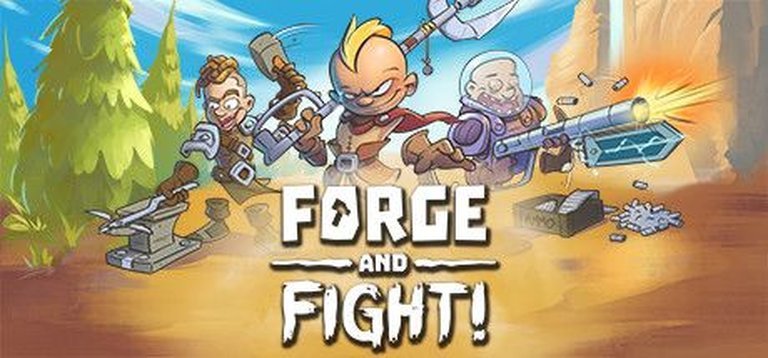
Forge and Fight is a dynamic action-fighting game where players take on the role of a blacksmith gladiator, crafting over-the-top custom weapons to battle enemies in frenzied combat. Set in a sandbox-style arena, the game blends creative weapon-forging mechanics with fast-paced fighting, offering both online multiplayer and open-ended sandbox modes. Originally released as a prototype to test its core concept, the full version expands on the experience with diverse game modes and maps.
Gameplay Videos
Forge and Fight Patches & Updates
Forge and Fight Guides & Walkthroughs
Forge and Fight Reviews & Reception
steambase.io (79/100): A triumphant return to form for the series.
flamebait.itch.io (78/100): LOVE this game, but the swinging bits and enemies lean towards my most OP weapon.
Forge and Fight: A Deep Dive into the Rise and Fall of a Creative Combat Experiment
Introduction: The Spark of a Unique Vision
In the crowded landscape of multiplayer combat games, Forge and Fight (2020) emerged as a breath of fresh air—a title that dared to blend the chaotic joy of weapon crafting with the visceral thrill of gladiatorial combat. Developed by the Swedish indie studio Flamebait Games, the game positioned itself as a “blacksmith gladiator” simulator, where players could design absurd, physics-defying weapons and test them in frenetic online battles. At its core, Forge and Fight was a celebration of creativity, encouraging players to build everything from flamethrower-minigun hybrids to brick-taped “bonk kush” bludgeons, then pit their creations against others in a sandbox of destruction.
Yet, despite its innovative premise and passionate community, Forge and Fight met an untimely end. In August 2024, Flamebait Games announced the game’s delisting from Steam and the shutdown of its servers, citing dwindling player counts and unsustainable maintenance costs. This review seeks to explore the game’s journey—from its ambitious origins to its bittersweet conclusion—examining its mechanics, reception, and legacy in the broader context of indie game development.
Development History & Context: Forging a Game from Scratch
The Studio Behind the Anvil
Flamebait Games, a small but ambitious studio based in Sweden, had already made a name for itself with Passpartout: The Starving Artist (2017), a quirky simulation game where players drew and sold artwork to survive. The studio’s ethos revolved around creativity, accessibility, and player expression—principles that would later define Forge and Fight. According to devlogs, the idea for Forge and Fight originated with Viktor, the studio’s audio producer, who pitched a concept where players crafted armor for dueling characters. The team quickly pivoted to weapon crafting, recognizing the appeal of designing offensive tools over defensive ones.
Prototyping and Early Access
The game’s development followed Flamebait’s structured prototyping process, outlined in their devlogs. After pitching and voting on ideas, the team spent 2–4 weeks creating a prototype to test the core gameplay loop: “In the game, what are you and what do you do?” For Forge and Fight, the answer was clear: “You’re a blacksmith gladiator that forges weapons and fights with them.” The prototype, released in 2019, was a stripped-down but functional demo that allowed players to build weapons and battle bots. It garnered over 80,000 downloads and 2.5 million YouTube views, proving the concept’s market viability.
The full game entered Steam Early Access on September 17, 2020, with a 15% launch discount. Flamebait emphasized community feedback during this phase, iteratively improving physics, matchmaking, and weapon customization. The game officially launched on December 2, 2020, with a reduced price of $4.99—a strategic move to attract a broader audience during the pandemic.
Technological and Market Challenges
Built in Unity with FMOD for audio, Forge and Fight leveraged accessible tools to bring its vision to life. However, the game faced technical hurdles, particularly with multiplayer stability and cross-platform performance. Early players reported issues like:
– Black screen errors on launch.
– Physics glitches where weapons would clip or behave unpredictably.
– Matchmaking struggles due to low player counts post-launch.
The gaming landscape in 2020 was dominated by battle royales (Fortnite, Apex Legends) and hero shooters (Overwatch), making it difficult for a niche title like Forge and Fight to carve out a lasting audience. Despite its unique selling point—unrestricted weapon crafting—the game struggled to retain players beyond its initial novelty.
Narrative & Thematic Deep Dive: A World of Absurdity and Creativity
Setting and Lore
Forge and Fight eschewed a traditional narrative in favor of a post-apocalyptic gladiatorial arena where blacksmiths battle for supremacy. The game’s lore, sprinkled across weapon descriptions and devlogs, painted a world where civilization had collapsed, leaving behind only scraps of technology and a thirst for violent spectacle. Players assumed the role of a “blacksmith gladiator,” forging weapons from salvaged parts to dominate in the arena.
The tone was unapologetically silly, with weapon names like “The Rapinator,” “Bonk Kush,” and “Fart Lighter” embodying the game’s irreverent humor. This lightheartedness extended to the arenas, which featured hazards like lava pits, spinning blades, and physics-based traps that could be exploited for strategic (or comedic) effect.
Themes: Creativity as a Weapon
At its heart, Forge and Fight was a celebration of player creativity. The game’s core theme revolved around:
1. Experimentations Over Optimization: Unlike traditional fighters where meta builds dominate, Forge and Fight rewarded absurdity. A weapon with 12 flamethrowers and a minigun might be unwieldy, but it was yours, and that was the point.
2. Destruction as Play: The game embraced chaos, encouraging players to exploit physics to knock enemies off maps or into environmental hazards.
3. Community-Driven Innovation: The devlogs highlighted how player feedback shaped weapon parts, from the “Swiss Army Knife” to the “Social Distancer” (a boxing glove on a stick, a nod to pandemic-era humor).
While the game lacked a traditional story, its emergent narratives—players sharing their weapon designs, laughing at physics fails, and competing in absurd battles—created a unique social experience.
Gameplay Mechanics & Systems: The Art of Weapon Crafting
Core Gameplay Loop
Forge and Fight’s gameplay revolved around two phases:
1. The Forge: Players selected from a growing arsenal of weapon parts (blades, guns, flamethrowers, bricks, etc.) and assembled them into a single weapon using a node-based system. Parts could be rotated, resized, and connected via joints, allowing for near-limitless customization.
2. The Fight: Armed with their creations, players entered online multiplayer or sandbox mode to test their weapons against bots or other players. Combat was physics-based, meaning a poorly balanced weapon could spin uncontrollably, while a well-designed one could dominate.
Combat and Physics
The game’s combat was a mix of melee and ranged chaos, with weapons behaving realistically (or unrealistically, depending on the build). Key mechanics included:
– Set Bonuses: Combining parts from the same category (e.g., multiple flamethrowers) unlocked passive buffs like damage increases or special attacks.
– Environmental Interaction: Arenas featured interactive elements (e.g., lava, spinning blades) that could be used to outmaneuver opponents.
– Physics-Based Hits: Weapons with uneven weight distribution would spin or flail, adding a layer of unpredictability.
Progression and Customization
Players earned scrap (in-game currency) by winning matches, which could be spent on:
– New Weapon Parts: Unlocking more absurd components (e.g., Tesla Zapper, Guardian Angel revival device).
– Cosmetics: Customizing their character’s appearance with hats, outfits, and accessories.
The sandbox mode allowed for unrestricted experimentation, while multiplayer offered competitive and cooperative modes.
Flaws and Missed Opportunities
Despite its strengths, Forge and Fight suffered from:
– Shallow Combat Depth: While weapon crafting was deep, the actual fighting mechanics were simplistic, lacking the nuance of games like Chivalry or Gang Beasts.
– Matchmaking Issues: Low player counts led to long wait times, and bots were often poor substitutes for human opponents.
– Technical Instability: Bugs like weapon parts rotating incorrectly or physics glitches persisted even after patches.
World-Building, Art & Sound: A Playground of Chaos
Visual Design
Forge and Fight’s art style was cartoonish and vibrant, with exaggerated character models and weapons that defied realism. The arenas were thematically diverse, ranging from lava-filled coliseums to junkyard battlegrounds, each designed to encourage creative combat.
The UI was functional but unpolished, with some players reporting clarity issues during fast-paced fights. However, the weapon customization screen was a highlight, offering an intuitive drag-and-drop interface for assembling parts.
Sound Design
The game’s audio, overseen by Viktor, was playful and dynamic, with:
– Satisfying weapon sounds: The clang of metal, the whoosh of flamethrowers, and the thud of bricks added weight to combat.
– Humorous voice lines: Characters would quip during matches, reinforcing the game’s lighthearted tone.
– Ambient arena noise: Crowd cheers and environmental sounds immersed players in the gladiatorial atmosphere.
Atmosphere
Forge and Fight’s greatest strength was its atmosphere of creative anarchy. The game didn’t take itself seriously, and neither did its players. The joy came from:
– Sharing weapon designs in the community.
– Laughing at physics fails (e.g., a weapon spinning out of control).
– Experimenting with absurd builds just to see what would happen.
Reception & Legacy: A Spark That Faded Too Soon
Critical and Commercial Reception
Forge and Fight received a Steambase Player Score of 79/100 (Mostly Positive) based on 63 reviews. Players praised:
– The weapon crafting system as innovative and fun.
– The humor and creativity encouraged by the game.
– The sandbox mode for unrestricted experimentation.
However, criticisms included:
– Repetitive combat once the novelty wore off.
– Technical issues that marred the experience.
– Low player counts making multiplayer difficult to enjoy.
Commercially, the game struggled to maintain an audience. By 2024, Flamebait Games cited “very low player counts” and unsustainable maintenance costs as reasons for shutting down the servers.
Influence and Legacy
While Forge and Fight didn’t spawn a genre, it contributed to the indie trend of creative combat games, influencing titles like:
– Mothergunship: Forge (2022), which expanded on weapon crafting in a bullet-hell setting.
– Mirror Forge (2022), another Flamebait project exploring similar mechanics.
The game’s community-driven design also highlighted the importance of player feedback in indie development. Flamebait’s transparent devlogs and responsiveness to suggestions set a standard for small studios engaging with their audience.
Conclusion: A Flawed but Brilliant Experiment
Forge and Fight was a bold, creative experiment that succeeded in its core mission: to let players unleash their imagination in a combat arena. Its weapon crafting system was unparalleled in depth and absurdity, offering a playground for those who valued creativity over competition. However, its shallow combat mechanics, technical instability, and struggle to retain players ultimately led to its demise.
In the annals of gaming history, Forge and Fight will be remembered as a cult classic—a game that dared to be different, even if it couldn’t sustain its spark. For those who experienced its chaotic joy, it remains a testament to the power of player creativity. As Flamebait Games moves on to new projects, Forge and Fight stands as a reminder that sometimes, the most memorable games are the ones that let you build a flamethrower-minigun and call it art.
Final Verdict: 7.5/10 – A brilliant but fleeting spark in the indie combat genre.