
- Release Year: 2019
- Platforms: Windows
- Publisher: Archiact Interactive Ltd.
- Developer: Archiact Interactive Ltd.
- Genre: Action
- Perspective: 1st-person
- Game Mode: Single-player
- Gameplay: Puzzle elements, Survival
- Setting: Aquatic, Underwater
- Average Score: 77/100
- VR Support: Yes
Description
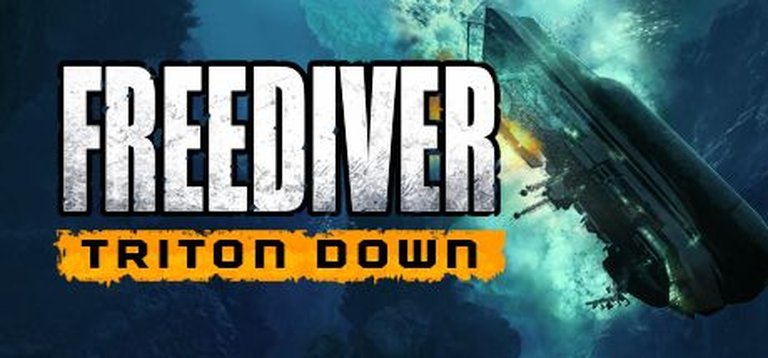
Freediver: Triton Down is a first-person action-puzzle game set in an underwater survival scenario. Players take on the role of a female protagonist navigating the depths of the ocean, solving puzzles, and exploring a sunken shipwreck while contending with the challenges of the aquatic environment. The game emphasizes realistic movement and immersive gameplay, offering a brief but intense experience that blends exploration, survival, and puzzle-solving in a visually striking underwater world.
Gameplay Videos
Where to Buy Freediver: Triton Down
PC
Freediver: Triton Down Cracks & Fixes
Freediver: Triton Down Guides & Walkthroughs
Freediver: Triton Down Reviews & Reception
metacritic.com (80/100): While all the flashy extras such as customisation options or other gameplay modes don’t exist in FREEDIVER: Triton Down, the videogame is still one that shouldn’t be overlooked.
uploadvr.com (75/100): Freediver: Triton Down is better than it has any right to be. What could well have been a soul-crushing slog turns out to be a pleasingly immediate palette cleanser.
store.steampowered.com : FREEDIVER: Triton Down is a breath of fresh air thanks to its engaging interactivity and thoughtful VR design.
Freediver: Triton Down – A Masterclass in VR Survival and Atmospheric Storytelling
Introduction: The Sinking Ship That Shouldn’t Have Worked
Freediver: Triton Down is a game that defies expectations. On paper, it’s a high-concept VR survival experience—an underwater disaster thriller where you play as a freediver escaping a sinking research vessel. In practice, it’s a taut, 60-minute masterpiece of immersive design, a game that understands the unique strengths of virtual reality better than most. Released in 2019 by Archiact Interactive, a studio known for its VR expertise, Freediver is a rare example of a game that knows exactly what it wants to be: brief, intense, and unforgettable.
This review will dissect Freediver: Triton Down in exhaustive detail, exploring its development, narrative, gameplay mechanics, world-building, and legacy. We’ll examine why it resonated so deeply with players despite its short runtime, how it leveraged VR technology to create an unparalleled sense of dread, and why its ambiguous ending left players both frustrated and fascinated. By the end, we’ll argue that Freediver is not just a great VR game—it’s a landmark in survival storytelling, a proof of concept for how virtual reality can amplify tension, immersion, and emotional resonance.
Development History & Context: The Making of a VR Survival Gem
The Studio Behind the Game: Archiact’s VR Pedigree
Archiact Interactive, based in Vancouver, Canada, is a studio with a long history in VR development. Founded in 2011, the company has worked on a variety of VR projects, from educational experiences to full-fledged games. Their portfolio includes titles like Journey to Foundation and Marvel Dimension of Heroes, but Freediver: Triton Down stands out as their most ambitious narrative-driven project.
The game was developed using Unreal Engine 4, a choice that allowed the team to craft stunning underwater environments with dynamic lighting and physics. The PhysX engine handled the water simulations, ensuring that the rising tides and floating debris felt organic and unpredictable. The team’s experience with VR movement systems was crucial—Freediver’s swimming mechanics are a direct evolution of their work on zero-gravity traversal in earlier projects.
The Vision: A Survival Game Built Around Breath
From the outset, Freediver was designed to be a short, intense experience. In an interview with UploadVR, Creative Director Sébastien Bouzac (credited as Seb Bouzac) explained that the team wanted to avoid the pitfalls of overstaying their welcome—a common issue in VR games, where prolonged play sessions can lead to fatigue. The decision to limit the runtime to roughly 60 minutes was deliberate, ensuring that the game’s tension never waned.
The core premise was inspired by disaster films like The Poseidon Adventure and Titanic, but with a twist: instead of playing as a passenger, you’re a freediver, a professional who can hold their breath for extended periods. This mechanic became the game’s central pillar—oxygen is your only resource, and every decision revolves around managing it.
Technological Constraints and Innovations
VR development in 2019 was still in its relative infancy, and Freediver had to navigate several technical challenges:
– Motion Controls: The game was designed exclusively for tracked motion controllers, requiring players to physically mimic swimming motions. This was a risk—poorly implemented motion controls can break immersion—but Archiact’s solution was elegant. Players “pull” themselves through the water, a mechanic that feels intuitive after a brief adjustment period.
– Performance Optimization: Underwater environments are notoriously demanding on hardware. The team had to balance visual fidelity with smooth performance, ensuring that the game ran well on mid-range VR setups like the Oculus Rift and HTC Vive.
– Sound Design: Audio in VR is paramount, and Freediver’s sound team crafted a binaural soundscape that heightened immersion. The sound of your own breathing, the creaking of the sinking ship, and the distant echoes of the ocean all contribute to the game’s oppressive atmosphere.
The Gaming Landscape in 2019
Freediver launched into a VR market that was still finding its footing. Major titles like Beat Saber and Superhot VR had proven that VR could be commercially viable, but narrative-driven experiences were rarer. Games like Lone Echo (2017) had demonstrated the potential for immersive storytelling in zero gravity, but underwater settings remained largely unexplored.
Freediver arrived at a time when players were hungry for short, high-impact VR experiences—games that could be completed in a single sitting but left a lasting impression. It also benefited from the growing popularity of room-scale VR, which allowed players to physically dodge obstacles and interact with the environment in ways that traditional games couldn’t match.
Narrative & Thematic Deep Dive: A Story of Survival, Science, and Ambiguity
Plot Summary: The Sinking of the Triton
Freediver: Triton Down follows Ren Tanaka, a world-class freediver who has been avoiding the ocean after a near-fatal accident. Her mentor, Dr. Lindstrom, convinces her to join an expedition to investigate a mysterious underwater cavern. The research vessel, the Triton, is equipped with advanced sonar and drilling technology, but the expedition goes horribly wrong when an unknown force causes the ship to capsize.
As Ren, you must navigate the sinking wreckage, solving puzzles, avoiding hazards, and managing your oxygen supply. The game’s narrative is minimalist but effective, relying on environmental storytelling and brief radio transmissions to convey the unfolding disaster. The dialogue is sparse, but the voice acting—particularly Ren’s panicked breathing—sells the desperation of the situation.
Characters and Dialogue: The Power of Silence
Ren Tanaka is a compelling protagonist not because of her backstory (which is barely explored) but because of her physicality. As a freediver, she’s uniquely equipped to survive the disaster, but her vulnerability is constantly emphasized. The game’s opening sequence, where she struggles to hold her breath during a training exercise, establishes her as a skilled but fallible character.
Dr. Lindstrom serves as the catalyst for the disaster, his obsession with the cavern’s secrets leading to the Triton’s downfall. His dialogue is laced with scientific jargon and poetic references, hinting at something otherworldly lurking in the depths. The game’s writing, penned by Peter Boychuk, walks a fine line between B-movie camp and genuine intrigue, though some critics noted that the narrative feels undercooked compared to the strength of the gameplay.
Themes: Isolation, Survival, and the Unknown
Freediver explores several key themes:
1. The Fragility of Human Life: The sinking ship is a metaphor for humanity’s vulnerability in the face of nature’s power. The bodies of crew members, floating lifelessly in the water, serve as grim reminders of the stakes.
2. The Allure of the Unknown: Dr. Lindstrom’s obsession with the cavern mirrors humanity’s drive to explore, even at great personal risk. The game’s ambiguous ending suggests that some mysteries are better left unsolved.
3. The Psychology of Survival: The game’s oxygen mechanic isn’t just a gameplay device—it’s a psychological weapon. The constant need to surface for air creates a sense of claustrophobic dread, amplifying the horror of the situation.
The Ambiguous Ending: A Stroke of Genius or a Misstep?
The game’s ending has been a point of contention among players. After escaping the Triton, Ren surfaces to see the ship sinking into the depths, with a mysterious creature (possibly the cause of the disaster) retreating into a cavern. The game then cuts to black, leaving Ren’s fate—and the nature of the creature—unresolved.
This ambiguity was a deliberate creative choice, as confirmed by Archiact in a Steam community post:
“With FREEDIVER, we wanted to end on a more ambiguous note, leaving the player to craft their own ending based on their experience.”
While some players praised the ending for its atmospheric resonance, others felt cheated by the lack of closure. The debate highlights a broader question in game design: When is ambiguity effective, and when does it feel like a cop-out? In Freediver’s case, the ending works because the game’s strength lies in its moment-to-moment tension, not its narrative payoff.
Gameplay Mechanics & Systems: The Art of Underwater Survival
Core Gameplay Loop: Swim, Breathe, Survive
Freediver’s gameplay is deceptively simple:
1. Navigate the sinking ship using motion-controlled swimming.
2. Manage your oxygen supply by surfacing for air or finding pockets of breathable space.
3. Solve environmental puzzles to progress, such as opening hatches or rerouting power.
4. Avoid hazards, including collapsing debris, electrical fires, and the rising water itself.
The genius of Freediver lies in how these mechanics interlock to create tension. Every action—whether it’s swimming through a flooded corridor or prying open a stuck door—consumes oxygen. The game forces you to prioritize efficiency, making split-second decisions that could mean the difference between survival and drowning.
Movement and Controls: The Illusion of Swimming
The game’s swimming mechanics are its most innovative feature. Unlike traditional underwater games (which often use analog sticks for movement), Freediver requires players to physically mimic swimming motions:
– Pulling yourself forward by extending your arms and “grabbing” the water.
– Turning by twisting your torso.
– Diving and surfacing by adjusting your arm angles.
This system is not perfectly realistic—real freediving involves complex leg movements, which the game simplifies—but it’s intuitive and immersive. The physicality of the controls makes the experience feel visceral, especially during high-stress moments when your oxygen is running low.
Oxygen Management: The Game’s Beating Heart
Oxygen is Freediver’s only resource, and the game’s difficulty revolves around managing it. Key mechanics include:
– Breath-Holding: Ren can hold her breath for a limited time, indicated by a depleting oxygen meter in the HUD.
– Air Pockets: Some areas contain trapped air, allowing you to replenish your supply.
– Surface Breaks: Returning to the surface (or higher areas of the ship) resets your oxygen, but this isn’t always possible in later stages.
The oxygen system is brutal but fair. The game gives you just enough time to complete each section, but mistakes—like taking a wrong turn or getting stuck on debris—can be punishing. This creates a rhythm of panic and relief, as you desperately search for the next air pocket while your vision starts to blur.
Puzzle Design: Environmental Storytelling in Action
Freediver’s puzzles are organic and diegetic, meaning they’re woven into the environment rather than feeling like arbitrary obstacles. Examples include:
– Rerouting Power: Flipping switches to restore electricity to locked doors.
– Clearing Debris: Moving obstacles to create new paths.
– Using Tools: Deploying flares to illuminate dark areas or using wrenches to open hatches.
The puzzles are never overly complex, but they’re tightly integrated with the game’s survival mechanics. For example, a puzzle might require you to swim through a flooded corridor to reach a switch, forcing you to balance oxygen management with problem-solving.
Hazards and Enemy Design: The Ship as the Antagonist
Unlike traditional survival games, Freediver doesn’t feature conventional enemies. Instead, the sinking ship itself is the primary threat:
– Rising Water: The ship floods progressively, cutting off escape routes and forcing you to adapt.
– Collapsing Structures: Debris can block paths or crush you if you’re not careful.
– Electrical Fires: Some areas are hazardous due to exposed wiring, requiring you to find alternate routes.
– Dead Crew Members: While not directly harmful, the bodies serve as psychological hazards, reinforcing the horror of the situation.
The absence of traditional enemies is a bold design choice. It shifts the focus from combat to pure survival, making the experience feel more realistic and oppressive.
UI and Feedback Systems: Minimalism in VR
Freediver’s UI is stripped-down, with only the essentials displayed:
– Oxygen Meter: A circular gauge that depletes as you hold your breath.
– Objective Markers: Subtle arrows that guide you toward your next goal.
– Interactive Highlights: Objects you can interact with are outlined in white.
This minimalism is crucial for immersion. VR games that clutter the screen with HUD elements risk breaking the player’s sense of presence, but Freediver avoids this pitfall by keeping its UI unobtrusive and diegetic.
World-Building, Art & Sound: Crafting an Underwater Nightmare
Setting and Atmosphere: The Triton as a Character
The Triton is more than just a setting—it’s a character in its own right. The research vessel is a labyrinth of corridors, labs, and cargo holds, each area telling a story through environmental details:
– Crew Quarters: Personal effects like photos and notes humanize the doomed crew.
– Research Labs: Scientific equipment and sonar readings hint at the expedition’s goals.
– Engine Rooms: The heart of the ship, where the disaster’s cause may lie.
As the ship sinks, the environment evolves dynamically. Water levels rise, debris shifts, and entire sections become inaccessible. This procedural destruction makes the world feel alive and unpredictable, heightening the sense of danger.
Visual Design: The Beauty and Horror of the Deep
Freediver’s art direction is a masterclass in underwater aesthetics. The game uses Unreal Engine 4 to create:
– Dynamic Lighting: Sunlight filters through portholes, creating eerie shafts of light in the murky water.
– Particle Effects: Bubbles, debris, and floating sediment add to the immersion.
– Realistic Water Physics: The water reacts to your movements, creating ripples and distortions.
The color palette shifts as you descend deeper into the ship:
– Surface Areas: Bright blues and whites, representing safety.
– Flooded Corridors: Dark greens and blacks, evoking claustrophobia.
– The Abyss: Inky darkness, where the unknown lurks.
The game’s visual fidelity is impressive, especially considering the technical constraints of VR. Archiact’s artists managed to create a believable underwater world without sacrificing performance.
Sound Design: The Symphony of Survival
Freediver’s audio is one of its strongest assets. The game uses binaural audio to create a 3D soundscape that enhances immersion:
– Breathing: Ren’s labored breathing becomes more intense as your oxygen depletes.
– Ambient Noise: The creaking of the ship, the rush of water, and distant explosions sell the disaster.
– Music: The score, composed by an award-winning team, is subtle but effective, using low drones and eerie melodies to build tension.
The sound design is so convincing that some players reported forgetting to breathe in real life, only to be startled by the sound of their own gasps. This blurring of reality and fiction is a testament to the power of VR audio.
The Creature: A Glimpse of the Unknown
One of the game’s most haunting moments comes near the end, when Ren encounters a mysterious creature in the depths. The creature is never fully seen, only glimpsed as a shadowy mass retreating into a cavern. This restraint makes it far more terrifying than any overt monster design could.
The creature’s presence raises questions:
– Was it responsible for the Triton’s sinking?
– Is it natural or supernatural?
– What was Dr. Lindstrom hoping to find?
The game never answers these questions, leaving players to theorize and debate. This ambiguity is frustrating for some, but it’s also what makes Freediver’s world feel mysterious and alive.
Reception & Legacy: A Cult Classic in the Making
Critical Reception: Praise for Innovation, Criticism for Brevity
Freediver: Triton Down received generally positive reviews, with critics praising its immersive design and tense gameplay. Key points from reviews:
– UploadVR (75/100): “Freediver: Triton Down is better than it has any right to be… a pleasingly immediate palette cleanser.”
– VR Focus (80/100): “An energetic journey which keeps you on edge at all times.”
– Gameplay (Benelux) (75/100): “A good and knap ogend geheel [well-made whole], with enough variation in puzzles and locations.”
Critics universally praised the game’s oxygen mechanics and VR movement, but some noted that the narrative felt underdeveloped and the ending was too abrupt. The game’s short runtime (roughly 60 minutes) was both a strength and a weakness—it ensured the experience never overstayed its welcome, but it also left players wanting more.
Player Reception: A Divisive but Beloved Experience
On Steam, Freediver holds a “Very Positive” rating (83% positive from 315 reviews). Player feedback highlights:
– Immersive Gameplay: Many players praised the physicality of the swimming controls and the sense of dread created by the oxygen system.
– Atmospheric Horror: The game’s sound design and visuals were frequently cited as standout features.
– Frustration with the Ending: A common complaint was the abrupt conclusion, with players feeling that the story needed more closure.
A Steam discussion thread titled “Game ended very abruptly” became a hub for player reactions, with some expressing disappointment:
“Excellent game experience but very annoying ending. Almost made me want to refund but I want to support games like this so won’t.” – Wunderbar
Archiact responded to the feedback, acknowledging that the ending was intentionally ambiguous but hinting at potential future content:
“It sounds like we left players wanting more, so we’re definitely considering that feedback for the future!”
Commercial Performance and Extended Cut
Freediver was a modest commercial success, selling well enough to justify an Extended Cut in 2020. The Extended Cut, released for PlayStation VR and Oculus Quest, added:
– New areas to explore.
– Additional puzzles and hazards.
– Expanded narrative elements, including more dialogue and environmental storytelling.
While the Extended Cut addressed some of the original game’s brevity issues, it didn’t fundamentally alter the ambiguous ending, leaving the core experience intact.
Influence and Legacy: A Blueprint for VR Survival Games
Freediver: Triton Down has had a lasting impact on VR game design, particularly in the survival and horror genres. Its influence can be seen in:
– Underwater VR Games: Titles like Subnautica VR and The Under Presents have drawn inspiration from Freediver’s oxygen mechanics and environmental storytelling.
– Short-Form VR Experiences: The game’s bite-sized runtime has become a model for other developers looking to create high-impact, replayable VR experiences.
– Physical Movement Systems: Freediver’s swimming mechanics have been cited as an innovative approach to VR locomotion, influencing games that require natural, intuitive movement.
Despite its niche appeal, Freediver has earned a cult following among VR enthusiasts. It’s frequently recommended as a “must-play” VR experience, particularly for fans of survival horror and immersive storytelling.
Conclusion: A Flawed but Unforgettable Dive into VR Terror
Freediver: Triton Down is a game that punches far above its weight. It’s short, it’s ambiguous, and its narrative is far from perfect, but it’s also one of the most immersive and intense VR experiences ever created. By focusing on core survival mechanics and leveraging the unique strengths of virtual reality, Archiact crafted a game that feels like a nightmare you can’t wake up from.
Its greatest strength is its understanding of VR as a medium. The game doesn’t just simulate underwater survival—it makes you feel it. The physicality of the controls, the oppressive sound design, and the relentless oxygen timer combine to create an experience that is visceral, stressful, and exhilarating.
Its greatest weakness is its lack of narrative payoff. The ambiguous ending, while thematically appropriate, leaves too many questions unanswered. The game’s brevity, while refreshing, also means that its world and characters aren’t as fleshed out as they could be.
Final Verdict: A Landmark in VR Survival
Freediver: Triton Down is not a perfect game, but it’s an essential one. It’s a proof of concept for how VR can amplify tension, immersion, and emotional resonance. It’s a masterclass in survival gameplay, proving that less can be more when every mechanic is tightly integrated.
For VR enthusiasts, it’s a must-play. For survival horror fans, it’s a revelation. And for game developers, it’s a blueprint for how to create short, intense, and unforgettable experiences in virtual reality.
Score: 8.5/10 – A Flawed Gem That Shines Brightest in the Dark
Post-Script: The Future of Freediver
Given the game’s cult status and the demand for more content, it’s not unreasonable to hope for a sequel or spiritual successor. Archiact has hinted at future projects in the Freediver universe, and with the continued growth of VR, there’s never been a better time to revisit Ren Tanaka’s story.
Until then, Freediver: Triton Down remains a haunting, beautiful, and terrifying dive into the unknown—a game that proves VR is more than just a gimmick. It’s a new frontier for storytelling, and Freediver is one of its finest pioneers.