
- Release Year: 2018
- Platforms: Windows
- Publisher: Unknown
- Developer: Unknown
- Genre: Role-playing (RPG), Simulation
- Perspective: Fixed / flip-screen
- Game Mode: Single-player
- Setting: Anime, Manga
- Average Score: 70/100
- Adult Content: Yes
Description
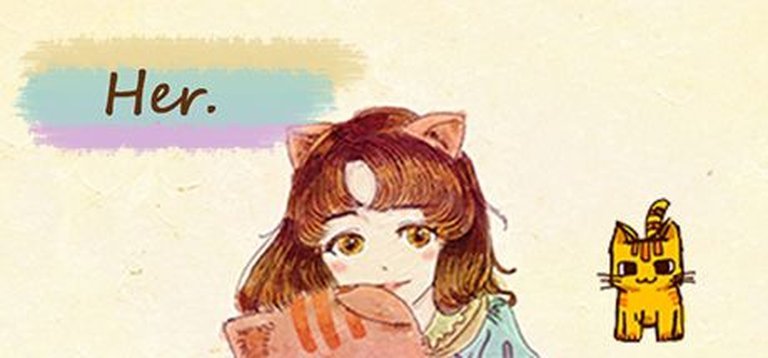
Her is a role-playing simulation game released in 2018, where players experience a human life narrative through the perspective of a female protagonist. The game features anime/manga-style art and a fixed/flip-screen visual presentation, offering a unique blend of storytelling and interactive gameplay. Developed using the Unity engine, it falls under the commercial business model and is designed for single-player offline play.
Where to Buy Her
PC
Her Mods
Her Reviews & Reception
metacritic.com (70/100): A pretty interesting game with its unique gameplay.
Her Cheats & Codes
PC
Enter codes as your search term to activate various effects.
| Code | Effect |
|---|---|
| admin_unlock | Allows you to see 15 search results instead of 5. |
| admin_random | Shows a random clip. |
| admin_share | Opens a real-world email browser. |
| admin_delete | Completely clears your progress and restarts the game. |
| ADMIN_RANDOM | Access ‘random’ video. |
| ADMIN_UNLOCK | Increase search term limit to 15. |
| BLANK | Returns all clips with undefined user tags. |
Her: A Misunderstood Gem in the Shadows of Its Namesake
Introduction
In the vast, often homogenizing landscape of video game history, few titles have been as tragically overshadowed by their own name as Her (2018). Released just four years after Sam Barlow’s critically acclaimed Her Story, this obscure, anime-styled RPG has languished in the shadows of its namesake, dismissed by many as a mere cash-in or an unrelated curiosity. Yet, Her is a fascinating, if flawed, experiment in narrative-driven gameplay, blending elements of simulation, role-playing, and visual novel mechanics into a uniquely melancholic experience. This review seeks to reclaim Her from the footnotes of gaming history, exploring its development, mechanics, and the unfortunate circumstances that have relegated it to obscurity.
Development History & Context
Her was developed by an anonymous solo creator under the pseudonym “piltdown_man,” a name that hints at the game’s themes of deception and hidden truths. Released on October 16, 2018, via Steam, Her is a passion project that defies easy categorization. The game’s official description on Steam is cryptic, warning players that it is “not so sunny and normal” and that it may be “sad and black.” This foreboding tone sets the stage for a game that grapples with themes of isolation, identity, and the blurred lines between humanity and monstrosity.
The developer’s decision to use the Unity engine reflects the indie game development landscape of the late 2010s, where accessible tools allowed solo creators to craft ambitious, if rough-around-the-edges, experiences. Her’s art style is deliberately retro, evoking the aesthetic of 1990s anime and RPG Maker games, a choice that feels both nostalgic and intentionally jarring. The game’s narrative is deeply influenced by Japanese visual novels and dating sims, but it subverts many of the tropes associated with those genres, particularly in its exploration of darker psychological themes.
The gaming landscape in 2018 was dominated by blockbuster titles like Red Dead Redemption 2 and God of War, as well as indie darlings such as Celeste and Return of the Obra Dinn. In this crowded field, Her struggled to find an audience. Its niche appeal, combined with its deliberate obscurity and the lack of a strong marketing push, ensured that it remained a hidden gem, known only to a small but dedicated group of players who stumbled upon it in the depths of Steam’s vast library.
Narrative & Thematic Deep Dive
Her is set in a world where humans and monsters coexist uneasily, a premise that draws heavily from Japanese folklore and horror. The protagonist, a 40-year-old soldier named Albert, finds himself lost in the monstrous forest, a liminal space where the boundaries between human and monster blur. The game’s narrative unfolds over 90 days, during which the player must guide Albert through a series of interactions with the game’s central character, Katie, a young woman who has “misunderstood human beings.”
Katie is one of the game’s most compelling elements. She is not a traditional RPG protagonist but rather a complex, often contradictory figure whose motivations and backstory are revealed gradually through dialogue and gameplay. The game’s narrative is non-linear, with the player’s choices influencing Katie’s attributes, relationships, and ultimately, the story’s outcome. There are 21 possible endings, ranging from tragic to bittersweet, each reflecting the player’s decisions and the moral ambiguities of the game’s world.
The themes of Her are deeply existential. The game explores the nature of identity, the consequences of isolation, and the ways in which trauma shapes human (and monstrous) behavior. Katie’s character is a study in duality: she is both victim and perpetrator, innocent and complicit in the game’s darker events. The monsters in Her are not mere antagonists but symbols of the protagonist’s inner turmoil, representing the parts of himself he has repressed or denied.
The game’s dialogue is often poetic, if occasionally awkward in translation, and it is here that Her’s strengths and weaknesses are most apparent. The writing is ambitious, attempting to grapple with weighty themes, but it can also feel uneven, with moments of profound insight juxtaposed against clunky exposition. This inconsistency is perhaps inevitable in a solo project of this scope, but it also contributes to the game’s unique charm. Her feels like a labor of love, a deeply personal work that is unapologetically idiosyncratic.
Gameplay Mechanics & Systems
Her is a hybrid of several genres, blending elements of simulation, role-playing, and visual novels. The core gameplay loop revolves around managing Katie’s daily schedule, which includes activities such as training, socializing, and participating in competitions. These activities influence Katie’s attributes, which in turn affect the story’s progression and the available endings.
Character Training and Attributes
Katie’s attributes are divided into several categories, including physical stats (e.g., strength, agility) and psychological traits (e.g., “demon,” “saint”). These attributes are not merely numerical values but reflections of Katie’s emotional state and moral alignment. For example, high “demon” attributes may lead to darker endings, while high “saint” attributes may result in more redemptive outcomes. The game’s attribute system is reminiscent of classic Japanese RPGs like Persona, but it is more fluid and less rigidly defined, allowing for a greater degree of player expression.
Daily Schedule and Time Management
Each day in Her is divided into time slots, during which the player must choose activities for Katie. These activities range from mundane tasks like shopping for clothes to more dramatic events such as competitions and tests. The player’s choices here are crucial, as they directly impact Katie’s attributes and relationships. For example, spending time with certain characters may increase Katie’s “human favor” stat, while neglecting others may lead to negative consequences.
Clothing and Intimacy
Clothing plays a surprisingly significant role in Her. Different outfits affect Katie’s attributes and can influence the story’s outcome. The game’s approach to clothing is both practical and symbolic: outfits are not merely cosmetic but reflect Katie’s emotional state and social standing. The intimacy system, which allows Katie to form relationships with other characters, is similarly nuanced. Intimacy is tied to dialogue choices and shared activities, and it can lead to romantic or platonic relationships, depending on the player’s decisions.
Subplots and Side Quests
In addition to the main narrative, Her features five subplots that explore the backstories of the game’s supporting characters. These subplots are optional but provide valuable context for the game’s world and themes. For example, one subplot delves into the history of the monstrous forest, while another explores the relationship between Katie and a mysterious blue-haired character named Night. These side stories are often darker and more ambiguous than the main narrative, adding depth to the game’s lore.
Competitions and Tests
Her includes a variety of mini-games and competitions, such as matches and tests, which serve as both gameplay mechanics and narrative devices. These events are often tied to the game’s themes of identity and self-discovery, with Katie’s performance reflecting her emotional state and growth. For example, a competition may require Katie to demonstrate her physical prowess, while a test may challenge her psychological resilience.
Fatigue and Illness
A unique aspect of Her’s gameplay is its fatigue system. Overexerting Katie can lead to illness, which temporarily reduces her attributes and limits her activities. This mechanic adds a layer of realism to the game, forcing the player to balance ambition with self-care. It also reinforces the game’s themes of vulnerability and the consequences of pushing oneself too hard.
World-Building, Art & Sound
Her’s world is a haunting blend of the familiar and the uncanny. The game’s setting, a world where humans and monsters coexist, is richly detailed, with a history that spans thousands of years. The monstrous forest, where much of the game takes place, is a liminal space that feels both ancient and timeless, a place where the rules of reality are bent and twisted.
The art style of Her is deliberately retro, evoking the aesthetic of 1990s anime and RPG Maker games. The character designs are simple but expressive, with a focus on emotional nuance rather than detailed realism. The game’s use of color is particularly striking: the monstrous forest is rendered in muted blues and greens, while the human settlements are bathed in warmer tones. This contrast reinforces the game’s themes of duality and the blurred lines between human and monster.
The sound design of Her is minimalist but effective. The game’s soundtrack consists of soft, melancholic melodies that underscore the game’s emotional beats. The ambient sounds of the monstrous forest—rustling leaves, distant howls—create a sense of unease and isolation. The voice acting, while limited, is well-done, with the characters’ performances conveying a range of emotions, from vulnerability to defiance.
Reception & Legacy
Her was released to little fanfare, with no major reviews or critical attention. On Steam, the game has a mixed reception, with some players praising its ambition and emotional depth, while others criticize its rough edges and uneven writing. The game’s obscurity is partly due to its niche appeal but also reflects the challenges faced by indie developers in a crowded marketplace.
Despite its lack of commercial success, Her has developed a small but dedicated following. Players who appreciate its unique blend of genres and themes often describe it as a hidden gem, a game that rewards patience and emotional engagement. The game’s exploration of identity and trauma has resonated with some players, who see in Katie’s story a reflection of their own struggles.
Her’s legacy is difficult to assess, as it has had little discernible influence on subsequent games. However, its existence is a testament to the power of solo development and the potential for video games to explore complex, emotionally resonant themes. In this sense, Her is a reminder of the medium’s untapped potential, a game that dares to be different in an industry often dominated by convention.
Conclusion
Her is a flawed but fascinating experiment in narrative-driven gameplay. It is a game that defies easy categorization, blending elements of simulation, role-playing, and visual novels into a uniquely melancholic experience. While its rough edges and uneven writing may deter some players, those who engage with its themes and mechanics will find a deeply personal and emotionally resonant work.
In the grand tapestry of video game history, Her is a minor thread, overshadowed by its more famous namesake and lost in the vast sea of indie releases. Yet, it is precisely this obscurity that makes Her worth revisiting. It is a game that challenges players to look beyond the surface, to embrace ambiguity, and to engage with themes that are often overlooked in mainstream gaming. For those willing to take the journey, Her offers a haunting, if imperfect, exploration of identity, isolation, and the blurred lines between humanity and monstrosity.
Final Verdict: 7.5/10 – A hidden gem that rewards patience and emotional engagement, despite its rough edges.