
- Release Year: 2013
- Platforms: Android, iPad, iPhone, Linux, Macintosh, PS Vita, Windows
- Publisher: Mass Creation Sp. z o. o.
- Developer: Mass Creation Sp. z o. o.
- Genre: Action
- Perspective: Side view
- Game Mode: Single-player
- Gameplay: Platform
- Setting: Fantasy
- Average Score: 75/100
Description
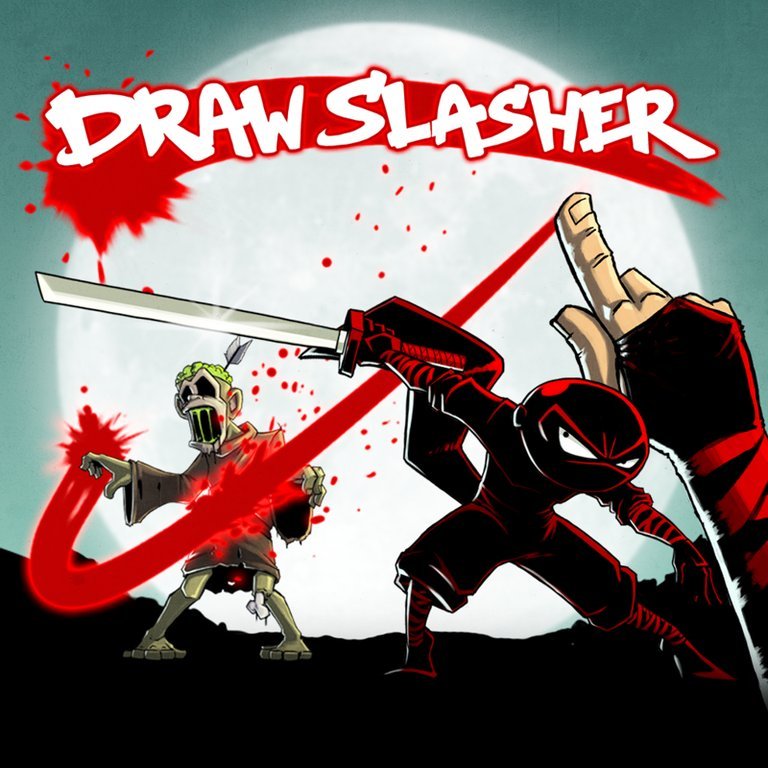
Draw Slasher is a fast-paced, side-scrolling action game where players take on the role of a ninja who slashes through enemies with simple, intuitive controls. Set in a fantasy world, the game features 2D scrolling visuals and a point-and-select interface, offering quick bursts of gameplay that emphasize speed and precision. Originally designed for mobile platforms, it later expanded to consoles and PC, delivering a straightforward yet engaging experience that blends platforming and combat.
Gameplay Videos
Where to Buy Draw Slasher
PC
Draw Slasher Free Download
Draw Slasher Guides & Walkthroughs
Draw Slasher Reviews & Reception
metacritic.com (69/100): A fun game, but only if you’re paying the lowest price possible.
allaboutsymbian.com (81/100): Draw Slasher reeks of style, like a good Kung-Fu movie from the 70s.
metacritic.com (83/100): Draw Slasher is a fun game, and I’d encourage you to play it, but only if you’re paying the lowest price possible.
mobygames.com (68/100): A game that would have found its brief niche as a release title for the iPhone 3.
Draw Slasher Cheats & Codes
PlayStation Vita (PSV) – USA/KOR – Version 1.00
Enter codes using VitaCheat. Works on vitamin 2.0 and cartridge.
| Code | Effect |
|---|---|
| $A200 8109657A BF00BF00 | Infinite HP |
| $C201 00000001 00000100 $0200 81800CA4 41F00000 |
Press Left Trigger for Ki Energy Max |
| $0100 81800CB4 000053F0 | EXP Max |
| $0200 81800CEC 00000039 $0200 81800CF0 00000039 |
All Chapters and Arcade Unlocked |
| $0200 81800CE8 00000039 $0200 81800CC0 00000003 $0200 81800CC8 00000003 $0200 81800CCC 00000003 $0200 81800CD0 00000003 $0200 81800CD4 00000003 |
All Challenges Unlocked |
| $0000 81800CD8 00000001 $0200 81800CDA 01010101 |
Have 5 Ninjutsu |
| $0000 81800CB8 00000005 $0000 81800CBC 00000005 |
Max HP and Stamina |
Draw Slasher: A Forgotten Gem or a Missed Opportunity?
Introduction
Draw Slasher is a game that defies easy categorization. Released in 2013 by Mass Creation, it blends the simplicity of mobile touchscreen mechanics with the depth of a side-scrolling action-platformer. At its core, Draw Slasher is a game about drawing lines—literally—to guide a ninja named Hanzo through hordes of zombie pirate monkeys, rescuing his kidnapped family along the way. The premise is absurd, the execution is polished, and the reception has been mixed. But what makes Draw Slasher worthy of analysis is not just its quirky charm or its innovative controls, but its place in the evolution of mobile-to-console ports and the broader landscape of indie games in the early 2010s.
This review will dissect Draw Slasher from every angle: its development history, narrative and thematic depth, gameplay mechanics, artistic and auditory design, critical reception, and lasting legacy. By the end, we’ll determine whether Draw Slasher is a forgotten gem, a missed opportunity, or something in between.
Development History & Context
The Studio Behind the Game
Draw Slasher was developed by Mass Creation, a Polish studio founded in 2010. The company’s portfolio is modest but eclectic, with titles like Ancient Planet and Draw Slasher showcasing a penchant for blending simple mechanics with stylish presentation. Draw Slasher was their most ambitious project at the time, designed to capitalize on the rising popularity of touchscreen gaming while offering something more substantial than the average mobile fare.
The Vision: A Ninja’s Revenge
The game’s concept is deceptively simple: players control Hanzo, a ninja whose family has been kidnapped by zombie pirate monkeys. The twist? Instead of traditional button inputs, players draw lines on the screen to dictate Hanzo’s movements and attacks. This mechanic was inspired by the success of Fruit Ninja but aimed to add depth by incorporating platforming, combat strategy, and RPG elements.
Mass Creation’s vision was to create a game that felt intuitive on mobile devices but could also translate to consoles like the PS Vita, which had touchscreen capabilities. The studio wanted to prove that touch-based games could be more than just casual time-wasters—they could be engaging, challenging, and even narratively driven.
Technological Constraints and the Gaming Landscape
Draw Slasher was developed during a transitional period in gaming. Mobile gaming was exploding, thanks to the iPhone and Android app stores, but many mobile games were criticized for being shallow or repetitive. Meanwhile, consoles like the PS Vita were struggling to find their footing, with developers experimenting with how to leverage their unique features (like touchscreens and rear touchpads).
The game’s development was constrained by the limitations of mobile hardware at the time. The Unity engine, which powered Draw Slasher, was still relatively new to mobile development, and optimizing performance for both mobile and console platforms was a challenge. The result was a game that looked and played well on the PS Vita but felt somewhat out of place on other platforms, particularly when ported to PC in 2016.
Release and Platform Expansion
Draw Slasher first launched on PS Vita in April 2013, followed by iOS (iPhone and iPad) in 2014, Android in 2015, and finally PC, Mac, and Linux in 2016. The staggered release schedule reflects the game’s origins as a mobile title, with the console and PC versions arriving as afterthoughts. This timing may have contributed to its lukewarm reception, as the mobile gaming market had already moved on to newer trends by 2016.
Narrative & Thematic Deep Dive
Plot Summary
The story of Draw Slasher is straightforward but effective. Hanzo, a lone ninja, returns from training to find his village in ruins and his family—his sister, mother, and master—kidnapped by the Pirate Monkey Zombies™. These creatures are a bizarre hybrid of pirates, monkeys, and zombies, and they serve as the game’s primary antagonists. Hanzo’s quest is to track them down, slice through their ranks, and rescue his loved ones.
The narrative is delivered through brief cutscenes and in-game dialogue, much of which is laced with humor. Hanzo’s one-liners, such as “Holy Shih Tzu!” and “Stink like dead baboon in here!”, give the game a lighthearted, almost Ren & Stimpy-esque tone. The story doesn’t take itself seriously, which is a double-edged sword: it makes the game more accessible, but it also prevents any real emotional investment.
Characters
- Hanzo: The protagonist, a stereotypical ninja with a katana and a sarcastic wit. He’s a silent hero in the traditional sense, but his internal monologue (delivered via text) adds personality.
- The Demon Samurai: The game’s final boss and the mastermind behind the Pirate Monkey Zombie invasion. He’s more demon than samurai, with no moral code and a penchant for dramatic monologues.
- The Pirate Monkey Zombies: A horde of mindless, grotesque enemies that serve as cannon fodder. Their design is intentionally absurd, blending pirate hats, monkey faces, and zombie decay.
Themes
- Absurdity and Humor: Draw Slasher embraces its ridiculous premise, using humor to offset the repetitive nature of its gameplay. The Pirate Monkey Zombies are a parody of over-the-top video game enemies, and the dialogue leans into self-aware comedy.
- Revenge and Rescue: The core narrative is a classic revenge tale, but it’s softened by the focus on rescuing Hanzo’s family. This gives the game a slight emotional anchor, though it’s never explored in depth.
- Skill and Mastery: The gameplay itself is a theme. Draw Slasher is about precision, timing, and mastery of its unique controls. The narrative frames this as Hanzo’s journey to become a true ninja, but the real story is the player’s own skill progression.
Dialogue and Writing
The writing in Draw Slasher is minimal but effective. The humor is hit-or-miss, with some lines landing as genuinely funny (“Wear a helmet—you got only one brain!”) and others feeling forced. The game’s tone is consistently lighthearted, which helps it avoid the pitfalls of taking its absurd premise too seriously.
Gameplay Mechanics & Systems
Core Gameplay Loop
At its heart, Draw Slasher is a side-scrolling action-platformer with a twist: instead of using traditional controls, players draw lines on the screen to dictate Hanzo’s movements. Here’s how it works:
- Drawing Lines: Hold down the left mouse button (or touch the screen) and drag to draw a line. Hanzo will dash along this line, slashing enemies in his path.
- Combat: Enemies must be sliced in specific ways. Some require a simple horizontal slash, while others need vertical or diagonal cuts. Bosses have unique patterns that must be memorized.
- Movement: Drawing a line upward makes Hanzo jump; drawing downward makes him crouch. The length and angle of the line determine the height and distance of his movement.
- Special Abilities (Ninjutsu): By pinching the screen (or right-clicking on PC), players can activate elemental powers:
- Earth: Stuns ground enemies.
- Lightning: Instantly kills nearby enemies.
- Fire: Burns all enemies on screen.
- Wind: Makes Hanzo invisible for a short time.
- Fury: Increases damage and ignores armor.
Progression and Upgrades
Draw Slasher features a light RPG system where players earn experience points (XP) by defeating enemies. Leveling up grants skill points that can be spent in The Dojo, a menu where players upgrade:
- Health: Increases Hanzo’s maximum HP.
- Stamina: Allows for longer or more frequent slashes.
- Ninjutsu: Unlocks and upgrades special abilities.
The progression system is simple but effective, giving players a sense of growth without overwhelming them with complexity.
Modes
- Story Mode: The main campaign, consisting of several chapters where Hanzo battles through different environments to rescue his family.
- Challenge Mode: A series of timed or scored challenges that test the player’s precision and speed. These range from survival tasks to boss rushes.
- Arcade Mode: Two sub-modes:
- Survival: Endless waves of enemies; the goal is to last as long as possible.
- Gatekeeper: Defend a gate from waves of Pirate Monkey Zombies.
Controls and Adaptations
The game’s controls are its defining feature, but they’re also its biggest point of contention. On touchscreen devices (PS Vita, mobile), the controls feel natural and responsive. Drawing lines with a finger is intuitive, and the game’s mechanics are designed around this input method.
On PC, however, the controls are less ideal. Using a mouse to draw lines can feel clunky, especially during fast-paced combat sequences. The game was clearly designed with touchscreens in mind, and the PC port suffers as a result. Some players have reported that using a graphics tablet improves the experience, but this is far from a universal solution.
Difficulty and Learning Curve
Draw Slasher is deceptively difficult. The early levels are straightforward, but the game quickly ramps up in complexity. Later stages require precise timing, memorization of enemy patterns, and strategic use of Ninjutsu abilities. Boss fights, in particular, can be punishing, with some requiring near-perfect execution to defeat.
The difficulty curve has been a point of criticism, with some players finding the jump from easy to hard too abrupt. However, the game’s checkpoint system is forgiving, allowing players to retry sections without losing too much progress.
Innovations and Flaws
Innovations:
– Unique Control Scheme: The draw-to-slash mechanic is fresh and engaging, offering a new way to interact with action-platformers.
– Boss Variety: Each boss fight introduces a new mechanic, keeping the gameplay from feeling stale.
– Humor and Tone: The game’s self-aware humor and absurd premise make it stand out in a crowded genre.
Flaws:
– Repetitive Enemies: While the Pirate Monkey Zombies are fun at first, their designs and behaviors become repetitive.
– PC Controls: The mouse-based controls feel awkward compared to touchscreens.
– Short Length: The story mode can be completed in a few hours, and the additional modes don’t add enough depth to justify multiple playthroughs.
World-Building, Art & Sound
Setting and Atmosphere
Draw Slasher takes place in a fantasy version of feudal Japan, overrun by Pirate Monkey Zombies. The environments are varied, including bamboo forests, pirate ships, and demonic castles. The art style is cartoonish and vibrant, with exaggerated animations and a color palette that leans heavily into reds, blacks, and greens.
The game’s atmosphere is lighthearted and chaotic, matching its humorous tone. The Pirate Monkey Zombies are designed to be grotesque but silly, with exaggerated features and over-the-top death animations. The world feels like a parody of classic ninja films, blending Ninja Scroll with Pirates of the Caribbean and a dash of Shaun of the Dead.
Visual Design
- Character Design: Hanzo is a classic ninja, with a black outfit and a masked face. The Pirate Monkey Zombies are a mix of pirate attire (eye patches, bandanas) and zombie decay (missing limbs, exposed brains).
- Animations: The game’s animations are fluid and exaggerated. Hanzo’s slashes are accompanied by speed lines and blood splatters, while enemies dissolve into gibs when defeated.
- Backgrounds: The environments are detailed but not overly complex, ensuring that the focus remains on the action. The pirate ship levels, in particular, stand out for their thematic consistency.
Sound Design and Music
- Music: The soundtrack is a mix of traditional Japanese instruments and rock guitar riffs, creating a fusion that matches the game’s tone. The main theme is catchy and upbeat, while boss battles feature more intense, fast-paced tracks.
- Sound Effects: The slashing sounds are satisfying, with a whoosh for each swing and a squelch for each enemy hit. The Pirate Monkey Zombies groan and gibber, adding to the game’s chaotic atmosphere.
- Voice Acting: Hanzo’s voice lines are minimal but well-delivered, with a mix of sarcasm and determination. The Demon Samurai’s voice is deep and menacing, providing a stark contrast to the game’s otherwise lighthearted tone.
Contribution to the Experience
The art and sound design work together to create a cohesive, if somewhat shallow, experience. The visuals are stylish and fun, while the music and sound effects enhance the game’s fast-paced action. However, the lack of depth in the world-building means that the game’s setting feels more like a backdrop than a living, breathing world.
Reception & Legacy
Critical Reception
Draw Slasher received mixed reviews upon release, with critics praising its innovative controls and humor but criticizing its repetitive gameplay and short length. Here’s a breakdown of the critical consensus:
- Gaming Age (83/100): “A fun game… but only if you’re paying the lowest price possible.”
- Touch Arcade (80/100): “The action is fun, making this latest iteration of Draw Slasher on iOS a game worth checking out.”
- Digitally Downloaded (40/100): “Draw Slasher manages to be both trying far too hard (to make players laugh) and not trying nearly hard enough (to create a compelling game).”
The Metacritic score for the PS Vita version sits at 69/100, indicating “mixed or average” reviews. User scores are similarly divided, with a 6.3/10 on Metacritic and a 2.9/5 on MobyGames.
Commercial Performance
Draw Slasher was not a commercial blockbuster, but it found a niche audience, particularly on the PS Vita. The game’s low price point ($1.99 on Steam) made it accessible, but it struggled to stand out in a market saturated with similar titles.
Evolution of Reputation
Over time, Draw Slasher has gained a cult following, particularly among fans of quirky indie games. Its unique controls and absurd premise have made it a memorable, if not essential, entry in the action-platformer genre. However, it remains overshadowed by more polished or innovative titles.
Influence on Subsequent Games
Draw Slasher’s influence is subtle but noticeable. Its draw-to-slash mechanic has inspired similar games, though none have replicated its exact formula. The game’s blend of humor and action can be seen in later titles like Katana ZERO and Sifu, though these games take a more serious approach to their narratives.
Conclusion: A Flawed but Fun Experiment
Draw Slasher is a game that defies easy classification. It’s not a masterpiece, but it’s not a failure either. It’s a flawed but fun experiment, a game that takes a simple mechanic and stretches it to its limits. Its strengths—innovative controls, humorous tone, and satisfying combat—are balanced by its weaknesses—repetitive enemies, awkward PC controls, and a lack of depth.
Final Verdict:
– For Mobile/PS Vita Players: Draw Slasher is a solid, if short, experience that makes excellent use of touchscreen controls. It’s worth playing for its unique mechanics and absurd charm.
– For PC Players: The game is less successful, with mouse controls feeling clunky and unintuitive. It’s playable but far from ideal.
– For Fans of Indie Games: Draw Slasher is a cult classic in the making, a game that’s memorable for its quirks rather than its polish.
Score: 7/10 – A fun, if flawed, experiment that’s worth a look for fans of innovative indie games.
Draw Slasher may not have left a lasting mark on the gaming industry, but it’s a reminder that even the simplest ideas can be elevated by creativity and humor. It’s a game that could have been great with a bit more refinement, but as it stands, it’s a quirky, enjoyable diversion that’s easy to recommend at its low price point.