
- Release Year: 2014
- Platforms: Windows
- Publisher: Kalypso Media Group GmbH
- Genre: Compilation
- Game Mode: Single-player
Description
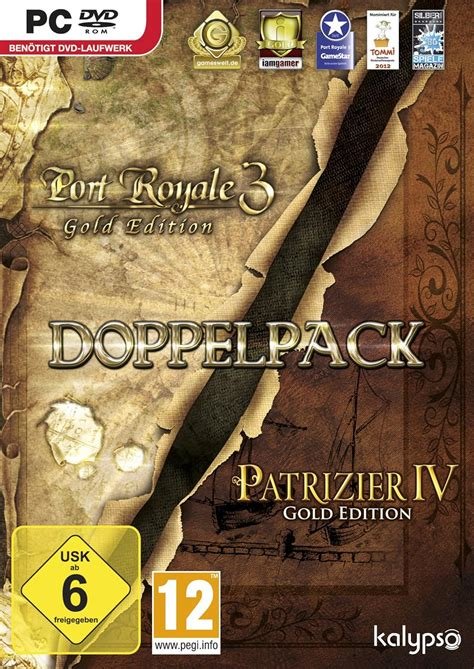
Doppelpack: Port Royale 3: Gold Edition & Patrizier IV: Gold Edition is a compilation of two strategy games set in historical maritime and trade environments. Port Royale 3: Gold Edition immerses players in the Caribbean during the 16th and 17th centuries, blending naval combat, trade, and city-building as they establish a thriving colonial empire. Patrician IV: Gold Edition shifts focus to the Hanseatic League in Northern Europe, where players engage in trade, diplomacy, and economic strategy to rise as influential merchants. Both games offer deep simulation mechanics, expansive economies, and dynamic challenges, making this bundle ideal for fans of historical strategy and trading simulations.
Gameplay Videos
Doppelpack: Port Royale 3: Gold Edition & Patrizier IV: Gold Edition: A Comprehensive Review
Introduction
The Doppelpack: Port Royale 3: Gold Edition & Patrizier IV: Gold Edition is a compelling compilation that brings together two of the most celebrated trading and strategy simulation games of the early 2010s. Released in 2014 by Kalypso Media, this double pack offers players a unique opportunity to dive into two distinct yet thematically connected worlds: the bustling Hanseatic League of the late Middle Ages and the pirate-infested Caribbean of the 17th century. This review will explore the historical context, gameplay mechanics, narrative depth, and lasting legacy of these games, providing an exhaustive analysis of their strengths, weaknesses, and contributions to the strategy genre.
Development History & Context
The Studio and Creators’ Vision
The Doppelpack was developed by Gaming Minds Studios, a German studio known for its expertise in economic and strategy simulations. The studio’s vision was to create immersive, historically grounded experiences that blended deep economic mechanics with accessible gameplay. Both Port Royale 3 and Patrizier IV were designed to appeal to fans of complex strategy games while maintaining a level of approachability for newcomers.
- Patrizier IV: Gold Edition (2011) was the fourth installment in the Patrician series, which began in 1992. The series focused on the Hanseatic League, a powerful trade alliance in Northern Europe during the Middle Ages. The Gold Edition included the base game and the Rise of a Dynasty expansion, which added new features such as expanded political systems and additional trade goods.
- Port Royale 3: Gold Edition (2013) was the third entry in the Port Royale series, which shifted the setting to the Caribbean during the Age of Piracy. The Gold Edition bundled the base game with three DLCs: Dawn of Pirates, Harbour Master, and New Adventures, each adding new campaigns, ships, and gameplay mechanics.
Technological Constraints and Gaming Landscape
The early 2010s were a transitional period for strategy games. While real-time strategy (RTS) games like StarCraft II dominated the market, there was a growing niche for economic and management simulations. Games like Anno 2070 and Tropico 4 demonstrated the appeal of deep, systems-driven gameplay, and Patrizier IV and Port Royale 3 fit neatly into this trend.
However, the games were constrained by the technological limitations of the time. Both titles were built on engines that, while capable, lacked the polish and fluidity of modern strategy games. The UI, in particular, often felt clunky, and the AI could be unpredictable, leading to moments of frustration. Despite these limitations, the games’ core mechanics—trading, city-building, and naval combat—remained engaging and rewarding.
Narrative & Thematic Deep Dive
Port Royale 3: Gold Edition
Port Royale 3 is set in the 17th-century Caribbean, a region defined by colonial rivalry, piracy, and economic exploitation. The game offers three distinct campaigns, each catering to a different playstyle:
- The Adventurer: Focuses on combat and exploration, tasking players with building a fleet and engaging in naval battles.
- The Trader: Emphasizes economic strategy, requiring players to establish trade routes and manage resources.
- The Pirate: A hybrid approach that blends combat and trade, allowing players to raid ships and plunder settlements.
The narrative is loosely structured around historical events, with players interacting with factions such as the Spanish, English, French, and Dutch empires, as well as independent pirate factions. The game’s dialogue and missions are functional but lack the depth of more narrative-driven strategy games. Instead, the story emerges from the player’s actions—whether they choose to align with a colonial power, become a feared pirate, or build a mercantile empire.
Patrizier IV: Gold Edition
Patrizier IV transports players to the Hanseatic League of the late Middle Ages, a time when Northern European cities like Lübeck, Hamburg, and Copenhagen thrived as centers of trade. The game’s campaign is centered around Lübeck, with players tasked with rising from a humble merchant to a powerful political figure.
The narrative is more structured than Port Royale 3, with a clear progression from small-scale trading to large-scale economic and political dominance. Players must navigate the complexities of medieval trade, dealing with supply and demand, political intrigue, and the occasional naval battle. The Rise of a Dynasty expansion adds depth to the political system, allowing players to influence city governance and even found new settlements.
Gameplay Mechanics & Systems
Core Gameplay Loops
Both games share a core gameplay loop centered around trading, resource management, and fleet management. However, they differ significantly in their execution:
-
Port Royale 3:
- Trading: Players buy and sell goods between ports, taking advantage of price fluctuations caused by supply and demand. The game features a dynamic economy where prices change based on player actions and random events.
- Naval Combat: Combat is a major focus, with players engaging in real-time battles against pirate ships, rival fleets, and colonial navies. The combat system is tactical but can feel repetitive over time.
- City Building: Players can invest in port infrastructure, upgrading buildings to increase production and trade efficiency.
-
Patrizier IV:
- Trading: The trading system is more complex, with players needing to manage production chains and respond to seasonal changes in demand. For example, shipping meat away during a famine can damage a player’s reputation.
- Political Influence: Unlike Port Royale 3, Patrizier IV places a stronger emphasis on political maneuvering. Players can become mayors, influence city policies, and even found new towns.
- Naval Combat: Combat is less central to Patrizier IV but still present. Players can engage in manual or automated battles, with the option to raid enemy ships.
Character Progression and UI
Both games feature progression systems that reward players for expanding their influence and wealth. However, the UI in both titles is a notable weakness. Menus can be overwhelming, and the lack of intuitive tooltips makes it difficult for newcomers to grasp the deeper mechanics. The games also suffer from occasional bugs and AI quirks, particularly in naval combat, where enemy ships sometimes behave unpredictably.
Multiplayer
Port Royale 3 introduced a multiplayer mode, allowing up to four players to compete or cooperate in the Caribbean. While ambitious, the multiplayer experience was hampered by technical issues and a lack of community support. Patrizier IV, by contrast, remained a single-player experience, focusing on its deep economic and political systems.
World-Building, Art & Sound
Setting and Atmosphere
- Port Royale 3: The Caribbean setting is vibrant and immersive, with detailed port cities, lush jungles, and stormy seas. The game captures the lawlessness and opportunity of the Age of Piracy, with players encountering everything from bustling colonial ports to hidden pirate coves.
- Patrizier IV: The Hanseatic League is rendered with a more subdued but equally detailed aesthetic. The game’s cities are bustling with medieval architecture, and the North Sea is depicted with a sense of realism that grounds the experience in history.
Visual Direction
Both games feature a mix of 2D and 3D art styles. While not cutting-edge by modern standards, the visuals are functional and atmospheric. Port Royale 3 benefits from its tropical setting, with bright colors and dynamic weather effects, while Patrizier IV leans into a more muted, historical palette.
Sound Design
The sound design in both games is understated but effective. Port Royale 3 features a mix of sea shanties and orchestral scores, enhancing the pirate adventure feel. Patrizier IV opts for a more classical medieval soundtrack, which complements its setting. The ambient sounds—waves crashing, market chatter, and ship creaking—add to the immersion.
Reception & Legacy
Critical and Commercial Reception
At launch, both games received mixed reviews. Critics praised their depth and historical authenticity but criticized their clunky interfaces and occasional bugs. Port Royale 3 was noted for its ambitious multiplayer mode, though it struggled to gain traction. Patrizier IV was lauded for its complex economic systems but was seen as overly niche.
Commercially, the games performed modestly, appealing primarily to fans of the genre. The Gold Editions helped extend their lifespan by bundling expansions and DLCs, offering better value to players.
Evolution of Reputation
Over time, both games have developed a cult following among strategy enthusiasts. Their depth and historical settings have aged well, and they are often cited as underrated gems in the economic simulation genre. The Doppelpack release in 2014 was a smart move by Kalypso Media, as it introduced the games to a new audience and provided a cost-effective way to experience both titles.
Influence on Subsequent Games
The Port Royale and Patrician series have had a lasting impact on the strategy genre. Games like Anno 1800 and Port Royale 4 (2020) have drawn inspiration from their economic and naval mechanics. The Doppelpack itself set a precedent for bundling related strategy games, a trend that has continued with titles like the Tropico and Anno series.
Conclusion
The Doppelpack: Port Royale 3: Gold Edition & Patrizier IV: Gold Edition is a fascinating snapshot of early 2010s strategy gaming. While both games suffer from technical limitations and occasional design flaws, their depth, historical authenticity, and engaging gameplay loops make them worthy of attention. Port Royale 3 offers a thrilling pirate adventure with a mix of trading and combat, while Patrizier IV provides a more cerebral economic and political experience.
For fans of strategy and simulation games, this compilation is a treasure trove of content. It may not be perfect, but its ambition and scope ensure its place in the annals of gaming history. If you’re willing to overlook its rough edges, the Doppelpack offers hundreds of hours of engaging, historically rich gameplay.
Final Verdict: A must-play for strategy enthusiasts, but approach with patience and an appreciation for depth over polish.