
- Release Year: 2006
- Platforms: Windows
- Publisher: Idigicon Limited
- Developer: Jeppe Dahlsgaard Nielsen
- Genre: Driving, Racing
- Perspective: Behind view
- Game Mode: Hotseat, Single-player
- Gameplay: Arcade, Automobile, Track builder, Track racing, Vehicle simulator, Vehicular
- Average Score: 100/100
Description
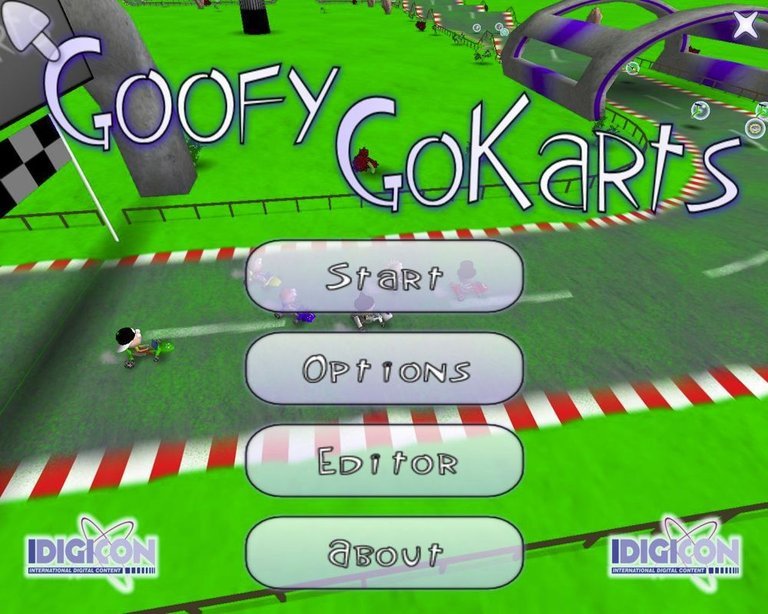
Goofy Gokarts is a casual 3D racing game released in 2006 for Windows, offering both single-player and local multiplayer modes. Players can compete in various tournaments, customize their karts, and race on tracks filled with power-ups and weapons. The game also features a track builder, allowing players to design and save their own custom courses, adding a creative twist to the arcade-style racing experience.
Gameplay Videos
Goofy Gokarts Reviews & Reception
myabandonware.com (100/100): this game is so stupid i love it
Goofy Gokarts: A Forgotten Gem of Whimsical Kart Racing
Introduction: The Unsung Hero of Budget Racing Games
In the mid-2000s, the kart racing genre was dominated by heavyweights like Mario Kart and Crash Team Racing, leaving little room for smaller, independent titles to carve out their own niche. Yet, amidst this competitive landscape, Goofy Gokarts (2006) emerged as a charming, if overlooked, contender—a game that embraced its budget roots while delivering a surprisingly polished and entertaining experience. Developed by Jeppe Dahlsgaard Nielsen and published by Idigicon Limited, Goofy Gokarts is a testament to the creativity that can flourish when a single visionary crafts a game with passion, despite technological and financial constraints.
This review seeks to reclaim Goofy Gokarts from the obscurity of abandonware archives and retro gaming forums, examining its development history, gameplay mechanics, artistic direction, and cultural impact. While it may not have the polish or prestige of its AAA counterparts, Goofy Gokarts offers a unique blend of humor, accessibility, and customization that makes it a fascinating case study in indie game design. By the end of this analysis, we will determine whether Goofy Gokarts deserves its status as a cult classic—or if it remains a curious footnote in the history of racing games.
Development History & Context: The Birth of a One-Man Passion Project
The Studio and the Solo Developer
Goofy Gokarts was the brainchild of Jeppe Dahlsgaard Nielsen, a Danish developer whose work often flew under the radar of mainstream gaming. Nielsen was no stranger to the industry, having previously worked on titles like Tricycle Racers (2005), a game that shared Goofy Gokarts‘ whimsical tone and physics-based racing mechanics. His approach to game development was distinctly hands-on, with Goofy Gokarts being a solo project—a rarity even in the indie scene of the mid-2000s.
The game was published by Idigicon Limited, a UK-based company known for distributing budget-friendly titles, often bundled in compilation packs (such as the 20 Game Mega Pack that included Goofy Gokarts Deluxe). Idigicon’s business model relied on affordable, accessible games that could appeal to casual gamers, and Goofy Gokarts fit perfectly into this niche.
Technological Constraints and Design Philosophy
Released in 2006, Goofy Gokarts was built for Windows PCs with modest hardware requirements, reflecting the limitations of budget game development at the time. The game’s 3D graphics were simple by contemporary standards, eschewing the high-end visuals of titles like Need for Speed: Most Wanted in favor of a cartoony, exaggerated aesthetic that prioritized charm over realism.
Key technological and design choices included:
– Keyboard-Only Controls: Unlike many racing games of the era, Goofy Gokarts did not support gamepads at launch, relying entirely on keyboard inputs. This decision likely stemmed from both cost constraints and the game’s target audience—casual players who might not own specialized controllers.
– Behind-the-Kart Perspective: The game employed a third-person, behind-the-vehicle camera, a staple of the kart racing genre, which allowed players to easily navigate tracks while maintaining visibility of upcoming obstacles and power-ups.
– Modular Track Design: One of the game’s most ambitious features was its track editor, which allowed players to design and save custom courses. This tool was a testament to Nielsen’s desire to extend the game’s replayability, even if its execution was somewhat rudimentary.
The Gaming Landscape of 2006
The mid-2000s were a golden age for racing games, with franchises like Gran Turismo, Forza Motorsport, and Burnout dominating the market. Kart racers, however, were a smaller subgenre, with Mario Kart: Double Dash!! (2003) and Crash Tag Team Racing (2005) being the most prominent examples. Goofy Gokarts entered this space as a budget alternative, offering a lighter, more humorous take on the genre without the licensing power of Nintendo or Activision.
Its release also coincided with the rise of digital distribution, though Goofy Gokarts was primarily sold as a physical CD-ROM, a format that was rapidly becoming obsolete. This, combined with its lack of major marketing, meant that the game struggled to find a wide audience despite its merits.
Narrative & Thematic Deep Dive: A World of Whimsy and Chaos
Plot and Characters: The Absence of Story
Goofy Gokarts is, at its core, a pure arcade racer, meaning it lacks a traditional narrative. There are no cutscenes, no overarching plot, and no character development. Instead, the game’s “story” is conveyed through its visual design and gameplay mechanics, which emphasize chaos, humor, and lighthearted competition.
The game’s roster of six playable characters (each with their own uniquely designed kart) are exaggerated, cartoonish figures with oversized heads and comical expressions. Their designs evoke a Saturday morning cartoon aesthetic, reinforcing the game’s playful tone. While their backstories are nonexistent, their distinctive karts—which resemble everything from miniature tractors to futuristic buggies—add a layer of personality to each racer.
Themes: Embracing the Absurd
Goofy Gokarts thrives on absurdity and unpredictability, two themes that define its gameplay and presentation. The tracks are filled with wacky obstacles, surreal landscapes, and over-the-top power-ups, all of which contribute to a sense of controlled chaos. This design philosophy aligns with the broader tradition of kart racers, where the goal is not realism but fun, frantic competition.
Key thematic elements include:
– Humor as a Core Mechanic: The game’s power-ups are deliberately ridiculous, featuring items like balloon lifts (which let players float over sections of the track), sandstorm generators (which obscure vision), and proximity mines shaped like cartoon bombs. These elements reinforce the game’s comedic tone.
– Accessibility Over Complexity: Unlike simulation racers, Goofy Gokarts prioritizes ease of play, making it approachable for younger audiences and casual gamers. The lack of a deep narrative or complex mechanics ensures that the focus remains on pure, unadulterated fun.
– Player Creativity: The inclusion of a track editor suggests a thematic emphasis on player agency, allowing gamers to craft their own chaotic races rather than being confined to pre-designed courses.
Dialogue and Presentation: Minimalist but Effective
Given its arcade nature, Goofy Gokarts features no spoken dialogue and only minimal text-based interactions (such as race start/finish notifications and power-up descriptions). The game’s “voice” is instead communicated through:
– Exaggerated Sound Effects: From the comical “boing” of a kart bouncing off a wall to the over-the-top explosion noises, the audio design reinforces the game’s playful tone.
– Visual Gags: The tracks are littered with absurd environmental details, such as giant lollipops, floating islands, and surreal weather effects (like sudden snowstorms in desert levels).
Gameplay Mechanics & Systems: A Mix of Familiarity and Innovation
Core Gameplay Loop: Racing with a Twist
At its heart, Goofy Gokarts follows the classic kart racing formula:
1. Select a Character and Kart: Players choose from six distinct racers, each with their own vehicle.
2. Choose a Tournament Mode:
– World Tournament: A pre-set series of races with increasing difficulty.
– Custom Tournament: Players adjust the number of races, laps, and opponents.
– Random Tournament: A shuffled selection of tracks and settings.
3. Race and Collect Power-Ups: Tracks are scattered with weapons and boosts that can turn the tide of a race.
4. Win and Unlock Rewards: Success grants access to new tracks and customization options.
Combat and Power-Ups: Chaos on Wheels
The game’s power-up system is where Goofy Gokarts shines, offering a diverse arsenal of weapons and abilities that keep races unpredictable. Some of the most notable include:
– Offensive Power-Ups:
– Rocket Launchers: Fire homing missiles at opponents.
– Proximity Mines: Drop explosive traps on the track.
– Toxic Mushrooms: Leave a trail of hazardous slime.
– Pipe Bombs: Detonate after a short delay.
– Defensive Power-Ups:
– Shields: Temporary invincibility against attacks.
– Speed Boosters: A burst of acceleration.
– Utility Power-Ups:
– Balloon Lift: Temporarily elevates the kart, allowing it to skip sections of the track.
– Sandstorm/Snowstorm: Obscures vision for all racers.
The randomized distribution of these power-ups ensures that no two races play out the same way, though it can also lead to frustrating moments of luck-based outcomes—a common critique of the genre.
Character Progression and Customization
While Goofy Gokarts lacks a traditional RPG-style progression system, it offers limited customization through:
– Unlockable Tracks: Winning tournaments grants access to new environments.
– Track Editor: Players can design their own courses, adjusting terrain, obstacles, and power-up placements.
However, the lack of deeper progression (such as kart upgrades or character stats) means that the game’s long-term appeal relies heavily on its multiplayer and track-editing features.
UI and Controls: Simplicity with Limitations
The game’s user interface is functional but barebones, reflecting its budget origins. Key elements include:
– Menu Navigation: Straightforward but lacking in visual flair.
– Race HUD: Displays speed, lap count, and power-up status in a clear, if unremarkable, layout.
– Keyboard Controls: The game’s reliance on keyboard inputs can feel clunky, especially for players accustomed to analog sticks or triggers. The lack of controller support at launch was a notable oversight.
Innovative Features: The Track Editor
The track editor is Goofy Gokarts‘ most ambitious feature, allowing players to:
– Design Custom Courses: Adjust track shape, terrain type, and obstacle placement.
– Save and Share Creations: While the game lacks online functionality, players could theoretically share tracks via external means.
However, the editor’s limited tools and lack of depth prevent it from rivaling more robust level designers (such as those in TrackMania or Mario Kart DS).
Flaws and Missed Opportunities
Despite its charm, Goofy Gokarts suffers from several design shortcomings:
– No Online Multiplayer: In an era where online racing was becoming standard, the game’s local-only multiplayer (split-screen for two players) felt outdated.
– Repetitive AI: Opponent racers follow predictable patterns, making single-player races less engaging over time.
– Limited Track Variety: While the environments (grass, desert, snow, etc.) are visually distinct, the core track designs lack the creativity seen in games like Diddy Kong Racing.
World-Building, Art & Sound: A Cartoonish Wonderland
Setting and Atmosphere: A Surreal Playground
Goofy Gokarts takes place in a vibrant, exaggerated world that blends cartoony whimsy with arcade-style racing. The tracks are filled with oversized props, floating platforms, and surreal weather effects, creating an atmosphere that feels like a living cartoon.
Key environmental themes include:
– Candyland Aesthetic: Some tracks feature giant lollipops, gumdrop trees, and cotton candy clouds, evoking a Willy Wonka-esque wonderland.
– Extreme Weather: Sudden snowstorms in deserts or rainbow-colored tornadoes add visual flair and gameplay challenges.
– Fantasy Elements: Floating islands, zero-gravity sections, and mystical obstacles (like bouncing mushrooms) reinforce the game’s dreamlike tone.
Visual Direction: Budget Charm
Given its low-poly 3D graphics, Goofy Gokarts prioritizes color and movement over detail. The result is a visually busy but endearing art style that fits its lighthearted tone. Key visual strengths include:
– Expressive Character Designs: The racers’ oversized heads and exaggerated animations make them instantly memorable.
– Vibrant Color Palettes: Each track uses bold, contrasting colors to ensure clarity during high-speed races.
– Dynamic Camera Angles: The third-person perspective shifts subtly to keep the action visible, though it can occasionally clip through scenery.
Sound Design: A Symphony of Silly
The game’s audio design is minimalist but effective, relying on:
– Upbeat, Looping Music: The soundtrack consists of cheerful, synth-heavy tunes that reinforce the game’s playful mood. However, the lack of variety means tracks can become repetitive.
– Exaggerated Sound Effects:
– Kart Engines: A comically high-pitched whir that sounds more like a toy than a real vehicle.
– Power-Up Noises: Over-the-top “booms,” “zaps,” and “splat” sounds that amplify the game’s humor.
– Character Reactions: While there’s no voice acting, grunts and yelps accompany crashes and boosts.
Atmosphere: Pure, Unfiltered Fun
Goofy Gokarts doesn’t take itself seriously—and that’s its greatest strength. The combination of absurd visuals, chaotic gameplay, and whimsical sound design creates an experience that feels like a Saturday morning cartoon come to life. It’s a game that embraces its budget roots without apology, delivering unpretentious, joyful racing.
Reception & Legacy: The Cult of the Overlooked
Critical Reception: A Mixed Bag
Upon release, Goofy Gokarts received little mainstream attention, with no major critic reviews archived on platforms like Metacritic. However, player reactions (as seen on abandonware sites and retro gaming forums) paint a picture of a polarizing but beloved niche title:
– Praise:
– “So stupid, I love it” (MyAbandonware user, 2024)
– “Literally my favourite childhood game” (MyAbandonware user “Raisin,” 2023)
– “A fun, budget Mario Kart alternative” (Squakenet)
– Criticism:
– “Primitive, with terrible controls and annoying music” (Old-Games.RU)
– “Lacks the polish of bigger kart racers” (Retro gaming forums)
Commercial Performance: A Budget Title’s Fate
As a low-cost CD-ROM release, Goofy Gokarts likely sold modestly, primarily through budget bins and compilation packs (such as Idigicon’s 20 Game Mega Pack). Its lack of digital distribution at launch further limited its reach, though it later found a second life on abandonware sites.
Legacy: A Cult Classic in the Making?
While Goofy Gokarts never achieved mainstream success, it has slowly gained a cult following among:
– Retro Gaming Enthusiasts: Players who appreciate obscure, quirky titles from the 2000s.
– Indie Game Historians: Developers and critics who study one-person passion projects.
– Nostalgia Seekers: Gamers who remember it from childhood or budget game bundles.
Its influence on later games is minimal, though its track editor and humorous tone can be seen as precursors to indie kart racers like Beach Buggy Racing (2014) and Garage: Bad Trip (2020).
Preservation and Modern Playability
Today, Goofy Gokarts is preserved on abandonware sites like MyAbandonware and Retrolorean, where it remains downloadable for free. Modern players can experience it via:
– Windows Emulation: Works on modern PCs with minimal tweaking.
– Fan Mods: Some communities have added controller support to improve playability.
Conclusion: A Flawed but Endearing Relic of Its Time
Goofy Gokarts is not a masterpiece—it lacks the polish, depth, and innovation of its AAA competitors. However, what it does offer is something far rarer: unfiltered joy, unapologetic silliness, and a reminder of a time when games could be simple, fun, and weird without needing to justify their existence.
Final Verdict: 7/10 – A Hidden Gem for the Right Audience
- Strengths:
- Charming, cartoonish visuals that age better than many contemporary budget titles.
- Chaotic, fun power-ups that keep races unpredictable.
- Track editor adds replayability.
- Nostalgic appeal for fans of early 2000s indie games.
- Weaknesses:
- Clunky keyboard controls and no native controller support.
- Repetitive AI and limited track variety.
- No online multiplayer, limiting its competitive potential.
Who Should Play It?
- Fans of Mario Kart who want something different.
- Retro gamers looking for obscure, quirky titles.
- Indie game historians interested in one-person development stories.
- Casual players who prefer fun over complexity.
Legacy in Gaming History
Goofy Gokarts will never be remembered alongside Mario Kart or F-Zero, but that’s not its goal. Instead, it stands as a testament to the creativity of solo developers, a relic of the budget gaming era, and—most importantly—a game that doesn’t take itself too seriously.
In a world where racing games often strive for hyper-realism or competitive esports appeal, Goofy Gokarts remains a refreshing, goofy alternative—one that deserves to be rediscovered, preserved, and celebrated for what it is: a delightfully silly racing game that’s as fun as it is flawed.
Final Score: ★★★★☆☆☆☆☆☆ (7/10) – A Cult Classic in the Making