
- Release Year: 2007
- Platforms: Windows
- Publisher: CNEC Inc., Electronic Arts, Inc.
- Developer: Electronic Arts, Inc.
- Genre: Real-time strategy
- Perspective: Top-down
- Game Mode: Online PVP, Single-player
- Gameplay: Base building, Resource Management, Unit production
- Setting: Modern military, Sci-fi
- Average Score: 89/100
Description
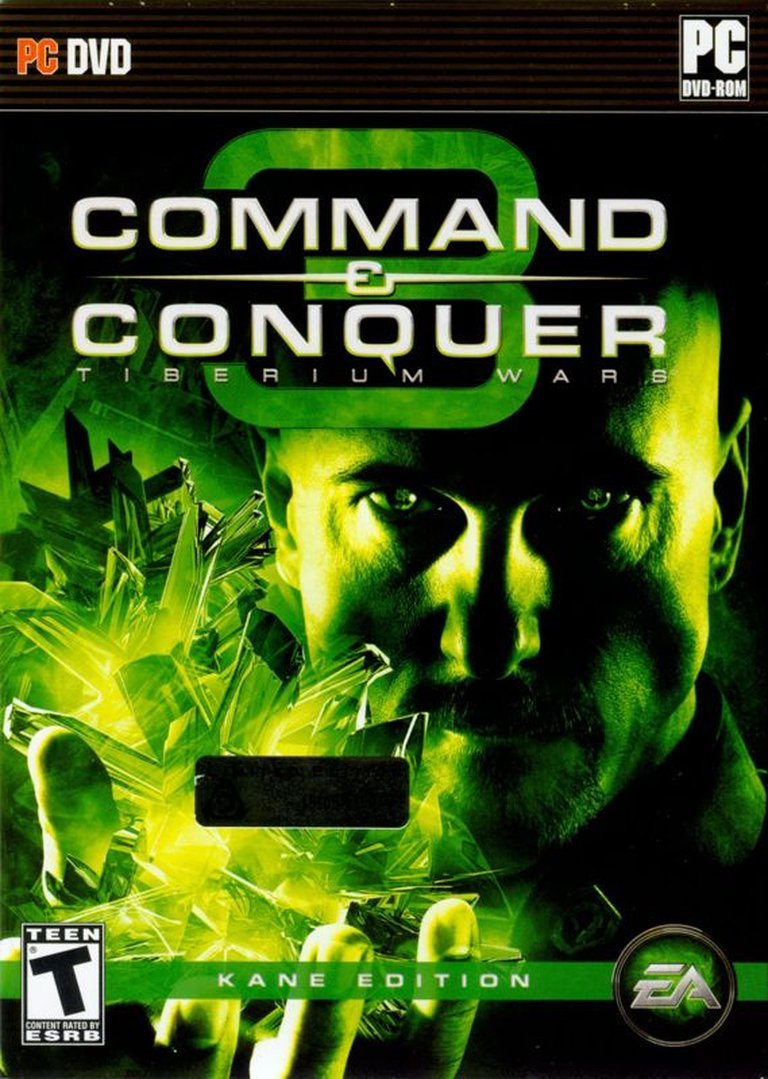
Command & Conquer 3: Tiberium Wars (Kane Edition) is a special collector’s edition of the 2007 real-time strategy game, set in a dystopian future where the mysterious alien substance Tiberium has reshaped Earth’s ecosystem. The game features three factions—the Global Defense Initiative (GDI), the Brotherhood of Nod, and the alien Scrin—battling for control in a high-stakes conflict. This edition includes exclusive content such as new multiplayer maps, unique unit skins, bonus DVDs with behind-the-scenes footage, and additional digital extras, making it a must-have for fans of the franchise.
Gameplay Videos
Command & Conquer 3: Tiberium Wars (Kane Edition) Cracks & Fixes
Command & Conquer 3: Tiberium Wars (Kane Edition) Patches & Updates
Command & Conquer 3: Tiberium Wars (Kane Edition) Guides & Walkthroughs
Command & Conquer 3: Tiberium Wars (Kane Edition) Reviews & Reception
mobygames.com (91/100): This collector’s edition contains: Command & Conquer 3: Tiberium Wars 5 new skirmish/multiplayer maps (Frontier Fracas, Ground Zero, Tiber River Valley, Tiberium Gardens III, Tournament Desert Redux) unique unit skins, four for each of the 3 factions in the game (Predator Tank, Mammoth Tank, Juggernaut, Firehawk, Scorpion Tank, Flame Tank, Avatar, Venom, Annihilator Tripod, Stormrider, Devastator Warship, Planetary Assault Carrier) 5 wallpapers in multiple resolutions bonus DVD featuring a behind the scenes documentary, deleted scenes and a blooper reel from the live action video shoots, a series of gameplay strategy videos from the game designers themselves, and more.
retrolorean.com (87/100): Command & Conquer 3: Tiberium Wars was generally well-received by critics, with an average review score of 87% on Metacritic. The game was praised for its graphics, gameplay, and single-player campaign, but was criticized for its lack of innovation.
Command & Conquer 3: Tiberium Wars (Kane Edition) Cheats & Codes
PC
Open the chat window by pressing Enter, type the cheat command, and press Enter again.
| Code | Effect |
|---|---|
| give money | Grants the specified amount of credits (e.g., ‘give money 50000’ gives 50,000 credits) |
Command & Conquer 3: Tiberium Wars (Kane Edition): A Definitive Retrospective
Introduction: The Return of a Legend
In the annals of real-time strategy (RTS) gaming, few franchises command the reverence and nostalgia of Command & Conquer. With its blend of high-stakes warfare, political intrigue, and sci-fi spectacle, the series redefined the genre in the 1990s. By 2007, after a tumultuous period of studio transitions and shifting creative visions, Command & Conquer 3: Tiberium Wars emerged as a phoenix from the ashes of Westwood Studios, now under the stewardship of EA Los Angeles. The Kane Edition, a lavish collector’s release, not only celebrated the game’s return but also cemented its place as a pivotal moment in RTS history.
This review dissects Tiberium Wars (Kane Edition) with surgical precision, exploring its development, narrative depth, gameplay innovations, and cultural impact. Was it a triumphant revival or a cautious homage? Did it honor the legacy of its predecessors while carving its own identity? Let’s embark on this comprehensive journey.
Development History & Context: The Birth of a New Era
The Fall of Westwood and the Rise of EA Los Angeles
The story of Tiberium Wars is inextricably linked to the demise of Westwood Studios, the original architects of the Command & Conquer universe. Following the release of Tiberian Sun (1999) and its Firestorm expansion, Westwood’s creative direction splintered. Electronic Arts, having acquired the studio in 1998, redirected resources toward Command & Conquer: Generals (2003), a modern military RTS that diverged from the Tiberium saga. This shift left fans of the core series in limbo, yearning for a true sequel.
The closure of Westwood’s Las Vegas studio in 2003 marked the end of an era. Many key developers, including Frank Klepacki and Adam Isgreen, departed to form Petroglyph Games, taking with them the spirit of classic C&C. The remaining team, absorbed into EA Los Angeles, faced the daunting task of reviving the Tiberium universe without its original creators.
From “Incursion” to Tiberium Wars
Early concept art for a Command & Conquer 3 surfaced in 2004 under the codename Incursion. These glimpses revealed a return to the series’ roots: mech units, Tiberium-infested battlefields, and the familiar GDI vs. Nod conflict. However, EA’s focus on Red Alert 3 and the Battle for Middle-earth series delayed progress. It wasn’t until 2006, under the leadership of executive producer Mike Verdu, that Tiberium Wars was officially announced.
The development cycle was ambitious yet constrained. The team utilized the SAGE engine, previously employed in Generals and The Battle for Middle-earth, to deliver a visually stunning experience. However, the engine’s limitations—particularly in unit pathfinding and AI behavior—would later become points of contention.
The Kane Edition: A Collector’s Dream
Released alongside the standard edition, the Kane Edition was a love letter to fans. Limited to 100,000 copies (except in Germany, where it served as an uncensored release), it included:
– Exclusive in-game content: Five new multiplayer maps and unique unit skins for all three factions.
– Bonus DVD: Featuring behind-the-scenes documentaries, deleted scenes, bloopers, and strategy videos.
– Digital extras: High-resolution wallpapers and concept art.
This edition underscored EA’s commitment to honoring the franchise’s legacy while catering to its most devoted followers.
Narrative & Thematic Deep Dive: A War on Three Fronts
The World of 2047: A Planet on the Brink
Tiberium Wars unfolds in a dystopian 2047, where the alien substance Tiberium has reshaped Earth’s geopolitical landscape. The planet is divided into three zones:
– Blue Zones: The last bastions of civilization, protected by GDI.
– Yellow Zones: Tiberium-contaminated regions, controlled by Nod.
– Red Zones: Uninhabitable wastelands, teeming with Tiberium and ion storms.
This setting is more than a backdrop; it’s a character in its own right. Tiberium’s spread symbolizes humanity’s hubris and the inevitability of ecological collapse—a theme eerily prescient in today’s climate-conscious world.
The Third Tiberium War: A Conflict of Ideologies
The narrative is a masterclass in asymmetrical storytelling, presenting the war from three perspectives:
1. GDI’s Campaign: Led by General Jack Granger (Michael Ironside), GDI fights to preserve humanity’s future. The campaign is a mix of tactical brilliance and moral ambiguity, culminating in the controversial use of a liquid Tiberium bomb.
2. Nod’s Campaign: Kane (Joseph D. Kucan) returns, orchestrating a grand deception to lure the Scrin—an alien faction—to Earth. His motives are shrouded in prophecy and manipulation, blurring the line between villain and visionary.
3. Scrin’s Campaign: The extraterrestrial invaders, drawn by the liquid Tiberium explosion, seek to harvest the planet. Their campaign is a desperate struggle for survival, offering a fresh perspective on the conflict.
Characters and Performances: A Hollywood-Caliber Cast
The game’s full-motion video (FMV) cutscenes are a tour de force, featuring:
– Joseph D. Kucan as Kane: Reprising his iconic role, Kucan delivers a performance that oscillates between menace and messianic charm.
– Michael Ironside as General Granger: A grizzled, morally conflicted leader whose decisions shape the war’s outcome.
– Tricia Helfer as Kilian Qatar: A ruthless Nod general whose loyalty to Kane is unwavering.
– Billy Dee Williams as Director Boyle: A bureaucrat whose political maneuvering adds layers of intrigue.
The writing is sharp, with dialogue that crackles with tension and dark humor. However, the Scrin’s campaign suffers from a lack of character development, relying more on gameplay than narrative depth.
Themes: Prophecy, Sacrifice, and Ascension
Tiberium Wars explores profound themes:
– The Cost of War: GDI’s use of the liquid Tiberium bomb mirrors real-world ethical dilemmas, forcing players to confront the consequences of their actions.
– Kane’s Grand Design: His manipulation of both GDI and the Scrin suggests a higher purpose—one that hints at humanity’s evolution or annihilation.
– The Scrin’s Harvest: Their arrival reframes Tiberium not as a weapon but as a resource, challenging the player’s perception of the conflict.
The game’s multiple endings—particularly GDI’s branching conclusion—add replayability and moral weight, a rarity in RTS narratives.
Gameplay Mechanics & Systems: Innovation and Tradition
Core Gameplay: A Refined Classic
Tiberium Wars adheres to the Command & Conquer formula while introducing modern refinements:
– Base Building: The construction yard remains the heart of operations, with cranes and foundries enabling parallel production queues.
– Resource Management: Tiberium harvesting is streamlined, with refiners and silos managing resources efficiently.
– Unit Diversity: Each faction boasts a distinct arsenal:
– GDI: Heavy armor and orbital strikes (Ion Cannon).
– Nod: Stealth and Tiberium-based weaponry (Temple of Nod).
– Scrin: Alien tech and Tiberium manipulation (Rift Generator).
The rock-paper-scissors combat system is intact, rewarding strategic foresight and adaptability.
Innovations and Flaws
Strengths:
– AI Personalities: Skirmish mode features AI opponents with distinct playstyles (e.g., “turtler,” “rusher”), adding depth to single-player engagements.
– Superweapons: The Ion Cannon, Temple of Nod, and Rift Generator are game-changers, requiring careful timing and positioning.
– BattleCast: A pioneering feature that allowed players to spectate and commentate on matches, positioning Tiberium Wars as an early esports contender.
Weaknesses:
– Pathfinding Issues: Units often exhibit erratic behavior, particularly in retreat scenarios.
– Fog of War Limitations: Unlike previous entries, units cannot attack unseen enemies, a design choice that frustrates veterans.
– Multiplayer Balance: The Scrin’s late-game dominance and Nod’s early-game fragility created imbalances that required patching.
The Kane Edition’s Exclusive Content
The Kane Edition’s additional maps and unit skins are more than cosmetic upgrades. Maps like Ground Zero and Tiber River Valley offer unique tactical challenges, while the skins—such as the Predator Tank’s sleek redesign—add visual flair without disrupting balance.
World-Building, Art & Sound: A Feast for the Senses
Visual Design: A Post-Apocalyptic Masterpiece
Tiberium Wars is a visual triumph. The SAGE engine renders:
– Dynamic Environments: Tiberium fields glow with eerie luminescence, while ion storms rage in the background.
– Unit Detail: From the hulking Mammoth Tank to the ethereal Scrin units, each model is meticulously crafted.
– Destruction Physics: Buildings crumble realistically, and explosions send debris flying, immersing players in the chaos of war.
The art direction strikes a balance between gritty realism and sci-fi spectacle, a testament to EA Los Angeles’ technical prowess.
Sound Design: A Symphony of War
The absence of Frank Klepacki’s iconic soundtrack is palpable, but composers Steve Jablonsky and Trevor Morris deliver a score that is both epic and atmospheric. The soundtrack blends orchestral grandeur with electronic pulses, evoking the tension of battle.
Sound effects are equally impressive:
– Weaponry: The crack of rifle fire, the hum of Tiberium-based weapons, and the thunderous roar of the Ion Cannon.
– Ambience: The distant wail of ion storms and the chatter of soldiers add layers of immersion.
Voice acting is top-tier, with standout performances from the cast. However, the lack of Klepacki’s signature tracks—like Hell March—leaves a void that even Jablonsky’s compositions cannot entirely fill.
Reception & Legacy: A Triumphant Return
Critical Acclaim and Commercial Success
Tiberium Wars was met with widespread acclaim:
– Metacritic: 85/100 (PC), 82/100 (Xbox 360).
– Awards: “Strategy/Simulation Game of the Year” at the 11th Annual Interactive Achievement Awards.
– Sales: Over 1 million copies sold within months, earning a “Gold” certification from ELSPA.
Critics praised its faithfulness to the C&C formula while embracing modern RTS conventions. However, some lamented its lack of innovation, particularly in comparison to contemporaries like Supreme Commander.
The Kane Edition’s Impact
The Kane Edition became a coveted collector’s item, with sealed copies fetching high prices on secondary markets. Its bonus content, particularly the behind-the-scenes DVD, offered fans unprecedented insight into the game’s development, fostering a deeper connection to the franchise.
Influence on the Genre and Franchise
Tiberium Wars revitalized the Command & Conquer series, paving the way for:
– Kane’s Wrath (2008): An expansion that delved deeper into Nod’s lore and introduced new sub-factions.
– Tiberian Twilight (2010): A divisive conclusion to the Tiberium saga, which abandoned traditional RTS mechanics.
– Remastered Collection (2020): A modern re-release of the original C&C and Red Alert, reigniting interest in the classic titles.
Its success also influenced the broader RTS landscape, proving that narrative-driven campaigns and asymmetrical faction design could thrive in an era dominated by multiplayer-focused titles.
Conclusion: A Monument to RTS Excellence
Command & Conquer 3: Tiberium Wars (Kane Edition) is a masterpiece of its genre—a game that honors its legacy while boldly marching forward. Its narrative depth, strategic complexity, and sensory immersion set a new standard for RTS games in the late 2000s.
Final Verdict: 9.5/10 – A Timeless Classic
While not without its flaws—pathfinding quirks, multiplayer imbalances, and the absence of Klepacki’s soundtrack—Tiberium Wars remains a high-water mark for the Command & Conquer franchise. The Kane Edition, with its exclusive content and collector’s appeal, is the definitive way to experience this pivotal chapter in gaming history.
For fans of the series, it is an essential playthrough. For newcomers, it is a gateway to one of gaming’s most enduring universes. And for historians, it is a testament to the resilience of a franchise that, like Kane himself, refuses to stay buried.
“Peace through power.” Indeed.