
- Release Year: 2015
- Platforms: Windows
- Publisher: Stamina-games
- Developer: Stamina-games
- Genre: Action, Sports
- Perspective: Diagonal-down
- Game Mode: Single-player
- Gameplay: Arcade, Fighting
- Setting: Futuristic, Sci-fi
- Average Score: 66/100
Description
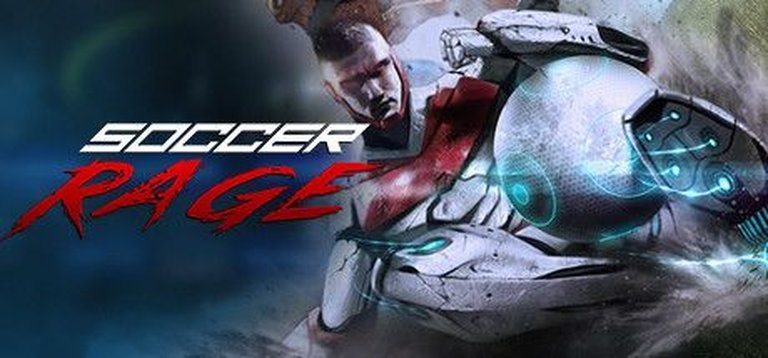
Soccer Rage is a futuristic, arcade-style sports game that blends soccer with intense fighting mechanics. Set in a sci-fi world, players engage in fast-paced matches where physical combat is as crucial as scoring goals. The game features a diagonal-down or side-view perspective, direct control, and a mix of 2D scrolling visuals, offering a unique twist on traditional soccer games with its emphasis on aggression and strategy.
Where to Buy Soccer Rage
PC
Soccer Rage Guides & Walkthroughs
Soccer Rage Reviews & Reception
steamcommunity.com : The concept of the game is very awesome. I understand it’s early access which is why the execution isn’t so great.
steambase.io (81/100): Soccer Rage has earned a Player Score of 81 / 100.
store.steampowered.com (40/100): Mixed (69) – 40% of the 69 user reviews for this game are positive.
completionist.me (77/100): 77.11 Game Rating
Soccer Rage: A Brutal, Unfinished Symphony of Chaos and Potential
Introduction: The Game That Could Have Been a Cult Classic
Soccer Rage (2015) is a game that defies easy categorization—a frenetic, violent, and utterly bizarre fusion of soccer and fighting mechanics. Released in Steam Early Access by the obscure studio Stamina-Games, it promised a revolutionary take on sports games, stripping away the sanitized rules of traditional football and replacing them with brutal brawls, no red cards, and a win condition that rewards both goals and knocking opponents unconscious. Yet, despite its ambitious premise, Soccer Rage remains a fascinating relic of unfulfilled potential—a game that teased greatness but ultimately succumbed to developmental limbo.
This review will dissect Soccer Rage in exhaustive detail, examining its development history, gameplay mechanics, narrative (or lack thereof), artistic direction, and legacy. Was it a bold experiment ahead of its time, or a flawed curiosity doomed by its own ambition? Let’s dive in.
Development History & Context: The Birth of a Hybrid Beast
The Studio Behind the Madness: Stamina-Games
Stamina-Games, the developer and publisher of Soccer Rage, is a relatively unknown entity in the gaming industry. Little is documented about the studio’s history, but their sole major release—Soccer Rage—suggests a team with a penchant for unconventional ideas. The game was built using the Unity engine, a popular choice for indie developers due to its accessibility and cross-platform capabilities.
The Vision: Soccer Meets Mortal Kombat
The core concept of Soccer Rage was simple yet radical: what if soccer had no rules? No offsides, no substitutions, no red cards—just raw, unfiltered aggression where players could fight mid-match, injure opponents, and reduce the opposing team’s numbers until they forfeited. The developers envisioned a game where strategy wasn’t just about passing and shooting but also about when to brawl and when to play.
This was not merely a sports game with fighting elements; it was an attempt to gamify the chaos of street football, where tempers flare and fists fly. The influence of arcade-style sports games like NBA Jam and Mutant League Football is evident, but Soccer Rage pushed the concept further by integrating one-on-one fighting mechanics reminiscent of Street Fighter or Tekken.
The Early Access Gamble
Soccer Rage launched on June 2, 2015, as an Early Access title on Steam, priced at $9.99. The developers were transparent about their intentions:
“It’s really important to us that we make Soccer Rage the best game it can be, and we can only do that with your help. Steam Early Access is the perfect place for us to do that.”
Their roadmap was ambitious:
– 8 teams at launch (out of a planned 32)
– 4 environments (out of 16)
– Quick match and tournament modes
– Planned features: Online multiplayer, advanced AI, team customization, and a story mode
The developers estimated a one-year Early Access period, with a full release slated for June 2016. However, as with many Early Access projects, development stalled. The last recorded update from Stamina-Games was over a decade ago, and the game remains in an unfinished state, effectively abandoned.
The Gaming Landscape in 2015
2015 was a pivotal year for indie games. Titles like Rocket League, Undertale, and Her Story proved that small teams could create groundbreaking experiences. Meanwhile, the fighting game genre was experiencing a renaissance with Mortal Kombat X and Street Fighter V on the horizon.
Soccer Rage arrived in this climate as a niche experiment, blending two genres that rarely intersect. Its closest contemporaries were:
– Mutant League Football (1993) – A violent, rule-breaking take on American football.
– Fight’N Rage (2017) – A beat ‘em up with deep combat mechanics.
– Super Blood Hockey (2017) – A brutal, retro-style hockey game with fighting.
Yet, Soccer Rage stood out for its real-time hybrid gameplay, where soccer and fighting were not separate modes but interwoven mechanics.
Narrative & Thematic Deep Dive: The Absence of Story and the Glory of Chaos
A Game Without a Plot (And Why That’s Okay)
Soccer Rage has no narrative. There are no characters, no cutscenes, no lore—just pure, unadulterated competition. This is not a flaw but a deliberate design choice. The game is not about storytelling; it’s about emergent chaos, where every match writes its own tale of betrayal, violence, and last-minute goals.
Themes: Anarchy, Survival, and the Dark Side of Sports
While Soccer Rage lacks a traditional story, it oozes thematic depth in its gameplay:
1. The Brutality of Competition – Unlike traditional sports games, where fouls are penalized, Soccer Rage encourages violence. The message is clear: winning isn’t just about skill—it’s about survival.
2. The Fragility of Teamwork – Since players can be permanently knocked out, every fight risks weakening your own team. Do you retaliate against a foul, or play it safe? The game forces players to weigh risk vs. reward in real time.
3. The Absurdity of Sports Culture – The game’s over-the-top violence serves as a satire of hyper-competitive sports culture, where athletes are glorified warriors and fans demand blood.
The Lack of Characters (And Why It Hurts the Game)
One of Soccer Rage’s biggest missed opportunities is its lack of distinct personalities. The teams are generic (Germany, Brazil, England, etc.), with no unique traits, special moves, or backstories. In a game where fighting is as important as scoring, this is a glaring omission.
Compare this to Mutant League Football, where each team had mutant players with unique abilities, or Fight’N Rage, where characters had distinct fighting styles. Soccer Rage could have benefited immensely from:
– Special “Rage Moves” tied to national stereotypes (e.g., a Brazilian capoeira kick, a German power tackle).
– Character customization, allowing players to build their own brutal athletes.
– A story mode where players rise through the ranks of an underground, no-holds-barred soccer league.
Instead, the game relies on pure mechanics, which, while fun, lack the personality and replayability that a deeper narrative or character system could provide.
Gameplay Mechanics & Systems: The Beautiful, Flawed Chaos Engine
Core Gameplay Loop: Soccer Meets Street Fighter
Soccer Rage’s gameplay is a real-time hybrid of:
1. Soccer Mechanics (passing, shooting, tackling)
2. Fighting Mechanics (combos, blocks, knockouts)
The objective is simple:
– Score more goals than the opponent, OR
– Reduce the opponent’s team to fewer than 7 players (by knocking them out).
This dual win condition fundamentally changes how soccer is played. Instead of just chasing the ball, players must decide when to fight and when to play.
Offensive Soccer Mechanics
The game offers a surprisingly deep (if clunky) soccer system:
– Basic Passes – Short, long, and one-two passes.
– Shooting Variety – Normal shots, precision shots, lofted shots, and “Rage Shots” (a powered-up strike).
– Dribbling & Ball Control – Players can shield the ball, but fights can break out at any moment.
The Problem: The controls are imprecise, making skilled plays feel more like luck than strategy. The AI is unpredictable, often either too passive or too aggressive.
Defensive & Fighting Mechanics
Defense is where Soccer Rage shines—and stumbles:
– Tackles – Standard, slide tackles, and “Rage Slide Tackles” (a devastating, high-risk move).
– Fighting System – When two players collide, they enter a one-on-one brawl with light/heavy attacks, blocks, and combos.
– Injuries & Knockouts – Taking too much damage removes a player from the match permanently.
The Good:
– The fighting is visceral and satisfying when it works.
– The risk-reward of starting a fight (do you weaken their team or leave yours vulnerable?) is brilliant in theory.
The Bad:
– No dedicated block button (a glaring omission in a fighting game).
– Hit detection is inconsistent—some punches whiff inexplicably.
– AI fighters are either too easy or too cheap, making fights feel unbalanced.
Team & Match Strategy
The game lacks depth in team management, but the strategic possibilities are intriguing:
– Do you focus on scoring, or do you try to cripple the opponent’s team?
– Should you protect your goalkeeper (the only player who can’t be knocked out)?
– When is it worth starting a fight?
Missed Opportunities:
– No formations or tactics (a basic feature in even the simplest soccer games).
– No player stats or customization (every player feels identical).
– No referee interactions (imagine a corrupt ref who could be bribed or attacked!).
Multiplayer & Replayability
At launch, Soccer Rage supported:
– Local multiplayer (up to 4 players)
– Tournament mode
Planned (but never implemented) features:
– Online multiplayer (would have been a game-changer).
– Advanced AI (the current AI is dumb and exploitable).
– More teams & scenarios (only 8 teams and 4 arenas were included).
The Verdict on Gameplay:
Soccer Rage’s mechanics are innovative but flawed. The hybrid soccer-fighting concept is genius, but poor execution, lack of polish, and abandoned development prevent it from being great.
World-Building, Art & Sound: A Futuristic, Gritty Aesthetic
Visual Design: Sci-Fi Meets Street Soccer
Soccer Rage adopts a futuristic, arcade-style aesthetic:
– 2D scrolling arenas with 3D character models.
– Sci-fi stadiums (rather than traditional soccer fields).
– Bright, neon colors that evoke Cyberpunk or Jet Set Radio.
The Problem:
– The art style is inconsistent—some elements look polished, while others feel unfinished.
– Animations are stiff, especially during fights.
– No crowd reactions (a missed opportunity for atmosphere).
Sound Design: The Silent Rage
The audio in Soccer Rage is minimalist to a fault:
– No commentary (unlike traditional sports games).
– Generic sound effects for kicks, punches, and goals.
– A forgettable soundtrack that does little to enhance the mood.
What It Needed:
– Dynamic crowd reactions (cheering for fights, booing weak plays).
– Voice lines for players (taunts, grunts, celebrations).
– A pumping, aggressive soundtrack to match the game’s tone.
Atmosphere: The Underground Fight Club Vibe
Despite its flaws, Soccer Rage nails the atmosphere of an illegal, no-rules sport. The lack of referees, the brutal fights, the sci-fi arenas—all contribute to a gritty, lawless feel.
If the game had leaned harder into this aesthetic (e.g., underground betting, corrupt promoters, player rivalries), it could have been a cult classic.
Reception & Legacy: The Game That Time Forgot
Critical & Commercial Reception: Mixed, But With Passion
Soccer Rage received mixed reviews on Steam:
– 40% positive (out of 69 reviews).
– Steambase Player Score: 81/100 (from 647 reviews, mostly positive).
Common Praise:
– “The concept is amazing!” – Players loved the hybrid gameplay.
– “Fighting is fun and brutal.” – The combat, when it worked, was satisfying.
– “Great for local multiplayer chaos.” – A party game in the vein of Super Smash Bros. Melee.
Common Criticisms:
– “Clunky controls and bad AI.” – The execution didn’t match the vision.
– “Feels unfinished.” – Many features were promised but never delivered.
– “No online multiplayer kills replayability.”
The Abandoned Dream: What Went Wrong?
Soccer Rage is a textbook case of Early Access gone wrong:
1. Overambitious Scope – The developers bit off more than they could chew.
2. Lack of Updates – After 2016, development stopped entirely.
3. No Community Engagement – The Steam forums show pleas for updates that never came.
Legacy: A Cult Following in the Making?
Despite its flaws, Soccer Rage has not been forgotten. It remains a curiosity—a game that could have been great if given the right polish.
Games It Influenced (Indirectly):
– Super Blood Hockey (2017) – A similar brutal sports hybrid.
– Lethal League (2014) – A fighting-sports hybrid with a different approach.
– Fight’N Rage (2017) – Proved that indie fighting games could thrive.
Could It Be Revived?
With the rise of roguelike sports games (Dodgeball Academia) and brutal indie fighters (Street Fighter 6’s modern controls), there’s still a market for Soccer Rage’s concept.
A remaster or spiritual successor with:
✅ Tightened controls
✅ Online multiplayer
✅ Character customization
✅ A story mode
…could finally realize the game’s potential.
Conclusion: A Flawed Masterpiece That Deserves a Second Chance
Soccer Rage is not a good game—at least, not in its current state. It’s buggy, unfinished, and mechanically flawed. Yet, it’s also one of the most interesting sports games ever made, a bold experiment that dared to ask: What if soccer had no rules?
Final Verdict: 6.5/10 – A Diamond in the Rough, Buried Under Dust
- Concept: 10/10 (Brilliant, original, and full of potential).
- Execution: 4/10 (Clunky, unfinished, and abandoned).
- Replayability: 5/10 (Fun in short bursts, but lacks depth).
- Legacy: 7/10 (A cult curiosity that could inspire future games).
Who Should Play It?
- Fans of chaotic local multiplayer (if you loved NBA Jam or Super Smash Bros.).
- Those curious about experimental game design (a fascinating “what if?”).
- Patients willing to look past jank (if you can tolerate rough edges).
Who Should Avoid It?
- Purists who want a “real” soccer game (this is not FIFA or PES).
- Those expecting a polished experience (this is Early Access purgatory).
- Online multiplayer fans (it was never implemented).
Final Thoughts: The Game That Could Have Been a Legend
Soccer Rage is a tragedy—not because it’s bad, but because it could have been legendary. With better funding, a full development cycle, and a team committed to refining its mechanics, it might have been the Mutant League Football of soccer.
As it stands, it’s a flawed, fascinating relic—a game that dared to be different but ultimately failed to deliver on its promise. Yet, in its chaotic, unpolished glory, there’s still something magical about it.
If you’re a gaming historian, an indie enthusiast, or just someone who loves weird experiments, Soccer Rage is worth a look. But if you’re hoping for a finished, polished experience, you’ll leave disappointed.
Final Score: 6.5/10 – A Beautiful Mess
Post-Script: The Lesson of Soccer Rage
This game is a cautionary tale for indie developers:
– Early Access is a double-edged sword—it can build hype, but abandoning it destroys trust.
– A great concept isn’t enough—execution matters.
– Community feedback is vital, but without follow-through, it’s meaningless.
Soccer Rage will likely fade into obscurity, remembered only by those who saw its potential. But perhaps, one day, another developer will pick up its torch and create the definitive brutal soccer-fighting hybrid it deserved to be.
Until then, let the rage simmer.