
- Release Year: 2014
- Platforms: Macintosh, Windows
- Publisher: rondomedia Marketing & Vertriebs GmbH
- Developer: Cape Copenhagen
- Genre: Simulation
- Perspective: First-person
- Game Mode: Single-player
- Gameplay: Real-time, Vehicle simulation
- Setting: Modern
- Average Score: 61/100
Description
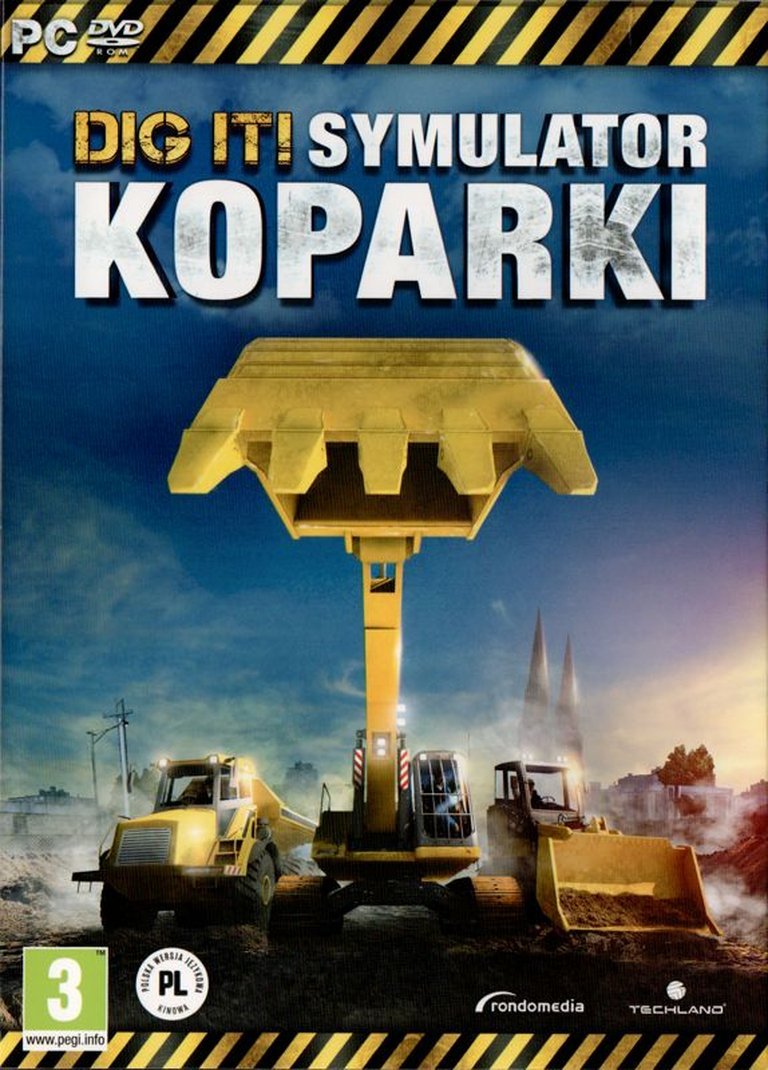
Dig It! A Digger Simulator is a realistic construction simulation game where players take on the role of an excavator operator, completing various digging and earth-moving tasks in a detailed, open-world environment. Developed by Cape Copenhagen and published by rondomedia, the game offers a hands-on experience with authentic controls, challenging missions, and a focus on precision and efficiency in operating heavy machinery.
Gameplay Videos
Where to Buy Dig It! A Digger Simulator
PC
Dig It! A Digger Simulator Cracks & Fixes
Dig It! A Digger Simulator Patches & Updates
Dig It! A Digger Simulator Mods
Dig It! A Digger Simulator Guides & Walkthroughs
Dig It! A Digger Simulator Reviews & Reception
gamepressure.com (61/100): A simulation game enriched with an economic theme, in which we set up our own construction company and deal with the implementation of further orders in different parts of the city.
steambase.io (61/100): DIG IT! – A Digger Simulator has earned a Player Score of 61 / 100.
niklasnotes.com (61/100): The reviews for ‘DIG IT! – A Digger Simulator’ reveal a polarized sentiment among players.
raijin.gg (61/100): DIG IT! – A Digger Simulator holds a 61.32% positive rating on Steam, based on 212 player reviews.
Dig It! A Digger Simulator: A Deep Dive into the Niche World of Excavation Simulation
Introduction: The Allure of the Digger’s Seat
In the vast landscape of simulation games, where players can pilot airliners, command warships, or manage entire cities, Dig It! A Digger Simulator (2014) carves out a uniquely granular niche. Developed by Cape Copenhagen and published by rondomedia, this title invites players to step into the cab of heavy excavation machinery, offering a meticulously crafted experience centered on the often-overlooked art of earth-moving. Far from the high-octane thrills of racing simulators or the strategic depth of city builders, Dig It! embraces the methodical, almost meditative rhythm of construction work, challenging players to master the nuances of hydraulic controls, terrain manipulation, and business management.
At its core, Dig It! is a celebration of precision—a game where the satisfaction comes not from speed or spectacle, but from the careful alignment of a bucket with a trench, the efficient transport of soil, and the gradual expansion of a fledgling construction company. It’s a game that asks: Can the act of digging a hole be as engaging as building a skyscraper? For a dedicated audience, the answer is a resounding yes. This review explores how Dig It! achieves its ambitious goal, where it stumbles, and why it remains a fascinating artifact in the simulation genre.
Development History & Context: The Rise of the Niche Simulator
The Studio Behind the Shovel: Cape Copenhagen
Cape Copenhagen, the Danish studio behind Dig It!, is no stranger to the world of simulation games. Founded in 2008, the studio has built a reputation for creating focused, often unconventional simulators, from Fireworks Simulator to Roadside Assistance Simulator. Their portfolio reflects a philosophy of embracing niche markets, catering to players who seek hyper-specific experiences rather than broad appeal. Dig It! is a prime example of this approach, targeting an audience that might include construction enthusiasts, machinery aficionados, or simply those curious about the intricacies of excavation work.
The development team, led by game designers Sebastian Trelles, Thomas Løfgren, and Peter Holm, brought a mix of technical expertise and creative vision to the project. With a team of 53 contributors—including 3D artists, programmers, and sound designers—Dig It! was built using the Unity engine, a choice that allowed for cross-platform compatibility (Windows and macOS) while maintaining the flexibility needed for realistic vehicle physics and environmental interactions.
The Gaming Landscape in 2014: A Golden Age for Simulators
Dig It! arrived during a renaissance for simulation games. The mid-2010s saw a surge in titles that catered to highly specific interests, from farming (Farming Simulator) to trucking (Euro Truck Simulator 2) to even more obscure professions like logging (Woodcutter Simulator). This trend was driven in part by the rise of digital distribution platforms like Steam, which made it viable for smaller studios to target niche audiences without the need for massive marketing budgets.
The success of games like Euro Truck Simulator 2 (2012) and Farming Simulator 15 (2014) demonstrated that there was a hungry market for simulators that prioritized realism and depth over flashy action. Dig It! positioned itself within this ecosystem, offering a counterpart to the vehicle-focused Construction Simulator series by zeroing in on the excavation process itself. While Construction Simulator allowed players to build structures, Dig It! was more concerned with the foundational work—the literal digging of trenches, the leveling of terrain, and the logistics of moving earth from one place to another.
Technological Constraints and Design Choices
Developing a realistic excavation simulator presented unique challenges. Unlike driving or flying simulators, where the primary interaction is with a vehicle’s movement, Dig It! required a deep simulation of physics, particularly the behavior of soil, the weight of machinery, and the precision of hydraulic controls. The Unity engine, while versatile, required custom solutions to handle the intricate interactions between the excavator’s bucket and the terrain.
One of the most significant design choices was the decision to focus on a career mode rather than pure sandbox play. This structure allowed the game to introduce players gradually to the complexities of excavation, starting with small, manageable tasks before progressing to large-scale industrial projects. The inclusion of a sandbox mode provided a counterbalance, giving players the freedom to experiment with different vehicles and techniques without the pressure of mission objectives.
Narrative & Thematic Deep Dive: The Story of Steel and Soil
The Plot: From Humble Beginnings to Industrial Might
Dig It! is not a game driven by a traditional narrative. There are no dramatic plot twists, no villainous rivals, and no overarching story to uncover. Instead, the game’s “narrative” is one of progression and mastery, a quiet tale of entrepreneurial growth told through the lens of construction contracts.
Players begin as the owner of a small, struggling excavation company, equipped with little more than a basic excavator and a handful of modest contracts. The early missions are straightforward: dig a trench here, level a patch of ground there, transport some soil to a dump site. As the company grows, so too do the challenges. Players soon find themselves tackling industrial-scale projects, managing fleets of heavy machinery, and navigating the complexities of client expectations.
The game’s structure is reminiscent of classic business simulators like RollerCoaster Tycoon, where the satisfaction comes from incremental growth and the tangible results of one’s labor. There’s a palpable sense of accomplishment in upgrading from a small excavator to a massive mining rig, or in expanding your company’s headquarters from a humble trailer to a sprawling industrial complex.
Characters and Dialogue: The Silent Partners of Construction
Dig It! is a game of machines, not people. There are no named characters, no dialogue trees, and no interpersonal drama. The closest thing to “characters” are the faceless clients who issue contracts, their satisfaction (or dissatisfaction) communicated through star ratings and brief mission debriefs.
This lack of human interaction is both a strength and a weakness. On one hand, it keeps the focus squarely on the machinery and the work itself, reinforcing the game’s core theme of precision and craftsmanship. On the other hand, it can make the world feel sterile and impersonal. There’s no banter between workers, no chatter over the radio, and no sense of camaraderie—just the hum of engines and the clank of metal.
Themes: The Beauty of the Mundane
At its heart, Dig It! is a meditation on the beauty of mundane labor. It’s a game that asks players to find joy in the repetitive, the methodical, and the often-overlooked aspects of construction work. The themes it explores are subtle but profound:
-
Mastery Through Repetition: The game’s progression system is built around the idea that skill comes through practice. Early missions are simple, almost trivial, but as players take on more complex tasks, they begin to appreciate the nuances of excavation—the angle of the bucket, the speed of the swing, the precision of the dump. There’s a Zen-like quality to the gameplay, where the act of digging becomes a form of meditation.
-
The Illusion of Control: One of the game’s most interesting themes is the tension between the player’s desire for control and the inherent unpredictability of excavation work. Soil doesn’t always behave as expected; a misjudged bucket placement can send dirt flying in unintended directions; and the weight of the machinery can cause unexpected shifts in the terrain. Dig It! captures the reality that even the most skilled operators must adapt to the unpredictable nature of their work.
-
The Business of Dirt: Beneath the surface-level gameplay lies a subtle commentary on the economics of construction. Players must balance the cost of new equipment against the potential profits of larger contracts, decide whether to invest in specialized attachments or stick with versatile tools, and manage their company’s reputation through careful attention to client satisfaction. It’s a microcosm of real-world business management, where every decision has tangible consequences.
Gameplay Mechanics & Systems: The Art and Science of Digging
Core Gameplay Loop: From Contract to Completion
Dig It! is structured around a straightforward but engaging core loop:
-
Accept a Contract: Players choose from a list of available missions, each with its own objectives, time limits, and financial rewards. Early contracts are simple—dig a trench, level a patch of ground—but later missions introduce complexities like multi-stage projects, precise grading requirements, and the need to coordinate multiple vehicles.
-
Prepare the Equipment: Before beginning a mission, players must ensure they have the right machinery and attachments. A small excavator might suffice for a residential job, but industrial projects require heavy-duty equipment like mining excavators and articulated dump trucks. The game’s garage serves as a hub for managing and upgrading your fleet.
-
Execute the Work: This is where the game’s depth shines. Players take direct control of their machinery, using a combination of keyboard, mouse, or controller inputs to manipulate the excavator’s arm, bucket, and tracks. The physics engine simulates the weight and momentum of the machinery, requiring players to account for factors like inertia, terrain resistance, and the distribution of soil.
-
Evaluate Performance: Upon completing a mission, players receive a detailed breakdown of their performance, including metrics like precision, speed, and cleanliness. These factors determine the star rating (1-3 stars) and the financial bonus awarded. Higher ratings unlock more lucrative contracts, creating a feedback loop that encourages mastery.
Vehicle Variety: A Fleet of Steel Giants
Dig It! features an impressive array of excavation machinery, each with its own handling characteristics, strengths, and weaknesses. The vehicles are divided into several categories:
-
Excavators: The bread and butter of the game, ranging from the nimble Excavator XS (985 kg, 14 hp) to the monstrous Mining Excavator XL (810,000 kg, 2,982 hp). Each excavator has unique attributes, such as reach, digging force, and maneuverability, making them suited to different tasks.
-
Dump Trucks: Essential for transporting soil and debris, these vehicles come in sizes from the compact Dump Truck M (7,500 kg) to the behemoth Dump Truck XL (235,000 kg). Their primary role is logistics, but their handling—particularly on uneven terrain—adds an extra layer of challenge.
-
Bulldozers and Wheel Loaders: These vehicles are used for pushing soil, leveling terrain, and loading dump trucks. The Bulldozer M and Wheel Loader L are particularly versatile, offering a mix of power and precision.
The variety of machinery ensures that no two missions play the same way. A residential job might require the finesse of a small excavator, while an industrial project demands the brute force of a mining rig. The game’s progression system cleverly gates access to larger vehicles behind financial and reputation milestones, ensuring that players gradually build their skills before tackling the most challenging equipment.
Mission Design: The Devil in the Details
Dig It!’s mission design is where the game’s attention to detail truly shines. Each contract is more than just a set of objectives; it’s a puzzle that requires careful planning and execution. Some notable mission types include:
-
Trench Digging: Players must excavate a trench of precise dimensions, ensuring that the walls are straight and the depth is consistent. The challenge lies in managing the soil displacement—too much in one area can cause the trench to collapse or require time-consuming corrections.
-
Grading and Leveling: These missions task players with creating a flat, even surface, often for road construction or building foundations. The game’s physics engine simulates the behavior of loose soil, requiring players to use a combination of excavators and bulldozers to achieve the desired result.
-
Material Transport: Some contracts require players to move large quantities of soil or debris from one location to another. This introduces logistical challenges, such as optimizing the route between the dig site and the dump site, or coordinating multiple vehicles to maximize efficiency.
-
Multi-Stage Projects: Later missions combine several of these elements, requiring players to dig trenches, level terrain, and transport materials within a single contract. These projects test the player’s ability to manage time, resources, and precision under pressure.
Control Schemes: The Make-or-Break Factor
One of the most polarizing aspects of Dig It! is its control system. The game offers three primary control schemes:
-
Keyboard (Simple): A streamlined setup that maps basic functions (e.g., arm movement, bucket control) to easily accessible keys. This scheme is ideal for beginners but lacks the precision needed for advanced maneuvers.
-
Keyboard (Mixed): A hybrid approach that combines keyboard inputs with mouse control for finer adjustments. This scheme offers more flexibility but can feel cumbersome during complex tasks.
-
Controller (Xbox 360): Fully supports gamepad input, with analog sticks controlling the excavator’s arm and bucket. This scheme is often preferred by players who want a more tactile, immersive experience.
The control system is where Dig It! receives the most criticism. Many players find the default keybindings unintuitive, and the lack of customization options exacerbates the issue. The game’s physics engine, while impressive in its simulation of machinery, can feel unforgiving when combined with imprecise controls. A misplaced button press can send a bucket crashing into the ground, undoing minutes of careful work.
Progression and Economy: The Business of Dirt
Beyond the immediate gameplay, Dig It! features a robust progression system that ties into its economic themes. Players earn money and stars (a measure of reputation) by completing contracts, which can then be reinvested into the company. Key elements of this system include:
-
Vehicle Purchases: New machinery is expensive, requiring players to carefully balance their budget. A larger excavator might allow for more efficient work, but it also comes with higher maintenance costs and fuel expenses.
-
Attachments and Upgrades: Players can customize their vehicles with different bucket attachments, each suited to specific soil types or tasks. A wide bucket is ideal for moving large quantities of loose soil, while a narrow bucket offers precision for trench digging.
-
Company Growth: As players complete more contracts, their company headquarters expand, unlocking new features like additional garage space and more advanced mission types. This visual progression serves as a tangible reward for the player’s efforts.
The economic system is simple but effective, reinforcing the game’s themes of careful resource management and long-term planning. However, it’s not without its flaws. Some players have criticized the game’s pacing, noting that the early missions can feel grind-y, with slow financial progression making it difficult to afford new equipment.
World-Building, Art & Sound: Crafting the Construction Site
Setting and Atmosphere: The Urban and Industrial Playground
Dig It! takes place across a variety of construction sites, each with its own distinct character and challenges. The game’s environments are divided into several key areas:
-
Residential Zones: These missions typically involve smaller-scale projects, such as digging trenches for utilities or leveling ground for home foundations. The environments are relatively open, with few obstacles, making them ideal for beginners.
-
Industrial Areas: Larger and more complex, these sites feature uneven terrain, tight spaces, and multiple objectives. Players might be tasked with excavating a foundation for a factory or clearing debris from a construction site.
-
Road Construction Sites: These missions focus on grading and leveling, requiring players to create smooth, even surfaces for asphalt laying. The terrain is often challenging, with slopes and uneven ground adding to the difficulty.
-
Gravel Pits and Mining Sites: The most demanding environments, these areas feature loose, unstable soil and require the use of heavy machinery like mining excavators and large dump trucks.
The game’s environments are functional rather than flashy. There’s a deliberate focus on realism, with textures and lighting designed to mimic the look and feel of a real construction site. The result is a world that feels authentic, if not particularly visually stunning.
Visual Design: The Aesthetics of Heavy Machinery
Dig It!’s art direction is understated but effective. The game’s visuals prioritize clarity and functionality, ensuring that players can easily distinguish between different soil types, machinery, and environmental hazards. Key visual elements include:
-
Vehicle Models: The excavators, dump trucks, and bulldozers are meticulously detailed, with accurate representations of their real-world counterparts. The animations—particularly the hydraulic movements of the excavator arms—are smooth and realistic.
-
Terrain and Soil: The game features multiple soil types, each with its own visual and physical properties. Loose gravel behaves differently from compacted dirt, and the game’s physics engine reflects these differences in how the soil reacts to the machinery.
-
Lighting and Weather: While not a major focus, the game includes dynamic lighting and basic weather effects (e.g., overcast skies, light rain). These elements add a touch of realism but don’t significantly impact gameplay.
The visual design is complemented by a clean, functional UI. The heads-up display (HUD) provides essential information—such as mission objectives, vehicle status, and control prompts—without overwhelming the player. The menu system is intuitive, with clear icons and straightforward navigation.
Sound Design: The Symphony of the Construction Site
Where Dig It! truly excels is in its sound design. The game’s audio is a masterclass in immersion, capturing the distinct sounds of a construction site with remarkable fidelity. Key audio elements include:
-
Engine and Hydraulic Sounds: The roar of a diesel engine, the hiss of hydraulic pistons, and the clank of metal-on-metal are all rendered with impressive detail. Each vehicle has its own unique audio profile, reinforcing the sense of operating real machinery.
-
Terrain Interaction: The sound of the bucket digging into soil changes depending on the terrain type. Loose gravel produces a crunching sound, while compacted dirt yields a deeper, more resonant thud. These subtle cues help players gauge the density of the soil they’re working with.
-
Ambient Noise: The construction site is alive with background sounds—distant machinery, the hum of generators, and the occasional shout of a worker. These elements create a sense of a living, breathing environment, even if the workers themselves are never seen.
The sound design is one of Dig It!’s strongest features, elevating the gameplay from a simple simulation to a genuinely immersive experience. The audio feedback is so precise that experienced players can often “feel” their way through a mission, using sound cues to guide their actions.
Reception & Legacy: The Mixed Fortunes of a Niche Title
Critical and Commercial Reception: A Polarizing Debut
Dig It! A Digger Simulator was released to a mixed reception upon its launch in October 2014. The game’s Steam page currently holds a “Mixed” rating, with a Steambase Player Score of 61/100 based on 212 reviews. This polarized response reflects the game’s niche appeal—while it resonated deeply with a subset of players, it left others cold.
Positive Reception:
– Realism and Immersion: Many players praised the game’s attention to detail, particularly its physics engine and sound design. The sense of operating real machinery was a highlight for fans of the genre.
– Variety of Machinery: The diverse fleet of vehicles and attachments was widely appreciated, offering plenty of replay value for those who enjoyed mastering different types of equipment.
– Satisfying Progression: The career mode’s structure, with its gradual unlocking of new contracts and machinery, was seen as a strength, providing a clear sense of advancement.
Negative Reception:
– Control Issues: The most common criticism centered on the game’s control scheme, which many players found clunky and unintuitive. The lack of customization options exacerbated this issue, making it difficult for some to enjoy the gameplay.
– Repetitive Gameplay: Some players felt that the mission structure became repetitive over time, with little variation in objectives or environments. The absence of a sandbox mode at launch (it was added later) was also noted as a missed opportunity.
– Technical Problems: A subset of reviews mentioned bugs and performance issues, particularly related to the physics engine and vehicle handling. These problems detracted from the overall experience for some players.
Commercially, Dig It! performed modestly, selling approximately 16,780 units according to data from Raijin.gg. While not a blockbuster, the game found a dedicated audience within the simulation community, particularly among players who appreciated its focus on excavation mechanics.
Evolution of Reputation: From Mixed to Cult Classic?
In the years since its release, Dig It! has developed something of a cult following. While it never achieved the mainstream success of titles like Euro Truck Simulator 2 or Farming Simulator, it has carved out a niche as a uniquely detailed excavation simulator. Its reputation has been bolstered by several factors:
-
The Rise of Niche Simulators: The success of games like SnowRunner and Construction Simulator has validated the market for hyper-specific simulation experiences. Dig It! is often cited as a precursor to this trend, particularly for its focus on the often-overlooked aspects of construction work.
-
Modding and Community Support: While Dig It! lacks official mod support, the game’s community has created guides, tutorials, and even custom control schemes to improve the gameplay experience. These efforts have helped mitigate some of the game’s initial shortcomings.
-
Retrospective Appreciation: As the simulation genre has evolved, Dig It! has been reevaluated by critics and players alike. Its emphasis on precision and realism, once seen as overly niche, is now recognized as a strength in an era where many simulators prioritize accessibility over depth.
Influence on Subsequent Games
Dig It!’s influence can be seen in several later titles, particularly within the construction and excavation subgenre:
-
Construction Simulator Series: Later entries in the Construction Simulator franchise, such as Construction Simulator 2 and Construction Simulator 3, incorporated more detailed excavation mechanics, likely inspired by Dig It!’s focus on earth-moving.
-
SnowRunner and MudRunner: While primarily focused on off-road driving, these games share Dig It!’s emphasis on terrain interaction and vehicle physics. The way soil and mud behave in these titles owes a debt to the excavation mechanics pioneered by Dig It!.
-
Industrial and Mining Simulators: Games like Mining Simulator and Industrial Empire have drawn on Dig It!’s approach to machinery simulation, particularly in their handling of heavy equipment and resource extraction.
Conclusion: A Flawed but Fascinating Excavation
Dig It! A Digger Simulator is a game of contradictions. It is both deeply immersive and frustratingly clunky, a testament to the beauty of mundane labor and a victim of its own niche appeal. For players who embrace its rhythms, it offers a uniquely satisfying experience—a chance to master the art of excavation, to feel the weight of steel in their hands, and to build a business from the ground up. For others, its repetitive missions and finicky controls make it a chore rather than a joy.
Yet, despite its flaws, Dig It! stands as a remarkable achievement in the simulation genre. It is a game that dares to ask players to find meaning in the methodical, to take pride in the precise, and to celebrate the often-overlooked work that forms the foundation of modern infrastructure. In an era where many games prioritize spectacle over substance, Dig It! is a quiet rebellion—a reminder that sometimes, the most rewarding experiences come from digging deep.
Final Verdict: 7/10 – A Niche Masterpiece with Rough Edges
Dig It! A Digger Simulator is not for everyone, but for those who appreciate its unique blend of realism and repetition, it is a hidden gem. Its detailed machinery, immersive sound design, and satisfying progression system make it a standout in the simulation genre, even if its controls and mission variety leave something to be desired. If you’ve ever wondered what it’s like to operate a massive excavator, Dig It! offers a compelling—if occasionally frustrating—answer. Just be prepared to dig in for the long haul.