
- Release Year: 2024
- Platforms: Nintendo Switch, PlayStation 4, PlayStation 5, Windows Apps, Windows, Xbox One, Xbox Series
- Publisher: Outright Games Ltd.
- Developer: Casual Brothers Ltd., Petoons Studio SL
- Genre: Action
- Perspective: Behind view
- Game Mode: Single-player
- Gameplay: Platform, Puzzle elements
- Average Score: 71/100
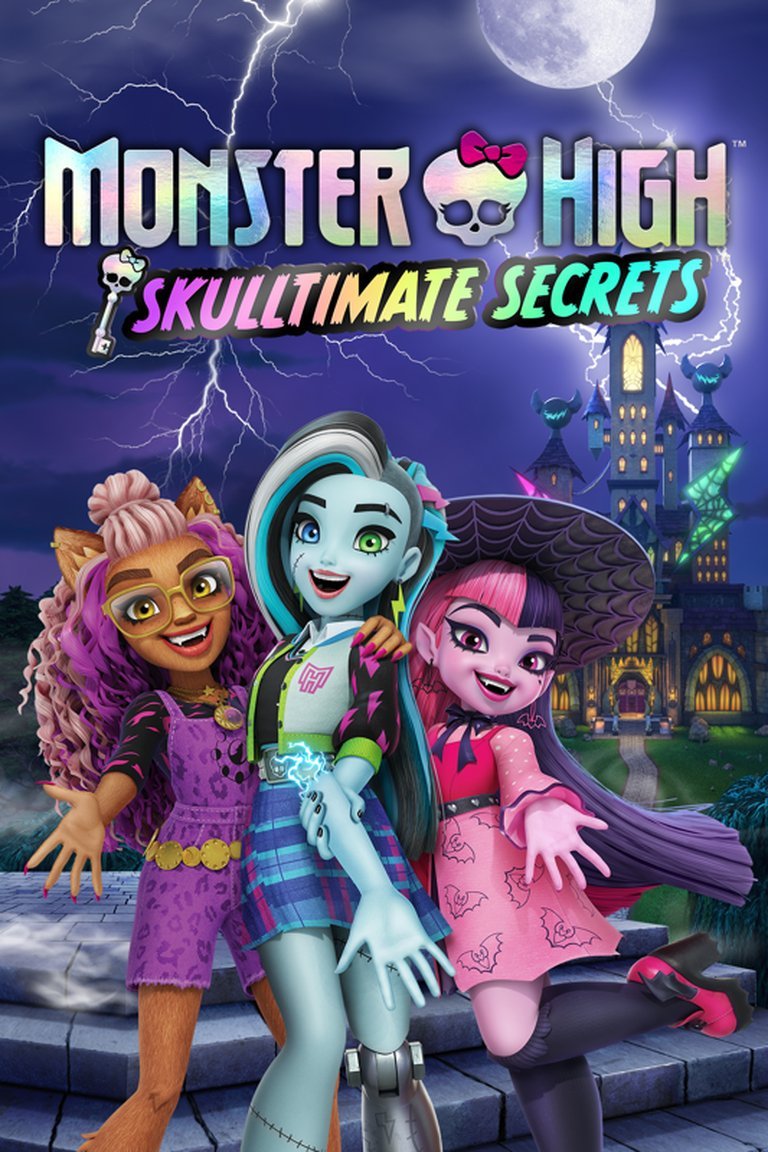
Description
Monster High: Skulltimate Secrets is an action-platformer game designed for younger audiences, set in the vibrant and spooky world of Monster High. Players take on the role of iconic monster characters as they navigate through colorful, monster-filled environments, solving puzzles and collecting items. The game features straightforward platforming mechanics, cinematic storytelling, and a lighthearted adventure that appeals to fans of the Monster High franchise.
Gameplay Videos
Where to Buy Monster High: Skulltimate Secrets
PC
Monster High: Skulltimate Secrets Free Download
Monster High: Skulltimate Secrets Cracks & Fixes
Monster High: Skulltimate Secrets Patches & Updates
Monster High: Skulltimate Secrets Guides & Walkthroughs
Monster High: Skulltimate Secrets Reviews & Reception
moviesgamesandtech.com : Monster High Skulltimate Secrets is the ideal game for your youngsters this Halloween.
metacritic.com (75/100): Monster High Skulltimate Secrets is an adventure platforming title for kids aged 7+.
familyfriendlygaming.com (68/100): One of the issues Family Friendly Gaming has exposed for years is the really short games that Outright Games publishes.
Monster High: Skulltimate Secrets – A Ghoulishly Charming but Flawed Return to the Boo Crew
Introduction: A Spooky Revival for a New Generation
Monster High: Skulltimate Secrets (2024) marks the long-awaited return of Mattel’s iconic Monster High franchise to the gaming world after a nine-year hiatus. Developed by Petoons Studio and Casual Brothers Ltd. and published by Outright Games, this 3D platformer aims to reintroduce the beloved Boo Crew—Clawdeen Wolf, Draculaura, Frankie Stein, and more—to a new generation of young gamers while appealing to nostalgic adult collectors. But does it succeed in capturing the spirit of Monster High, or does it fall prey to the pitfalls of licensed children’s games?
This review will dissect Skulltimate Secrets across its development history, narrative depth, gameplay mechanics, artistic direction, and cultural impact. We’ll explore whether it stands as a worthy successor to past Monster High games or if it’s merely a shallow cash-in on a beloved IP.
Development History & Context: A Franchise Reborn
The Monster High Legacy in Gaming
Monster High’s gaming history is a mixed bag. The franchise debuted in 2010 with a line of fashion dolls, quickly expanding into animated series, films, and video games. Early titles like Monster High: Ghoul Spirit (2011) and Monster High: Skultimate Roller Maze (2012) were modest platformers and racing games tailored for the Nintendo DS and Wii. The last major console release, Monster High: New Ghoul in School (2015), was a 3D adventure that, while flawed, at least attempted to expand the lore.
After nearly a decade of silence, Skulltimate Secrets emerges in a vastly different gaming landscape. The rise of indie platformers, the dominance of open-world collectathons like Super Mario Odyssey, and the increasing demand for representation in children’s media all influence how this game is perceived.
The Creators’ Vision: Empowerment Through Monsters
In an interview with Pocket Tactics, narrative designer Destinee Cleveland emphasized the game’s focus on inclusivity and self-expression. Unlike past Monster High games, which often followed pre-established characters, Skulltimate Secrets allows players to create their own monster avatar, choosing from various species (vampires, werewolves, gorgons, etc.) and customizing their appearance.
Cleveland stated:
“Representation is very important, especially in today’s world. Showcasing a wide array of characters allows young children to connect in ways that help them feel seen.”
This philosophy aligns with Monster High’s modern reboot (Generation 3), which has introduced non-binary characters (Frankie Stein), diverse body types, and more inclusive storytelling. The game’s narrative and character design reflect this evolution, making it more than just a simple platformer—it’s a statement on identity.
Technological Constraints & Engine Choice
Built in Unity, Skulltimate Secrets is a technically modest game, which is both a strength and a weakness. The engine’s accessibility allowed the developers to focus on character customization and environmental interaction, but it also led to performance issues, particularly with the camera and frame rate stability (as noted in Movies Games and Tech’s review).
Given the game’s multi-platform release (PS4/PS5, Xbox One/Series, Switch, and PC), the developers had to ensure it ran smoothly on lower-end hardware like the Nintendo Switch. This likely contributed to the simplified level design and repetitive environments, which we’ll explore later.
Narrative & Thematic Deep Dive: A Mystery with Heart (But Little Depth)
Plot Summary: A First Day to Remember
The game begins with the player’s custom monster character arriving at Monster High for their first day. Almost immediately, strange occurrences disrupt the school—mysterious doors appear, energy orbs vanish, and the Boo Crew (Clawdeen, Draculaura, and Frankie) suspect foul play. The headmistress tasks the player with uncovering the “Skulltimate Secrets” by finding hidden keys, solving puzzles, and restoring the school’s “spooky balance.”
The story is lighthearted, episodic, and heavily dialogue-driven, with the Boo Crew serving as guides. While the overarching mystery is thin, the character interactions carry the narrative. Each member of the Boo Crew has distinct personalities:
– Clawdeen Wolf – The confident, fashion-forward werewolf.
– Draculaura – The sweet but occasionally ditzy vampire.
– Frankie Stein – The non-binary, science-loving reanimated teen.
Themes: Self-Discovery, Acceptance, and Monster Pride
The game’s themes revolve around:
1. Embracing Individuality – The customization system reinforces the idea that players can be “any kind of monster.”
2. Friendship & Teamwork – The Boo Crew’s dynamic emphasizes collaboration.
3. Overcoming Fear of the Unknown – The hidden rooms and secrets metaphorically represent facing one’s insecurities.
However, the writing is simplistic, catering to its 7+ target audience. While this is expected, the lack of meaningful choices or branching paths makes the narrative feel linear and predictable. The game could have benefited from more player agency—perhaps allowing choices that affect which Boo Crew member assists you in certain missions.
Dialogue & Voice Acting: Charming but Repetitive
The voice acting is energetic and fitting, with each character delivering lines that match their personalities. However, repetitive dialogue (e.g., constant reminders to “find the orbs!”) becomes grating over time. The iCoffin (a parody of a smartphone) serves as the game’s quest log, but its limited functionality makes tracking objectives tedious.
Gameplay Mechanics & Systems: A Collectathon with Training Wheels
Core Gameplay Loop: Platforming Lite
Skulltimate Secrets is, at its heart, a collectathon platformer in the vein of Banjo-Kazooie or Ratchet & Clank—but dumbed down for younger players. The structure is as follows:
1. Explore Monster High’s campus (hub world).
2. Find hidden doors (marked by glowing runes).
3. Enter a challenge room (platforming, puzzle, or combat).
4. Collect skull coins, emblems, and energy orbs.
5. Unlock new abilities (e.g., Vampire Jump, Gorgon Dash).
6. Repeat until all keys are found.
Platforming & Movement: Safe but Uninspired
- Basic Controls: Running, jumping, and a dash mechanic are the core movements.
- Ability-Gated Progression: New skills (like double jumps or wall-climbing) are unlocked via keys, encouraging backtracking.
- Puzzle Elements: Simple switch-flipping and object-moving puzzles break up the platforming.
The Good:
✅ Accessible for kids – The difficulty is forgiving, with checkpoints after every major challenge.
✅ Variety in abilities – Each monster type has unique traversal options, adding slight replayability.
The Bad:
❌ Repetitive level design – Most challenge rooms follow the same structure: “collect X coins, open Y chests, grab the orb.”
❌ Camera issues – The fixed behind-the-shoulder perspective often obscures jumps, leading to cheap falls.
❌ Lack of enemy variety – The only foes are Garbage Goblins, which are more annoying than challenging.
Character Progression: Fashion Over Function
- Customization: Players can swap outfits and accessories using Monster Points (earned by collecting items).
- No Stats or RPG Elements: Unlike games like Spyro, there’s no skill tree or upgrades—just cosmetic changes.
This is a missed opportunity. Even a simple upgrade system (e.g., faster dashes, higher jumps) could have added depth.
UI & Navigation: Clunky but Functional
- The iCoffin menu is slow to navigate, especially for younger players.
- No in-game map – Players must memorize locations, leading to frustrating backtracking.
- Quest tracking is minimal – The game doesn’t highlight missing collectibles, making 100% completion a chore.
World-Building, Art & Sound: A Spooky Aesthetic with Technical Flaws
Setting & Atmosphere: Monster High Comes to Life
The game’s visual identity is its strongest asset. Monster High’s gothic-meets-pop-punk aesthetic translates well into 3D:
– The school is a vibrant, cartoonish maze of lockers, creepy classrooms, and secret passages.
– Character designs stay true to the Gen 3 dolls, with exaggerated proportions and bold colors.
– Hidden rooms have unique themes (e.g., a haunted library, a mad scientist’s lab).
However, textures are low-resolution, and environments lack detail—likely due to performance constraints.
Sound Design & Music: A Ghoulishly Good Soundtrack
- Voice Acting: As mentioned, the Boo Crew’s performances are lively, though some lines repeat ad nauseam.
- Music: The upbeat, synth-heavy tracks fit the spooky-but-fun tone. However, loops are short, leading to auditory fatigue.
- Sound Effects: Collectible jingles and monster noises are satisfying, but footsteps and environmental sounds feel hollow.
Reception & Legacy: A Niche Hit with Room for Improvement
Critical Reception: “Fun for Kids, Frustrating for Parents”
The only major review (from Movies Games and Tech) gave it a 7.5/10, praising its:
✔ Kid-friendly design
✔ Charming visuals and voice acting
✔ Easy controls
But criticized:
❌ Repetitive gameplay
❌ Awful camera
❌ Limited replay value
Family Friendly Gaming scored it 68/100, noting:
“Monster High Skulltimate Secrets can be beaten in around three hours… There was a clever little wrinkle put in to add game play time [hunting for keys], but it’s still too short.”
Commercial Performance & Audience
Given its multi-platform release and Monster High’s enduring popularity, the game likely sold modestly well, especially around Halloween. However, no sales figures have been disclosed.
The target audience (7-12-year-olds) seems to enjoy it, but older fans and parents find it too simplistic.
Influence & Future of Monster High Games
Skulltimate Secrets is a step in the right direction for Monster High gaming, but it doesn’t innovate enough to stand out in a crowded market. Future entries should:
✅ Expand the world (open-world Monster High?).
✅ Add deeper RPG mechanics (character stats, dialogue choices).
✅ Improve technical performance (better camera, smoother framerate).
Conclusion: A Flawed but Fun Return to Monster High
Final Verdict: 6.5/10 – “A Ghoulishly Good Time for Kids, But Lacks Depth”
Monster High: Skulltimate Secrets is a charming, visually appealing, and accessible platformer that successfully captures the spirit of Monster High’s Gen 3 reboot. Its focus on inclusivity, self-expression, and lighthearted spookiness makes it a great introduction for young gamers.
However, repetitive gameplay, technical flaws, and a lack of depth prevent it from being a must-play for anyone outside its target demographic. Parents will likely grow frustrated with the camera and backtracking, while older fans may find it too simplistic.
Who Should Play It?
✔ Young Monster High fans (ages 7-12)
✔ Parents looking for a safe, spooky-themed game
✔ Collectors of Monster High memorabilia
Who Should Skip It?
❌ Players seeking a challenging platformer
❌ Those who dislike repetitive collectathons
❌ Anyone expecting deep storytelling
Final Thought:
Skulltimate Secrets is not a bad game—it’s just not ambitious enough. With more polish, better level design, and deeper mechanics, a sequel could truly revitalize Monster High in gaming. For now, it remains a fun but forgettable entry in the franchise.
Score Breakdown:
– Graphics & Art Direction: 7/10 (Vibrant but technically limited)
– Sound & Music: 7/10 (Catchy but repetitive)
– Gameplay: 6/10 (Accessible but shallow)
– Story & Characters: 6/10 (Charming but simplistic)
– Replayability: 5/10 (Little incentive to revisit)
– Overall: 6.5/10 – “A Solid but Unremarkable Comeback”
Where to Buy:
– Steam | PlayStation | Xbox | Nintendo Switch
What are your thoughts on Monster High: Skulltimate Secrets? Did it live up to your expectations, or did it leave you wanting more? Share your thoughts in the comments! 👇