
- Release Year: 2022
- Platforms: Windows
- Publisher: Games Incubator sp. z o.o., PlayWay S.A.
- Developer: Games Incubator sp. z o.o., Monuments Games
- Genre: Simulation
- Perspective: 1st-person
- Game Mode: Single-player
- Gameplay: Business simulation, City building, construction simulation, Managerial
- Average Score: 78/100
Description
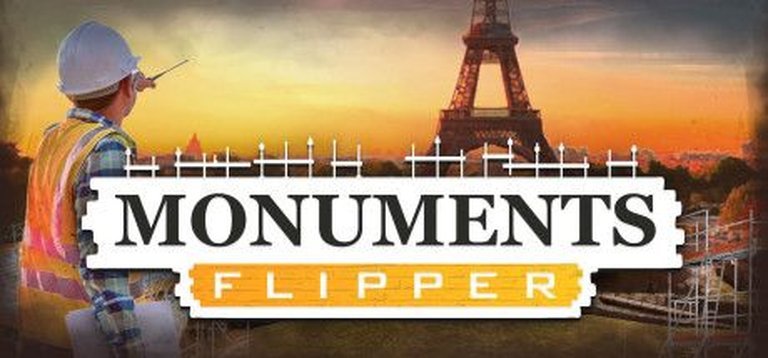
Monuments Flipper is a first-person simulation game where players take on the role of a professional monument restorer, traveling the world to revive ancient historical landmarks to their former glory. Combining elements of city-building, managerial simulation, and hands-on construction, the game challenges players to use historically accurate tools and materials to meticulously restore and refurbish monuments while learning about their rich backstories. With a relaxing, stress-free pace and a focus on detail, the game offers a unique blend of education and creativity, allowing players to explore and preserve humanity’s architectural heritage.
Gameplay Videos
Where to Buy Monuments Flipper
PC
Monuments Flipper Patches & Updates
Monuments Flipper Guides & Walkthroughs
Monuments Flipper Reviews & Reception
store.steampowered.com (78/100): Mostly Positive (78% of 305 user reviews for this game are positive).
steambase.io (78/100): Monuments Flipper: Prologue has earned a Player Score of 78 / 100.
Monuments Flipper Cheats & Codes
PC
Press F1 to enable “cheat-mode”. Then you can enter the following codes:
| Code | Effect |
|---|---|
| POKOLENO | Immortal. |
| FPSCOUNT | Enable fps counter. |
| RAMBOMOD | Enable all weapons, full ammo, full health and armor. |
| NEXTLEVL | Go to the next level. |
Monuments Flipper: A Meditative Ode to Preservation and the Art of Restoration
Introduction: The Unassuming Charm of Digital Preservation
In an era where video games often prioritize spectacle—explosive action, sprawling open worlds, or narrative grandeur—Monuments Flipper (2022) emerges as a quiet rebellion. Developed by Monuments Games and Games Incubator, and published under the PlayWay S.A. banner, this first-person simulation game eschews traditional gaming thrills in favor of something far more contemplative: the meticulous, almost therapeutic act of restoring the world’s most iconic historical monuments. It is a game that does not demand your adrenaline but instead invites your patience, your attention to detail, and—perhaps most surprisingly—your curiosity about history itself.
At its core, Monuments Flipper is a monument renovation simulator, a spiritual successor to titles like House Flipper (2018) but with a far grander scope. Where House Flipper tasks players with refurbishing suburban homes, Monuments Flipper challenges them to breathe new life into crumbling relics of human civilization—the Eiffel Tower, Notre-Dame Cathedral, the Great Wall of China, and Machu Picchu, among others. The game’s premise is deceptively simple: clean, repair, rebuild, and furnish these structures to their former glory. Yet, beneath this straightforward loop lies a surprisingly rich tapestry of educational value, relaxation mechanics, and an unspoken commentary on the importance of cultural preservation.
This review will dissect Monuments Flipper in exhaustive detail, exploring its development history, narrative and thematic depth, gameplay systems, artistic direction, reception, and legacy. By the end, we will determine whether this niche simulator is a hidden gem deserving of broader recognition or a flawed but fascinating experiment in the ever-expanding “flipper” subgenre.
Development History & Context: The Rise of the “Flipper” Phenomenon
The Studio Behind the Scaffolding
Monuments Flipper is the brainchild of Monuments Games, a relatively new studio that collaborated with Games Incubator, a developer with a growing portfolio of simulation and “job simulator” titles. Games Incubator’s previous works include Animal Shelter (2021), Car Detailing Simulator (2021), and Ship Graveyard Simulator (2022), all of which share a common DNA: hyper-focused, first-person simulations of niche professions. These games cater to a specific audience—players who derive satisfaction from methodical, repetitive tasks rather than high-stakes gameplay.
The partnership with PlayWay S.A., a Polish publisher known for its prolific output of simulation games (e.g., Farming Simulator, House Flipper, Cooking Simulator), ensured that Monuments Flipper would find its place within a burgeoning market. PlayWay’s business model revolves around identifying underserved niches and flooding them with accessible, often budget-friendly titles. Monuments Flipper fits neatly into this strategy, offering a fresh twist on the “flipper” formula by shifting from domestic spaces to historical landmarks.
The Gaming Landscape: Why 2022 Was the Perfect Time for Monument Restoration
The late 2010s and early 2020s saw a renaissance of simulation games, particularly those that emphasized relaxation, creativity, and realism. Titles like Stardew Valley (2016), Animal Crossing: New Horizons (2020), and PowerWash Simulator (2022) proved that players were hungry for low-pressure, meditative experiences—games that could be enjoyed in short bursts or long sessions without the stress of failure.
Monuments Flipper arrived in November 2022, riding this wave of cozy gaming. However, it also benefited from a cultural moment: the global fascination with historical preservation, spurred in part by real-world events like the 2019 Notre-Dame fire and the ongoing debates about cultural heritage in the face of climate change and urbanization. The game’s premise—restoring monuments to their former glory—resonated with a public increasingly aware of the fragility of history.
Technological Constraints and Design Philosophy
Built in Unity, Monuments Flipper is not a technical powerhouse. Its visuals are functional rather than breathtaking, and its animations are simplistic. However, this is not necessarily a detriment. The game’s minimalist approach aligns with its relaxation-focused design philosophy. The developers prioritized gameplay clarity and accessibility over graphical fidelity, ensuring that the game could run on mid-range PCs without alienating potential players.
One of the most interesting aspects of Monuments Flipper’s development is its Early Access journey. The game launched with a prologue version in May 2022, featuring just two locations (Aqueduct and Old Village), before expanding to a full release in November 2022 with nine monuments. This iterative development process allowed the team to gather player feedback and refine mechanics, such as tool durability, UI improvements, and the addition of a mini-museum to display restored artifacts.
The decision to rebrand the game from Monuments Flipper to Monuments Renovator in 2024 further reflects the developers’ responsiveness to community input. The name change was not merely cosmetic; it signaled a shift in identity, emphasizing restoration over commercialization—a subtle but meaningful distinction in a genre often criticized for its capitalist undertones.
Narrative & Thematic Deep Dive: More Than Just a Job Simulator
The Plot: A Silent Story of Preservation
Monuments Flipper does not have a traditional narrative in the sense of cutscenes, dialogue trees, or character arcs. Instead, its storytelling is environmental and procedural. The player assumes the role of a professional monument renovator, tasked with traveling the world to restore historically significant structures. There is no overarching villain, no urgent deadline, no dramatic twists—just the steady, rewarding progression of seeing a ruined monument transformed into a pristine landmark.
The game’s implicit narrative is one of respect for history. Each monument comes with historical context, delivered through in-game descriptions, blueprints, and occasional trivia. For example:
– Restoring the Notre-Dame Cathedral includes references to the 2019 fire, making the player’s work feel timely and meaningful.
– The Great Wall of China segment educates players on its construction techniques and strategic importance.
– Machu Picchu’s restoration ties into discussions about Inca civilization and colonialism.
This educational layer is Monuments Flipper’s most underrated strength. Unlike many simulation games that treat their subject matter as mere set dressing, this game actively encourages players to engage with history. It is, in many ways, a stealth history lesson disguised as a relaxation tool.
Themes: Time, Decay, and the Human Desire to Preserve
At its heart, Monuments Flipper is a meditation on impermanence. The monuments you restore are physical manifestations of human achievement, yet they are also vulnerable to time, neglect, and disaster. The game’s core loop—cleaning, repairing, rebuilding—is a metaphor for the human struggle against entropy.
Several key themes emerge:
1. The Fragility of History – Many of the monuments in the game have real-world counterparts that are endangered (e.g., Notre-Dame, the Great Wall). The game subtly reminds players that preservation is an ongoing battle.
2. Labor as Love – Unlike games where work is a means to an end (e.g., Euro Truck Simulator), Monuments Flipper frames labor as an act of devotion. There is no “boss” demanding results; the player’s motivation comes from personal satisfaction and historical reverence.
3. Capitalism vs. Culture – The “flipper” genre often carries capitalist connotations (buy low, sell high). Monuments Flipper subverts this by removing monetary incentives—there are no profits to maximize, no market trends to exploit. The reward is purely intrinsic, reinforcing the idea that some things are worth preserving for their own sake.
Characters and Dialogue: The Absence of Voice
One of the most striking aspects of Monuments Flipper is its lack of traditional characters. There are no NPCs to interact with, no clients to please, no rivals to outperform. The closest thing to a “character” is Alice, a virtual guide who appears in the UI to offer tips. Even she is minimalist in presentation, more of a functional assistant than a personality.
This deliberate absence of human presence serves a thematic purpose:
– It isolates the player, making the act of restoration feel personal and introspective.
– It elevates the monuments themselves as the true “characters” of the game, each with their own stories, scars, and secrets.
– It avoids the potential trivialization of historical sites by turning them into mere “content” for a game.
The dialogue, such as it is, consists of tool tips, historical notes, and progress updates. It is expository rather than emotional, but this fits the game’s documentary-like tone.
Gameplay Mechanics & Systems: The Art of Digital Restoration
Core Gameplay Loop: Clean, Repair, Rebuild, Repeat
Monuments Flipper’s gameplay can be broken down into four primary phases, each with its own tools and challenges:
-
Assessment & Cleaning
- The player begins by surveying the monument, identifying areas of decay (e.g., graffiti, mold, rust, collapsed walls).
- Tools used: Pressure washer, brushes, scrapers, chemical cleaners.
- This phase is therapeutic, with satisfying visual and auditory feedback (e.g., watching grime disappear under a pressure washer).
-
Structural Repair
- Once cleaned, the player must rebuild damaged sections (e.g., replacing wooden beams, re-mortaring bricks, reinforcing foundations).
- Tools used: Hammer, chisel, trowel, saw, nail gun.
- This phase introduces light puzzle-solving, as players must follow blueprints to ensure historical accuracy.
-
Detail Work & Aesthetic Restoration
- After structural integrity is restored, the player focuses on fine details (e.g., repainting frescoes, polishing metalwork, restoring statues).
- Tools used: Paintbrushes, sandpaper, gold leaf applicators.
- This phase is the most artistic, allowing for creative expression within historical constraints.
-
Interior Furnishing
- The final step involves furnishing the monument’s interior with period-appropriate decor (e.g., chandeliers in a cathedral, tapestries in a castle).
- Tools used: Furniture assembly tools, fabric swatches, lighting fixtures.
- This phase is the most “game-like”, as it involves inventory management and spatial planning.
Progression & Tool Mastery
Monuments Flipper employs a skill-based progression system rather than a traditional leveling mechanic. As players complete tasks, they unlock new tools and materials, which in turn allow them to tackle more complex restorations. For example:
– Early monuments (e.g., Old Village) require only basic tools (axe, broom, hammer).
– Later monuments (e.g., Notre-Dame, Machu Picchu) introduce specialized equipment (e.g., stone-carving tools, gold leaf kits).
The game also features a tool durability system, where equipment degrades with use and must be repaired via mini-games. This mechanic was controversial among players, with some arguing it added unnecessary friction, while others appreciated the realism. The developers later added an option to toggle tool deterioration, a rare example of player-driven design iteration.
UI & Quality-of-Life Features
The user interface is clean and functional, with a radial menu for tool selection and a progress tracker for each monument. However, some players criticized the lack of a “undo” feature, which can lead to frustrating mistakes (e.g., accidentally painting the wrong section).
One of the game’s most innovative systems is the blueprint mode, which allows players to overlay historical plans onto the monument, ensuring accuracy in restoration. This feature is both educational and practical, reinforcing the game’s commitment to historical authenticity.
Flaws & Missed Opportunities
While Monuments Flipper excels in relaxation and education, it is not without its gameplay shortcomings:
– Repetition – The core loop, while satisfying, can become monotonous over long play sessions.
– Lack of Challenge – There is no failure state; players can take as long as they want without penalty.
– Limited Interactivity – Some players wished for more dynamic elements, such as weather effects, NPC interactions, or time-sensitive restorations.
– Technical Issues – Early versions suffered from bugs (e.g., clipping issues, tool glitches), though many were patched post-launch.
Despite these flaws, the game’s strengths lie in its simplicity. It is not trying to be a “game” in the traditional sense but rather a digital preservation sandbox—a virtual museum where the player is both curator and artisan.
World-Building, Art & Sound: Crafting Atmosphere Through Restraint
Setting & Atmosphere: The Monuments as Characters
Monuments Flipper’s world-building is unconventional. There is no open world, no living cities, no NPCs to populate the space. Instead, the monuments themselves are the world, each serving as a self-contained diorama of history.
The game’s artistic direction prioritizes authenticity over spectacle:
– Textures are detailed but not hyper-realistic, striking a balance between readability and immersion.
– Lighting plays a crucial role, with dynamic shadows highlighting the passage of time (e.g., sunlight streaming through a newly restored stained-glass window).
– Scale is used effectively—standing atop the Eiffel Tower or gazing at the vastness of the Great Wall evokes a sense of awe.
One of the most immersive aspects is the attention to historical detail. The developers consulted architectural references to ensure that materials, colors, and structural elements were period-accurate. This commitment to realism extends to the wear and tear—each monument begins in a state of decay that reflects real-world deterioration (e.g., water damage, vandalism, structural fatigue).
Sound Design: The Symphony of Restoration
The audio design in Monuments Flipper is subtle but effective. There is no epic soundtrack, no booming voiceovers—just the ambient sounds of labor:
– The scrape of a brush against stone.
– The hiss of a pressure washer.
– The clink of a hammer on metal.
These procedural sounds are oddly soothing, reinforcing the game’s meditative qualities. The lack of music in most areas is a deliberate choice, allowing players to focus on the task at hand or supplement the experience with their own playlists (a common practice among fans of the genre).
The few musical cues that do exist are soft, ambient tracks that play during menu navigation or completion screens. They are unobtrusive, designed to enhance relaxation rather than drive emotion.
The Absence of Life: A Deliberate Design Choice
Some players criticized Monuments Flipper for feeling “too empty”, lacking the bustling energy of other simulation games. However, this emptiness is intentional:
– It isolates the player, making the act of restoration feel personal and sacred.
– It avoids trivializing history by turning monuments into tourist attractions.
– It creates a sense of solitude, reinforcing the idea that preservation is a quiet, thankless labor.
In this way, the game’s artistic minimalism serves its thematic goals.
Reception & Legacy: A Niche Gem with Room to Grow
Critical Reception: A Polarizing but Beloved Experience
Monuments Flipper received mixed but generally positive reception upon release. Critics and players alike praised its:
✅ Relaxing, stress-free gameplay.
✅ Educational value and historical accuracy.
✅ Satisfying restoration mechanics.
However, it was also criticized for:
❌ Repetitive gameplay loops.
❌ Lack of depth in progression systems.
❌ Technical issues in early versions.
Opium Pulses gave the game an unscored but favorable review, calling it a “hidden little gem” that offers a “charm” absent in more mainstream titles. The reviewer highlighted its therapeutic qualities, noting that it’s “one of those games where you can get lost in that world and bimble along at your own pace with no stress.”
On Steam, the Prologue version holds a “Mostly Positive” rating (78% positive from 305 reviews), with players praising its relaxing nature but criticizing its lack of long-term engagement.
Commercial Performance & Community Engagement
Monuments Flipper was not a blockbuster hit, but it found a dedicated niche audience. Its budget-friendly price ($14.99 at launch, often discounted to under $5) made it accessible to casual players, while its historical themes attracted history buffs and architecture enthusiasts.
The developers actively engaged with the community, using Steam forums and Discord to gather feedback. This led to several post-launch improvements, including:
– New monuments (Great Wall, Luxor, Machu Picchu).
– Tool durability toggles.
– UI overhauls.
– Bug fixes and optimizations.
The game’s nomination for the Steam Awards 2023 in the “Labor of Love” category (awarded to games that receive long-term developer support) is a testament to its dedicated fanbase and iterative development.
Influence & Legacy: Paving the Way for “Cultural Simulators”
Monuments Flipper may not have redefined the simulation genre, but it carved out a unique space within it. Its success (or lack thereof) demonstrates that there is an audience for “cultural simulators”—games that blend education, relaxation, and hands-on interaction with history.
Its influence can be seen in:
– Pixel Restorer (2024) – A game about restoring digital art, which shares Monuments Flipper’s focus on meticulous, meditative work.
– The rise of “heritage gaming” – A growing trend of games that center on historical preservation, such as Assassin’s Creed’s Discovery Tour modes or Uncharted’s virtual museum exhibits.
However, Monuments Flipper also highlights the limitations of the “flipper” formula. Without stronger narrative hooks or dynamic gameplay, even the most satisfying restoration mechanics can grow stale over time. Future games in this subgenre will need to balance realism with engagement, perhaps by introducing:
– Narrative-driven restoration projects (e.g., uncovering a monument’s hidden history).
– Multiplayer collaboration (e.g., team-based restoration challenges).
– Procedural generation (e.g., randomized decay patterns to increase replayability).
The Name Change: From “Flipper” to “Renovator”
In February 2024, the developers announced that Monuments Flipper would be rebranded as Monuments Renovator. This was not merely a marketing gimmick but a philosophical shift:
– “Flipper” implies commercialization (buy low, sell high).
– “Renovator” implies preservation (restore for the sake of history).
This change reflects the game’s true identity—it was never about profit margins but about honoring the past.
Conclusion: A Quiet Masterpiece for the Patient and the Curious
Monuments Flipper (now Monuments Renovator) is not a game for everyone. It lacks the adrenaline of action games, the narrative depth of RPGs, and the social dynamics of multiplayer experiences. What it offers instead is something rarer: a digital sanctuary where players can slow down, engage with history, and find satisfaction in the act of preservation.
Final Verdict: 7.5/10 – A Flawed but Fascinating Experiment
Pros:
✔ Deeply relaxing and meditative.
✔ Educational without being preachy.
✔ Satisfying restoration mechanics.
✔ Strong historical authenticity.
✔ Responsive developers who listen to feedback.
Cons:
✖ Repetitive gameplay can grow stale.
✖ Lack of narrative or dynamic challenges.
✖ Technical issues in early versions.
✖ Minimalist presentation may not appeal to all players.
Who Should Play It?
- Fans of simulation games looking for a fresh twist on the genre.
- History and architecture enthusiasts who want to interact with landmarks in a hands-on way.
- Players seeking relaxation—a game to unwind with after a long day.
- Educators and parents looking for a fun, informative experience for students.
Who Should Avoid It?
- Players who crave action, competition, or high-stakes gameplay.
- Those who dislike repetitive tasks (this is not a game of variety).
- Gamers who need strong narrative or character-driven experiences.
Legacy & Future Potential
Monuments Flipper may not be a landmark title in gaming history, but it is a notable footnote—a game that proves there is an audience for thoughtful, slow-paced, historically grounded experiences. Its greatest achievement is its ability to make preservation feel personal, turning the player into both a laborer and a guardian of history.
If the developers continue to expand its scope—perhaps by adding more interactive storytelling, dynamic weather effects, or even VR support—Monuments Renovator could evolve into something truly special. For now, it remains a hidden gem, waiting to be discovered by those who appreciate the beauty in restoration.
Final Thought:
In a world where so much is disposable, Monuments Flipper reminds us that some things are worth saving. And in doing so, it saves itself from obscurity.
Would I recommend it? Yes—but only to the right player.
Would I play it again? Absolutely, on a rainy Sunday with a cup of tea.
Does it deserve more recognition? Without a doubt.
Monuments Flipper is not just a game—it’s a love letter to history, wrapped in the humble guise of a simulation. And sometimes, that’s enough.