
- Release Year: 2007
- Platforms: Windows
- Publisher: SdLL, S.A.S., Teyon S.A.
- Developer: Destan Entertainment
- Genre: Board game, Strategy, Tactics
- Perspective: 1st-person
- Game Mode: Single-player
- Gameplay: Board game, Turn-based
Description
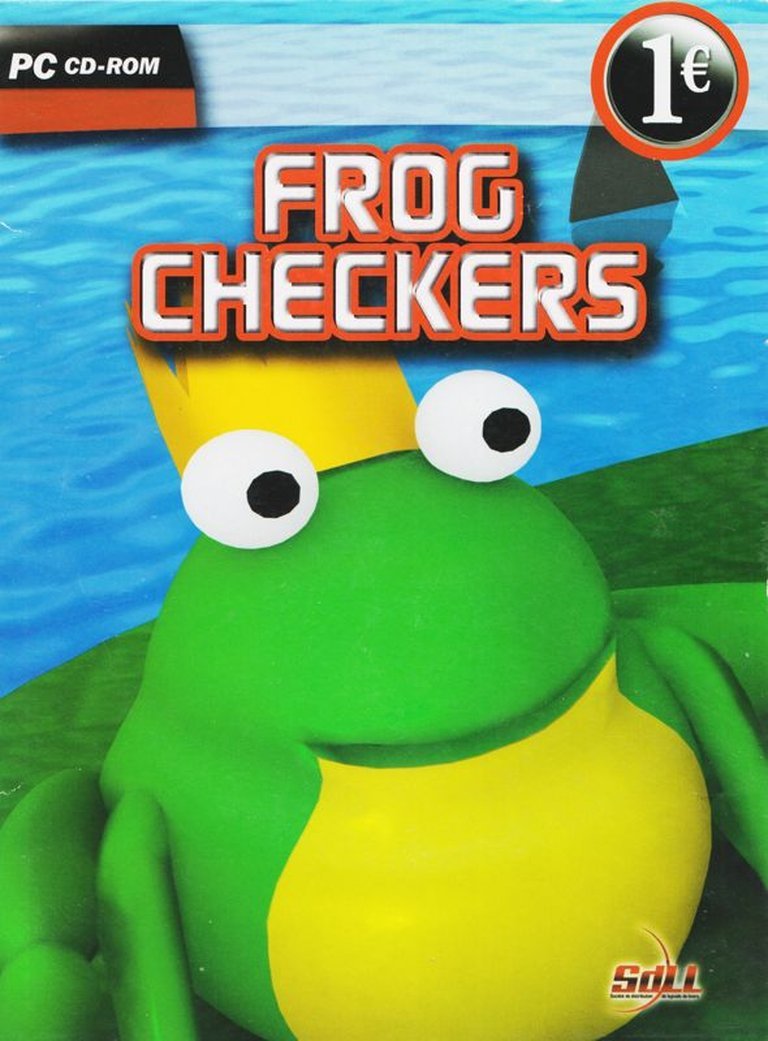
Frog Checkers is a whimsical twist on the classic board game of checkers, where players control either dark or bright frogs on themed boards like water or stony landscapes. The game offers three difficulty levels, customizable profiles, and unique audio backgrounds for each board style, blending strategy with a playful, amphibious aesthetic.
Frog Checkers: A Ribbiting Reinvention of a Classic
In the vast, often stagnant pond of digital board game adaptations, Frog Checkers (2007) emerges as a peculiar yet charming anomaly—a game that dares to ask: What if checkers, but frogs? Developed by Destan Entertainment and published by SdLL, S.A.S. and Teyon S.A., this Windows-exclusive title is a delightful oddity, a game that embraces its absurdity while offering a surprisingly polished take on the timeless strategy classic. While it may lack the depth or innovation to redefine its genre, Frog Checkers stands as a fascinating artifact of mid-2000s casual gaming, a testament to the era’s willingness to experiment with even the most mundane of concepts.
Development History & Context: The Birth of a Ribbiting Idea
The Studio Behind the Frogs: Destan Entertainment
Destan Entertainment, the Turkish studio responsible for Frog Checkers, was a relatively obscure developer with a portfolio primarily consisting of budget-friendly casual games. Founded in the early 2000s, the studio specialized in simple, accessible titles often aimed at family audiences. Their work included a mix of puzzle games, card games, and digital adaptations of classic board games—Frog Checkers being a prime example of the latter.
While Destan Entertainment never achieved the mainstream recognition of larger studios, their games were characterized by a certain earnestness, a focus on straightforward gameplay mechanics wrapped in whimsical presentations. Frog Checkers fits squarely within this philosophy: it takes a universally understood game and dresses it in an amusing, if somewhat arbitrary, thematic skin.
The Vision: Why Frogs?
The decision to theme Frog Checkers around amphibians is, on the surface, baffling. Checkers, a game with no inherent narrative or thematic ties, could have been reskinned in countless ways—why frogs? The answer likely lies in the casual gaming market of the mid-2000s, where quirky, animal-themed games were a dime a dozen. Titles like Luxor (2005) and Zuma (2004) had proven that vibrant, cartoonish aesthetics could make even the simplest games appealing to a broad audience.
Frogs, with their bright colors and playful associations, were a natural fit for a lighthearted, family-friendly game. The choice may also have been influenced by the success of other frog-centric games, such as Frogger (1981) and its various sequels, which had cemented the amphibian as a recognizable mascot in gaming. By leveraging this familiarity, Destan Entertainment could market Frog Checkers as a fun, approachable twist on a classic, even if the connection between frogs and checkers was tenuous at best.
Technological Constraints & Design Choices
Released in 2007, Frog Checkers was developed during a transitional period in PC gaming. The industry was shifting toward more graphically intensive 3D experiences, but the casual gaming market still thrived on 2D, low-system-requirement titles. Frog Checkers reflects this dichotomy: it is a 2D game with simple, fixed/flip-screen visuals, designed to run smoothly on even the most modest of PCs.
The game’s technical specifications reveal its modest ambitions:
– Perspective: 1st-person and diagonal-down (a nod to traditional checkers boards).
– Visual Style: Fixed/flip-screen, with three distinct board themes (classic, water, and stony).
– Pacing: Turn-based, adhering strictly to the rules of standard checkers.
– Interface: Point-and-select, optimized for mouse-driven gameplay.
These choices were not just practical but intentional. By keeping the gameplay mechanics identical to traditional checkers, Destan Entertainment ensured that Frog Checkers would be instantly accessible to anyone familiar with the board game. The frogs, then, were purely cosmetic—a way to differentiate the product in a crowded market without alienating players who might be wary of drastic rule changes.
The Gaming Landscape in 2007
The year 2007 was a pivotal one for digital board games. The casual gaming boom, fueled by platforms like Big Fish Games and PopCap, had made digital adaptations of classic games a lucrative niche. Titles like Bejeweled (2001) and Peggle (2007) had proven that simple, addictive gameplay could translate into massive commercial success.
However, Frog Checkers entered a market already saturated with digital checkers variants. Competitors like Checkers! (1980) and Checkers (2010) offered similar experiences, often with more polished presentations or additional features. What set Frog Checkers apart was its commitment to its absurd premise—it didn’t just reskin checkers; it leaned into the frog theme with a surprising degree of enthusiasm, from the board designs to the audio cues.
Narrative & Thematic Deep Dive: The Silent Story of the Frogs
Plot & Characters: A Wordless Tale of Amphibian Rivalry
Frog Checkers is, at its core, a narrative-free experience. There is no story, no dialogue, and no characters in the traditional sense. Instead, the game relies entirely on its thematic presentation to convey its premise: two teams of frogs, one dark and one bright, engaged in an eternal battle for dominance on a checkered battlefield.
The lack of narrative is not a flaw but a deliberate choice. Frog Checkers is not attempting to tell a story; it is attempting to evoke a mood. The frogs are not characters with motivations or backstories—they are avatars of the player’s strategic prowess, cute and colorful stand-ins for the traditional red and black checkers pieces.
Themes: Strategy, Simplicity, and Whimsy
While Frog Checkers may lack a traditional narrative, it is not without thematic depth. The game explores several subtle ideas:
-
The Universality of Strategy: By stripping away all narrative and presenting checkers in its purest form, Frog Checkers highlights the timeless appeal of strategic gameplay. The frogs are irrelevant to the core experience—they are a cosmetic layer atop a game that has been played for centuries. In this way, the game serves as a reminder that great strategy games transcend their themes.
-
The Power of Presentation: The frog theme, while arbitrary, demonstrates how presentation can transform even the most mundane of experiences. The bright, cheerful frogs and the themed boards (particularly the “water” board, which features lily pads and a pond aesthetic) make Frog Checkers feel distinct from other digital checkers games, proving that sometimes, a fresh coat of paint is all it takes to breathe new life into an old classic.
-
Accessibility and Inclusivity: Frog Checkers is a game that anyone can play, regardless of age or gaming experience. The lack of narrative or complex mechanics ensures that the game is welcoming to casual players, while the strategic depth of checkers provides enough challenge to keep more experienced players engaged. The frogs, with their universal appeal, further enhance this accessibility, making the game feel like a fun, family-friendly experience.
Dialogue & Audio: The Sound of Silence (and Ribbits)
Frog Checkers features no spoken or written dialogue, but it is not entirely silent. The game includes subtle audio cues that reinforce its frog theme:
– Each of the three board styles (“classic,” “water,” and “stony”) has its own unique ambient soundtrack, designed to evoke the setting. The “water” board, for example, features gentle, aquatic sounds, while the “stony” board has a more rugged, earthy tone.
– The frogs themselves emit soft ribbits and croaks when moved or captured, adding a layer of charm to the gameplay.
These audio elements are minimal but effective. They serve to immerse the player in the game’s whimsical world without ever becoming intrusive or distracting. The sound design is a testament to the game’s commitment to its theme—every element, no matter how small, is designed to reinforce the idea that this is Frog Checkers, not just checkers with a frog skin.
Gameplay Mechanics & Systems: The Timeless Appeal of Checkers
Core Gameplay Loop: Turn-Based Strategy at Its Purest
Frog Checkers adheres faithfully to the rules of standard American checkers (also known as draughts). The gameplay is turn-based, with players alternating moves on an 8×8 grid. The objective is simple: capture all of the opponent’s frogs or block them so they cannot make a legal move.
The core gameplay loop is as follows:
1. Select a Frog: The player clicks on one of their frogs (either dark or bright, depending on their chosen team).
2. Move the Frog: The frog can move diagonally forward one space, unless it is a “king” (a frog that has reached the opposite end of the board), in which case it can move diagonally in any direction.
3. Capture an Opponent’s Frog: If an opponent’s frog is adjacent to the player’s frog and the space directly behind it is empty, the player can “jump” over the opponent’s frog, capturing it and removing it from the board. Multiple jumps can be chained together in a single turn if possible.
4. Win the Game: The game ends when one player has captured all of their opponent’s frogs or when a player is unable to make a legal move.
This loop is unchanged from traditional checkers, and Frog Checkers makes no attempt to innovate or alter the rules. The game’s strength lies in its execution—it presents these familiar mechanics in a polished, user-friendly package.
Difficulty Levels & AI: A Challenge for All Skill Levels
Frog Checkers offers three difficulty levels, allowing players to tailor the experience to their skill level:
– Easy: The AI makes basic, often predictable moves, ideal for beginners or younger players.
– Medium: The AI employs more strategic thinking, including forced captures and basic defensive maneuvers.
– Hard: The AI becomes more aggressive, prioritizing captures and attempting to minimize the player’s advantages.
The AI, while not groundbreaking, is competent and provides a fair challenge. It adheres strictly to the rules of checkers, ensuring that it never makes illegal moves or exploits unintended mechanics. This reliability makes Frog Checkers a solid choice for players looking to practice their checkers skills in a digital environment.
User Interface & Controls: Point-and-Click Simplicity
The game’s interface is minimalist and intuitive, designed to be accessible to players of all ages. The main menu allows players to:
– Create and save player profiles.
– Choose their frog team (dark or bright).
– Select a difficulty level.
– Pick a board style (classic, water, or stony).
– Toggle audio on or off.
Once in-game, the controls are equally straightforward:
– Point-and-Click Movement: Players select a frog by clicking on it, then click on a valid destination to move.
– Visual Feedback: Possible moves are highlighted, and captured frogs are removed from the board with a satisfying animation.
– Turn Indicator: A simple indicator at the top of the screen shows whose turn it is.
The UI is functional but unremarkable. It prioritizes clarity and ease of use over aesthetic flair, ensuring that players can focus on the gameplay without distraction.
Innovations & Flaws: A Faithful but Unambitious Adaptation
Frog Checkers is, above all, a faithful adaptation of checkers. It does not attempt to reinvent the wheel, and in many ways, this is its greatest strength. The game is a pure, unadulterated version of checkers, presented in a way that is accessible and enjoyable.
However, this fidelity to the original game also highlights the title’s primary flaw: a lack of innovation. While the frog theme and board designs add a layer of charm, they do not fundamentally alter the gameplay experience. Players looking for a fresh take on checkers will find little to excite them here—Frog Checkers is content to be a digital replica of the board game, rather than an evolution of it.
Additionally, the game’s lack of multiplayer functionality is a notable omission. While the AI is competent, the absence of local or online multiplayer limits the game’s replayability. Checkers, after all, is a game best enjoyed against human opponents, and Frog Checkers misses an opportunity to facilitate this.
World-Building, Art & Sound: Crafting a Whimsical Checkers Universe
Setting & Atmosphere: A Pond-Side Battlefield
Frog Checkers takes place in a whimsical, abstract world where frogs engage in strategic warfare on themed battlefields. The game’s setting is not a fully realized universe but rather a series of self-contained arenas, each with its own distinct aesthetic.
The three board styles—classic, water, and stony—offer different visual and auditory experiences:
– Classic Board: A traditional checkered board with a neutral, wooden aesthetic. The frogs are brightly colored, standing out against the muted background.
– Water Board: A lily pad-strewn pond, complete with gentle ripples and aquatic ambient sounds. The frogs appear to be sitting on the lily pads, reinforcing the theme.
– Stony Board: A rugged, rock-filled landscape, with a more earthy color palette. The frogs blend in slightly more with the environment, giving the board a more naturalistic feel.
Each board is accompanied by its own ambient soundtrack, further enhancing the immersion. The water board, in particular, stands out for its serene, almost meditative audio design, which contrasts nicely with the strategic intensity of the gameplay.
Visual Direction: Bright, Cheerful, and Uncluttered
The art style of Frog Checkers is simple but effective. The frogs are cartoonish and exaggerated, with bright, vibrant colors that make them instantly recognizable. The animations are minimal—frogs hop from space to space with a slight bounce, and captured frogs disappear with a small puff of smoke—but they are smooth and satisfying.
The board designs are equally uncluttered. The classic board is the most straightforward, with a clean, grid-like layout that ensures clarity. The water and stony boards add environmental details (lily pads, rocks, etc.) without ever obscuring the gameplay. This balance between thematic flair and functional design is one of the game’s strongest suits.
Sound Design: The Subtle Symphony of the Frogs
As previously mentioned, Frog Checkers features a minimalist but effective sound design. The ambient tracks for each board are looped but not repetitive, providing a pleasant backdrop to the gameplay. The frog sound effects—soft ribbits when moving, a slightly louder croak when capturing an opponent—add a layer of personality to the game without becoming annoying.
The sound design is subtle enough to fade into the background during intense matches but noticeable enough to enhance the game’s charm. It is a perfect complement to the visual presentation, reinforcing the whimsical, lighthearted tone of the game.
Reception & Legacy: The Ribbit Heard ‘Round the World (Or Not)
Critical & Commercial Reception: A Niche Success
Frog Checkers was released to little fanfare in 2007. As a budget-friendly casual game, it did not receive widespread critical attention, and there are no recorded reviews from major gaming publications. The game’s MobyGames page lists no critic reviews, and player reviews are equally scarce.
However, the game’s lack of mainstream recognition does not necessarily indicate failure. Frog Checkers was likely targeted at a niche audience—casual gamers, families, and fans of digital board games—and within this demographic, it likely found a modest but appreciative audience. The game’s simple, accessible design and charming presentation would have made it an easy sell for parents looking for a fun, educational game for their children.
Evolution of Reputation: A Cult Classic in the Making?
In the years since its release, Frog Checkers has faded into obscurity. It is not remembered as a groundbreaking title, nor is it frequently cited as an influence on later games. However, within certain circles—particularly among fans of quirky, offbeat games—it has developed a minor cult following.
The game’s appeal lies in its unapologetic weirdness. In an era where digital board games often strive for realism or complexity, Frog Checkers embraces its absurd premise with a straight face, offering a pure, unadulterated checkers experience wrapped in a delightfully bizarre package. This commitment to its vision, however silly, has earned it a degree of respect among those who value games that dare to be different.
Influence on Subsequent Games: A Small Ripple in a Large Pond
Frog Checkers did not spawn a franchise or inspire a wave of frog-themed strategy games. Its influence, if any, is subtle and indirect. The game’s success (or lack thereof) likely had little impact on the broader gaming industry, but it serves as a fascinating case study in how even the simplest of ideas can find an audience when executed with care.
If Frog Checkers has a legacy, it is as a reminder of the power of presentation. The game proves that a fresh coat of paint—even one as seemingly random as frogs—can make an old classic feel new again. In this way, it shares a spiritual kinship with other themed board game adaptations, from Battle vs. Chess (2011) to Chess Ultra (2017), which similarly attempt to reinvigorate traditional games through creative reskinning.
Conclusion: A Small but Significant Ribbit in Gaming History
Frog Checkers is not a game that will be remembered alongside the titans of strategy gaming. It does not innovate, it does not challenge, and it does not redefine its genre. What it does do, however, is something equally important: it takes a classic game, wraps it in a delightfully absurd package, and presents it with a level of polish and care that elevates it above the countless other digital checkers adaptations.
In many ways, Frog Checkers is a microcosm of the casual gaming boom of the mid-2000s—a time when developers were willing to experiment with even the most mundane of concepts, confident that a strong presentation and accessible gameplay could find an audience. The game’s frogs may be arbitrary, but they are also charming, and their presence transforms Frog Checkers from a simple digital board game into a memorable, if minor, curiosity.
Final Verdict: 7/10 – A Charming, if Unambitious, Ribbit
Frog Checkers is a game that knows exactly what it is: a digital adaptation of checkers with a frog theme. It does not aspire to be more than that, and in this modesty lies its strength. The game is polished, accessible, and charming, offering a pure checkers experience wrapped in a whimsical package.
For fans of checkers or casual strategy games, Frog Checkers is a delightful diversion. For those seeking innovation or depth, it will likely feel underwhelming. But as a piece of gaming history—a snapshot of an era when even the simplest of ideas could find a home—it is a fascinating and endearing artifact.
Pros:
– Faithful, polished adaptation of checkers.
– Charming frog theme and board designs.
– Accessible to players of all ages and skill levels.
– Competent AI with multiple difficulty settings.
Cons:
– Lacks innovation or meaningful deviations from traditional checkers.
– No multiplayer functionality.
– Minimal narrative or thematic depth beyond the frog aesthetic.
Legacy:
Frog Checkers may not have left a lasting mark on the gaming industry, but it stands as a testament to the power of presentation and the enduring appeal of simple, well-executed gameplay. In a world of increasingly complex and ambitious games, there is something refreshing about a title that embraces its absurdity with such earnestness. For that alone, Frog Checkers deserves to be remembered—not as a masterpiece, but as a delightful oddity, a small but significant ribbit in the vast pond of gaming history.