
- Release Year: 2007
- Platforms: Windows
- Publisher: 1C Company
- Developer: PIPE studio
- Genre: Educational
- Perspective: Third-person
- Game Mode: Single-player
- Gameplay: Puzzle elements, Reading, writing
- Setting: Educational
- Average Score: 58/100
Description
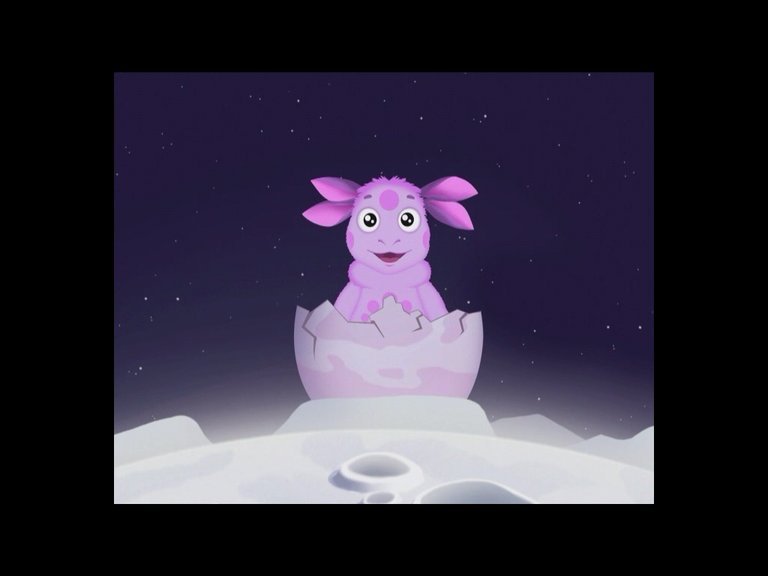
Luntik: Russkiy Yazyk dlya Malyshei (Luntik: Russian Language for Children) is an educational game designed for young children aged 5-7, based on the beloved Russian TV cartoon series. The game features a variety of minigames focused on teaching basic Russian language skills, such as constructing words from letters, identifying misspelled words, and solving simple puzzles, all presented in a fun and engaging way to help kids develop their reading and writing abilities.
Luntik: Russkiy Yazyk dlya Malyshei Reviews & Reception
vgtimes.com (71/100): An educational game with puzzle elements from developers from PIPE studio.
softclub.ru : The game is designed for children aged 5-7 years and helps them learn letters, words, and simple puzzles.
rubrikator.org (45/100): The game is recommended for children aged 6 and up, and it is very engaging and educational.
luntik.fandom.com : The game is based on the popular Russian TV cartoon series and helps children learn letters, words, and simple puzzles.
Luntik: Russkiy Yazyk dlya Malyshei: A Deep Dive into Russia’s Beloved Educational Game
Introduction
In the vast landscape of educational gaming, few titles have left as indelible a mark on early childhood literacy as Luntik: Russkiy Yazyk dlya Malyshei (Luntik: Russian Language for Children). Released in 2007 by PIPE Studio and published by 1C Company, this game emerged during a pivotal moment in Russia’s digital education revolution. It wasn’t just another edutainment product—it was a cultural phenomenon that bridged the gap between television and interactive learning, leveraging the immense popularity of the Luntik animated series to create an experience that felt like playing inside a beloved cartoon.
This review will dissect Luntik: Russkiy Yazyk dlya Malyshei with the rigor it deserves, exploring its development context, narrative integration, gameplay mechanics, and lasting impact on both the educational gaming sector and Russian pop culture. We’ll examine why, despite its technical simplicity, it remains a touchstone for parents and educators nearly two decades later.
Development History & Context
The Studio Behind the Magic: PIPE Studio
PIPE Studio, the Moscow-based developer behind Luntik: Russkiy Yazyk dlya Malyshei, was no stranger to educational software by 2007. Founded in the late 1990s, the studio had carved a niche in creating licensed children’s games tied to popular Russian media properties. Their collaboration with Melnitsa Animation Studio—the creative force behind the Luntik TV series—was a natural evolution of this strategy.
The game’s development coincided with Russia’s burgeoning interest in digital education tools. While Western markets had long embraced titles like Reader Rabbit and JumpStart, Russia’s educational gaming scene was still maturing. Luntik arrived at a perfect storm: the animated series had already captivated millions of young viewers, and parents were increasingly seeking screen-based learning alternatives to traditional workbooks.
Technological Constraints of the Era
Released for Windows PCs, Luntik: Russkiy Yazyk dlya Malyshei was built with the technical limitations of mid-2000s Russian households in mind. The minimum system requirements—Windows 95, a Pentium III processor, and 64MB of RAM—reflect an era when many families still relied on older machines. The game’s Flash-based animation (a common choice for children’s software at the time) ensured smooth performance even on modest hardware.
This technical accessibility was crucial. Unlike high-end Western edutainment titles that demanded newer systems, Luntik could run on the same computers used in schools and homes across Russia, democratizing access to digital literacy tools.
The Gaming Landscape of 2007
The late 2000s were a transitional period for educational gaming. While console-based learning games like Brain Age were gaining traction globally, Russia’s market remained heavily PC-centric. Competitors included:
– Disney’s localized educational titles (e.g., Mickey Mouse Toddler)
– Domestic alternatives like Repka (a Russian folk tale-based series)
– Imported Western games adapted with Russian language support
What set Luntik apart was its seamless integration with an existing media franchise. Children weren’t just learning Russian—they were doing so alongside characters they already loved, in a world they recognized from television. This synergy between media and education was PIPE Studio’s masterstroke.
Narrative & Thematic Deep Dive
Plot: A Journey Through Language
Luntik: Russkiy Yazyk dlya Malyshei eschews a traditional linear narrative in favor of an episodic, activity-based structure. Players assume the role of Luntik, the curious lunar-born protagonist of the animated series, as he navigates a vibrant forest teeming with anthropomorphic insects and animals. Each “chapter” of the game corresponds to a different linguistic concept:
1. Letter Recognition (with Korney Korneeich, the worm)
2. Word Construction (with Shnyuk the spider)
3. Syllable Division (with Sher the bee)
4. Stress Patterns (with Kuzya the grasshopper)
5. Sentence Formation (with Motya the turtle)
The genius lies in how these lessons are framed as adventures. For example:
– Rescuing a butterfly from Shnyuk’s web by spelling words correctly
– Helping Vupsen and Pupsen (the mischievous caterpillar brothers) gather mushrooms by identifying letter sounds
– Assisting Motya pack for a trip by dividing words into syllables
This narrative approach transforms abstract linguistic rules into tangible, goal-oriented challenges, a technique that modern educational games still strive to emulate.
Characters: The Power of Familiar Faces
The game’s cast is drawn directly from the Luntik animated series, a decision that paid dividends in engagement:
– Luntik: The wide-eyed, inquisitive protagonist serves as the player’s avatar, his naivety making him a relatable stand-in for young learners.
– Kuzya: The energetic grasshopper acts as a peer mentor, modeling enthusiasm for learning.
– Korney Korneeich: The wise worm embodies the “teacher” archetype, patiently explaining phonetic concepts.
– Vupsen & Pupsen: The comedic caterpillars provide levity, their antics making even repetitive exercises feel playful.
Voice acting plays a pivotal role in maintaining immersion. The original cast from the animated series reprised their roles, ensuring consistency in tone and character. This attention to detail reinforced the illusion that players were stepping into the Luntik universe rather than a generic educational tool.
Themes: Learning Through Play
At its core, Luntik: Russkiy Yazyk dlya Malyshei embodies several key themes:
1. Discovery as Joy: Every correct answer is met with exuberant praise from characters, reinforcing positive associations with learning.
2. Collaboration: Tasks are framed as helping friends, fostering a sense of community.
3. Progressive Challenge: The game’s difficulty curve mirrors early literacy development, starting with letter recognition before advancing to sentence construction.
4. Cultural Pride: By focusing on the intricacies of the Russian language (e.g., hard/soft consonants, stress patterns), the game subtly instills appreciation for linguistic heritage.
Gameplay Mechanics & Systems
Core Gameplay Loop
The game’s structure revolves around ten distinct minigames, each targeting a specific linguistic skill. Players navigate a hub world (the forest) and choose which character to visit, allowing for non-linear progression. This design respects children’s short attention spans while providing a sense of autonomy.
Example Minigames:
1. “Letter Hunt”: Players match letters to their sounds under Korney Korneeich’s guidance.
2. “Word Builder”: Drag-and-drop letters to form words and free trapped butterflies.
3. “Syllable Split”: Use a magnifying glass to divide words, with Sher the bee offering hints.
4. “Stress Marker”: Place accent marks on words to help Kuzya perform in a talent show.
Combat? No. Challenge? Yes.
While Luntik lacks traditional “combat,” it employs low-stakes challenge mechanics to maintain engagement:
– Timed Activities: Some tasks require quick responses (e.g., catching falling letters), adding mild pressure without frustration.
– Progressive Difficulty: Early games focus on visual matching, while later ones introduce abstract concepts like stress patterns.
– Reward System: Completing tasks unlocks animated cutscenes from the Luntik series, serving as both incentive and rest period.
UI/UX: Designed for Little Hands
The interface exemplifies child-centric design principles:
– Large, Colorful Buttons: Easy to click even with imprecise mouse control.
– Visual Feedback: Correct answers trigger confetti animations and character cheers.
– Minimal Text: Instructions are delivered aurally by characters, reducing reading dependency.
– Safe Exploration: No “game over” states—mistakes are met with gentle corrections rather than penalties.
Innovations & Flaws
Innovations:
✅ Seamless Media Integration: The game feels like an extension of the TV show, not a separate product.
✅ Adaptive Difficulty: Parents can adjust challenge levels via a hidden menu.
✅ Multisensory Learning: Combines visual, auditory, and kinesthetic (mouse-based) inputs.
Flaws:
❌ Limited Replayability: Once all minigames are completed, incentives to revisit diminish.
❌ Over-Reliance on Repetition: Some activities (e.g., syllable division) become tedious without varied mechanics.
❌ Technical Limitations: The Flash-based engine shows its age, with occasional animation stutters on modern systems.
World-Building, Art & Sound
A Living Cartoon
The game’s visual design is its strongest asset. PIPE Studio leveraged assets directly from the animated series, ensuring consistency in character models, backgrounds, and animations. The forest setting is rendered in soft, pastel hues, evoking the warmth of a storybook.
Key Artistic Choices:
– 2D Animation: While contemporaries were experimenting with 3D, Luntik’s hand-drawn aesthetic aligned with its source material.
– Expressive Characters: Facial animations emphasize emotions—Luntik’s wide-eyed wonder, Kuzya’s enthusiastic jumps—making interactions feel alive.
– Interactive Environments: Clicking on background elements (e.g., flowers, trees) triggers small animations or sound effects, rewarding exploration.
Sound Design: The Unsung Hero
The audio experience is meticulously crafted to enhance immersion:
– Voice Acting: The original cast’s performances are energetic and encouraging, crucial for maintaining young players’ motivation.
– Sound Effects: Subtle cues (e.g., a “ding” for correct answers, a “swoosh” for letter placement) provide immediate feedback.
– Music: Composer Maxim Koshevarov’s score blends whimsical melodies with the show’s iconic themes, reinforcing the connection to the TV series.
Example: The “Word Builder” minigame features a gentle, looping tune that accelerates slightly as the player nears completion, creating a sense of momentum.
Reception & Legacy
Critical and Commercial Reception
Upon its June 22, 2007 release, Luntik: Russkiy Yazyk dlya Malyshei was met with moderate critical acclaim and strong commercial success:
– Parental Praise: Reviews on platforms like Rubrikator highlight its effectiveness, with many crediting the game for helping children learn to read.
– Educator Approval: Russian kindergartens and primary schools adopted it as a supplemental teaching tool.
– Sales: While exact figures are undisclosed, its 2010 re-release suggests sustained demand.
However, not all feedback was glowing. Some critics noted:
– “Too Simplistic”: A minority of parents felt the game lacked depth for advanced learners.
– Technical Issues: Early copies suffered from installation bugs on newer Windows versions.
Evolution of Reputation
Over time, Luntik’s reputation has solidified as a classic of Russian edutainment:
– Nostalgia Factor: Millennials who played it as children now introduce it to their own kids.
– Cultural Crossover: The game is frequently cited in discussions about Russia’s digital education evolution.
– Academic Recognition: Studies on gamified learning in Russia often reference Luntik as a case study in effective media tie-ins.
Influence on the Industry
Luntik: Russkiy Yazyk dlya Malyshei set several precedents:
1. Franchise Synergy: Proved that educational games could thrive when tied to beloved IP.
2. Localization Success: Demonstrated the viability of Russia-specific edutainment in a market dominated by Western imports.
3. Design Standards: Established benchmarks for child-friendly UI/UX in Russian software.
Its success paved the way for sequels like:
– Luntik: Matematika dlya Malyshei (Math)
– Luntik: Angliyskiy Yazyk dlya Malyshei (English)
– Luntik: Gotovimsya k Shkole (School Preparation)
Conclusion: A Timeless Tool for Early Literacy
Luntik: Russkiy Yazyk dlya Malyshei is more than a game—it’s a cultural artifact that captures the intersection of media, education, and technology in post-Soviet Russia. While its graphics and mechanics may feel dated by modern standards, its core strengths remain undiminished:
– Engaging narrative integration that makes learning feel like play.
– Thoughtful, child-centric design that respects young learners’ needs.
– Lasting educational impact, with generations of Russian children owing their first steps in literacy to Luntik and his friends.
Final Verdict: 8.5/10 – A Masterclass in Edutainment
For parents and educators seeking a fun, effective way to introduce Russian language concepts, Luntik: Russkiy Yazyk dlya Malyshei remains an essential tool. It’s a testament to how games can transcend entertainment to become gateways to knowledge—and why, nearly 20 years later, Luntik’s legacy endures.
Post-Script: As of 2023, efforts to preserve Luntik for modern systems (via emulation or remasters) are underway, ensuring that new generations can experience this landmark title. Here’s to hoping Luntik’s journey continues for years to come.