
- Release Year: 2014
- Platforms: Linux, Macintosh, Windows
- Publisher: Kingstill International Software Services Ltd.
- Genre: Special edition
- Game Mode: Single-player
- Average Score: 76/100
Description
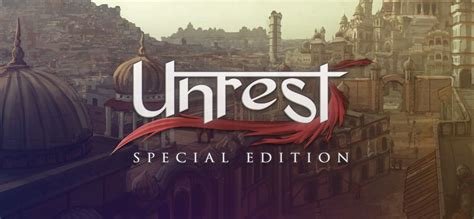
Unrest (Soundtrack Edition) is an adventure role-playing game set in ancient India during a period of social turmoil and famine. The game features a unique 2D perspective with hand-drawn visuals and follows five distinct characters across eight chapters, each with their own backstory. Players navigate through the story by engaging in dialogue with NPCs, making choices that influence traits like Friendship, Respect, and Fear, which in turn shape the narrative. Combat is rare, and character deaths are permanent, impacting the story’s progression in subsequent chapters. The Soundtrack Edition includes the base game along with the soundtrack in multiple audio formats.
Unrest (Soundtrack Edition) Guides & Walkthroughs
Unrest (Soundtrack Edition) Reviews & Reception
metacritic.com (80/100): A unique, and quite frankly ground-breaking conversational adventure and RPG hybrid project set into the ancient India.
metacritic.com (80/100): Unrest offers a gripping story about hope, failure, action and inaction, fear and security, which feels more like an interactive visual novel than an actual game.
steambase.io (68/100): Unrest has earned a Player Score of 68 / 100.
Unrest (Soundtrack Edition): A Bold, Flawed Masterpiece of Narrative-Driven RPG Design
Introduction: The Unrest That Redefined Storytelling in RPGs
Unrest (Soundtrack Edition) is more than just a repackaged version of Pyrodactyl Games’ 2014 cult classic—it is a testament to the power of narrative-driven gameplay in an industry often obsessed with combat, loot, and spectacle. Set in a low-fantasy interpretation of ancient India, Unrest eschews traditional RPG tropes in favor of a deeply human, morally ambiguous experience where dialogue, consequence, and social dynamics take center stage. The Soundtrack Edition, bundling the game with its hauntingly beautiful original score, elevates an already atmospheric experience into something even more immersive.
This review will dissect Unrest in its entirety—its development, narrative depth, mechanical innovations, artistic vision, and lasting legacy. It is a game that dared to ask: What if an RPG wasn’t about saving the world, but about surviving it?
Development History & Context: A Kickstarter Triumph from Jaipur
The Birth of Pyrodactyl Games and a Unique Vision
Unrest was developed by Pyrodactyl Games, a small indie studio based in Jaipur, India—a rarity in an industry dominated by Western and Japanese developers. The game’s lead designer, Arvind Raja Yadav, sought to create an RPG that reflected the social complexities, moral dilemmas, and cultural nuances of ancient India, a setting largely unexplored in mainstream gaming.
The team’s ambition was clear from the outset:
– A focus on dialogue over combat—where words, not swords, shaped the narrative.
– A rejection of traditional “heroism”—players would control ordinary people struggling in a city on the brink of collapse.
– A living, reactive world—where choices had permanent consequences, including the death of playable characters.
The Kickstarter Campaign: A Community-Backed Success
Launched in May 2013, Unrest’s Kickstarter campaign had a modest initial goal of $3,000—a sum it surpassed in just two days. By the campaign’s end, it had raised $36,251, allowing the team to expand the game’s scope with:
– Enhanced visuals (though still retaining its distinctive hand-drawn aesthetic).
– Additional chapters and content.
– Physical rewards for backers, including posters, soundtrack CDs, and signed merchandise.
This success was a watershed moment for Indian indie development, proving that culturally distinct narratives could resonate globally.
Technological Constraints and Design Philosophy
Built on a custom engine, Unrest was designed for PC, Mac, and Linux, avoiding the technical limitations of consoles. The team embraced:
– 2D top-down navigation (reminiscent of classic Sierra adventure games).
– A branching dialogue system where every choice influenced NPC reactions (tracked via Friendship, Respect, and Fear metrics).
– Minimal combat—duels were rare, avoidable, and deadly, reinforcing the game’s theme of vulnerability.
The decision to avoid traditional “Game Over” screens was revolutionary—death was not a failure state but a narrative pivot, with the story adapting to the loss of a character.
The Gaming Landscape in 2014: A Standout Among Giants
Released on July 23, 2014, Unrest entered a market dominated by:
– AAA RPGs (Dragon Age: Inquisition, The Witcher 3 looming on the horizon).
– Indie darlings (Papers, Please, This War of Mine) that also explored moral ambiguity and survival.
Yet, Unrest carved its own niche by:
– Centering an ancient Indian setting (a first for commercial RPGs).
– Rejecting power fantasies—players were peasants, priests, and outcasts, not chosen ones.
– Embracing failure as storytelling—a concept later popularized by games like Disco Elysium.
Narrative & Thematic Deep Dive: A Tapestry of Desperation and Choice
Setting: Bhimra, a City on the Brink
Unrest unfolds in Bhimra, a famine-stricken city-state plagued by:
– Political corruption (a ruling class indifferent to suffering).
– Social upheaval (caste tensions, religious strife).
– Supernatural intrigue (the Naga, a race of snake-like humanoids, lurk in the shadows).
The world is low-fantasy—magic exists, but it is subtle, dangerous, and rarely beneficial. The game’s tone is gritty, melancholic, and deeply human, more akin to A Game of Thrones than The Lord of the Rings.
Structure: Eight Chapters, Five Protagonists, One Unfolding Tragedy
The story is divided into eight chapters, with players controlling five distinct characters, each with their own burdens, motivations, and moral dilemmas:
-
The Peasant Girl (Bhagya)
- Struggle: Escaping an arranged marriage to a man she despises.
- Themes: Agency vs. tradition, the oppression of women in patriarchal societies.
- Key Choice: Does she flee, submit, or rebel—and at what cost?
-
The Elderly Priest (Niyantran)
- Struggle: Grappling with his temple’s radicalization and his own crisis of faith.
- Themes: Religious extremism, the corruption of institutions.
- Key Choice: Does he challenge the status quo or preserve the order, even if it’s unjust?
-
The Mercenary Chief (Jivan)
- Struggle: Leading a mercenary guild in a city tearing itself apart.
- Themes: Loyalty vs. survival, the cost of violence.
- Key Choice: Does he protect the weak or exploit the chaos for profit?
-
The Urchin Princess (Avani)
- Struggle: The sole heir of a murdered royal family, now living as a beggar in the slums.
- Themes: Identity, vengeance, and loss.
- Key Choice: Does she reclaim her birthright or abandon her past for a chance at peace?
-
The Naga Ambassador (Vasuki)
- Struggle: Navigating human prejudice while trying to prevent a war.
- Themes: Xenophobia, diplomacy, and sacrifice.
- Key Choice: Does she appease the humans or assert her people’s dominance?
Themes: A Mirror to Real-World Struggles
Unrest is not just a fantasy—it is a commentary on systemic oppression, exploring:
– Caste and class divide (the untouchables vs. the elite).
– Gender inequality (Bhagya’s arranged marriage, the limited roles of women).
– Religious fanaticism (Niyantran’s temple turning militant).
– Colonialism and othering (the Naga as a persecuted minority).
The game does not offer easy answers. Choices are morally gray, and no path is wholly “right.” A decision that helps one character may doom another, reinforcing the game’s central thesis: in a broken system, survival is a zero-sum game.
Dialogue & Character Depth: The Soul of Unrest
The writing is the game’s greatest strength. Every line of dialogue feels purposeful, weighted, and culturally authentic. The three-axis reaction system (Friendship, Respect, Fear) ensures that:
– NPCs remember your actions—insult a merchant early on, and they may refuse to help you later.
– Relationships evolve dynamically—a character who fears you may obey out of intimidation, but a respected ally will offer genuine aid.
– Silence is a weapon—sometimes, not speaking is as powerful as a well-timed lie.
The lack of voice acting (a budgetary constraint) is not a detriment—the text-based interactions force players to engage deeply with the words, making each choice feel personal and deliberate.
Gameplay Mechanics & Systems: Dialogue as Combat, Death as Story
Core Gameplay Loop: Conversation as the Primary Mechanic
Unrest inverts traditional RPG design:
– No open-world exploration—movement is grid-based, with locations unlocking as the story progresses.
– No traditional combat—duels are turn-based, rare, and avoidable.
– No “leveling up”—progression is narrative, not statistical.
Instead, the game revolves around:
1. Exploring Bhimra’s districts (markets, temples, slums, palaces).
2. Engaging in branching dialogues (with clear indicators of how your tone affects NPCs).
3. Making irreversible choices (will you bribe, threaten, or persuade?).
4. Witnessing the consequences (which may not be immediate—some repercussions unfold chapters later).
The Three-Pillar Reaction System: Friendship, Respect, Fear
Every NPC interaction is governed by three metrics, visible in the UI:
– Friendship (Green): NPCs like and trust you—they may offer help, secrets, or leniency.
– Respect (Blue): NPCs acknowledge your authority—they may follow orders but not necessarily aid you.
– Fear (Red): NPCs are intimidated—they may obey out of coercion but could betray you later.
This system eliminates the “good vs. evil” binary—players must weigh the pros and cons of each approach. For example:
– Threatening a guard (Fear) may get you past a checkpoint, but they’ll remember—and may retaliate later.
– Befriending a merchant (Friendship) could lead to discounts or crucial information, but they may ask for favors in return.
Combat: Rare, Brutal, and Best Avoided
When violence does occur, it is:
– One-on-one duels (no party-based battles).
– Turn-based but unpredictable—success depends on RNG and preparation.
– Potentially fatal—losing a duel can kill your character, advancing the story without them.
The game discourages combat through:
– High stakes (death is permanent).
– Limited rewards (violence rarely solves problems—it often creates new ones).
– Moral weight (killing someone may haunt your character in later chapters).
Death & Failure: A Narrative Device, Not a Punishment
Unrest’s most radical design choice is its handling of failure:
– If a character dies, the story continues—their death becomes part of the narrative.
– Example: If Bhagya is killed while fleeing her marriage, the next chapter may reference her fate, altering how other characters perceive you.
– No “Game Over” screens—the game adapts, not resets.
– Iron Man Mode (optional)—for players who want true permanence (no manual saves).
This mechanic reinforces the game’s themes:
– Life in Bhimra is fragile—no one is safe.
– Choices have lasting consequences—even failure shapes the world.
UI & Accessibility: Functional but Flawed
The user interface is clean but minimalist:
– Dialogue trees are clear, with color-coded tone indicators.
– Inventory management is simple (few items, most are quest-related).
– No map automation—players must manually navigate the city, which can feel tedious in later chapters.
Criticisms:
– Lack of voice acting (while immersive for some, others found it dry).
– Repetitive backdrops—the hand-drawn art is beautiful, but limited location variety makes exploration less engaging.
– Pacing issues—some chapters drag, while others end abruptly.
World-Building, Art & Sound: A Living Canvas of Ancient India
Visual Design: Hand-Drawn Beauty with Limitations
Unrest’s art style is its most distinctive feature:
– Hand-drawn sprites and environments evoke Indian miniature paintings.
– Vibrant colors contrast with dark themes—lush reds and golds clash with the grimy slums.
– Character designs are expressive, with distinct cultural attire (saris, turbans, Naga scales).
Strengths:
– Aesthetic cohesion—the world feels alive and authentic.
– Symbolism in design—the Naga’s serpentine features reinforce their otherness.
Weaknesses:
– Limited animation—characters often stand stiffly during dialogues.
– Repetitive backgrounds—some areas reuse assets, breaking immersion.
Sound Design & Music: The Soul of Bhimra
The soundtrack (included in the Soundtrack Edition) is a masterpiece of atmospheric composition:
– Classical Indian instruments (sitar, tabla, bansuri) create an authentic, haunting mood.
– Dynamic tracks shift based on location and tension—peaceful ragas in temples, dissonant strings in the slums.
– Ambient sounds (market chatter, distant prayers, the hiss of Naga speech) enhance immersion.
Standout Tracks:
– “Bhimra’s Lament” (a melancholic theme for the city’s suffering).
– “The Naga’s March” (a sinister, rhythmic piece for the serpentine ambassadors).
– “Avani’s Theme” (a bittersweet melody for the fallen princess).
The Soundtrack Edition is essential—listening to the music outside the game deepens appreciation for its emotional weight.
Atmosphere: A City That Breathes (and Suffocates)
Bhimra is not just a setting—it is a character:
– The slums reek of desperation—children beg, disease spreads, and corpses line the streets.
– The temple district hums with tension—priests preach revolution, while the elite ignore the suffering.
– The Naga quarter is shrouded in mystery—whispers of war linger in the air.
The game excels at environmental storytelling:
– Graffiti on walls hints at rebellion.
– Overheard conversations reveal secrets.
– The passage of time is marked by changing weather and festivals.
Reception & Legacy: A Cult Classic That Defied Expectations
Critical Reception: Mixed but Respectful
Unrest received mixed-to-positive reviews, with critics praising its ambition but noting its flaws:
| Publication | Score | Key Praise | Key Criticism |
|---|---|---|---|
| Hardcore Gamer | 3.5/5 | “A choice-driven RPG with little combat that touches on relevant social issues.” | “Some chapters feel underdeveloped.” |
| GameSpot | 6/10 | “In a sea of clearly defined morality systems, Unrest proves that sometimes the best waters consist of infinite shades of gray.” | “Lack of voice acting makes it feel dry at times.” |
| National Post | 6/10 | “A bold, powerful, and interesting game.” | “I’m just not sure how much fun it is.” |
| Paste Magazine | 6/10 | “Smartly constructed core.” | “Lacks layers to complement it.” |
| Metacritic | 65/100 | “Mixed or Average” | “Divisive but memorable.” |
Common Praise:
– Innovative narrative design (death as storytelling, branching dialogues).
– Culturally rich setting (a rare, authentic depiction of ancient India).
– Moral complexity (no black-and-white choices).
Common Criticisms:
– Pacing issues (some chapters drag or end abruptly).
– Limited gameplay variety (too much dialogue, too little interaction).
– Technical rough edges (repetitive art, clunky navigation).
Commercial Performance: A Niche Success
Unrest was not a commercial blockbuster, but it found a dedicated audience:
– Steam reviews remain Mixed (68/100), with 64% positive ratings.
– Strong word-of-mouth in indie and narrative-driven gaming circles.
– Mod support extended its lifespan, with fan-made stories expanding the lore.
Legacy: Influencing a New Wave of Narrative RPGs
While not a mainstream hit, Unrest’s influence is undeniable:
– Paved the way for games like Disco Elysium (2019), which also embraced failure as narrative.
– Proved that non-Western settings could resonate globally (later seen in Pentiment, Citizen Sleeper).
– Inspired indie devs to prioritize storytelling over combat.
In 2020, Pyrodactyl Games released the source code under the MIT License, allowing modders to build upon its foundation.
Comparisons to Similar Games
| Game | Similarities | Differences |
|---|---|---|
| Disco Elysium | Dialogue-driven, failure as narrative, deep character customization | Disco has more humor, a detective framework, and voice acting. |
| Papers, Please | Moral dilemmas, consequences of choice, oppressive setting | Papers is more mechanical (document checks), less character-driven. |
| This War of Mine | Survival in a broken society, no “heroes” | TWoM is more survival-sim, less dialogue-focused. |
| 80 Days | Branching narratives, cultural richness | 80 Days is more whimsical and fast-paced. |
Conclusion: A Flawed Gem That Redefined What an RPG Could Be
Unrest (Soundtrack Edition) is not a perfect game—its pacing stumbles, its visuals grow repetitive, and its lack of voice acting may deter some. But what it lacks in polish, it makes up for in ambition, depth, and courage.
It is a game that dares to ask hard questions:
– What does it mean to survive in a broken world?
– Can ordinary people change anything, or are they doomed to repeat the cycles of oppression?
– Is violence ever justified, or does it only perpetuate suffering?
In an industry where power fantasies dominate, Unrest is a rare, humbling experience—one that respects its players’ intelligence and challenges their morals.
Final Verdict: 8.5/10 – A Masterpiece of Narrative Design, Warts and All
- For fans of: Disco Elysium, Papers Please, This War of Mine, 80 Days.
- Play if you love: Deep storytelling, moral ambiguity, culturally rich settings.
- Avoid if you prefer: Fast-paced action, traditional RPGs, voice-acted narratives.
Unrest may not be the most fun game you’ll ever play, but it is one of the most thought-provoking—and in a medium often criticized for shallow storytelling, that is no small feat.
The Soundtrack Edition is the definitive way to experience it—the music elevates the melancholy beauty of Bhimra, making its tragedies hit even harder.
In the end, Unrest is not just a game—it is a meditation on human resilience, and for that alone, it deserves to be remembered.
Final Score Breakdown:
– Narrative & Themes: 10/10
– Character Depth: 9.5/10
– Gameplay Innovation: 8/10
– Art & Sound Design: 8.5/10
– Replayability: 7/10 (choices matter, but some paths feel similar)
– Technical Execution: 6.5/10 (rough edges, but charming in its imperfections)
Overall: 8.5/10 – “A Bold, Essential Experience for Narrative RPG Fans”