
- Release Year: 2010
- Platforms: Windows
- Publisher: Mindscape SA, Ubisoft Entertainment SA
- Genre: Compilation
- Game Mode: Online PVP, Single-player
- Average Score: 88/100
Description
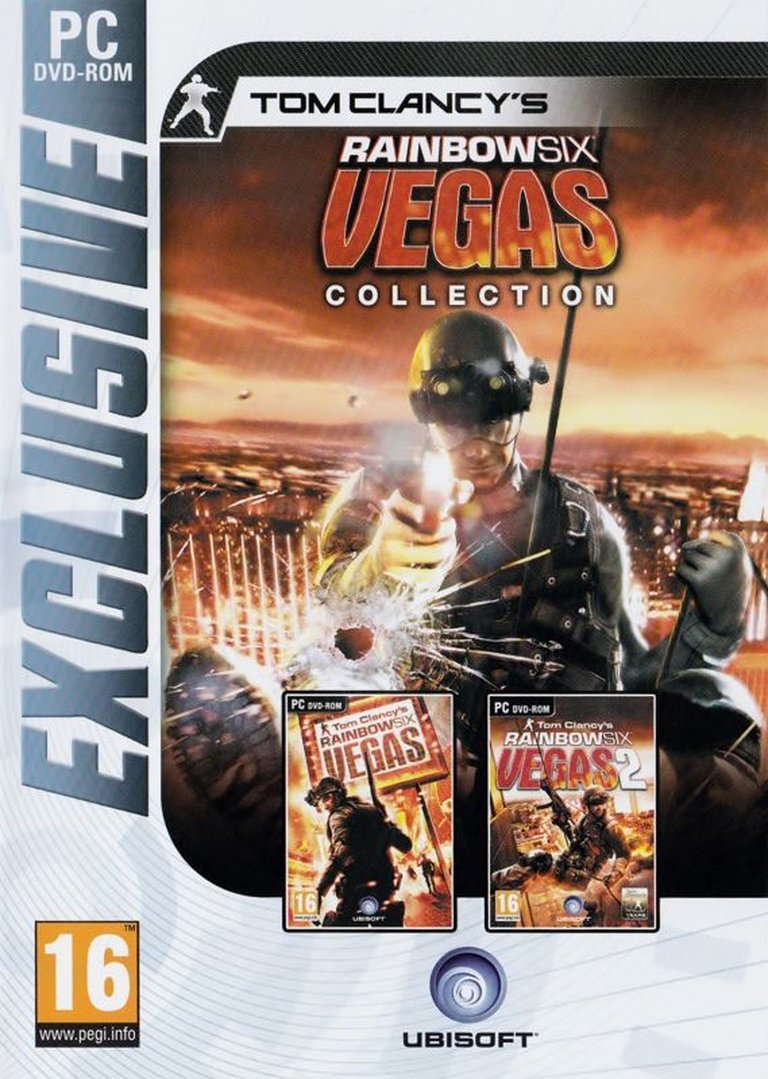
Tom Clancy’s Rainbow Six: Vegas – Collection is a compilation of two tactical first-person shooters, ‘Tom Clancy’s Rainbow Six: Vegas’ and its sequel, set in Las Vegas. The games follow an elite counter-terrorism unit as they battle a terrorist threat led by Irena Morales, featuring realistic combat mechanics, squad-based tactics, and a mix of single-player and multiplayer modes. The collection highlights the series’ shift to a more dynamic health system, third-person cover mechanics, and intense urban warfare scenarios.
Where to Buy Tom Clancy’s Rainbow Six: Vegas – Collection
PC
Tom Clancy’s Rainbow Six: Vegas – Collection Guides & Walkthroughs
Tom Clancy’s Rainbow Six: Vegas – Collection Reviews & Reception
metacritic.com (88/100): An incredible game online or offline. My high expectations, and they were indeed high, were met and exceeded in what I can only term one of my most favorite Xbox games yet.
ign.com : The result is the most accessible and among the most satisfying Rainbow Six titles yet — a treat for former Delta Force operatives and acne-ridden Halo gamers alike.
Tom Clancy’s Rainbow Six: Vegas – Collection Cheats & Codes
Xbox 360
Pause game play in Single Player mode then hold LB and enter the following codes.
| Code | Effect |
|---|---|
| Left Analog-stick(2), A, Right Analog-stick(2), B, Left Analog-stick(2), X, Right Analog-stick(2), Y | Alternate bullet tracer color |
| B, X, A, Y, Left Analog-stick, Y, A, X, B, Right Analog-stick | Big heads |
| X, B, X, B, Left Analog-stick(2), Y, A, Y, A, Right Analog-stick(2) | Third person view |
| A(2), B(2), X(2), Y(2), A, B, X, Y | Stronger ragdoll effect |
| Left Analog-stick, Right Analog-stick, Left Analog-stick, Right Analog-stick, A, B, Left Analog-stick, Right Analog-stick, Left Analog-stick, Right Analog-stick, X, Y | One hit kills |
| Left Analog-stick(2), A, Right Analog-stick(2), B, Left Analog-stick(2), X, Right Analog-stick(2), Y | Laser bullets (Host an online match on Xbox Live) |
PlayStation 3
Pause the game and hold L2, then enter the following codes.
| Code | Effect |
|---|---|
| Square, Circle, Square, Circle, L3(2), Triangle, X, Triangle, X, R3(2) | Third Person Mode |
| L3, R3, L3, R3, X, Circle, L3, R3, L3, R3, Square, Triangle | Instant Kill Mode |
| X(2), Circle(2), Square(2), Triangle(2), X, Circle, Square, Triangle | Super Ragdoll Mode |
| L3(2), X, R3(2), Circle, L3(2), Square, R3(2), Triangle | GI John Doe mode (Host an online match) |
| Circle, Square, X, Triangle, L3, Triangle, X, Square, Circle, R3 | Big Head Mode |
Tom Clancy’s Rainbow Six: Vegas – Collection: A Definitive Retrospective
Introduction
Few franchises in gaming history have managed to evolve as dramatically as Tom Clancy’s Rainbow Six. From its tactical, slow-paced origins in 1998 to the high-octane, cover-based shooter it became in 2006, the series has continually redefined itself. Tom Clancy’s Rainbow Six: Vegas – Collection, released in 2010, bundles two of the most pivotal entries in the series—Rainbow Six: Vegas (2006) and Rainbow Six: Vegas 2 (2008)—offering players a chance to experience the transformation of the franchise during the seventh generation of consoles. This collection is not just a compilation of two games; it is a testament to Ubisoft Montreal’s ability to innovate while respecting the core identity of the Rainbow Six brand.
This review will dissect the Vegas – Collection in exhaustive detail, exploring its development history, narrative depth, gameplay mechanics, artistic direction, and lasting legacy. By the end, we will understand why these games remain beloved by fans and how they influenced the tactical shooter genre.
Development History & Context
The Studio and Vision
Rainbow Six: Vegas was developed by Ubisoft Montreal, a studio with a storied history of creating immersive, narrative-driven shooters. The team was led by Maxime Béland (Director) and Chadi Lebbos (Producer), with Jean-Pascal Cambiotti serving as the lead designer. The game was built using Unreal Engine 3, a powerful tool that allowed for advanced lighting, physics, and environmental detail—critical for the game’s urban warfare setting.
The vision for Vegas was clear: modernize the Rainbow Six franchise while retaining its tactical roots. The original Rainbow Six games were known for their slow, methodical gameplay, emphasizing planning, precision, and team coordination. However, by the mid-2000s, the gaming landscape had shifted. Titles like Halo 2 (2004) and Gears of War (2006) had popularized fast-paced, cover-based shooters with regenerating health systems. Ubisoft Montreal faced a challenge: how to make Rainbow Six accessible to a broader audience without alienating its core fanbase.
Technological Constraints and Innovations
The Xbox 360, the lead platform for Vegas, presented both opportunities and limitations. The console’s multi-core architecture allowed for more complex AI and physics, but memory constraints required careful optimization. The team implemented several key innovations:
- Regenerating Health System: A departure from the series’ traditional one-hit-kill mechanics, this system allowed players to recover health when not taking fire, similar to Gears of War. However, Ubisoft ensured that the system remained punishing—headshots and explosions were still instant kills.
- Third-Person Cover Mechanic: Inspired by Gears of War, this feature allowed players to blind-fire from cover, adding a tactical layer to firefights.
- Dynamic AI and Squad Commands: The game introduced a context-sensitive D-pad command system, enabling players to issue orders to their squad (e.g., “breach,” “cover,” “defuse”) without pausing the action.
- Procedural Animation: The rappelling and fast-rope mechanics were meticulously animated, allowing for fluid vertical combat.
The Gaming Landscape in 2006
When Vegas launched in November 2006, it entered a crowded market. Competitors included:
– Gears of War (Epic Games, 2006) – The gold standard for cover-based shooters.
– Call of Duty 3 (Treyarch, 2006) – A World War II shooter with a focus on squad tactics.
– Ghost Recon Advanced Warfighter (Ubisoft Paris, 2006) – Another Tom Clancy title that blended tactics with modern combat.
Vegas distinguished itself by merging tactical depth with mainstream appeal. It was neither a pure simulation nor a run-and-gun arcade shooter but a hybrid that rewarded both strategy and reflexes.
Narrative & Thematic Deep Dive
Plot Summary
Rainbow Six: Vegas follows Logan Keller, a Rainbow operative deployed to a Mexican border town to capture Irena Morales, a terrorist leader smuggling mercenaries into the U.S. After a botched operation, Keller is redeployed to Las Vegas, where Morales’ forces have seized key locations, including casinos and the Hoover Dam. The story culminates in a high-stakes confrontation at the dam, where Keller must prevent a micro-pulse missile from being launched.
Vegas 2 continues the story, introducing a customizable protagonist (Bishop) and expanding the narrative with new characters and missions. The sequel delves deeper into the consequences of Keller’s actions, including the betrayal of Gabriel Nowak, a former Rainbow operative turned traitor.
Characters and Dialogue
The Vegas games feature a diverse cast of operatives, each with distinct personalities:
– Logan Keller: The stoic, determined leader.
– Michael Walters and Jung Park: Keller’s loyal but inexperienced teammates.
– Gabriel Nowak: A morally ambiguous operative whose betrayal adds narrative weight.
– Irena Morales: A ruthless terrorist with a personal vendetta against Rainbow.
The dialogue is gritty and realistic, with improvised banter between squad members. One standout moment occurs when terrorists debate video games while unaware of Keller’s presence—a touch of dark humor that humanizes the enemies.
Themes
- The Cost of War: The games explore the psychological toll of counter-terrorism, particularly in Vegas 2, where characters grapple with betrayal and loss.
- Urban Decay: Las Vegas, a city of glitz and excess, becomes a battleground, symbolizing the fragility of modern civilization.
- Brotherhood and Loyalty: The bond between Rainbow operatives is central, with sacrifice and camaraderie driving the narrative.
Gameplay Mechanics & Systems
Core Gameplay Loop
Vegas and Vegas 2 revolve around tactical, squad-based combat with an emphasis on cover and positioning. The core loop involves:
1. Reconnaissance: Using the snake cam to scout enemy positions.
2. Planning: Deciding whether to breach, flank, or suppress enemies.
3. Execution: Coordinating with squadmates to clear rooms and secure objectives.
Combat and AI
- Enemy AI: Terrorists are aggressive and intelligent, flanking players, using cover, and throwing grenades to flush out hiding spots.
- Squad AI: Teammates follow orders but can be unpredictable, occasionally blocking doorways or failing to revive downed allies.
- Weapons and Customization: A vast arsenal of real-world firearms, each with unique handling and recoil. Players can modify loadouts between missions.
Progression and UI
- Checkpoint System: Replaced traditional saves, forcing players to adapt on the fly.
- Persistent Elite Creation (Vegas 2): Allowed players to customize their operative’s appearance and gear, adding a role-playing element.
Multiplayer
- Terrorist Hunt: A cooperative mode where players fight waves of enemies.
- Adversarial Modes: Including Attack & Defend, Retrieval, and Sharpshooter, with 16-player support.
- Map Design: Levels like Calypso Casino, Dante’s Casino, and the Hoover Dam were meticulously crafted for tactical play.
World-Building, Art & Sound
Setting and Atmosphere
Las Vegas is more than a backdrop—it is a character. The neon-lit casinos, abandoned hotels, and industrial complexes create a claustrophobic yet expansive environment. The Hoover Dam mission is a standout, blending industrial aesthetics with high-stakes tension.
Visual Direction
- Lighting and Shadows: Unreal Engine 3’s dynamic lighting creates moody, cinematic scenes.
- Destruction: Environmental damage (e.g., shattered glass, exploding slot machines) enhances immersion.
- Character Models: Detailed animations, particularly rappelling and breaching, set a new standard for tactical shooters.
Sound Design
- Gunfire and Explosions: Punchy and realistic, with directional audio helping players locate enemies.
- Voice Acting: Gritty and authentic, with improvised dialogue adding depth.
- Music: A pulsing, cinematic score that heightens tension during firefights.
Reception & Legacy
Critical and Commercial Success
Rainbow Six: Vegas was universally praised, earning an 88/100 on Metacritic for the Xbox 360 version. Critics lauded its:
– Innovative cover system (IGN called it “the best use of cover in any shooter”).
– Tactical depth (GameSpot praised its “excellent, immersive tactical shooter” design).
– Multiplayer (Game Informer awarded it 9.5/10, calling it “the best first-person shooter on the Xbox 360”).
The game sold 1.7 million copies by March 2007, becoming a commercial juggernaut.
Influence on the Genre
Vegas and Vegas 2 influenced subsequent tactical shooters, including:
– Rainbow Six: Siege (2015): Borrowed the destructible environments and team-based tactics.
– Ghost Recon: Future Soldier (2012): Adopted the cover mechanics and squad commands.
– Call of Duty: Modern Warfare (2019): Incorporated realistic gunplay and tactical breaching.
Legacy
The Vegas duology remains a fan favorite, often cited as the peak of the Rainbow Six franchise. While Siege shifted toward hero-based gameplay, Vegas retains a pure, unfiltered tactical experience that many players still crave.
Conclusion
Tom Clancy’s Rainbow Six: Vegas – Collection is more than a compilation—it is a time capsule of tactical shooter evolution. Vegas and Vegas 2 successfully modernized the franchise while preserving its core identity, delivering tense, strategic gameplay in a visually stunning urban warzone.
Final Verdict: 9.5/10 – A Masterclass in Tactical Shooters
For fans of methodical, squad-based combat, the Vegas – Collection is essential playing. It stands as a testament to Ubisoft Montreal’s vision and remains one of the most influential shooters of the 2000s. Whether you’re a veteran Rainbow Six player or a modern FPS enthusiast, these games offer an unmatched blend of strategy, action, and atmosphere.
Viva Las Vegas, indeed.