
- Release Year: 2002
- Platforms: GameCube, PlayStation 2, Windows
- Publisher: Ubi Soft Entertainment Software
- Developer: Inland Productions, Inc.
- Genre: Action, Driving, Racing
- Perspective: 1st-person, 3rd-person
- Game Mode: Hotseat, Single-player
- Gameplay: Damage system, Truck customization, Vehicular combat
- Setting: Modern
- Average Score: 49/100
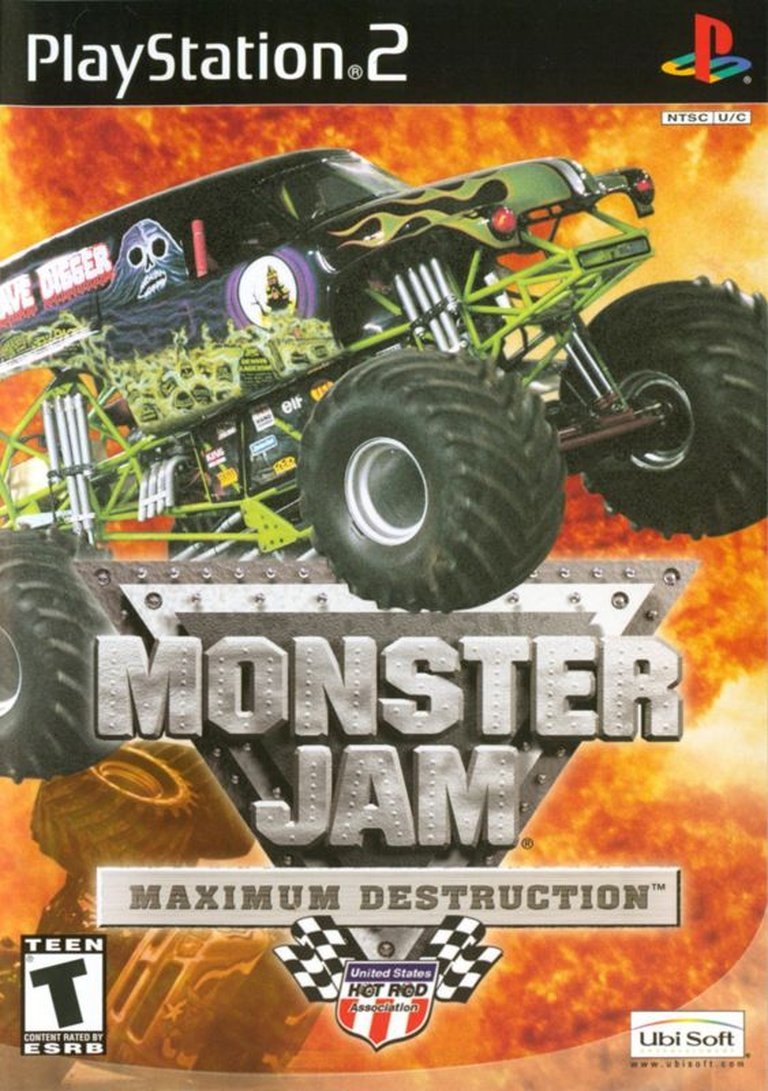
Description
Monster Jam: Maximum Destruction is a high-octane vehicular combat game where players take control of iconic monster trucks to unleash chaos in fast-paced, destructive races. Set in a dynamic arena, the game features intense battles where trucks smash through walls, crush opponents, and perform gravity-defying stunts, with realistic damage that causes parts to deform, blacken, and eventually fall off. With a variety of licensed monster trucks, weapons like railguns and rocket launchers, and multiplayer options, the game delivers an adrenaline-fueled experience of demolition and competition.
Gameplay Videos
Monster Jam: Maximum Destruction Free Download
Monster Jam: Maximum Destruction Cracks & Fixes
Monster Jam: Maximum Destruction Guides & Walkthroughs
Monster Jam: Maximum Destruction Reviews & Reception
metacritic.com (47/100): A mediocre car combat title.
gamepressure.com (68/100): A dynamic race in which we sit behind the wheel of one of several dozen monster-trucks.
gamespot.com (46/100): Monster Jam: Maximum Destruction can best be described as a poor version of Twisted Metal: Black.
ign.com (36/100): Poor gameplay makes for “Maximum Distraction.”
Monster Jam: Maximum Destruction Cheats & Codes
PlayStation 2
Enter codes during gameplay or via Action Replay/GameShark.
| Code | Effect |
|---|---|
| R1, R1, R2, R2, L1, L1, L2, L2, Start | Unlocks all trucks |
| 0E3C7DF2 1853E59E EE873702 BCC498EA |
Master Code (Must Be On) |
| DE8DD9E6 BF899B8B DE8DD9E2 BCA99B83 DE9D7196 BCA99B84 |
Dead AI |
| DEA98D02 C19E7B82 | Infinite Money |
| BE9FD93E BCB99B84 F0FDFCF9 BCA99B83 |
Unlock All Cars |
| DE9D7666 0DA99B83 | 1 Hit Kills-Flamer |
| DE9D767E 0DA99B83 | 1 Hit Kills-Machine Gun |
| DE9D760A 0DA99B83 | 1 Hit Kills-Pulse Gun |
| DE9D7626 0DA99B83 | 1 Hit Kills-Lighting |
| DE9D7632 0DA99B83 | 1 Hit Kills-Shotgun |
| DE9D76CE 0DA99B83 | 1 Hit Kills-Railgun |
| 0E934838 BCA95282 DE9D702A FA299B83 0E934838 BCB95282 DE9D702A FCA99B83 |
Moon Jump: Press X+R1 |
| BE9FD8BE BCA59B84 BF7EFEFE BCA99B83 |
Max Stats All Trucks |
| BE9FD8BE BCAD9B84 BF7EFEFE BCA99B83 |
Airborne Ranger |
| BE9FD84E BCAD9B84 BF7EFEFE BCA99B83 |
Airborne Ranger Champ |
| BE9FD85E BCAD9B84 BF7EFEFE BCA99B83 |
American Guardian |
| BE9FD86E BCAD9B84 BF7EFEFE BCA99B83 |
American Guardian Champ |
| BE9FD87E BCAD9B84 BF7EFEFE BCA99B83 |
Avenger |
| BE9FD80E BCAD9B84 BF7EFEFE BCA99B83 |
Avenger Champ |
| BE9FD81E BCAD9B84 BF7EFEFE BCA99B83 |
Blacksmith |
| BE9FD82E BCAD9B84 BF7EFEFE BCA99B83 |
Blacksmith Champ |
| BE9FD83E BCAD9B84 BF7EFEFE BCA99B83 |
Bulldozer |
| BE9FD8CE BCAD9B84 BF7EFEFE BCA99B83 |
Bulldozer Champ |
| BE9FD8DE BCAD9B84 BF7EFEFE BCA99B83 |
Bustin’ Loose |
| BE9FD8EE BCAD9B84 BF7EFEFE BCA99B83 |
Bustin’ Loose Champ |
| BE9FDFFE BCAD9B84 BF7EFEFE BCA99B83 |
Destroyer |
| BE9FDF8E BCAD9B84 BF7EFEFE BCA99B83 |
Destroyer Champ |
| BE9FDF9E BCAD9B84 BF7EFEFE BCA99B83 |
El Toro Loco |
| BE9FDFAE BCAD9B84 BF7EFEFE BCA99B83 |
El Toro Loco Champ |
| BE9FDFBE BCAD9B84 BF7EFEFE BCA99B83 |
Eradicator |
| BE9FDF4E BCAD9B84 BF7EFEFE BCA99B83 |
Eradicator Champ |
| BE9FDF5E BCAD9B84 BF7EFEFE BCA99B83 |
Goldberg |
| BE9FDF6E BCAD9B84 BF7EFEFE BCA99B83 |
Goldberg Champ |
| BE9FDF7E BCAD9B84 BF7EFEFE BCA99B83 |
Grave Digger |
| BE9FDF0E BCAD9B84 BF7EFEFE BCA99B83 |
Grave Digger Champ |
| BE9FDF1E BCAD9B84 BF7EFEFE BCA99B83 |
Gun Slinger |
| BE9FDF2E BCAD9B84 BF7EFEFE BCA99B83 |
Gun Slinger Champ |
| BE9FDF3E BCAD9B84 BF7EFEFE BCA99B83 |
King Krunch |
| BE9FDFCE BCAD9B84 BF7EFEFE BCA99B83 |
King Krunch Champ |
| BE9FDFDE BCAD9B84 BF7EFEFE BCA99B83 |
Madusa |
| BE9FDFEE BCAD9B84 BF7EFEFE BCA99B83 |
Madusa Champ |
| BE9FDEFE BCAD9B84 BF7EFEFE BCA99B83 |
Mountaineer |
| BE9FDE8E BCAD9B84 BF7EFEFE BCA99B83 |
Mountaineer Champ |
| BE9FDE9E BCAD9B84 BF7EFEFE BCA99B83 |
Predator |
| BE9FDEAE BCAD9B84 BF7EFEFE BCA99B83 |
Predator Champ |
| BE9FDEBE BCAD9B84 BF7EFEFE BCA99B83 |
Prowler |
| BE9FDE4E BCAD9B84 BF7EFEFE BCA99B83 |
Prowler Champ |
| BE9FDE5E BCAD9B84 BF7EFEFE BCA99B83 |
Reptoid |
| BE9FDE6E BCAD9B84 BF7EFEFE BCA99B83 |
Reptoid Champ |
| BE9FDE7E BCAD9B84 BF7EFEFE BCA99B83 |
Spiderman |
| BE9FDE0E BCAD9B84 BF7EFEFE BCA99B83 |
Spiderman Champ |
| BE9FDE1E BCAD9B84 BF7EFEFE BCA99B83 |
Blue Thunder |
| BE9FDE2E BCAD9B84 BF7EFEFE BCA99B83 |
Blue Thunder Champ |
| BE9FDE3E BCAD9B84 BF7EFEFE BCA99B83 |
Sting |
| BE9FDECE BCAD9B84 BF7EFEFE BCA99B83 |
Sting Champ |
| BE9FDEDE BCAD9B84 BF7EFEFE BCA99B83 |
Sudden Impact |
| BE9FDEEE BCAD9B84 BF7EFEFE BCA99B83 |
Sudden Impact Champ |
| BE9FDDFE BCAD9B84 BF7EFEFE BCA99B83 |
Survivor |
| BE9FDD8E BCAD9B84 BF7EFEFE BCA99B83 |
Survivor Champ |
| BE9FDD9E BCAD9B84 BF7EFEFE BCA99B83 |
Thrasher |
| BE9FDDAE BCAD9B84 BF7EFEFE BCA99B83 |
Thrasher Champ |
| BE9FDDBE BCAD9B84 BF7EFEFE BCA99B83 |
Wild Thing |
| BE9FDD4E BCAD9B84 BF7EFEFE BCA99B83 |
Wild Thing Champ |
| BE9FDD5E BCAD9B84 BF7EFEFE BCA99B83 |
Wolverine |
| BE9FDD6E BCAD9B84 BF7EFEFE BCA99B83 |
Wolverine Champ |
| BE9FDD7E BCAD9B84 BF7EFEFE BCA99B83 |
Grave Digger (Special) |
| BE9FDD0E BCAD9B84 BF7EFEFE BCA99B83 |
Grave Digger (Special Champ) |
PC
Run the game with the following command-line parameters.
| Code | Effect |
|---|---|
| NOAI | No AI for Other Trucks |
| SKIPUI | Skip User Interface |
| TRUCK | Specify Truck to Use |
| WORLD | Specify World to Use |
| WINDOWED | Run Game in a Window |
Monster Jam: Maximum Destruction: A Retrospective on a Flawed but Fascinating Relic of Early 2000s Vehicular Combat
Introduction: The Monster Truck Combat Experiment
Monster Jam: Maximum Destruction (2002) is a game that exists in the shadow of its own ambition. Released during the golden age of vehicular combat titles like Twisted Metal: Black and Vigilante 8, it attempted to carve out a niche by merging the spectacle of monster truck rallies with the chaotic fun of armored car battles. The result was a game that, while deeply flawed, remains a fascinating artifact of early 2000s gaming—a title that dared to ask, “What if Twisted Metal but with Grave Digger?”
This review will dissect Monster Jam: Maximum Destruction from every angle: its development history, its gameplay mechanics, its reception, and its legacy. We’ll explore why it failed to resonate with critics and players alike, yet still holds a cult appeal for monster truck enthusiasts and fans of offbeat racing games. By the end, we’ll determine whether it deserves its reputation as a forgettable footnote or if there’s more to this game than meets the eye.
Development History & Context: The Birth of a Monster
The Studio Behind the Wheels
Monster Jam: Maximum Destruction was developed by Inland Productions, a studio with a mixed track record in the early 2000s. Known for titles like Arctic Thunder and Monster 4×4: Masters of Metal, Inland had experience with vehicular combat and off-road racing games. However, their work was often overshadowed by more polished competitors. The game was published by Ubisoft, a company that, at the time, was expanding its portfolio beyond its usual fare of platformers and licensed titles.
The Game Boy Advance version was handled by Unique Development Studios, a Swedish developer with a focus on handheld games. This split development approach would later contribute to the game’s inconsistent quality across platforms.
The Vision: Monster Trucks Meet Combat
The core idea behind Monster Jam: Maximum Destruction was simple: take the spectacle of monster truck rallies—crushing cars, jumping over buses, and performing death-defying stunts—and inject it with the combat mechanics of games like Twisted Metal. The developers wanted players to feel the raw power of these behemoths while also engaging in over-the-top battles with weapons like railguns and rocket launchers.
The game was officially licensed by the USHRA Monster Jam series, giving it access to real-life trucks like Grave Digger, Goldberg, and Spider-Man. This licensing was a double-edged sword: while it lent the game authenticity, it also tied the developers to the constraints of real-world designs, limiting their creative freedom in some areas.
Technological Constraints of the Era
Released in 2002, Monster Jam: Maximum Destruction was developed during a transitional period for console gaming. The PlayStation 2 was the dominant platform, but developers were still learning how to maximize its capabilities. The game’s physics engine, while serviceable, lacked the weight and impact of contemporaries like Twisted Metal: Black. Collisions often felt floaty, and the damage system, while visually impressive (with parts flying off trucks), didn’t always translate into meaningful gameplay consequences.
The GameCube version, released later in 2002, suffered from similar issues, though it did benefit from slightly smoother framerates. The PC version, released in December 2002, was the most technically proficient but still failed to stand out in a crowded market.
The Gaming Landscape in 2002
2002 was a banner year for vehicular combat and racing games. Twisted Metal: Black had redefined the genre with its dark tone and tight gameplay, while Burnout 2: Point of Impact was revolutionizing arcade racing. Monster Jam: Maximum Destruction entered this landscape as an underdog, lacking the polish or innovation of its competitors.
The game’s Teen rating (a rarity for Monster Jam titles) hinted at its attempt to appeal to a broader audience with its combat focus. However, this also alienated younger fans of the Monster Jam brand, who were more interested in stunts and racing than vehicular warfare.
Narrative & Thematic Deep Dive: The Story of a Game Without a Story
The Absence of Plot
Monster Jam: Maximum Destruction is, at its core, a plotless experience. There is no overarching narrative, no characters to speak of, and no dialogue beyond the occasional announcer quip. The game is purely about the spectacle of monster trucks smashing into each other, and in that regard, it delivers exactly what it promises—nothing more, nothing less.
This lack of narrative isn’t necessarily a flaw—many great arcade-style games thrive without story—but it does highlight the game’s identity crisis. Is it a racing game, a combat game, or a stunt simulator? The answer is all three, and yet none of them are fully realized.
Themes: Destruction as Entertainment
The game’s sole thematic focus is destruction as spectacle. Every arena is designed to facilitate chaos, with ramps, explosive barrels, and destructible environments encouraging players to wreak havoc. The inclusion of weapons like the RailGun and rocket launcher further emphasizes this theme, turning what could have been a straightforward racing game into a demolition derby.
However, the game’s tone is inconsistent. The real-life Monster Jam trucks (like Grave Digger and Spider-Man) clash with the over-the-top combat, creating a disjointed experience. Are we supposed to take this seriously as a Monster Jam simulation, or is it a parody of vehicular combat games? The game never quite decides.
The Announcer: A Missed Opportunity
One of the few narrative elements in the game is the announcer, who provides commentary during battles. Unfortunately, his lines are repetitive and lack the charm of similar figures in games like Twisted Metal or NBA Jam. His presence feels like an afterthought rather than a meaningful addition to the experience.
Gameplay Mechanics & Systems: The Good, the Bad, and the Ugly
Core Gameplay Loop: Combat Over Racing
Monster Jam: Maximum Destruction is, first and foremost, a vehicular combat game. The primary objective in most modes is to deplete your opponent’s health bar by ramming into them, using weapons, or triggering environmental hazards. The game features:
- Six main modes, including:
- Destruction Derby: A free-for-all battle mode.
- Freestyle: A stunt-based mode where players perform jumps and tricks.
- Racing: Traditional races with obstacles and weapons.
- Championship: A season-based mode with unlockable trucks.
- Weapons: Scattered around arenas, including railguns, rocket launchers, and mines.
- Damage System: Trucks visibly deform as they take damage, with parts flying off.
The Combat: Fun but Shallow
The combat is where Monster Jam: Maximum Destruction shines—briefly. The initial thrill of smashing into an opponent with a monster truck is undeniable, and the weapons add a layer of strategy. However, the combat quickly becomes repetitive due to:
- Limited AI: Opponents often drive in predictable patterns, making battles feel scripted.
- Weak Physics: Collisions lack weight, and trucks frequently bounce off each other unrealistically.
- Overpowered Weapons: Some weapons, like the RailGun, are so powerful that they trivialized battles.
The Racing: An Afterthought
The racing modes feel tacked on, lacking the depth of dedicated racing games. Tracks are short, and the handling of the monster trucks is clunky, making precise maneuvering difficult. The inclusion of weapons in races is a nice touch, but it doesn’t compensate for the overall shallowness of the mode.
Freestyle Mode: A Hidden Gem
The Freestyle mode is the game’s most unique offering. Players are tasked with performing stunts (jumps, flips, and crashes) to earn points. This mode captures the spirit of real-life Monster Jam events better than any other part of the game. Unfortunately, it’s buried under the more prominent combat modes and feels underdeveloped.
Progression & Unlockables
The game features a Championship mode where players compete in a season to unlock new trucks. While the idea is solid, the execution is lackluster:
- Unlockable Trucks: Most are cosmetic reskins of existing trucks, offering little in the way of new gameplay experiences.
- Upgrade System: Players can earn cash to upgrade their trucks, but the upgrades have minimal impact on performance.
- Repair System: Trucks take damage over time, requiring repairs that cost in-game currency. This adds a layer of strategy but is ultimately underutilized.
Multiplayer: A Missed Opportunity
The game supports split-screen multiplayer, but only for two players—a major oversight in an era where four-player local multiplayer was becoming standard. The lack of online play (understandable for 2002) further limits the game’s longevity.
UI & Controls: Functional but Uninspired
The user interface is serviceable but lacks polish. Menus are clunky, and the HUD during battles is overly simplistic. The controls are responsive but suffer from the same floaty physics that plague the combat.
World-Building, Art & Sound: A Mixed Bag of Spectacle and Repetition
Arenas: Destructible Playgrounds
The game’s arenas are designed to facilitate chaos, with multiple sub-levels, traps, and interactive elements. Some standout features include:
- Destructible Environments: Walls can be smashed, barrels can be exploded, and entire sections of arenas can collapse.
- Thematic Variety: Arenas range from junkyards to stadiums, each with its own hazards and shortcuts.
- Verticality: Ramps and jumps allow for aerial combat, adding a layer of strategy.
However, the arenas suffer from repetition. Many share similar layouts, and the destructible elements quickly become predictable.
Visual Design: Detailed Trucks, Dull Environments
The monster trucks are the star of the show, with highly detailed models that deform realistically as they take damage. Seeing a truck lose its hood or wheels after a brutal collision is satisfying, even if the physics don’t always sell the impact.
The environments, on the other hand, are dull and repetitive. Textures are muddy, and the arenas lack the vibrant personality of games like Twisted Metal. The game’s color palette is dominated by browns and grays, making it visually unappealing.
Sound Design: The Roar of the Engines
The sound design is a mixed bag:
- Engine Sounds: The roar of the monster trucks is impressive, capturing the raw power of these vehicles.
- Weapons & Collisions: The sound of metal crunching and explosions is satisfying, though it lacks the bass-heavy punch of better vehicular combat games.
- Music & Announcer: The background music is generic rock, and the announcer’s commentary quickly becomes repetitive.
Reception & Legacy: A Game That Couldn’t Find Its Audience
Critical Reception: A Resounding “Meh”
Monster Jam: Maximum Destruction received mixed to negative reviews upon release, with critics highlighting its shallow gameplay, repetitive combat, and lack of innovation. Some key points from reviews:
- IGN (3.6/10): Called it a “poorly executed example of how to tackle the car combat genre” and suggested players stick with Twisted Metal: Black.
- GameSpot (4.6/10): Criticized the game for its weak physics and lack of depth, stating that it failed to capture the excitement of real monster truck events.
- GameSpy (44/100): Noted that the game’s official licenses couldn’t mask its flawed execution.
- ZTGameDomain (9/10): One of the few positive reviews, praising the unlockable trucks and weapon variety, though this outlier didn’t reflect the broader consensus.
Player Reception: A Cult Following Among Monster Truck Fans
While critics panned the game, it found a small but dedicated audience among Monster Jam enthusiasts. Players who loved the real-life sport appreciated the authentic truck designs and the Freestyle mode, which captured the essence of monster truck rallies.
However, even fans admitted that the game was flawed. Common complaints included:
- Repetitive gameplay that grew stale quickly.
- Clunky controls that made precision difficult.
- Lack of multiplayer depth, especially the absence of four-player support.
Commercial Performance: A Forgotten Title
The game didn’t set sales records, and it quickly faded into obscurity. Its Teen rating (unusual for a Monster Jam game) may have limited its appeal to younger audiences, while its lack of polish failed to attract older gamers looking for a serious combat experience.
Legacy: The Black Sheep of Monster Jam Games
Monster Jam: Maximum Destruction is often remembered as the black sheep of the Monster Jam gaming franchise. Later entries, like Monster Jam: Path of Destruction (2010) and Monster Jam: Steel Titans (2019), focused more on racing and stunts, abandoning the combat mechanics that defined this title.
In retrospect, the game’s biggest sin was its identity crisis. It tried to be three games in one—a combat game, a racing game, and a stunt simulator—but excelled at none. Had the developers focused on one aspect (particularly the Freestyle mode), it might have found a more appreciative audience.
Conclusion: A Flawed Experiment Worth Remembering
Monster Jam: Maximum Destruction is not a good game by conventional standards. Its shallow combat, repetitive gameplay, and lack of polish make it difficult to recommend, especially when compared to contemporaries like Twisted Metal: Black or Burnout 2.
And yet, there’s something charming about its ambition. The game dared to merge two disparate genres—monster truck rallies and vehicular combat—and while the execution was flawed, the idea itself was bold. The Freestyle mode remains a hidden gem, and the destruction physics, while imperfect, are still fun to watch.
Final Verdict: 5.5/10 – A Flawed but Fascinating Relic
Monster Jam: Maximum Destruction is best enjoyed as a curiosity—a game that tried something different and failed, but in an interesting way. It’s not a must-play, but for fans of offbeat racing games or Monster Jam history, it’s worth a look—preferably as a weekend rental rather than a full-price purchase.
In the grand tapestry of video game history, Monster Jam: Maximum Destruction is a footnote, but it’s a footnote that reminds us of an era when developers weren’t afraid to take risks—even if those risks didn’t always pay off.