
- Release Year: 2013
- Platforms: iPad, iPhone, Windows
- Publisher: Kingstill International Software Services Ltd., Pointscape Pte. Ltd.
- Developer: Pointscape Pte. Ltd.
- Genre: Action, Strategy, Tactics
- Perspective: Top-down
- Game Mode: Single-player
- Setting: Futuristic, Sci-fi
- Average Score: 50/100
Description
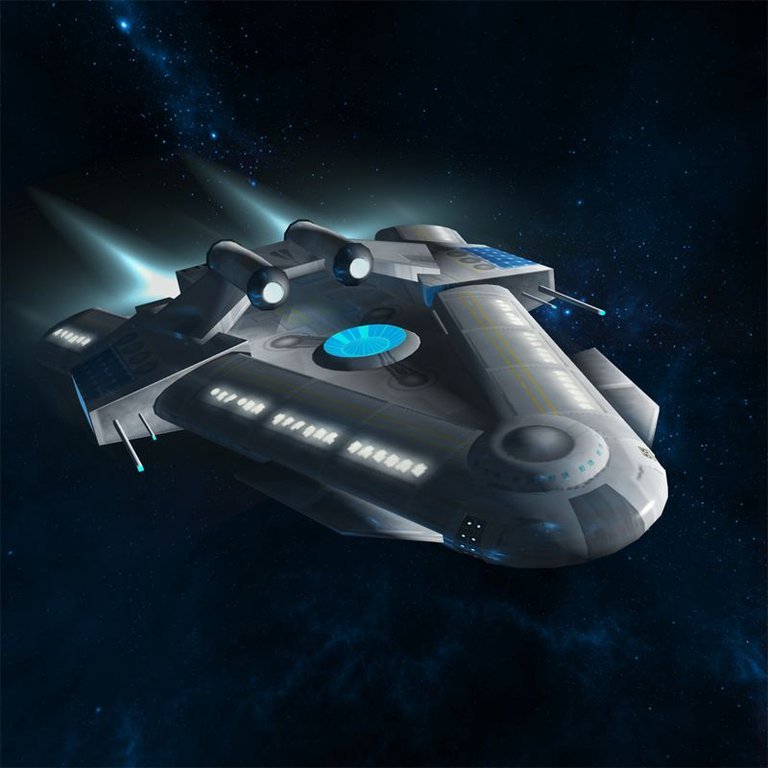
The Agent Saga: Rover Rescue is a sci-fi action-strategy game where players must navigate a spaceship across ten planets to rescue stranded people while avoiding millions of meteors. The game features 3D levels with gravity, power-ups, and upgrades, all set within a solar system inspired by real NASA imagery. Players race against time to save as many lives as possible while collecting salvage, all while uncovering a story tied to the larger Agent Saga universe.
Gameplay Videos
The Agent Saga: Rover Rescue Guides & Walkthroughs
The Agent Saga: Rover Rescue Reviews & Reception
videogamegeek.com (50/100): A space themed action/strategy game.
The Agent Saga: Rover Rescue – A Hidden Gem in the Line-Drawing Genre
Introduction: A Frantic Rescue Mission Across the Solar System
The Agent Saga: Rover Rescue (2013) is a curious artifact of early mobile gaming—a title that defies easy categorization. At first glance, it appears to be a simple line-drawing game, a genre popularized by titles like Flight Control and Harbor Master. Yet beneath its unassuming surface lies a surprisingly ambitious blend of action, strategy, and sci-fi storytelling. Developed by the small but passionate team at Pointscape Pte. Ltd., Rover Rescue is a prelude to The Agent Saga: Fractured, a larger narrative universe that never fully materialized. This review will dissect the game’s development, mechanics, narrative, and legacy, arguing that while it may not have achieved widespread acclaim, it remains a fascinating experiment in mobile game design.
Development History & Context: A One-Man Army’s Vision
The Agent Saga: Rover Rescue was primarily the brainchild of Euan MacInnes, who served as project director, programmer, artist, and animator—a testament to the indie spirit of the early 2010s. The game was released on iPhone (September 21, 2013), followed by iPad and Windows (2014). Its development coincided with the rise of mobile gaming as a legitimate platform for experimental titles, yet it struggled to stand out in an increasingly crowded market.
Technological Constraints & Innovations
- Line-Drawing Mechanics in 3D Space: Unlike traditional 2D line-drawing games, Rover Rescue introduced 3D levels with gravity, a bold move that added depth (literally and figuratively) to the genre.
- Cross-Platform Challenges: The game’s transition from iOS to Windows highlighted the difficulties of adapting touch controls to PC, leading to mixed reception.
- NASA-Inspired Aesthetics: The menu system doubles as an audio-visual tour of the solar system, using real NASA imagery—a rare attention to detail in mobile games.
The Gaming Landscape of 2013
At the time of its release, mobile gaming was dominated by:
– Free-to-play giants (Clash of Clans, Candy Crush Saga)
– Endless runners (Temple Run 2, Subway Surfers)
– Minimalist puzzlers (Threes!, Monument Valley)
Rover Rescue’s premium pricing ($1 on iOS, $4.99 on Steam) and niche appeal made it a tough sell, despite its innovative mechanics.
Narrative & Thematic Deep Dive: A Sci-Fi Rescue Operation
Plot Summary
The game is set in The Agent Saga universe, where the Unified Earth (UE) organization oversees human colonization across the solar system. A catastrophic “solar event” disrupts communications, leaving colonies vulnerable to a system-wide meteor shower. Players take on the role of a UE Commander aboard the Anaeis, tasked with rescuing civilians using UE Model D Rescue Craft.
Themes & Tone
- Humanity’s Fragility in Space: The game’s premise underscores the precariousness of space colonization, a theme rarely explored in mobile games.
- Selflessness vs. Salvage: While the primary goal is rescue, players are also encouraged to collect salvage, introducing a moral dilemma—do you prioritize lives or resources?
- Minimalist Storytelling: The narrative is delivered through text logs and environmental details, avoiding cutscenes in favor of immersion.
Characters & World-Building
- The UE Anaeis Crew: Though faceless, the game’s procedural dialogue (e.g., distress calls) adds urgency.
- The Solar System as a Character: Each planet has distinct gravitational effects, reinforcing the game’s hard sci-fi tone.
Gameplay Mechanics & Systems: A Frantic Balancing Act
Core Gameplay Loop
- Draw Paths for Escape Pods: Players must guide civilian ships to safety by drawing trajectories.
- Avoid Meteors & Hazards: Obstacles require quick reflexes and strategic planning.
- Upgrade Your Commander: Progression unlocks speed boosts, shields, and salvage bonuses.
Innovations & Flaws
✅ 3D Gravity Mechanics: A standout feature that forces players to think in three dimensions.
✅ Dynamic Difficulty: Later levels introduce black holes and solar flares, increasing complexity.
❌ Clunky Controls on PC: The Windows port suffered from imprecise mouse controls, a common issue in touch-to-PC conversions.
❌ Repetitive Structure: Despite its depth, the core loop can feel grindy over time.
UI & Accessibility
- Solar System Menu: A visually stunning but occasionally confusing navigation system.
- Lack of Tutorial Depth: New players may struggle with the 3D path-drawing mechanics.
World-Building, Art & Sound: A Love Letter to Space Exploration
Visual Design
- NASA-Inspired Planets: The game’s celestial bodies are rendered with scientific accuracy, a rarity in mobile titles.
- Minimalist UI: The HUD avoids clutter, keeping focus on the action.
Sound & Music
- Ambient Space Soundtrack: Composed by Cloud Nine Audio, the score enhances immersion.
- Procedural Distress Calls: Randomized voice lines add tension.
Reception & Legacy: A Cult Classic in the Making?
Critical & Commercial Reception
- Mixed Reviews: Steam users reported technical issues, while iOS players praised its innovative mechanics.
- Niche Appeal: Its hard sci-fi tone and strategy elements alienated casual players.
Influence & Legacy
- Pioneered 3D Line-Drawing: Few mobile games have attempted similar mechanics since.
- Part of a Larger (Unfinished) Saga: The Agent Saga: Fractured was planned but never released, leaving Rover Rescue as a standalone curiosity.
Conclusion: A Flawed but Fascinating Experiment
The Agent Saga: Rover Rescue is a diamond in the rough—a game that dared to blend line-drawing, strategy, and hard sci-fi in an era dominated by freemium fluff. While its controls and repetition hold it back, its ambition and atmosphere make it worthy of rediscovery.
Final Verdict: 7/10 – A bold, if imperfect, innovation in mobile gaming.
For fans of:
– Line-drawing games (Flight Control, Harbor Master)
– Sci-fi strategy (FTL: Faster Than Light)
– Indie experiments (SpaceChem, Infinifactory)
Rover Rescue may not have changed gaming history, but it remains a testament to indie creativity—and a reminder that even small games can dream big.