
- Release Year: 2019
- Platforms: Windows
- Genre: Action
- Perspective: Side view
- Game Mode: Single-player
- Gameplay: Platform
- Setting: Futuristic, Sci-fi
- Average Score: 58/100
Description
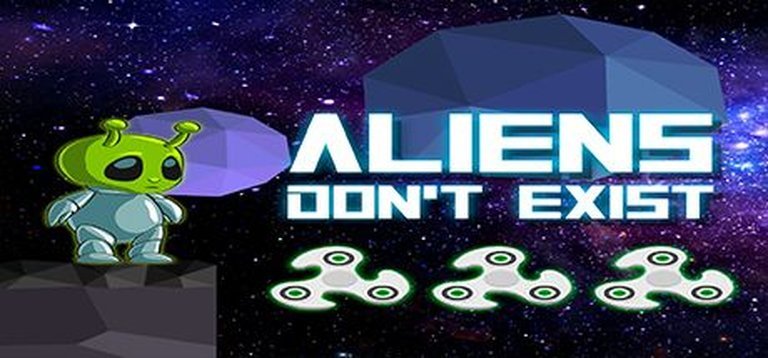
Aliens Don’t Exist is a sci-fi platformer where players control a stranded alien navigating a surreal, desert-like world filled with deadly traps and puzzles. The game’s core mechanic revolves around diagonal teleportation, which players must master to avoid obstacles like fidget spinners and moving enemies while searching for the elusive Black Door to progress through 30 levels. With a side-view perspective and 2D scrolling visuals, the game blends action and precision platforming in a futuristic setting.
Aliens Don’t Exist Patches & Updates
Aliens Don’t Exist Guides & Walkthroughs
Aliens Don’t Exist Reviews & Reception
steambase.io (68/100): Aliens Don’t Exist has earned a Player Score of 68 / 100.
thegamehoard.com : Aliens Don’t Exist is purely a platformer about hopping around rocks in space as an alien and you are given no explanation as to why it is doing so.
completionist.me (63/100): Game Rating: 63.46
Aliens Don’t Exist: A Flawed but Fascinating Experiment in Minimalist Platforming
Introduction: The Paradox of a Nameless Alien
Aliens Don’t Exist is a game that wears its contradictions on its sleeve. From its paradoxical title—asserting the nonexistence of aliens while casting the player as one—to its minimalist design and finicky mechanics, it is a title that defies easy categorization. Released in January 2019 by the obscure studio Ruskija Game Experience, this 2D side-scrolling platformer is a curious artifact of indie game development, embodying both the creative ambition and the technical limitations of small-scale projects. At its core, Aliens Don’t Exist is a game about teleportation, precision, and the frustrations of imperfect execution. It is a title that, despite its flaws, offers a glimpse into the potential of innovative mechanics, even when they are not fully realized.
This review will dissect Aliens Don’t Exist in exhaustive detail, exploring its development context, narrative (or lack thereof), gameplay systems, artistic direction, and its place in the broader landscape of indie games. By the end, we will determine whether this game is a forgotten gem, a cautionary tale, or something in between.
Development History & Context: The Birth of a Curious Experiment
The Studio Behind the Game
Aliens Don’t Exist was developed by Ruskija Game Experience, a studio with a limited portfolio and little public presence. The game was published by Tero Lunkka and Morning Shift Studios, the latter of which has been involved in a handful of other indie titles. The development team’s obscurity is reflected in the game’s minimal marketing and lack of pre-release hype. It emerged quietly on Steam in early 2019, priced at a modest $0.49—a reflection of its indie roots and perhaps an acknowledgment of its limitations.
The game was built using the Unity engine, a popular choice for indie developers due to its accessibility and versatility. However, Aliens Don’t Exist does not push the engine’s capabilities, instead opting for a simple, almost retro aesthetic that harkens back to the platformers of the early 2000s.
The Gaming Landscape of 2019
2019 was a year of both blockbuster releases and indie darlings. Games like Sekiro: Shadows Die Twice, Resident Evil 2 Remake, and The Outer Worlds dominated headlines, while indie titles such as Hollow Knight, Celeste, and Dead Cells continued to prove that smaller studios could deliver polished, innovative experiences. Aliens Don’t Exist, however, arrived without fanfare, overshadowed by more ambitious projects.
The platformer genre in 2019 was thriving, with games like Celeste and Super Meat Boy Forever setting high standards for precision platforming. Aliens Don’t Exist attempted to carve out its own niche with its teleportation mechanic, but it lacked the polish and depth of its contemporaries.
Technological Constraints and Design Choices
The game’s development was likely constrained by budget and time, resulting in a product that feels unfinished. The teleportation mechanic, while innovative, is marred by imprecise controls and inconsistent hit detection. The absence of a targeting reticle in later levels suggests that the developers may have underestimated the difficulty players would have in mastering the mechanic.
The game’s 30 levels are short, with most taking only a few minutes to complete. This brevity, combined with the lack of additional content (such as collectibles or hidden areas), makes Aliens Don’t Exist feel more like a prototype than a fully realized game.
Narrative & Thematic Deep Dive: The Absence of Story
The Premise: A Nameless Alien in a Deadly Labyrinth
The game’s Steam description sets up a simple premise:
“The road of adventure sometimes leads to a dead end. Thus, our nameless alien, who left his home in search of new worlds, fell into a trap, having landed in an unfamiliar desert drifting in outer space. The ship is gone, the earth has gone mad and spinning fidget spinners have materialized everywhere! Help the courageous space explorer to survive all the attacks of fate and get out of the deadly labyrinth of an unexplored world!”
This blurb is the extent of the game’s narrative. There is no dialogue, no cutscenes, and no explanation for why the alien is trapped or what the “fidget spinners” (which are actually saw-like hazards) represent. The game’s title, Aliens Don’t Exist, is never addressed, leaving players to wonder if it is a meta-commentary, a joke, or simply a misnomer.
Themes: Isolation and Futility
Despite its lack of story, Aliens Don’t Exist conveys a sense of isolation and futility. The alien is alone in a hostile environment, with no clear goal beyond reaching the next black door. The game’s minimalist design reinforces this theme, as the player is given no context or motivation beyond survival.
The absence of an ending—players simply stand in front of the final door without any resolution—further emphasizes the game’s nihilistic tone. There is no victory, no explanation, and no reward beyond the Steam achievement that confirms completion.
The Paradox of the Title
The game’s title is its most intriguing narrative element. By asserting that “aliens don’t exist” while casting the player as an alien, the game creates a paradox that is never resolved. This could be interpreted as:
– A meta-joke about the player’s suspension of disbelief.
– A commentary on the alien’s own existential crisis.
– A simple case of poor naming.
Regardless of the intention, the title remains one of the game’s most memorable aspects, even if it is never explored within the game itself.
Gameplay Mechanics & Systems: The Teleportation Gimmick
Core Gameplay Loop
Aliens Don’t Exist is a 2D side-scrolling platformer with a single core mechanic: teleportation. The player controls a small, melancholic-looking alien who can:
1. Jump: A standard platforming leap.
2. Teleport: A short-range blink that can be used to traverse gaps, avoid hazards, or defeat enemies.
The teleportation mechanic is the game’s defining feature, but it is also its greatest flaw.
Teleportation: Innovation vs. Execution
The teleportation system is controlled by pressing W, D, and the left mouse button to teleport diagonally. This allows the alien to:
– Phase through platforms: Teleporting above or below obstacles.
– Defeat enemies: Teleporting into enemy ships to destroy them.
– Navigate hazards: Avoiding saw-like “fidget spinners” and moving platforms.
However, the mechanic is plagued by issues:
1. Imprecision: Teleporting requires the player to be in motion, making precise landings difficult.
2. Lack of Feedback: Early levels include a targeting reticle, but later levels remove it, forcing players to guess their landing spot.
3. Inconsistent Hit Detection: Teleporting into walls or enemies can feel unpredictable, leading to frustrating deaths.
Level Design: From Tutorial to Tedium
The game’s 30 levels are divided into two distinct phases:
1. Early Levels (1-10): Simple, tutorial-like stages that introduce the teleportation mechanic.
2. Later Levels (11-30): More complex arrangements that require precise teleportation and quick reflexes.
The later levels are where the game shines, offering challenging platforming sequences that test the player’s mastery of the teleportation mechanic. However, the brevity of the game means that these moments are fleeting, and the experience ends just as it begins to get interesting.
Enemies and Hazards
The game features two primary threats:
1. Fidget Spinners (Saws): Stationary hazards that instantly kill the player on contact.
2. Moving Enemy Ships: Patrol routes that must be avoided or destroyed via teleportation.
The enemy ships add a layer of challenge, as players must time their teleports to avoid collision. However, the lack of variety in hazards and enemies makes the gameplay feel repetitive.
Progression and Replayability
Aliens Don’t Exist offers no additional content beyond its 30 levels. There are no collectibles, hidden areas, or unlockable abilities. The game’s Steam achievements are tied to level completion, but there is no incentive to replay levels beyond personal satisfaction.
The lack of replayability is a significant drawback, as the game’s short length (most players complete it in under two hours) leaves little reason to return.
World-Building, Art & Sound: A Minimalist Aesthetic
Visual Design: Retro Simplicity
The game’s visual style is minimalist and retro, reminiscent of early 2000s Flash games or Xbox 360 indie titles. The alien protagonist is a small, round creature with a sad expression, and the environments consist of floating platforms, saw blades, and the occasional enemy ship.
The color palette is muted, with shades of gray and green dominating the scenery. The lack of detail gives the game a sterile, almost clinical feel, which aligns with its themes of isolation and futility.
Sound Design: Silence and Simplicity
The game’s audio is equally minimalist. There is no soundtrack, and the only sounds are the alien’s teleportation noise and the occasional hum of enemy ships. The absence of music reinforces the game’s lonely atmosphere but also makes the experience feel hollow.
Atmosphere: A Deadly Labyrinth
The game’s setting—a “deadly labyrinth of an unexplored world”—is conveyed through its level design. The floating platforms and hazards create a sense of disorientation, as if the alien is trapped in a surreal, inescapable maze. The lack of narrative context only heightens this feeling, leaving players to wonder why they are navigating this hostile environment.
Reception & Legacy: A Forgotten Experiment
Critical Reception: Mixed but Mostly Negative
Aliens Don’t Exist received a 43% score from The Game Hoard, which criticized its imprecise controls and lack of depth. The reviewer noted that while the teleportation mechanic had potential, its execution was flawed, leading to frustration rather than enjoyment.
On Steam, the game has a Mixed rating, with players praising its uniqueness but criticizing its short length and technical issues. Many players compared it to Flash games or Xbox 360 indie titles, highlighting its retro feel but also its lack of polish.
Commercial Performance: A Niche Product
The game’s low price ($0.49) and lack of marketing meant that it never achieved widespread success. According to Steambase, it has sold fewer than 1,000 copies, making it a commercial non-entity. However, its obscurity has also made it a curiosity among indie game enthusiasts, who appreciate its odd charm.
Influence and Legacy: A Cautionary Tale
Aliens Don’t Exist is not a game that will be remembered for its innovation or influence. Instead, it serves as a cautionary tale about the importance of polish and precision in platformers. Its teleportation mechanic had potential, but the game’s technical limitations and lack of depth prevented it from realizing that potential.
That said, the game’s minimalist design and surreal atmosphere have earned it a small cult following. It is a title that, despite its flaws, offers a unique experience for those willing to overlook its rough edges.
Conclusion: A Flawed but Fascinating Experiment
Aliens Don’t Exist is a game of contradictions. It is innovative yet flawed, minimalist yet ambitious, and surreal yet forgettable. Its teleportation mechanic is a clever twist on traditional platforming, but its imprecise execution and lack of depth prevent it from being a great game.
For players who enjoy experimental indie titles or retro platformers, Aliens Don’t Exist offers a brief but intriguing experience. However, those seeking polished gameplay or a compelling narrative will likely find it frustrating and underwhelming.
Final Verdict: 5/10 – A Flawed Experiment Worth Exploring
Aliens Don’t Exist is not a game for everyone, but it is a fascinating artifact of indie game development. Its flaws are numerous, but its ambition and uniqueness make it a title worth experiencing—if only to appreciate the potential of its central mechanic.
Recommendation: Play it if you enjoy obscure indie games or are curious about innovative platforming mechanics. Skip it if you prefer polished, fully realized experiences.
Additional Notes: The Game’s Place in History
Aliens Don’t Exist is a reminder that not every game needs to be a masterpiece to be worth remembering. Its flaws are part of its charm, and its obscurity only adds to its mystique. In a gaming landscape dominated by blockbusters and highly polished indie darlings, Aliens Don’t Exist stands as a testament to the creativity and ambition of small-scale developers—even when their vision is not fully realized.
For those who dare to explore its deadly labyrinth, it offers a brief but memorable journey—one that is as frustrating as it is fascinating.