
- Release Year: 2004
- Platforms: Windows
- Publisher: Digital Jesters Ltd., dtp digital tainment pool GmbH, Focus Home Interactive SAS, Game Factory Interactive Ltd., Puntosoft Interactive SL, Russobit-M
- Developer: Cyanide S.A.
- Genre: Driving, Racing, Simulation, Sports
- Perspective: 3rd-person
- Game Mode: Online PVP, Single-player
- Gameplay: Bicycling, Bike, Business simulation, Managerial, Vehicular
- Setting: Country, France
- Average Score: 76/100
Description
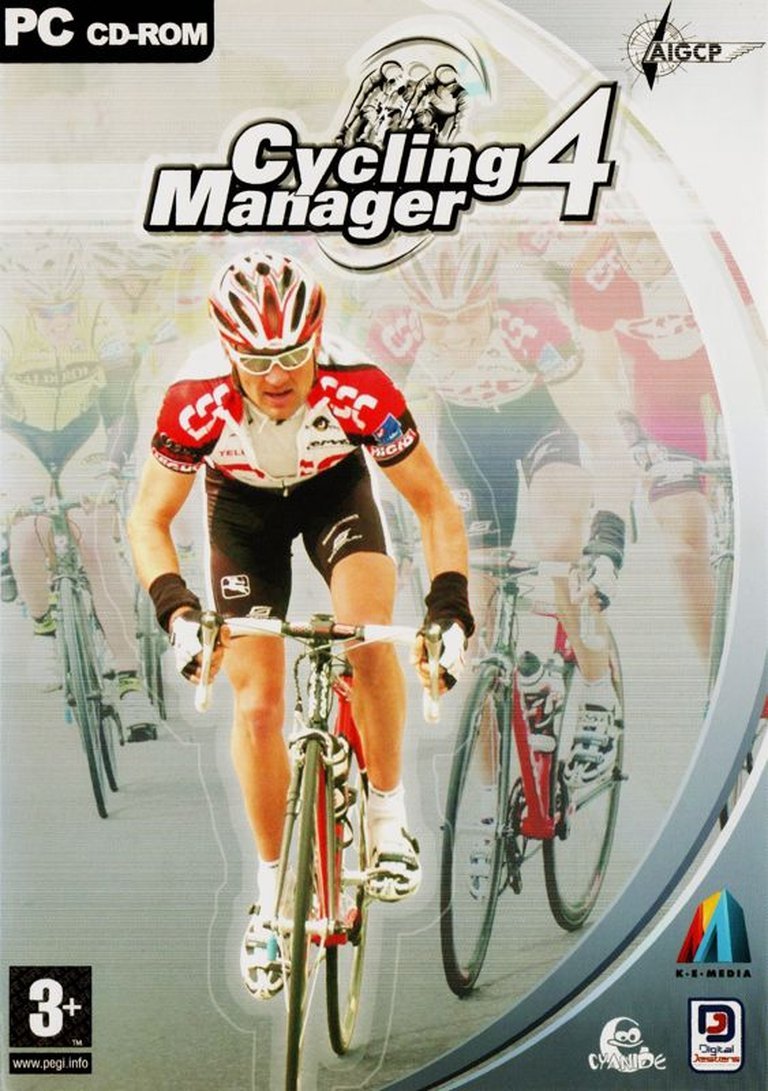
Cycling Manager 4 is a managerial simulation game where players take on the role of a professional cycling team manager. The game tasks you with handling contracts, budgets, training, race tactics, and scouting talent, featuring over 1,300 riders and 300 real-time 3D races. The fourth installment introduces a reworked interface, improved AI, weather effects, 18 new national championships, a time trial mode, and enhanced training systems. With a focus on realism and strategy, players can also control their team during races using a motorcycle TV camera for better oversight.
Gameplay Videos
Cycling Manager 4 Free Download
Cycling Manager 4 Patches & Updates
Cycling Manager 4 Guides & Walkthroughs
Cycling Manager 4 Reviews & Reception
mobygames.com (70/100): A triumphant return to form for the series.
gamepressure.com (83/100): Experience the tactics, the pressure and the pain of competitive racing with Cycling Manager 4.
mobygames.com (70/100): The management part of the game is really addictive. The potential for losing sleep and ruining your marriage is almost the same as in the football manager series.
Cycling Manager 4: A Deep Dive into the Pinnacle of Early Cycling Management Simulation
Introduction: The Unsung Hero of Sports Management Games
In the pantheon of sports management simulations, Cycling Manager 4 (2004) stands as a fascinating artifact—a game that, while overshadowed by its more polished successors and the juggernauts of football management, carved out a niche so deep that it remains a cult classic nearly two decades later. Developed by Cyanide S.A. and published by Focus Home Interactive, Cycling Manager 4 is the fourth installment in a series that dared to simulate one of the most tactically nuanced and physically demanding sports in the world: professional cycling.
At its core, Cycling Manager 4 is a game about strategy, endurance, and obsession. It tasks players with managing a professional cycling team—handling contracts, budgets, training regimens, race tactics, and the delicate psychology of riders pushed to their limits. With over 1,300 riders, 300 real-time 3D races, and a reworked interface that attempted to streamline the complexity of its predecessors, the game was an ambitious attempt to capture the essence of cycling’s brutal beauty.
Yet, Cycling Manager 4 is more than just a managerial spreadsheet with a racing veneer. It is a time capsule of early 2000s game design, a testament to the challenges of simulating a sport that is as much about team dynamics and environmental factors as it is about raw athleticism. It is also a game that, despite its flaws, hooked players with an almost addictive depth, earning comparisons to the Football Manager series in its ability to consume hours, days, and—if the warnings are to be believed—marriages.
This review will dissect Cycling Manager 4 from every angle: its development history, its narrative and thematic underpinnings, its gameplay mechanics, its aesthetic and technical limitations, its reception and legacy, and ultimately, its place in the annals of sports gaming history.
Development History & Context: The Birth of a Niche Giant
The Studio Behind the Pedals: Cyanide S.A.
Cyanide S.A., a French development studio founded in 2000, was no stranger to ambitious simulations by the time Cycling Manager 4 rolled into production. The studio had already established itself with titles like Pro Rugby Manager and earlier iterations of the Cycling Manager series. However, Cycling Manager 4 arrived at a pivotal moment for both the studio and the genre.
The early 2000s were a golden age for management simulations, with Championship Manager and Football Manager dominating the sports landscape. Yet, cycling—a sport with a rabid European fanbase but limited global appeal—remained largely untapped in the digital realm. Cyanide saw an opportunity to fill a void, leveraging the Tour de France’s cultural prestige and the growing popularity of cycling in countries like France, Belgium, and the Netherlands.
Technological Constraints and Ambitions
Cycling Manager 4 was developed in an era where hardware limitations were still a significant hurdle. The game’s system requirements—a Pentium III 600 MHz, 128 MB RAM, and a 16MB graphics card—reflect the technological landscape of 2004. While these specs were modest even for the time, Cyanide pushed the boundaries of what was possible, attempting to render real-time 3D races with dynamic weather effects and AI-driven tactics.
The game’s engine was custom-built, a necessity given the lack of off-the-shelf solutions for cycling simulations. This bespoke approach allowed for unique mechanics, such as the bio-rhythm system, which simulated riders’ performance fluctuations based on fatigue, morale, and training. However, it also meant that the game was prone to bugs, a recurring theme in early reviews.
The Gaming Landscape of 2004
In 2004, the sports simulation genre was dominated by EA Sports’ FIFA and Madden series, as well as Sega’s Football Manager (then still under the Championship Manager banner). Cycling, by comparison, was a niche interest, and Cycling Manager 4 had no direct competitors. This lack of competition was both a blessing and a curse:
- Blessing: Cyanide could define the genre without pressure from rival titles.
- Curse: The game had to educate players on the intricacies of cycling management, a steep learning curve that alienated casual gamers.
The game’s multiplayer mode, supporting up to 20 players online, was an ambitious feature for its time, reflecting the studio’s desire to foster a community around the title. However, the lack of widespread broadband adoption in 2004 meant that online play was limited to hardcore enthusiasts.
The Vision: Realism Over Spectacle
Cyanide’s vision for Cycling Manager 4 was clear: authenticity above all else. The studio collaborated with Eurosport, securing real commentary from Patrick Chassé (French) and David Duffield (English), lending the game a broadcast-quality feel. The inclusion of licensed teams, riders, and equipment further grounded the experience in reality.
Yet, the game’s realism extended beyond aesthetics. The AI was designed to mimic real-world cycling tactics, with riders forming breakaways, pelotons, and sprint trains based on their individual strengths and team roles. The weather system introduced dynamic race conditions, where rain could turn a straightforward stage into a slippery, chaotic battle of attrition.
However, this commitment to realism came at a cost. The game’s steep learning curve and complexity made it inaccessible to casual players, a criticism that would dog the series for years.
Narrative & Thematic Deep Dive: The Unseen Story of Cycling Manager 4
The Plot: A Silent Epic of Strategy and Endurance
Unlike traditional narrative-driven games, Cycling Manager 4 does not have a scripted story in the conventional sense. Instead, it crafts emergent narratives through its management and racing systems. The player’s journey is one of ascent, struggle, and (hopefully) triumph, as they guide a team from obscurity to glory.
The game’s career mode is its narrative backbone. Players begin by selecting or creating a team, then navigate the cutthroat world of professional cycling management. The story unfolds through:
- Contract negotiations (securing sponsors, signing riders, managing budgets).
- Training camps (preparing riders for specific races, balancing endurance and speed).
- Race-day tactics (deciding when to attack, when to conserve energy, and how to counter rivals).
- Scouting and development (discovering young talent, nurturing them into champions).
The absence of a traditional plot is not a weakness but a strength. The game’s narrative is dynamic, shaped by the player’s decisions and the unpredictability of AI opponents. A last-minute breakaway victory in the Tour de France or a devastating crash in the Giro d’Italia can create moments of drama that rival any scripted story.
Characters: The Riders, the Staff, the Rivals
While Cycling Manager 4 lacks fully fleshed-out characters with backstories, its riders and staff are defined by their attributes and roles:
- Riders are categorized by specializations:
- Sprinters (fast finishers, weak climbers).
- Climbers (excellent on mountains, poor in sprints).
- All-rounders (versatile but not dominant).
- Domestiques (support riders who sacrifice themselves for the team).
Each rider has hidden stats (morale, fatigue, potential) that influence their performance. The scouting system allows players to unearth hidden gems, adding a layer of discovery to the management experience.
-
Staff (doctors, mechanics, scouts) play crucial roles in maintaining the team’s performance. A good doctor can reduce injury recovery time, while a skilled mechanic ensures optimal bike performance.
-
Rival Teams are AI-controlled but exhibit distinct strategies. Some teams focus on sprints, others on mountain stages, and a few play defensively, waiting for opponents to tire.
Themes: The Brutality and Beauty of Cycling
Cycling Manager 4 explores several underlying themes that resonate with the sport it simulates:
-
The Sacrifice of the Domestique:
- In cycling, not every rider wins. The domestique is the unsung hero, the rider who burns themselves out to set up a teammate for victory. The game forces players to make tough choices: Do you sacrifice a promising young rider to ensure a star’s victory? Or do you nurture them for future glory?
-
The Unpredictability of Nature:
- Cycling is at the mercy of the elements. A sudden rainstorm can turn a race upside down, favoring climbers over sprinters. The game’s weather system reinforces this theme, punishing players who fail to adapt.
-
The Business of Sport:
- Behind the glamour of the Tour de France lies a cutthroat industry. Sponsors demand results, riders demand contracts, and one bad season can spell financial ruin. The game’s economic mechanics highlight the precarious nature of professional cycling.
-
The Psychology of Endurance:
- Cycling is as much a mental battle as a physical one. Riders hit walls, suffer crises of confidence, and burn out. The game’s morale and fatigue systems simulate this psychological toll, forcing players to manage not just bodies, but minds.
Dialogue and Presentation: The Voice of Cycling
The game’s commentary, provided by Eurosport’s Patrick Chassé and David Duffield, is a standout feature. While the lines are repetitive (a common criticism), the authenticity of the delivery adds immersion. The commentators react to race events, calling out breakaways, crashes, and sprint finishes with the excitement of a real broadcast.
However, the music and sound design are less successful. The background music is generic and forgettable, and the sound effects (bike chains, crowd noise) are functional but unremarkable. Many players, as noted in reviews, opt to mute the audio entirely.
Gameplay Mechanics & Systems: The Engine of Obsession
Core Gameplay Loop: Manage, Train, Race, Repeat
Cycling Manager 4 is built around a cyclical gameplay loop that mirrors the rhythm of a cycling season:
-
Pre-Season Planning:
- Budget allocation (sponsors, equipment, staff).
- Rider recruitment (signing new talent, renewing contracts).
- Training camp scheduling (preparing riders for key races).
-
Race Preparation:
- Team selection (choosing the right riders for each race).
- Tactical planning (deciding when to attack, when to defend).
- Equipment selection (bikes, wheels, tires optimized for terrain).
-
Race Execution:
- Real-time or simulated races (players can watch races unfold or skip to results).
- Tactical adjustments (changing strategies mid-race based on conditions).
-
Post-Race Analysis:
- Performance review (identifying strengths and weaknesses).
- Morale and fatigue management (resting riders, addressing injuries).
- Sponsor and fan reactions (securing future funding based on results).
This loop is repetitive but deeply satisfying, offering endless strategic depth for those willing to dive into its complexities.
Combat (Race Tactics): The Chess Match on Wheels
While Cycling Manager 4 is not a traditional combat game, its race tactics function as a turn-based strategy system. Players must outthink the AI by:
- Setting Pace: Deciding whether to push hard early or conserve energy for a late sprint.
- Forming Breakaways: Sending a small group of riders ahead to force the peloton to chase.
- Countering Attacks: Responding to rival breakaways with tactical positioning.
- Sprint Finishes: Timing the final burst of speed to cross the line first.
The AI is aggressive, often launching unexpected attacks that force players to adapt on the fly. However, the AI’s decision-making can be predictable, allowing experienced players to exploit patterns.
Character Progression: From Unknown to Legend
Rider development is central to long-term success. Players must:
- Train riders in specific disciplines (climbing, sprinting, endurance).
- Monitor fatigue and morale to prevent burnout.
- Scout for young talent and nurture them into stars.
The progression system is gradual but rewarding. A well-trained rider can dominate races, while a neglected one will underperform or quit.
UI and Accessibility: A Double-Edged Sword
The game’s user interface is functional but dated. The menu system is cluttered, with multiple layers of submenus that can overwhelm new players. The lack of tooltips and in-game tutorials exacerbates this issue, making the learning curve steep.
However, the reworked interface in Cycling Manager 4 was an improvement over its predecessors, offering better organization and quicker access to key features. The training and scouting systems were streamlined, though still complex by modern standards.
Innovative Systems: Weather and Bio-Rhythm
Two standout mechanics set Cycling Manager 4 apart:
-
Dynamic Weather System:
- Rain, wind, and temperature affect rider performance.
- Wet roads increase crash risk and favor climbers over sprinters.
- Headwinds slow the peloton, making breakaways harder to sustain.
-
Bio-Rhythm System:
- Riders experience performance peaks and troughs based on training and fatigue.
- Overtraining leads to burnout, while undertraining results in poor form.
- Players must time fitness peaks to coincide with major races.
These systems add layers of realism but also increase complexity, contributing to the game’s steep learning curve.
Flawed Systems: AI and Balance Issues
Despite its strengths, Cycling Manager 4 suffers from several flaws:
-
AI Inconsistencies:
- The AI can be **too aggressive in some races and too passive in others.
- Rival teams sometimes make illogical tactical decisions, such as attacking on flat stages when they have no sprinters.
-
Difficulty Imbalance:
- On lower difficulty settings, the game is too easy, allowing players to win every stage with minimal effort.
- On higher difficulties, the AI can feel unfair, with rival riders exhibiting superhuman endurance.
-
Bugs and Stability Issues:
- The initial release was plagued with bugs, including crashes, corrupted saves, and AI glitches.
- Patches (notably v1.3R and v1.4) fixed many issues, but some persisted, requiring community-made fixes.
-
Database Accuracy:
- The default rider database was outdated and inaccurate, a common issue in sports games of the era.
- Fan-made databases (such as PPDB 2005) became essential for an authentic experience.
World-Building, Art & Sound: The Aesthetic of the Peloton
Setting and Atmosphere: The Romance of the Road
Cycling Manager 4 captures the essence of professional cycling’s most iconic races:
- Tour de France (the pinnacle of cycling, with its legendary mountain stages).
- Giro d’Italia (known for its brutal climbs and unpredictable weather).
- Vuelta a España (a test of endurance in the Spanish heat).
- Classics (one-day races like Paris-Roubaix, famous for its cobbled sections).
The game’s 3D landscapes attempt to recreate these iconic routes, though technological limitations result in simplified environments. The European countryside is rendered in broad strokes, with generic villages, forests, and mountains that lack detail but convey the scale of the races.
Visual Direction: Functional but Uninspired
The graphics of Cycling Manager 4 are a product of their time:
- Rider models are blocky and stiff, with limited animations.
- Bike physics are basic, with little sense of weight or momentum.
- Crowds and spectators are low-poly placeholders.
- Weather effects (rain, fog) are impressive for 2004 but lack depth.
Despite these limitations, the 3D races are functional, providing enough visual feedback to understand race dynamics. The motorcycle TV camera (a new feature in Cycling Manager 4) adds a cinematic touch, allowing players to follow riders from a dynamic angle.
Sound Design: The Symphony of the Peloton
The audio experience in Cycling Manager 4 is mixed:
- Commentary: The Eurosport commentary is the highlight, with Patrick Chassé and David Duffield delivering authentic, engaging calls. However, the repetitive lines become grating over time.
- Music: The background music is generic and forgettable, with looping tracks that fail to capture the drama of cycling.
- Sound Effects: The bike chains, wind noise, and crowd murmurs are functional but lack immersion.
Many players opt to mute the music and rely on commentary alone, a testament to the weakness of the audio design.
Atmosphere: The Loneliness of the Long-Distance Manager
Cycling Manager 4 excels in creating a sense of isolation. Managing a cycling team is a solitary endeavor, and the game reinforces this through its minimalist presentation. There are no cutscenes, no dramatic narratives, just the cold, hard numbers of budgets, stats, and race results.
Yet, within this austerity, there is beauty. The thrill of a last-minute victory, the agony of a crashed rider, the slow, methodical climb to the top of the rankings—these moments create their own atmosphere, one of quiet determination and strategic brilliance.
Reception & Legacy: The Game That Refused to Fade Away
Critical Reception: A Niche Masterpiece with Flaws
Cycling Manager 4 received mixed but generally positive reviews, with critics praising its depth and realism while criticizing its accessibility and technical issues.
| Publication | Score | Key Praise | Key Criticism |
|---|---|---|---|
| JeuxVideoPC.com | 80% | Deep management, improved AI | Steep learning curve |
| GamesFire | 79% | Realistic races, good AI | Lack of depth in management |
| 4Players.de | 76% | Authentic cycling experience | Repetitive graphics, outdated names |
| GameSpot (Benelux) | 76% | Best cycling sim available | Niche appeal, lacks polish |
| Jeuxvideo.com | 75% | Addictive, realistic | AI still needs work |
| GameStar (Germany) | 74% | Time trials add depth | Graphics are dated |
| Gamigo | 73% | Great for cycling fans | Not enough for pure management fans |
| DarkZero | 72% | Best in its genre | Limited appeal outside cycling fans |
| Joystick (France) | 70% | Faithful to cycling | Graphics and sound are weak |
| Gameplay (Benelux) | 65% | Only for hardcore fans | Too niche, lacks innovation |
Common Praise:
– Addictive management gameplay.
– Realistic race tactics and AI.
– Authentic cycling experience.
Common Criticisms:
– Steep learning curve.
– Dated graphics and sound.
– Buggy initial release.
– Niche appeal (not for casual gamers).
Player Reception: A Cult Following
Player reviews were even more polarized. The game’s MobyGames player score is 3.3/5, with one review summarizing the experience:
“The management part of the game is really addictive. The potential for losing sleep and ruining your marriage is almost the same as in the football manager series. The graphics are quite ugly, the music is really annoying, and the commentator is pretty simplistic. Turn off the sound. It is possible to win almost every stage if you play it correctly. The first versions were more bugged than a termite’s nest, but patches fixed most issues. With a good database update, it’s a great experience.”
This sentiment is echoed across forums, where hardcore cycling fans praise the game’s depth while casual players find it overwhelming.
Legacy: The Foundation of a Franchise
Cycling Manager 4 was not a commercial blockbuster, but it laid the groundwork for the Pro Cycling Manager series, which continues to this day. Its innovations—such as the bio-rhythm system, dynamic weather, and real-time race tactics—became staples of the genre.
The game’s modding community also played a crucial role in its longevity. Fan-made databases, patches, and UI improvements kept the game playable and relevant long after its release.
Influence on the Genre
Cycling Manager 4 proved that cycling could be a viable subject for deep management simulations. Its success inspired later titles, including:
- Pro Cycling Manager (2005–present): The direct successor, refining the formula with better graphics, deeper mechanics, and official licenses.
- Tour de France series: Spin-offs focusing more on racing than management.
- Other niche sports managers: Games like Pro Rugby Manager and Pro Tennis Manager owed a debt to Cycling Manager 4’s bold approach to simulating lesser-known sports.
Conclusion: The Unsung Champion of Sports Management
Cycling Manager 4 is not a perfect game. Its graphics are dated, its sound design is forgettable, and its learning curve is steep. Yet, beneath these surface-level flaws lies a game of remarkable depth, one that captures the essence of professional cycling in a way few titles have matched.
It is a game for the obsessed, for those who see beauty in spreadsheets and strategy, for those who understand that cycling is not just about speed, but about endurance, sacrifice, and tactics. It is a game that demands patience but rewards persistence, offering moments of triumph that feel earned in a way few modern games can replicate.
In the pantheon of sports management simulations, Cycling Manager 4 may not sit alongside Football Manager or Championship Manager in terms of mainstream appeal, but it carved out a niche that remains unmatched in its authenticity and depth.
Final Verdict: 8/10 – A Flawed Masterpiece
Cycling Manager 4 is not for everyone, but for cycling enthusiasts and management sim aficionados, it is an essential experience. Its addictive gameplay, realistic mechanics, and emergent narratives make it a standout title in the history of sports simulations.
Should You Play It Today?
– Yes, if: You love deep management sims, have patience for complexity, and are willing to mod for the best experience.
– No, if: You prefer accessible, polished games with modern graphics and sound.
Cycling Manager 4 is a relic of a bygone era, but it is also a testament to the power of niche game design. It proves that passion, not polish, is what makes a game truly great.
Final Thought:
In a world where sports games prioritize spectacle over substance, Cycling Manager 4 remains a rare gem—a game that dares to be complex, uncompromising, and deeply rewarding for those who embrace its challenges. It is not just a game about cycling; it is a game about obsession, and in that, it succeeds brilliantly.