
Description
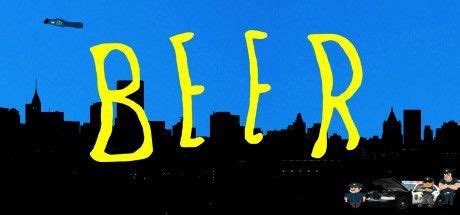
Beerman is a 2D side-scrolling action-adventure game set in Boston, where players take on the role of a reluctant superhero returning from Hollywood to combat the villainous Society of the Ninth. This nefarious group seeks to addict the city’s citizens to a dangerous drug and impose a new era of prohibition. Teaming up with the Boston PD, Beerman must traverse land, sea, and air to dismantle the Society’s machines and save the city from their sinister plot. The game blends arcade-style shooter gameplay with a quirky, narrative-driven adventure, offering a mix of action, humor, and nostalgic superhero tropes.
Where to Buy Beerman
PC
Beerman Patches & Updates
Beerman Guides & Walkthroughs
Beerman Reviews & Reception
store.steampowered.com (76/100): Mostly Positive
Beerman: A Reluctant Hero’s Satirical Crusade Against Prohibition 2.0
Introduction: The Last Call for a Forgotten Hero
In the pantheon of indie games, Beerman (2016) stands as a bizarre, brash, and unapologetically weird artifact—a game that defies easy categorization. Part side-scrolling shooter, part absurdist comedy, and part social satire, it’s a title that emerged from the fever dream of a single developer, Lee Davidson (aka VS1Toronto), whose personal frustrations and dark humor bled into every pixel. At its core, Beerman is a love letter to Boston, a middle finger to prohibition, and a chaotic ode to the anti-heroes who stumble into greatness.
This review will dissect Beerman in exhaustive detail, exploring its origins, its narrative eccentricities, its gameplay quirks, and its legacy as a cult curiosity. We’ll examine how a game born from a taxi driver’s rage and a university exercise evolved into a full-fledged indie oddity, and why its blend of Family Guy-esque humor, retro arcade mechanics, and surprisingly sharp social commentary makes it a fascinating footnote in gaming history.
Development History & Context: From Taxi Rage to Steam Greenlight
The Birth of a Beered Crusader
Beerman was not conceived in a boardroom or a high-budget studio. It was born in the mind of Lee Davidson, a former taxi driver in Glasgow, Scotland—self-described as the “murder capital of Europe”—whose nine years of night shifts left him disillusioned with humanity. The game’s genesis traces back to a university exercise where Davidson was instructed to “take the leash off your brain” and write the first thing that came to mind. What emerged was the image of an irritable, aging superhero who hurled beer cans at people and verbally abused bystanders.
This wasn’t just a game; it was therapy. Davidson has openly admitted that Beerman was a way to exorcise the anger and cynicism he’d absorbed from years of ferrying drunk, violent, and otherwise unpleasant passengers. The alternative, as he joked in interviews, was a “spree kill”—a darkly humorous nod to the game’s underlying tension between absurdity and genuine frustration.
Technological Constraints & the Indie Grind
Developed using Unity 5, Beerman is a 2D side-scrolling shooter with a visual style that evokes classic arcade games and adult animated series like Family Guy or Futurama. Davidson handled every aspect of production himself:
– Art & Animation: Using a Huion 2048 stylus and Paint.NET, he spent months drawing and animating sprites. The game’s most infamous example of labor-intensive work? The tank in Level 7, which appears on-screen for a mere two seconds but took six hours to animate.
– Voice Acting: Davidson performed all character voices, leading to a complaint from neighbors who thought multiple people were screaming in his home. The local council even investigated him for “multiple occupancy.”
– Sound Design: The game’s soundtrack includes tracks like “The Lord of Evil” for its climactic boss battles, carefully selected to match the over-the-top tone.
The development process was isolating and grueling, with Davidson often working late into the night after university classes. The game was initially intended as a single-level experiment to learn game design before moving on to another project (Croc Runner). However, Beerman “developed arms and legs,” morphing into a full game with a sprawling narrative and cast of eccentric characters.
The Steam Greenlight Gauntlet
Beerman’s path to release was as chaotic as its protagonist. Davidson employed unconventional tactics to navigate Steam Greenlight, a notoriously competitive and often toxic environment. He:
– Linked the game’s website to its Greenlight page to boost visibility.
– Allegedly received help from an Argentinian publicity firm (though he refused to confirm this, citing the corrupt nature of Greenlight).
– Rallied the “Duck Society” (a Steam group) to defend a Mexican high school’s game (Ducks in Space) from trolls, earning allies in the process.
Greenlight, as Davidson described it, was “more corrupt than Wall Street”, a place where honesty was a liability. His experience reflects the brutal realities of indie game marketing in the mid-2010s, where standing out required either sheer luck, shameless self-promotion, or a bit of both.
Narrative & Thematic Deep Dive: Prohibition, Fast Food, and the Ninth Cheek
Plot Summary: Boston’s Second Prohibition
Beerman’s story is a satirical alternate history that blends real-world events with absurd fiction. The game opens in the 1980s, where our titular hero—Beerman—was a stunt double for fraudulent Hollywood superheroes (a jab at the commodification of heroism). With crime in Boston eradicated post-Prohibition, Beerman found himself out of work until Hollywood no longer needed “real” actors.
Fast forward to the present (or the game’s version of it), and Boston faces a new prohibition—this time orchestrated by The Society of the Ninth Cheek, a villainous organization led by Fatula, a former Mexican snack tycoon. Fatula’s origin story is a masterclass in dark comedy:
– He made a fortune selling powdered snacks in Mexico.
– To stay competitive, he developed MRG, a super-addictive chemical.
– In a drunken celebration, he fell into a vat of MRG, becoming a fast-food addict who believes obesity is the key to happiness.
– His mission? Eliminate alcohol (which suppresses appetite) so people can grow a ninth cheek before heart failure.
The Society’s plan is to addict Boston’s citizens to MRG-laced snacks, then export the drug across America. Beerman, now a washed-up, bitter has-been, is called back into action to save the city’s hotels, streets, and shores from the Society’s mechanized onslaught.
Themes: Addiction, Consumerism, and the Absurdity of Morality
Beerman is not subtle in its themes, but it’s also not shallow. Beneath the crude humor and over-the-top action lies a scathing critique of:
1. Corporate Greed & Addiction:
– Fatula’s backstory mirrors real-world fast-food and pharmaceutical industries, where companies engineer addiction for profit.
– The game’s MRG drug is a stand-in for processed foods, sugar, and GMOs, with Davidson hinting at their health consequences in interviews.
– The Society’s name—The Ninth Cheek—is a grotesque metaphor for unchecked consumption leading to self-destruction.
-
The Hypocrisy of Prohibition:
- The game frames prohibition as a cycle of control, where governments and corporations dictate what people can consume.
- Beerman, a reluctant hero who drinks on the job, embodies the rebellion against puritanical restrictions.
-
The Illusion of Heroism:
- Beerman is not a traditional hero. He’s cynical, irritable, and flawed—a far cry from the caped crusaders he once doubled for in Hollywood.
- The game mocks the superhero genre, suggesting that real heroism is messy, unglamorous, and often unintentional.
-
Satire of Social Movements:
- Vegan Bob, a deranged villain, is a parody of extreme veganism, born from Davidson’s own failed vegetarian experiment (which left him unable to recognize traffic lights).
- The game takes shots at feminism, though Davidson clarifies it’s aimed at toxic, dogmatic factions rather than the movement itself.
Characters: A Rogues’ Gallery of Absurdity
- Beerman: The anti-hero protagonist, a former Hollywood stuntman turned alcoholic savior. His irritability reflects Davidson’s own frustrations.
- Fatula: The obese, fast-food-addicted mastermind of The Society of the Ninth Cheek. His motivations are both hilarious and horrifying.
- Vegan Bob: A deranged vegan hitman whose backstory involves forced vegetarianism driving him insane.
- Brabus: A Jamaican enforcer who survives being blown out of a tank, bouncing off buildings, and landing on fire—because, as Davidson puts it, “Jamaicans can’t do uncool.”
- The Mayor of Boston: A loud, bombastic figure whose voice nearly got Davidson investigated for noise complaints.
Gameplay Mechanics & Systems: Arcade Chaos with a Side of Beer
Core Gameplay Loop: Shoot, Fly, and Insult
Beerman is a side-scrolling shooter with arcade-style mechanics, blending:
– Run-and-gun combat: Players shoot beer cans, bottles, and other projectiles at enemies.
– Flight mechanics: Beerman can hover and fly, allowing for vertical combat and dodging.
– Dialogue interactions: The game features optional verbal abuse (a nod to Davidson’s original concept).
The game is divided into eight levels, each with:
– Unique enemy types (from Society grunts to mechanized tanks).
– Boss battles (including Fatula’s giant snack machine).
– Cutscenes that advance the absurd plot.
Combat & Progression: Simple but Satisfying
- Weapons:
- Beer cans (basic projectile).
- Bottles (stronger, limited ammo).
- Special attacks (unlocked via power-ups).
- Movement:
- Ground combat (limited by Beerman’s sluggishness).
- Flight (essential for dodging and reaching high enemies).
- Health & Upgrades:
- Cheeseburgers (health pickups, a nod to Davidson’s post-vegetarian breakdown).
- Power-ups (temporary boosts like rapid fire or invincibility).
UI & Controls: Retro Simplicity
- The game uses a minimalist HUD, displaying:
- Health bar.
- Ammo count.
- Score (a callback to classic arcade games).
- Controls are keyboard-focused, with optional controller support (added post-launch).
Flaws & Frustrations
While Beerman is charming in its chaos, it suffers from:
– Repetitive gameplay: The core loop doesn’t evolve much, leading to fatigue in later levels.
– Clunky movement: Beerman’s flight controls can feel imprecise, especially in tight spaces.
– Lack of difficulty scaling: Some sections spike in difficulty, leading to cheap deaths.
– Limited replayability: Once completed, there’s little incentive to revisit outside of achievement hunting.
World-Building, Art & Sound: Boston as a Battleground of Absurdity
Setting: A City Under Siege
Beerman’s Boston is a hyper-stylized, cartoonish version of the real city, with:
– Iconic landmarks (hotels, docks, streets) reimagined as war zones.
– The Society’s machines (giant snack-dispensing tanks, flying fortresses) dominating the skyline.
– A gritty, comedic tone that blends noir and slapstick.
Visual Style: A Love Letter to Adult Animation
The game’s 2D sprite-based art draws heavy inspiration from:
– Adult swim cartoons (Family Guy, Futurama).
– Classic arcade shooters (Metal Slug, Contra).
– Comic book aesthetics (bold outlines, exaggerated expressions).
The character designs are intentionally grotesque:
– Fatula is a mountain of flesh with a permanent grin.
– Vegan Bob is a wild-eyed, emaciated zealot.
– Beerman himself is a middle-aged, pot-bellied anti-hero in a tattered cape.
Sound Design: Voice Acting as a One-Man Show
Davidson’s self-performed voice work is either brilliant or cringe-inducing, depending on taste. Highlights include:
– The Mayor’s booming, over-the-top rants.
– Fatula’s gleefully evil monologues.
– Beerman’s sarcastic quips (e.g., “You call that a punch? My granny hits harder!”).
The soundtrack is a mix of:
– Royalty-free tracks (e.g., “The Lord of Evil” for boss battles).
– Arcade-style chiptune for standard levels.
– Silence in key moments (used for comedic effect).
Reception & Legacy: A Cult Classic in the Making?
Critical & Commercial Reception
Beerman launched on Steam in August 2016 to mixed but generally positive reviews:
– Steam User Score: 76% Positive (26 reviews).
– Metacritic: No critic reviews (a common fate for ultra-niche indies).
– Sales: Modest, with the game frequently discounted to $0.81.
Players praised:
✅ The humor and originality.
✅ The absurd story and characters.
✅ The retro arcade feel.
Criticisms included:
❌ Repetitive gameplay.
❌ Clunky controls.
❌ Short length (~3-4 hours).
Legacy & Influence
While Beerman never became a mainstream hit, it developed a small but devoted fanbase:
– Steam community guides (e.g., “Game Configuration Settings”) helped players optimize graphics.
– Nominations: It was nominated for “Best Small Budget Game” at the Scottish Games Awards 2023.
– Ports: The game was later released on Android and Windows apps, though with scaled-down graphics due to mobile limitations.
Davidson has hinted at a sequel (Beerman 2: Toronto Nights), which would:
– Move the action to Toronto.
– Introduce Vegan Bob’s Canadian brother (a polite but deranged criminal).
– Expand the lore of The Society of the Ninth Cheek.
Conclusion: A Flawed but Fascinating Relic of Indie Gaming
Beerman is not a perfect game. Its gameplay is repetitive, its controls are clunky, and its humor won’t land for everyone. But what it lacks in polish, it makes up for in personality.
This is a game born from rage, humor, and sheer determination—a one-man passion project that defies convention. It’s a satirical middle finger to prohibition, corporate greed, and the illusion of heroism. It’s Boston as a battleground, beer as a weapon, and a washed-up stuntman as the city’s last hope.
In the grand tapestry of indie games, Beerman is a minor but memorable thread—a reminder that the best games often come from the weirdest places.
Final Verdict: 7/10 – “A Drunken Masterpiece of Absurdity”
Play it if: You love offbeat humor, retro shooters, and games with soul.
Avoid it if: You demand tight controls, deep mechanics, or political correctness.
Beerman is not for everyone, but for those who get it, it’s an experience unlike any other—like a late-night bar fight between a superhero and a taco truck, narrated by a Scottish taxi driver with a grudge against the world.
Bottoms up. 🍻