
- Release Year: 2017
- Platforms: PlayStation 4, Windows, Xbox One
- Publisher: Io-Interactive A/S
- Developer: Io-Interactive A/S
- Genre: Compilation
- Game Mode: Single-player
- Average Score: 70/100
Description
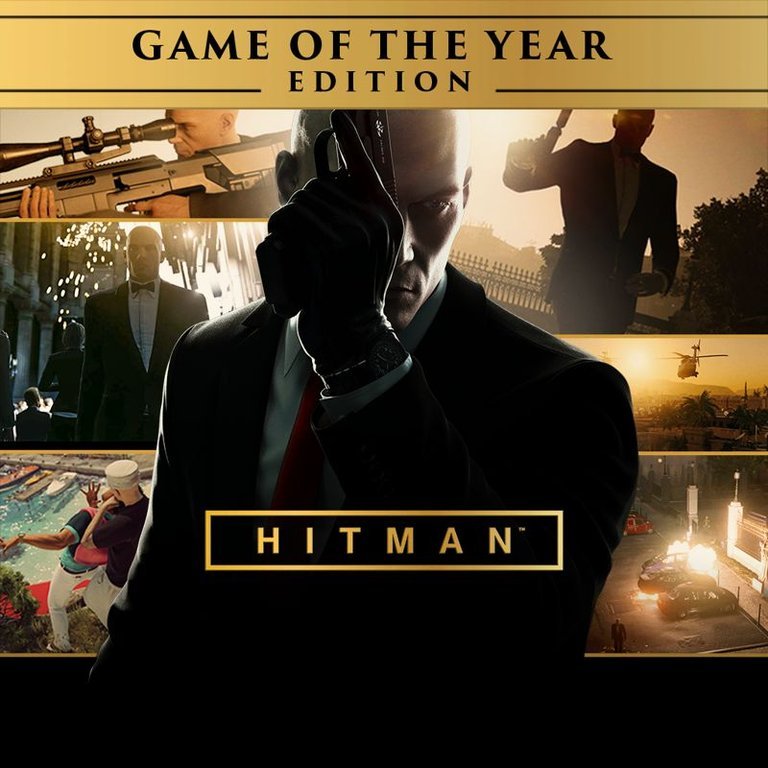
Hitman: Game of the Year Edition is a compilation release of the 2016 reboot of the Hitman series, developed by IO Interactive. The game follows the iconic assassin Agent 47 as he travels globally to execute high-profile contracts with precision and stealth. Set in a modern, open-world environment, the game emphasizes player choice, allowing for creative approaches to assassinations, whether through silent takedowns, elaborate disguises, or chaotic confrontations. The edition includes all the content from the original 2016 release, offering a refined experience of the franchise’s signature stealth gameplay.
Gameplay Videos
Hitman: Game of the Year Edition Free Download
Hitman: Game of the Year Edition Cracks & Fixes
Hitman: Game of the Year Edition Patches & Updates
Hitman: Game of the Year Edition Mods
Hitman: Game of the Year Edition Guides & Walkthroughs
Hitman: Game of the Year Edition Reviews & Reception
metacritic.com (60/100): A lot of Hitman’s components are of the highest standard, but in my opinion its episodic nature took a heavy toll.
lakebit.com : The meat of the game, without a doubt, is the main campaign.
mobygames.com (80/100): Average score: 4.0 out of 5
Hitman: Game of the Year Edition: A Masterclass in Stealth and Sandbox Design
Introduction: The Evolution of a Legend
The Hitman franchise has long been synonymous with meticulous stealth, creative assassination, and sandbox-level design. Hitman: Game of the Year Edition (2017) represents a pivotal moment in the series’ history—a refinement of the 2016 reboot that redefined what a modern Hitman game could be. This edition compiles the entirety of the first season of Hitman (2016), including its episodic missions, the Patient Zero bonus campaign, and a wealth of post-launch content. It is both a celebration of IO Interactive’s return to form and a testament to the studio’s resilience in the face of industry upheaval.
At its core, Hitman: GOTY Edition is a game about experimentation. It invites players to step into the polished shoes of Agent 47, the genetically engineered assassin, and approach each contract with the precision of a surgeon or the chaotic flair of a madman. The game’s brilliance lies in its ability to make every player feel like a mastermind, whether they’re orchestrating a complex accident or simply donning a disguise and walking past unsuspecting guards. This review will dissect the game’s development, narrative, gameplay, and legacy, arguing that Hitman: GOTY Edition is not just a compilation, but a definitive statement on the art of assassination.
Development History & Context: A Phoenix Rising
The Birth of a New Era
The road to Hitman: Game of the Year Edition was fraught with challenges. The 2016 reboot, simply titled Hitman, was IO Interactive’s ambitious attempt to revitalize the franchise after the divisive Hitman: Absolution (2012). Absolution had alienated long-time fans with its linear level design and heavy emphasis on action over stealth, leading to mixed reviews and underwhelming sales. In response, IO Interactive sought to return to the series’ roots—open-ended levels, emergent gameplay, and a focus on player agency.
However, the development of Hitman (2016) was not without its controversies. Square Enix, the publisher at the time, opted for an episodic release model, a decision that sparked debate among fans and critics alike. While this approach allowed IO Interactive to refine each level based on player feedback, it also fragmented the game’s narrative and left some players feeling as though they were paying for an incomplete experience.
Independence and Redemption
The situation took a dramatic turn in May 2017, when Square Enix announced it was divesting from IO Interactive, allowing the studio to become independent and retain the Hitman IP. This move was a double-edged sword: while it granted IO Interactive creative freedom, it also meant the studio had to prove its viability without the backing of a major publisher. The Game of the Year Edition, released in November 2017, was part of this effort—a complete package that addressed the criticisms of the episodic model while showcasing the game’s strengths.
The GOTY Edition included:
– All six main missions from the 2016 season.
– The Patient Zero bonus campaign, featuring four new missions.
– Three new themed Escalation Contracts.
– Three new outfits and weapons.
– Reactivated Elusive Targets, time-limited assassination challenges that had previously been available only during the game’s episodic release.
This compilation was more than just a marketing ploy; it was a love letter to fans, a way for IO Interactive to say, “This is the Hitman we always wanted to make.”
Technological and Design Innovations
From a technical standpoint, Hitman (2016) and its GOTY Edition represented a significant leap forward for the franchise. The game utilized IO Interactive’s proprietary Glacier 2 engine, which allowed for densely populated levels with up to 300 NPCs, each with their own routines and behaviors. This was a far cry from the scripted, linear corridors of Absolution, and it harkened back to the sandbox design of Hitman: Blood Money (2006), widely regarded as the series’ high point.
The game’s AI was also overhauled. While earlier Hitman games had notoriously unpredictable NPC behavior (a quirk that became part of the series’ charm), Hitman (2016) struck a balance between realism and player freedom. Guards would react dynamically to suspicious behavior, and civilians would report anomalies, but the game also gave players the tools to manipulate these systems—whether through distractions, disguises, or sheer audacity.
Narrative & Thematic Deep Dive: A Web of Conspiracy and Identity
The Plot: Shadows and Secrets
Hitman: GOTY Edition continues the story of Agent 47, the genetically engineered assassin created by the mad scientist Dr. Otto Wolfgang Ort-Meyer. The game’s narrative is structured around a series of seemingly unrelated contracts that gradually reveal a larger conspiracy involving a shadowy organization known as Providence.
The story begins in Paris, where 47 is tasked with assassinating Viktor Novikov and Dalia Margolis, the leaders of IAGO, a private intelligence agency. This mission sets the stage for the game’s overarching plot, as it is later revealed that Novikov and Margolis were part of a larger scheme orchestrated by the Shadow Client, a mysterious figure who is manipulating events from the shadows.
As the game progresses, 47 travels to:
– Sapienza, Italy, where he eliminates Dr. Silvio Caruso, a scientist developing a deadly virus.
– Marrakesh, Morocco, where he prevents a military coup by assassinating a corrupt general and a disgraced banker.
– Bangkok, Thailand, where he takes out a narcissistic rock star and his lawyer.
– Colorado, USA, where he infiltrates a militia compound to eliminate four high-value targets.
– Hokkaido, Japan, where he assassinates a Providence operative undergoing a secret heart transplant.
The narrative culminates in the revelation that the Shadow Client is Lucas Grey, a fellow clone of Ort-Meyer and 47’s childhood friend. Grey has been orchestrating these assassinations to dismantle Providence, the organization responsible for their creation. The game ends on a cliffhanger, setting the stage for Hitman 2 (2018).
Themes: Identity, Control, and Moral Ambiguity
At its heart, Hitman is a story about identity. Agent 47 is a man without a past, a weapon crafted by science and shaped by the ICA (International Contract Agency). His journey is one of self-discovery, as he uncovers the truth about his origins and the organization that created him. The game explores themes of free will versus determinism, asking whether 47 is truly in control of his actions or merely a pawn in a larger game.
The game also delves into moral ambiguity. While 47’s targets are invariably corrupt individuals—terrorists, war criminals, and corporate tyrants—the game never shies away from the fact that 47 himself is a killer. The ICA, too, is portrayed as a morally gray organization, willing to manipulate events and sacrifice agents to achieve its goals. This ambiguity is further complicated by the introduction of Providence, a cabal of elites who pull the strings of global power. The game suggests that the world is controlled by unseen forces, and that even assassins are mere pieces on a chessboard.
Characterization: The Silent Assassin and His Handlers
Agent 47 remains one of gaming’s most iconic protagonists, not because of his personality (or lack thereof), but because of his presence. Voiced by David Bateson, 47 is a man of few words, but his actions speak volumes. His cold, calculating demeanor is offset by moments of dry humor, such as his deadpan delivery of lines like, “I need a suit” or “This could have gone better.”
The game’s supporting cast is equally compelling:
– Diana Burnwood, 47’s handler, serves as his moral compass and the player’s guide. Her relationship with 47 is professional but tinged with genuine concern, and her voice (provided by Jane Perry) adds a layer of warmth to the otherwise sterile world of assassination.
– Erich Soders, the ICA’s director, is a more ambiguous figure. Initially presented as a bureaucrat, he is later revealed to be a traitor working with Providence.
– Lucas Grey, the Shadow Client, is a mirror to 47—a clone who has chosen a different path. His motivations are complex, and his relationship with 47 adds emotional weight to the game’s climax.
Dialogue and Writing: Subtle and Effective
The writing in Hitman is understated but effective. The game’s dialogue is sparse, but every line serves a purpose—whether to advance the plot, provide world-building, or add a touch of dark humor. The game’s narrative is delivered primarily through environmental storytelling and optional conversations, rewarding players who take the time to explore and eavesdrop.
One of the game’s strengths is its ability to immerse the player in its world without relying on excessive exposition. The game’s levels are filled with details—newspaper clippings, overheard conversations, and environmental cues—that flesh out the game’s lore. This approach allows players to piece together the story at their own pace, making the world feel alive and reactive.
Gameplay Mechanics & Systems: The Art of the Kill
Core Gameplay Loop: Freedom and Creativity
Hitman is, at its core, a sandbox assassination simulator. Each level is a meticulously crafted playground, filled with opportunities for creative murder. The game’s core gameplay loop revolves around observation, planning, and execution, with players encouraged to experiment with different approaches.
The game’s levels are designed to be replayable, with multiple paths to each target and a variety of ways to eliminate them. Whether it’s poisoning a target’s drink, rigging an explosion, or simply walking up and snapping their neck, the game rewards creativity. This freedom is further enhanced by the game’s disguise system, which allows 47 to blend in with different factions (e.g., guards, chefs, or maintenance workers) to access restricted areas.
Disguises and Social Stealth
The disguise system is one of Hitman’s most important mechanics. Unlike traditional stealth games, where the goal is to remain unseen, Hitman encourages players to hide in plain sight. By knocking out or killing an NPC and taking their clothes, 47 can assume their identity and move freely through areas that would otherwise be off-limits.
However, disguises are not foolproof. The game employs a suspicion system, where certain NPCs (e.g., guards or individuals familiar with the person whose clothes you’ve stolen) will recognize that something is amiss. This system adds tension to the game, as players must constantly be aware of who is watching them and how to avoid detection.
Opportunities and Emergent Gameplay
One of the game’s most innovative features is the Opportunities system, which guides players toward scripted assassination methods. These Opportunities are presented as a series of steps (e.g., “Steal the chef’s uniform,” “Poison the soup,” “Serve the soup to the target”) that culminate in a unique kill. While some purists may argue that this system holds the player’s hand, it serves as an excellent tutorial for newcomers and a source of inspiration for veterans.
That said, Hitman truly shines when players ignore the Opportunities and forge their own path. The game’s levels are filled with emergent gameplay moments—unscripted interactions that arise from the game’s systems. For example, a player might accidentally cause a gas leak, leading to an explosion that kills their target. Or they might drop a wrench, distracting a guard and allowing them to slip past unnoticed. These moments make each playthrough feel unique.
Combat and Stealth
While Hitman is primarily a stealth game, it does feature combat mechanics. However, the game discourages direct confrontation, as 47 is easily overwhelmed by armed guards. Instead, combat is treated as a last resort, something to be avoided unless absolutely necessary.
The game’s Instinct mode, introduced in Absolution and refined in Hitman (2016), allows players to see through walls and highlight important objects. While this mechanic was controversial in Absolution (where it was overused), Hitman (2016) scales it back, making it a useful tool rather than a crutch.
Progression and Mastery
Hitman features a Mastery system, which rewards players for completing challenges and exploring each level. As players gain Mastery points, they unlock new starting locations, weapons, and gear, which can be used in subsequent playthroughs. This system encourages replayability, as players are incentivized to return to levels and experiment with different approaches.
The game also includes Escalation Contracts, which are multi-stage assassination challenges that increase in difficulty. These contracts test the player’s skills and creativity, often requiring them to complete objectives under strict conditions (e.g., no disguises, no kills).
Elusive Targets: High-Stakes Assassination
One of the game’s most innovative features is the Elusive Targets mode. These are time-limited, one-time-only assassination challenges that require players to adapt to unique scenarios. If a player fails to eliminate the target or dies during the mission, the target is gone forever. This mode adds a layer of tension and realism to the game, as players must carefully plan their approach without the safety net of multiple attempts.
UI and Accessibility
The game’s UI is clean and intuitive, providing players with the information they need without overwhelming them. The mini-map highlights key locations, while the inventory system allows for quick access to weapons and gear. The game also features a save system, which was notably absent in Absolution, allowing players to save their progress at any time (with some restrictions on higher difficulties).
World-Building, Art & Sound: A Global Playground
Level Design: Living, Breathing Worlds
Hitman’s levels are some of the most immersive and detailed in gaming. Each location is a miniature world, filled with NPCs going about their daily routines. From the bustling streets of Marrakesh to the serene gardens of Sapienza, every level feels alive.
The game’s levels are designed with verticality and inter connectivity in mind. Players can often find multiple ways to reach their objectives, whether by climbing through air vents, sneaking through underground tunnels, or simply walking through the front door in disguise. This design philosophy encourages exploration and rewards players who take the time to learn the layout of each level.
Visual Direction: A Feast for the Eyes
Visually, Hitman is a stunning game. The Glacier 2 engine allows for detailed character models, lush environments, and dynamic lighting. Each level has its own distinct aesthetic:
– Paris is a glamorous fashion show, filled with neon lights and high society.
– Sapienza is a sun-drenched Italian village, with cobblestone streets and a sprawling mansion.
– Marrakesh is a bustling marketplace, filled with vibrant colors and crowded alleys.
– Bangkok is a sleek, modern hotel, with glass elevators and rooftop bars.
– Colorado is a grimy militia compound, with rusted metal and barbed wire.
– Hokkaido is a high-tech hospital, with sterile white halls and futuristic medical equipment.
The game’s art direction is cinematic, with each level feeling like a set piece from a spy thriller. The attention to detail is remarkable, from the way light filters through the windows of a Parisian palace to the way rain glistens on the streets of Sapienza.
Sound Design: The Symphony of Assassination
The game’s sound design is equally impressive. The ambient noise of each level—whether it’s the chatter of partygoers in Paris or the hum of machinery in Hokkaido—helps to immerse the player in the world. The game’s soundtrack, composed by Nils Brown, is a mix of orchestral and electronic music, perfectly capturing the game’s blend of elegance and brutality.
The voice acting is top-notch, with David Bateson’s iconic performance as 47 being a standout. The game’s NPCs are also well-voiced, with each character having their own distinct personality. This attention to detail extends to the game’s sound effects, from the click of a silenced pistol to the thud of a body hitting the ground.
Reception & Legacy: A Triumphant Return
Critical Reception: Praise and Criticism
Hitman: Game of the Year Edition was met with overwhelmingly positive reviews, with critics praising its level design, gameplay depth, and replayability. The game’s Metascore of 83/100 (based on PS4 reviews) reflects its status as one of the best entries in the series.
Praise:
– Sandbox Design: Critics lauded the game’s open-ended levels, which encouraged creativity and experimentation.
– Replayability: The game’s Mastery system, Escalation Contracts, and Elusive Targets were highlighted as key features that extended the game’s lifespan.
– Visuals and Sound: The game’s art direction, soundtrack, and voice acting were universally praised.
– Return to Form: Many reviewers noted that Hitman (2016) was a return to the series’ roots, rectifying the missteps of Absolution.
Criticism:
– Episodic Model: Some critics felt that the game’s episodic release fragmented the narrative and made the experience feel disjointed.
– Story Pacing: The game’s plot was criticized for being slow to develop, with some feeling that the narrative took a backseat to gameplay.
– AI Quirks: While improved over Absolution, the game’s AI still had moments of unpredictability, which could lead to frustrating situations.
Commercial Performance and Industry Impact
Despite its critical acclaim, Hitman (2016) underperformed commercially, leading to Square Enix’s decision to divest from IO Interactive. However, the game’s legacy is undeniable. It revitalized the Hitman franchise, proving that there was still a market for stealth-focused, sandbox assassination games.
The success of Hitman: GOTY Edition helped to secure IO Interactive’s future, allowing the studio to continue developing the series independently. This independence culminated in Hitman 2 (2018) and Hitman 3 (2021), which further refined the formula established in Hitman (2016).
Influence on the Genre
Hitman (2016) had a profound impact on the stealth genre, influencing games like:
– Deus Ex: Mankind Divided (2016), which adopted a similar sandbox approach to level design.
– Dishonored 2 (2016), which emphasized player choice and emergent gameplay.
– Shadow Tactics: Blades of the Shogun (2016), a real-time tactics game that drew inspiration from Hitman’s stealth mechanics.
The game’s Elusive Targets mode also set a new standard for live-service content in single-player games, proving that time-limited challenges could enhance replayability without relying on multiplayer.
Conclusion: A Definitive Assassination Experience
Hitman: Game of the Year Edition is more than just a compilation—it is a masterclass in stealth gameplay, level design, and player agency. IO Interactive’s decision to return to the series’ roots while innovating with new mechanics like Opportunities, Escalation Contracts, and Elusive Targets paid off in spades, resulting in a game that is both a love letter to long-time fans and a welcoming entry point for newcomers.
The game’s narrative, while slow to unfold, is compelling, with a mystery that keeps players engaged and a cliffhanger that sets the stage for future installments. Its characters are well-written, its world is immersive, and its gameplay is endlessly replayable.
Most importantly, Hitman: GOTY Edition proved that the franchise still had life after the missteps of Absolution. It redefined what a modern Hitman game could be, blending sandbox design, emergent gameplay, and cinematic storytelling into a cohesive whole.
Final Verdict: 9/10 – A Must-Play for Fans of Stealth and Sandbox Games
Hitman: Game of the Year Edition is not just one of the best Hitman games—it is one of the best stealth games ever made. It is a testament to IO Interactive’s skill as a developer and a celebration of the art of assassination. Whether you’re a longtime fan of the series or a newcomer looking for a deep, rewarding stealth experience, this game is an essential play.
Where to Buy:
– Steam
– PlayStation Store
– Xbox Store
– GOG
Recommended for:
– Fans of stealth games (Metal Gear Solid, Splinter Cell, Dishonored).
– Players who enjoy sandbox design and emergent gameplay.
– Those who appreciate replayable, content-rich experiences.
Hitman: Game of the Year Edition is a triumph, and it cements IO Interactive’s place as one of the greatest developers in the stealth genre. Here’s to many more assassinations in the years to come.