
- Release Year: 2005
- Platforms: Windows
- Publisher: 1C Company, 1C Publishing EU s.r.o., Lago S.r.l., Strategy First, Inc.
- Developer: G5 Software LLC
- Genre: Strategy, Tactics
- Perspective: Diagonal-down
- Game Mode: Online PVP, Single-player
- Gameplay: Real-time strategy (RTS), Resource Management, Turn-based strategy, Unit management
- Setting: 1960s, Alternate history, Post-apocalyptic
- Average Score: 65/100
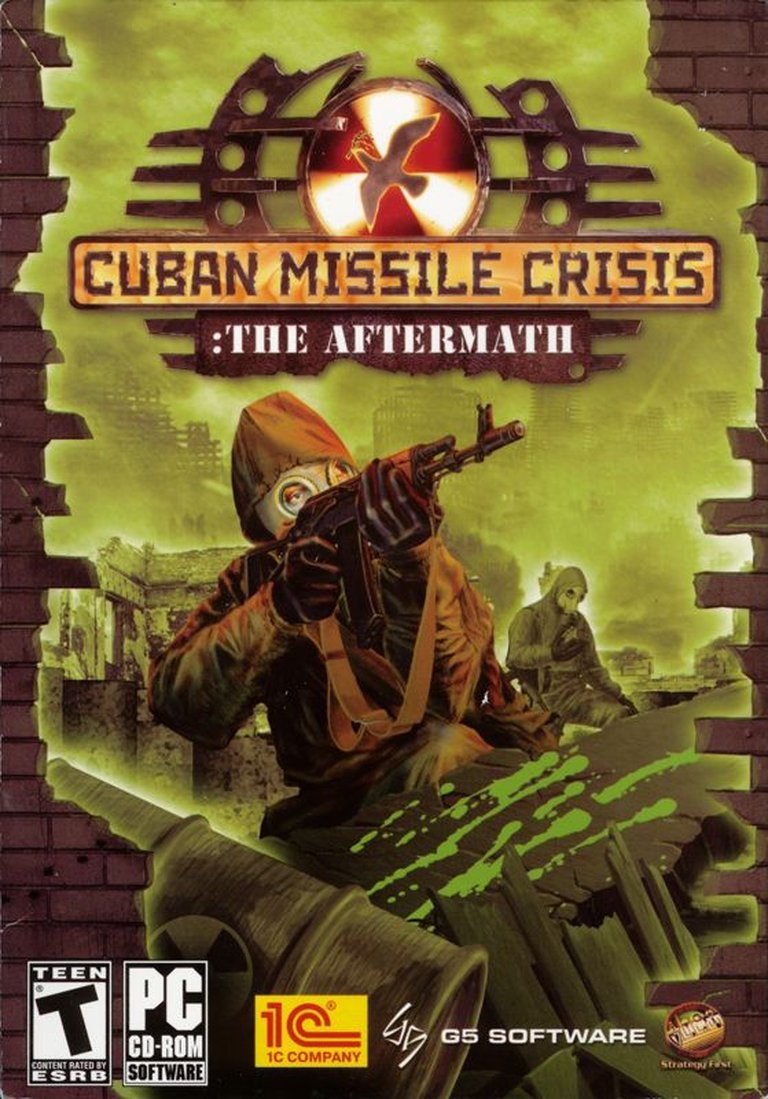
Description
Cuban Missile Crisis: The Aftermath is a real-time strategy game set in an alternate history where the 1962 Cuban Missile Crisis escalated into a full-scale nuclear war, triggering a global apocalypse. Players command surviving nations—either allied factions like the USA-United Kingdom or lone powers like the USSR and China—as they battle for control over the last habitable zones and scarce resources. The game blends strategic turn-based movement with tactical real-time combat, utilizing the Blitzkrieg engine, as factions vie for dominance in a devastated, post-apocalyptic world.
Gameplay Videos
Cuban Missile Crisis: The Aftermath Free Download
Cuban Missile Crisis: The Aftermath Cracks & Fixes
Cuban Missile Crisis: The Aftermath Patches & Updates
Cuban Missile Crisis: The Aftermath Mods
Cuban Missile Crisis: The Aftermath Guides & Walkthroughs
Cuban Missile Crisis: The Aftermath Reviews & Reception
metacritic.com (59/100): This is essentially a professional quality modification to “Blitzkrieg”, handled by another Russian developer with ties to original producers Nival Interactive.
mobygames.com (61/100): Average score: 61% (based on 28 ratings)
worthplaying.com : The game includes four campaigns, one for each faction, and are set in locations where the interests of the major powers converge: Europe, Asia and Africa.
gamepressure.com (77/100): A real-time strategy embedded in an alternative history. The Cuban crisis (the conflict between the USA and Cuba, which found itself in the sphere of influence of the USSR and received military aid) does not end here with a peaceful solution.
Cuban Missile Crisis: The Aftermath Cheats & Codes
PC
Press the ‘~’ key to show the console window and type this phrase to activate cheat mode: @Password(“HardTruck”). Once done, activate the following cheats by entering the corresponding codes:
| Code | Effect |
|---|---|
| @superunit(549845) | Black Eagle tank |
| @superunit(140329) | Chinese T-98 tank |
| @Win(1) | defeat |
| @God(0,1) | God mode |
| @God(0,0) | God mode off |
| @God(0,2) | God mode with one shot kills |
| @superunit(387546) | Leopard 2 tank |
| @superunit(874653) | M1A1 Abrams tank |
| @Win(0) | Victory |
| @ChangeWarFog(1) | Remove fog of war |
| @ChangeWarFog(0) | Restore fog of war |
Cuban Missile Crisis: The Aftermath – A Flawed but Fascinating Alternate History RTS
Introduction
In the annals of real-time strategy (RTS) games, few titles dare to blend historical speculation with tactical warfare as boldly as Cuban Missile Crisis: The Aftermath. Released in 2005 by Russian developer G5 Software, this game posits a chilling “what if” scenario: what if the 1962 Cuban Missile Crisis had escalated into full-scale nuclear war? The result is a post-apocalyptic wargame that pits surviving superpowers against each other in a desperate scramble for resources and territory. While The Aftermath is often dismissed as a Blitzkrieg clone with a fresh coat of Cold War paranoia, its ambitious fusion of turn-based strategy and real-time tactics, coupled with its grim alternate history narrative, makes it a fascinating, if flawed, artifact of mid-2000s RTS design.
This review will dissect Cuban Missile Crisis: The Aftermath in exhaustive detail, examining its development context, narrative depth, gameplay mechanics, technical execution, and lasting legacy. By analyzing its strengths and weaknesses, we can better understand its place in the evolution of historical RTS games and why it remains a cult favorite among alternate history enthusiasts.
Development History & Context
The Studio and the Vision
G5 Software, a Russian developer founded in the early 2000s, was no stranger to wartime strategy games. The studio had previously worked on titles like Whirlwind Over Vietnam and Brigade E5: New Jagged Union, but Cuban Missile Crisis: The Aftermath (often abbreviated as CMC:TA) was its most ambitious project to date. The game was built using Nival Interactive’s Enigma Engine, the same technology that powered the critically acclaimed Blitzkrieg series. This engine was chosen for its proven ability to handle large-scale battles with detailed unit physics and destructible environments, but it also came with limitations—most notably, its reliance on 2D sprites for infantry and a fixed isometric camera.
The game’s lead designer, Alexander Valencia-Campo, envisioned CMC:TA as more than just another Blitzkrieg clone. In interviews, he emphasized the importance of the game’s alternate history premise, which allowed players to explore a world where the Cold War had turned hot. The developers drew inspiration from classic Cold War thrillers and post-apocalyptic fiction, aiming to create a game that felt both historically grounded and eerily plausible. The result was a hybrid experience: a turn-based strategic layer governing global movements and a real-time tactical layer for individual battles, all set against the backdrop of a nuclear-devastated Earth.
Technological Constraints and the Gaming Landscape
CMC:TA was released in February 2005, a time when the RTS genre was dominated by 3D powerhouses like Company of Heroes and Warhammer 40,000: Dawn of War. The Enigma Engine, while capable, was already showing its age. Its inability to render fully 3D infantry or allow camera rotation made CMC:TA feel visually outdated compared to its contemporaries. Additionally, the engine’s pathfinding and AI systems were carried over from Blitzkrieg, which meant that tactical battles often devolved into frustrating bottlenecks and scripted ambushes.
Despite these limitations, the game’s strategic layer was a notable innovation. Unlike Blitzkrieg, which featured linear campaigns, CMC:TA introduced a dynamic, turn-based world map where players could choose their battles and manage supply lines. This was a bold attempt to blend the depth of a wargame with the accessibility of an RTS, but it also highlighted the game’s identity crisis: was it a Blitzkrieg expansion, a standalone strategy game, or something entirely new?
Publishers and Market Positioning
CMC:TA was published by a trio of companies: 1C Company in Russia, Black Bean Games in Europe, and Strategy First in North America. The game’s marketing leaned heavily on its alternate history premise, with box art depicting a mushroom cloud looming over a battlefield. However, its release was overshadowed by more high-profile titles like Age of Empires III and Civilization IV, both of which launched the same year. Critics and players alike struggled to categorize CMC:TA—was it a niche wargame, a budget RTS, or a missed opportunity?
Narrative & Thematic Deep Dive
The Premise: A World in Ruins
The game’s narrative is built on a single, pivotal divergence from real history: on October 27, 1962, a U-2 spy plane is shot down over Cuba, triggering a full-scale nuclear exchange between the United States and the Soviet Union. The resulting devastation leaves the world in ruins, with millions dead and entire regions rendered uninhabitable by radiation. The surviving powers—the USSR, the Anglo-American Alliance, the European Alliance (France and Germany), and China—must now fight for control of the remaining resources and territory.
This premise is both the game’s greatest strength and its most underutilized asset. The alternate history setting is rich with potential, offering a unique blend of Cold War tension and post-apocalyptic survival. However, the narrative is delivered almost entirely through dry text briefings and mission objectives, with little in the way of cinematic storytelling or character development. The game’s opening cinematic, which features archival footage of the Cuban Missile Crisis intercut with fictional newsreels, is one of its few attempts at immersive world-building. Unfortunately, the rest of the game relies on the player’s imagination to fill in the gaps.
The Factions and Their Campaigns
CMC:TA features four playable factions, each with its own campaign and strategic objectives:
-
Anglo-American Alliance (USA/UK):
- Narrative: The remnants of the United States and United Kingdom, numerically inferior but boasting the strongest navy, retreat from Europe and invade Yugoslavia and Burma to secure resources. Their campaign culminates in a push into South America, Southern Africa, and Australia.
- Themes: Survival, resource scarcity, and the struggle to maintain global influence in a shattered world.
-
European Alliance (France/Germany):
- Narrative: Led by a reunited Germany and France, this faction focuses on slowing the Soviet invasion of Europe before relocating to West Africa. Their campaign is the most defensive, emphasizing delaying actions and civilian evacuations.
- Themes: The fragility of alliances, the cost of war on civilian populations, and the desperation of a continent on the brink.
-
USSR:
- Narrative: With vast manpower and resources, the Soviets dominate Eastern Europe before pushing into Western Europe and dealing with a surprise Chinese attack in Siberia. Their campaign is the most aggressive, reflecting the USSR’s historical military doctrine.
- Themes: Total war, the brutality of Soviet tactics, and the struggle to maintain control over a vast, irradiated empire.
-
China:
- Narrative: Initially allied with the USSR, China suffers a devastating nuclear strike on Beijing, leading to a revolution against Mao’s loyalists. The player commands revolutionary forces in a civil war before expanding into Siberia and Southeast Asia.
- Themes: Revolution, betrayal, and the rise of a new power in the ashes of the old world.
Each campaign is structured as a series of chapters, with players choosing their battles on a strategic map before engaging in real-time tactical missions. The dynamic campaign system allows for some replayability, but the lack of branching narratives or meaningful choices makes the experience feel linear.
Themes: War, Survival, and the Cost of Nuclear Conflict
CMC:TA is, at its core, a meditation on the horrors of nuclear war. The game’s world is one of scarcity, where radiation zones and ruined cities are constant reminders of the devastation wrought by the initial exchange. The inclusion of NBC (Nuclear, Biological, Chemical) troops, who can decontaminate irradiated areas, is a clever mechanical representation of the game’s themes. Players must weigh the risks of sending units into contaminated zones, knowing that failure could mean the loss of valuable troops to radiation sickness.
However, the game’s treatment of its themes is often superficial. While the setting is grim, the tactical battles themselves feel detached from the larger narrative. There are no civilian casualties to consider, no moral dilemmas, and no real sense of the human cost of war. The game’s focus on military hardware and strategic maneuvering makes it feel more like a wargame than a story-driven experience.
Missed Opportunities
The alternate history premise of CMC:TA is ripe with narrative potential, but the game squanders much of it. Here are a few areas where deeper storytelling could have elevated the experience:
- Character Development: The game’s briefings are delivered by faceless officers, with no personalities or arcs to speak of. A Command & Conquer-style cast of characters could have added much-needed depth.
- Moral Choices: The post-apocalyptic setting begs for tough decisions—should you sacrifice a town to radiation to deny it to the enemy? Should you use experimental weapons with unknown consequences? CMC:TA avoids these questions entirely.
- Civilian Impact: The European Alliance’s campaign touches on civilian evacuations, but the game never forces the player to confront the human cost of their actions. Civilians are abstracted into “resources” rather than people.
- Diplomacy and Alliances: The strategic layer could have included diplomatic mechanics, allowing players to negotiate temporary truces or betray allies. Instead, alliances are static and predetermined.
Gameplay Mechanics & Systems
The Dual-Layered Approach: Strategic and Tactical
CMC:TA’s most innovative feature is its two-tiered gameplay structure:
-
Strategic Layer (Turn-Based):
- Players move armies across a world map divided into a grid.
- Each turn, units can move a set distance, capture resource points (factories, radars, cities), and engage enemy forces.
- Supply lines are critical—units must be resupplied with fuel, ammunition, and spare parts, or they will become ineffective.
- The strategic map is where players manage their overall war effort, deciding where to strike and where to defend.
-
Tactical Layer (Real-Time):
- When armies clash, the game shifts to a real-time battle on a smaller, isometric map.
- These battles play out like a traditional RTS, with players controlling individual units (tanks, infantry, artillery, etc.).
- The tactical layer uses the Blitzkrieg engine, complete with destructible environments, weather effects, and unit physics.
This dual-layered approach is ambitious, but it suffers from a lack of polish. The strategic layer is engaging at first, offering a sense of grand strategy, but it quickly becomes repetitive due to the limited number of map templates and objectives. The tactical layer, meanwhile, is hampered by the Enigma Engine’s limitations, particularly its poor pathfinding and lack of modern RTS conveniences like camera rotation or unit grouping.
Combat and Unit Mechanics
CMC:TA’s combat system is deeply rooted in the Blitzkrieg tradition, with a few notable additions:
-
Unit Variety: The game features a wide array of historically accurate (and some speculative) units from the early 1960s, including:
- Tanks: From WWII relics like the Sherman to Cold War mainstays like the T-55 and Centurion.
- Infantry: Standard riflemen, machine gun teams, and elite units like snipers and engineers.
- Artillery: Howitzers, rocket launchers, and mortar teams, capable of firing specialized ammunition (e.g., anti-personnel mines).
- Aircraft: Helicopters for transport and attack, as well as fixed-wing planes for reconnaissance and bombing (unlocked later in campaigns).
- Special Units: NBC troops for decontamination, engineers for bridge repair and mine-laying, and officers who can call in artillery strikes.
-
Damage Model: Units have individualized armor ratings for different facing angles (front, side, rear, top), and damage is tracked in real-time. Tanks can lose tracks, guns can jam, and crews can be killed by radiation.
-
Terrain Interaction: The environment is fully destructible—bridges can be blown, forests can be flattened by tanks, and buildings can be reduced to rubble. This adds a layer of tactical depth, as players can create their own cover or deny it to the enemy.
-
Supply and Logistics: One of the game’s most realistic (and frustrating) mechanics is its supply system. Units consume ammunition, fuel, and spare parts, which must be replenished via supply trucks. Running out of supplies mid-battle can be catastrophic, as tanks become immobile and infantry lose their ability to fight effectively.
AI and Difficulty
The AI in CMC:TA is a mixed bag:
- Strategic AI: The computer opponent in the strategic layer is competent, often making aggressive moves to cut off supply lines or capture key objectives. It will prioritize high-value targets and can be surprisingly cunning in its maneuvers.
- Tactical AI: The tactical AI is far less impressive. Enemy units tend to rely on static defenses, ambushes, and overwhelming numbers rather than dynamic tactics. The AI is particularly weak in offensive operations, often sending waves of units directly into the player’s defenses without attempting flanking maneuvers.
The game’s difficulty is notoriously punishing, even on normal settings. The tactical AI’s reliance on ambushes and bottleneck maps means that players must approach every battle with extreme caution, often scouting ahead with snipers or officers to avoid walking into traps. This can make the game feel more like a puzzle than a dynamic war simulation.
Multiplayer and Replayability
CMC:TA includes a multiplayer mode supporting up to six players via LAN or internet. However, the multiplayer experience is limited to skirmish-style battles on pre-made maps, with no strategic layer. The lack of a persistent online campaign or cooperative mode is a missed opportunity, especially given the game’s emphasis on large-scale conflict.
Replayability is further hampered by the game’s linear campaigns and repetitive mission structures. While the dynamic strategic layer offers some variety, the tactical missions quickly become predictable, with many battles playing out on the same handful of map templates.
World-Building, Art & Sound
Visual Design: A Product of Its Time
CMC:TA’s visuals are a testament to the limitations of the Enigma Engine. The game’s isometric perspective and 2D sprites for infantry give it a dated look, even by 2005 standards. The 3D-rendered vehicles and environments are detailed but lack the polish of contemporary 3D RTS games like Company of Heroes.
- Unit Design: The tanks and vehicles are well-modeled, with accurate historical details. However, the infantry sprites are stiff and poorly animated, making them feel out of place in a 3D environment.
- Environmental Detail: The game’s maps feature a variety of terrains, from European forests to Middle Eastern deserts. Weather effects like rain and snow add atmosphere, but the lack of dynamic lighting or shadows makes the world feel flat.
- Destruction: The game’s destructible environments are one of its highlights. Watching a bridge collapse under artillery fire or a forest burn after a napalm strike is satisfying, but the lack of physics-based debris or dynamic terrain changes limits the impact.
Sound Design: Functional but Unremarkable
The game’s audio is serviceable but unmemorable:
- Music: The soundtrack consists of orchestral and synthetic tracks that evoke a sense of Cold War tension. However, the music is repetitive and lacks the emotional punch of scores from games like Command & Conquer or Homeworld.
- Sound Effects: The gunfire, explosions, and engine noises are adequate, but they lack the weight and realism of modern RTS games. The absence of voice acting for units or commanders further detracts from the immersion.
- Ambient Noise: The game includes environmental sounds like wind, rain, and distant artillery, but these are often drowned out by the chaos of battle.
Atmosphere: A Bleak but Shallow World
CMC:TA’s post-apocalyptic setting is its strongest atmospheric element. The strategic map, with its radiation zones and ruined cities, conveys a sense of a world on the brink. However, the tactical battles often feel disconnected from this larger narrative. The absence of civilian presence, environmental storytelling, or even basic elements like ruined buildings with lootable supplies makes the world feel hollow.
The game’s briefing screens, which feature grainy black-and-white footage of the Cuban Missile Crisis, are effective at setting the tone, but they are few and far between. Ultimately, CMC:TA’s atmosphere is more implied than realized—a missed opportunity to create a truly immersive alternate history.
Reception & Legacy
Critical Reception: A Divided Response
Cuban Missile Crisis: The Aftermath received mixed reviews upon release, with critics praising its ambitious premise and strategic depth while criticizing its outdated presentation and frustrating gameplay quirks. Here’s a breakdown of the critical consensus:
-
Praised Aspects:
- Innovative Hybrid Gameplay: Critics appreciated the blend of turn-based strategy and real-time tactics, with GameSpot noting that the strategic layer “feels much more like a cool wargame than a traditional RTS.”
- Alternate History Setting: The game’s premise was widely regarded as fresh and intriguing, with Worth Playing calling it “a novel and interesting take on Cold War conflict.”
- Unit Variety and Depth: The wide range of historically accurate units and the detailed damage model were highlights, with GameZone praising the “great range of units that reflect the period.”
-
Criticized Aspects:
- Outdated Visuals: The Enigma Engine’s limitations were a common complaint. PC Gamer dismissed the game as “all been done before—and a hell of a lot better,” while Jeuxvideo.com criticized the “dated graphics and poor pathfinding.”
- Repetitive Missions: The lack of variety in tactical missions was a frequent knock. PC Zone noted that “déjà vu quickly sets in as there are only a handful of map templates.”
- Frustrating AI and Difficulty: The tactical AI’s reliance on ambushes and the game’s punishing difficulty were major pain points. GamingExcellence summed it up as “difficult to learn, difficult to play, and difficult to find a reason to keep playing.”
- Lack of Polish: Many reviews mentioned the game’s rough edges, from clunky controls to poorly translated text. Computer Gaming World lamented that “if the actual battle engine were better, this would be a great game. It isn’t, so it’s not.”
Metascore and User Reception:
– Metacritic: 59/100 (Mixed or Average)
– MobyGames: 6.3/10 (based on 28 critic reviews)
– User Scores: Generally more favorable, with a Metacritic user score of 8.2/10, suggesting that the game found a niche audience among hardcore strategy fans.
Commercial Performance and Longevity
CMC:TA was not a commercial blockbuster, but it found a dedicated following among fans of alternate history and wargames. Its budget pricing (often sold for under $20) and inclusion in bundles like the Cuban Missile Crisis + Ice Crusade Pack helped it maintain a presence in the strategy gaming community.
The game’s longevity is largely due to its unique premise and the lack of direct competitors in the alternate history RTS space. While titles like World in Conflict (2007) and Wargame: European Escalation (2012) would later explore Cold War gone hot scenarios, CMC:TA remains one of the few games to focus specifically on the Cuban Missile Crisis as a catalyst for global war.
Influence and Legacy
CMC:TA’s influence on the RTS genre is minimal, but it holds a special place in the hearts of alternate history enthusiasts. Its legacy can be seen in a few key areas:
- Alternate History Gaming: The game’s success (among its niche audience) demonstrated that there was demand for historically grounded “what if” scenarios in strategy games. Later titles like The Operational Art of War IV and Hearts of Iron IV would expand on this concept with more sophisticated mechanics.
- Hybrid Strategy Games: While CMC:TA’s blend of turn-based and real-time gameplay was not revolutionary, it contributed to the ongoing experimentation with hybrid strategy designs. Games like Total War and Battlefleet Gothic: Armada would later refine this approach.
- Post-Apocalyptic Wargames: The game’s focus on resource scarcity and irradiated battlefields foreshadowed later titles like Wasteland 2 and XCOM 2, which also blended tactical combat with survival mechanics.
The Sequel: Cuban Missile Crisis: Ice Crusade
In 2005, G5 Software released Cuban Missile Crisis: Ice Crusade, a stand-alone expansion set five years after the events of The Aftermath. The sequel introduced new factions (including Scandinavia and Japan), expanded the strategic layer, and added naval combat. While Ice Crusade addressed some of the original game’s shortcomings, it suffered from many of the same issues, including outdated visuals and repetitive missions. Nonetheless, it remains a cult favorite among fans of the series.
Conclusion: A Flawed Gem with a Unique Vision
Cuban Missile Crisis: The Aftermath is a game of contradictions. It is ambitious yet unpolished, innovative yet derivative, and thematically rich yet narratively shallow. Its greatest strength—its alternate history premise—is also its greatest missed opportunity. The game’s blend of turn-based strategy and real-time tactics is compelling, but its execution is hampered by an outdated engine, frustrating AI, and repetitive mission design.
Final Verdict:
– For Hardcore Strategy Fans: CMC:TA is a hidden gem, offering a unique take on Cold War conflict and a challenging wargame experience. Its dynamic campaign system and detailed unit mechanics make it worth a look for those willing to overlook its rough edges.
– For Casual Players: The game’s steep learning curve, punishing difficulty, and lack of modern conveniences (like camera rotation or unit grouping) make it a tough sell. Those looking for a more accessible RTS should look elsewhere.
– For Alternate History Enthusiasts: The game’s premise is its biggest draw, and while the narrative is underdeveloped, the setting alone makes it a fascinating “what if” scenario to explore.
Score: 6.5/10 – A Flawed but Fascinating Experiment
Cuban Missile Crisis: The Aftermath is not a great game by modern standards, but it is an important one. It represents a bold attempt to merge historical speculation with tactical warfare, and its legacy as a cult classic is well-deserved. For those willing to dive into its bleak, nuclear-ravaged world, it offers a glimpse of what might have been—and a reminder of the horrors we narrowly avoided.
Final Thought:
In an era where RTS games are increasingly focused on spectacle and accessibility, CMC:TA stands as a relic of a time when strategy games dared to be complex, challenging, and unapologetically niche. It may not be a masterpiece, but it is a testament to the creativity of its developers and the enduring appeal of alternate history. For that alone, it deserves to be remembered.