
- Release Year: 2018
- Platforms: Windows
- Publisher: Ninja Thumbs Limited
- Developer: Ninja Thumbs Limited
- Genre: Action
- Perspective: Side view
- Game Mode: Single-player
- Average Score: 75/100
Description
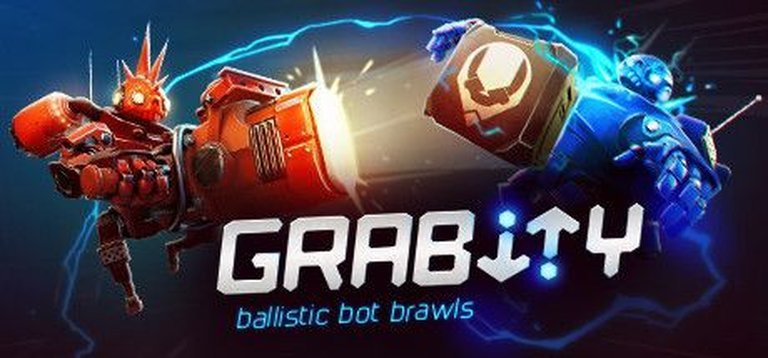
Grabity: Ballistic Bot Brawls is a fast-paced, physics-based arena brawler where combat robots engage in intense tactical battles using Grab guns to manipulate nearby objects as weapons or shields. Set in a dynamic side-view environment, players must strategically hurl debris, outmaneuver opponents, and dominate in high-energy, competitive throw-downs. With support for local and online multiplayer, the game blends action, precision, and chaotic fun in a unique 2D fighter experience.
Grabity: Ballistic Bot Brawls Patches & Updates
Grabity: Ballistic Bot Brawls Guides & Walkthroughs
Grabity: Ballistic Bot Brawls Reviews & Reception
store.steampowered.com (90/100): A fast-paced, physics-based arena brawler with intense tactical throw-downs.
metacritic.com (60/100): A casual party game that largely succeeds at what it tries to do.
steamcommunity.com : Very fun needs more players
Grabity: Ballistic Bot Brawls – A Masterclass in Physics-Based Chaos
Introduction: The Unsung Hero of Indie Brawlers
In the crowded landscape of indie multiplayer games, Grabity: Ballistic Bot Brawls (2018) stands as a hidden gem—a game that defies convention by blending the frenetic energy of Super Smash Bros. with the tactical depth of a physics-based shooter. Developed by New Zealand’s Ninja Thumbs Limited, Grabity is a love letter to couch co-op chaos, where gravity-defying robot brawls unfold in a symphony of flying crates, explosive canisters, and last-second dodges. While it may not have achieved the mainstream acclaim of its contemporaries, its innovative mechanics, tight controls, and sheer replayability make it a cult classic worthy of deeper examination.
This review will dissect Grabity from every angle—its development history, narrative (or lack thereof), gameplay systems, artistic direction, and lasting legacy. By the end, we’ll determine whether it’s a fleeting indie experiment or a timeless multiplayer experience that deserves a spot in the pantheon of great competitive games.
Development History & Context: From Game Jam to Indie Darling
The Birth of a Brawler
Grabity began as a game jam project in February 2016, a modest experiment by a small team of New Zealand developers. The core concept—robots using gravity guns to hurl objects at each other—was simple yet immediately compelling. The game’s potential was recognized early, winning first place in the 2016 Kiwi Game Starter competition, a New Zealand-based indie game incubator. This victory provided the team with the resources and confidence to expand Grabity into a full-fledged title.
Over the next two years, Ninja Thumbs refined the game’s mechanics, polished its physics engine, and iterated on its multiplayer design. The studio’s philosophy was clear: prioritize fun over complexity. In an era where many indie games chased narrative depth or roguelike mechanics, Grabity doubled down on pure, unadulterated competitive chaos.
The Indie Scene in 2018
Grabity launched on May 30, 2018, into a gaming landscape dominated by battle royales (Fortnite, PUBG) and narrative-driven indie darlings (Celeste, Dead Cells). Multiplayer-focused games were abundant, but few offered the same blend of physics-based combat and local co-op appeal. Competitors like TowerFall Ascension and Nidhogg had already carved out niches in the competitive indie space, but Grabity distinguished itself with its gravity gun mechanics and destructible environments.
The game’s development was a testament to the power of iterative design. The team, led by Steve Salmond (code) and Moritz Schlitter (art), relied heavily on community feedback from early demos and convention showings (including PAX Australia 2017, where it was an Indie Showcase finalist). This grassroots approach ensured that Grabity’s core gameplay loop was tight, responsive, and endlessly replayable.
Technological Constraints & Design Choices
Built in Unity, Grabity leveraged the engine’s physics system to create a dynamic, destructible playground. The side-on 2.5D perspective was a deliberate choice—it allowed for clear visibility of projectiles and player movement while maintaining a sense of depth. The game’s twin-stick controls (one stick for movement, the other for aiming/grabbing) were intuitive yet deep, rewarding both twitch reflexes and strategic positioning.
One of the most impressive technical feats was the real-time physics interactions. Every crate, canister, and environmental object could be grabbed, thrown, or used as a shield, creating a living battlefield where no two matches played out the same way. The game’s netcode (for online play) was serviceable but not flawless, a common limitation for small indie teams. However, the local multiplayer experience remained the star, offering buttery-smooth 60 FPS gameplay that felt responsive and fair.
Narrative & Thematic Deep Dive: A World Without Words
The Absence of Story
Grabity is, at its core, a pure gameplay experience. There is no overarching narrative, no character backstories, and no lore-heavy cutscenes. Instead, the game’s “story” is told through its environmental design and mechanical interactions.
The setting is a dystopian robot testing facility, a gritty junkyard where combat bots engage in gladiatorial battles for unknown purposes. The arenas are littered with industrial debris, explosive canisters, and floating platforms, reinforcing the idea of a high-stakes training ground where only the most agile and cunning bots survive.
Themes: Chaos, Adaptability, and Emergent Storytelling
While Grabity lacks a traditional narrative, it excels in emergent storytelling—the kind that unfolds naturally through player interactions. Every match is a micro-drama of betrayal, last-second saves, and hilarious mishaps. The game’s themes include:
- Control vs. Chaos – Players must balance precision aiming with adaptability, as the battlefield constantly shifts.
- Resource Scarcity – The fight over limited ammo (crates, canisters) creates tension and forces players to improvise.
- Teamwork & Rivalry – Whether in free-for-all or team modes, alliances form and shatter in seconds.
The game’s Māori language support (a rare feature in indie games) also adds a layer of cultural depth, reflecting the developers’ New Zealand roots. While not narrative-driven, this inclusion speaks to Grabity’s commitment to accessibility and representation.
Character Design: Functional Minimalism
The combat bots are deliberately simple—faceless, agile machines with distinct color schemes to differentiate players. This minimalist approach ensures that gameplay clarity is never sacrificed for aesthetic flair. The bots’ animations—dashing, hovering, and shield-blocking—are fluid and expressive, conveying personality through movement rather than dialogue.
Gameplay Mechanics & Systems: The Art of the Grab
Core Gameplay Loop: A Dance of Destruction
Grabity’s genius lies in its elegant simplicity. The core mechanic revolves around the Grab Gun, a device that allows players to:
- Seize objects (crates, canisters, grenades) and hurl them at opponents.
- Use objects as shields to block incoming projectiles.
- Manipulate gravity to alter trajectories mid-flight.
This single mechanic creates a deep, skill-based combat system where positioning, timing, and prediction are key. Matches unfold in a three-phase rhythm:
- The Scramble – Players dash for ammo and pickups, jockeying for position.
- The Exchange – A footsie-style battle where players test each other’s reflexes, lobbing projectiles while dodging counterattacks.
- The Climax – A frantic, high-stakes showdown where the last remaining crates become the deciding factor.
Combat & Movement: Twin-Stick Mastery
The twin-stick control scheme is where Grabity shines:
- Left Stick – Movement (including dashing and hovering).
- Right Stick – Aiming the Grab Gun.
- Triggers/Buttons – Grab, throw, and shield.
The hover mechanic is particularly crucial—it allows players to adjust their trajectory mid-air, making for mind games where opponents must predict not just where you’ll throw, but where you’ll land.
Weapons & Pickups: Risk vs. Reward
Grabity’s arsenal is small but impactful:
| Item | Effect |
|---|---|
| Standard Crate | Basic projectile, no special effects. |
| Explosive Canister | Detonates on impact, dealing massive damage. |
| Acid Gas Canister | Releases a damage-over-time cloud on impact. |
| Napalm Canister | Creates a burning zone that lingers. |
| EMP Canister | Disables enemy bots temporarily. |
| Grenades | Timed explosives that can be cooked for maximum effect. |
| Cluster Grenades | Splits into smaller explosives mid-air. |
| Health Pack | Instant HP restore. |
| Damage Boost | Increases throwing power. |
| Speed Boost | Enhances movement speed. |
| Shield Bubble | Temporary invincibility. |
The risk-reward dynamic is brilliant. Do you grab the explosive canister and risk blowing yourself up, or play it safe with a standard crate? Do you hold onto the King Crate in King of the Crate mode, or yeet it at an opponent for a quick kill?
Game Modes: Variety Without Bloat
Grabity offers six distinct modes, each altering the core gameplay in meaningful ways:
- Deathmatch – Classic free-for-all scoring.
- Elimination – Last bot standing with limited lives.
- King of the Crate – Hold the golden crate to score; throwing it can be a tactical sacrifice.
- Juggernaut – Kill streaks make you bigger (and slower), creating a David vs. Goliath dynamic.
- Craterball – A basketball-style mode where players score by dunking crates.
- Low Gravity – Floating, slow-motion chaos that forces players to rethink strategies.
Each mode reshapes the meta, ensuring that Grabity remains fresh even after hundreds of matches.
Progression & Customization: Minimal but Effective
Unlike many modern multiplayer games, Grabity eschews complex progression systems. There are no loot boxes, no battle passes, and no pay-to-win mechanics. Instead, players unlock cosmetic skins through achievements and gameplay milestones.
This minimalist approach keeps the focus on pure skill rather than grind, a refreshing contrast to the monetization-heavy trends of 2018.
UI & Accessibility: Clean and Functional
The HUD is unobtrusive, displaying only health, ammo count, and score. The menu system is intuitive, with quick matchmaking and custom game options. The game also supports multiple languages, including Māori, a nod to its New Zealand roots.
One minor critique: The online matchmaking could be more robust, as finding games post-launch has become difficult due to the shrinking player base.
World-Building, Art & Sound: A Gritty Playground
Visual Design: Industrial Grit Meets Cartoonish Chaos
Grabity’s art style is a blend of dystopian sci-fi and slapstick comedy. The arenas are futuristic junkyards, filled with rusted metal platforms, flickering neon lights, and floating debris. The 2.5D perspective ensures that the action is always clear and readable, even in the most chaotic moments.
The character designs are minimalist but expressive—the bots’ glowing eyes and mechanical limbs give them personality without distracting from gameplay. The explosions and particle effects are satisfyingly weighty, making every hit feel impactful.
Sound Design: The Symphony of Destruction
The audio design is understated but effective:
- Crates clatter when thrown.
- Explosions boom with satisfying bass.
- Grab Gun charges hum ominously before a shot.
The music, composed by Clark Aboud, is a pulsing electronic soundtrack that ramps up in intensity as matches progress. It’s not overly intrusive, allowing players to focus on the action while still enhancing the mood.
Atmosphere: A Living Battleground
The true magic of Grabity’s presentation is how the arena evolves over the course of a match. What starts as a pristine battlefield quickly devolves into a wreckage-strewn warzone, with crates shattered, platforms destroyed, and debris floating in zero-G.
This dynamic transformation makes every match feel unique and unpredictable, reinforcing the game’s emergent storytelling.
Reception & Legacy: A Cult Classic in the Making
Critical Reception: Praised but Overlooked
Grabity received generally positive reviews upon release, with critics praising its:
✅ Tight, responsive controls
✅ Innovative physics-based combat
✅ Endless replayability in local multiplayer
However, it was also criticized for:
❌ Lack of single-player content
❌ Small online player base
❌ Limited narrative depth
Gamers Heroes gave it a 6/10, calling it “a casual party game that largely succeeds at what it tries to do… not the deepest or unique title around, but those looking for a new game for their group can do far worse.”
On Steam, the game holds a Very Positive (90%) rating from over 300 user reviews, with players highlighting its addictive multiplayer and hilarious emergent moments.
Commercial Performance & Community
Grabity was not a commercial blockbuster, but it found a dedicated niche audience. The game’s free-to-play transition in later years helped revive interest, though the online community remains small.
The Discord server and Steam forums are still active, with players organizing custom tournaments and sharing modded arenas. The game’s modding potential (via Unity) has kept it alive in speedrunning and challenge communities.
Influence & Legacy
While Grabity didn’t spawn a direct genre revolution, its physics-based brawler mechanics have influenced later indie titles, such as:
- Ballistic Craft (2020) – A similar gravity gun combat game.
- Clustertruck (2016) – Shares Grabity’s chaotic physics-driven gameplay.
- Ultimate Chicken Horse (2016) – Another indie multiplayer game that thrives on emergent chaos.
Its biggest legacy, however, is as a testament to the power of local multiplayer. In an era where online-only games dominate, Grabity proves that couch co-op is still a viable and thrilling experience.
Conclusion: A Hidden Gem Worth Grabbing
Grabity: Ballistic Bot Brawls is not a perfect game, but it is a brilliant one. It sacrifices narrative depth and single-player content in favor of pure, unfiltered multiplayer fun—and it succeeds spectacularly in that goal.
Final Verdict: 8.5/10 – A Must-Play for Multiplayer Enthusiasts
✔ Pros:
– Innovative physics-based combat that rewards skill and creativity.
– Tight, responsive controls that feel great in both local and online play.
– Endless replayability thanks to multiple game modes and emergent chaos.
– Minimalist but effective art and sound design.
– Free-to-play, making it accessible to everyone.
✖ Cons:
– No single-player campaign (though this was never the focus).
– Small online community post-launch.
– Could benefit from more arenas and bots.
Where It Stands in Gaming History
Grabity may not be a household name, but it deserves to be remembered as one of the best indie multiplayer games of the 2010s. It’s a love letter to couch co-op, a celebration of physics-based chaos, and a testament to the power of simple, well-executed mechanics.
If you have friends, a controller, and a love for competitive mayhem, Grabity is an essential experience. It’s the kind of game that turns casual players into rivals, friends into enemies, and living rooms into battlegrounds.
Final Recommendation:
🔹 Play it with friends. This is a local multiplayer masterpiece.
🔹 Try the custom modes. King of the Crate and Juggernaut are standout experiences.
🔹 Support indie devs. Games like Grabity deserve more attention.
In the end, Grabity isn’t just a game—it’s a chaotic, gravity-defying dance, and one that every multiplayer fan should experience at least once.
Now go grab a controller, rally some friends, and prepare for war. The bots are waiting. 🚀💥