
- Release Year: 2024
- Platforms: Windows
- Publisher: CreativeForge Games S.A., PlayWay S.A.
- Developer: BLUM Entertainment sp. z o.o., Strategy Labs
- Genre: Simulation
- Perspective: Diagonal-down
- Game Mode: Single-player
- Gameplay: City building, construction simulation
- Setting: Classical antiquity, Classical Greece, Europe
- Average Score: 60/100
Description
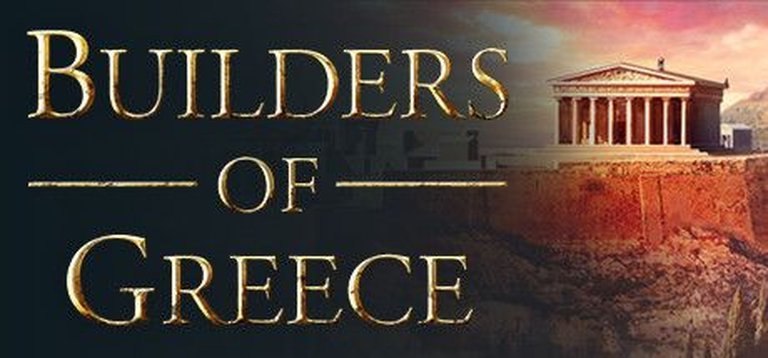
Builders of Greece is a city-building simulation game set in Classical Greece, where players take on the role of a leader tasked with rebuilding a Hellenistic settlement after their homeland is sacked. The game emphasizes resource management, economic growth, and strategic planning, allowing players to construct and optimize their city while also gaining favor with Greek gods for unique bonuses and divine blessings. With a focus on both aesthetics and functionality, players must ensure their polis thrives economically and defensively in a real-time, diagonal-down perspective.
Gameplay Videos
Where to Buy Builders of Greece
PC
Builders of Greece Free Download
Builders of Greece Guides & Walkthroughs
Builders of Greece Reviews & Reception
reddit.com : Builders of Greece is a mildly promising albeit raw, uncut, and mostly unpolished hunk of marble.
steamcommunity.com : The demo version left a better impression on me. In the current version, there is a significant lack of the technology tree (it was great) and the economy panel.
game8.co (60/100): Builders of Greece is an unfinished simulacrum of a real city builder.
Builders of Greece Cheats & Codes
PC (Cheat Engine Table)
Use Cheat Engine to apply the following cheats.
| Code | Effect |
|---|---|
| Unlimited Resources | Grants unlimited resources. |
| Force Pause (Toggle: Pause Break) | Toggles game pause. |
| Speedhack (Ctrl+/Ctrl-) | Adjusts game speed. |
PC (Cheat Happens Trainer)
Press F1 at the main menu to activate the trainer. Listen for ‘Trainer Activated’.
| Code | Effect |
|---|---|
| NumPad1 | Mega Drachmas |
| NumPad2 | Free Building |
| NumPad3 | Unlock All Buildings |
| NumPad4 | Disable Bandits |
| NumPad5 | Enable Bandits |
| NumPad6 | Disable Raids |
| NumPad7 | Enable Raids |
| NumPad8 | Super Game Speed |
PC (PLITCH)
Install PLITCH, start Builders of Greece, and use the PLITCH cheats.
| Code | Effect |
|---|---|
| Add Drachma | Increases Drachma. |
| Sub Drachma | Decreases Drachma. |
| No Resource Decrease | Prevents resource decrease. |
| x-times Building Costs (lower) | Reduces building costs. |
| x-times Building Costs (higher) | Increases building costs. |
| No Building Costs | Removes building costs. |
| Max Resource Production Time | Maximizes resource production time. |
| Minimum Happiness | Sets happiness to minimum. |
| x-times Recruitment Time (faster) | Speeds up recruitment time. |
| x-times Recruitment Time (slower) | Slows down recruitment time. |
PC (Cheat Evolution)
Use the Cheat Evolution app to apply the following cheats.
| Code | Effect |
|---|---|
| Unlimited Resources | Grants unlimited resources. |
| Force Pause | Toggles game pause. |
| Speedhack | Adjusts game speed. |
Builders of Greece: A Flawed but Promising Ode to Hellenic City-Building
Introduction: The Unfinished Parthenon of City Builders
Builders of Greece (2024) is a city-building simulation game that transports players to the golden age of Hellenic city-states, tasking them with constructing and managing a thriving Polis from scratch. Developed by BLUM Entertainment and Strategy Labs, and published by CreativeForge Games and PlayWay S.A., the game entered Early Access on February 27, 2024, with a full release following on May 6, 2025. While it promises a deep, historically inspired experience, Builders of Greece is a study in contrasts—a game with a strong foundation but marred by technical shortcomings, underdeveloped systems, and a lack of polish that leaves it feeling more like an unfinished marble block than a gleaming Parthenon.
This review will dissect Builders of Greece in exhaustive detail, examining its development history, narrative and thematic ambitions, gameplay mechanics, world-building, reception, and legacy. By the end, we’ll determine whether this game is a diamond in the rough or a cautionary tale of premature release.
Development History & Context: A Studio’s Ambition Meets Early Access Realities
The Studio and Vision
BLUM Entertainment and Strategy Labs, the developers behind Builders of Greece, are no strangers to the city-building genre. The game is part of their Builders series, which includes Builders of Egypt (2025) and the earlier Builders of Egypt: Prologue (2020). The studio’s vision for Builders of Greece was clear: to create an “old-school city builder with a modern twist,” blending the depth of classics like Pharaoh and Zeus: Master of Olympus with contemporary design sensibilities.
The game’s official description promises:
– Dozens of historically accurate buildings.
– Extensive management and decision-making systems.
– Expanded production chains and resource networks.
– Random events, weather conditions, and war systems.
– A focus on balancing residential, administrative, and military zones.
However, the reality of Early Access development often clashes with ambition. Builders of Greece launched in a state that many players and critics deemed unfinished, with missing features, pervasive bugs, and a lack of content that belied its lofty goals.
Technological Constraints and the Gaming Landscape
Builders of Greece was built using the Unity engine, a choice that allowed for cross-platform flexibility but also introduced limitations in graphical fidelity and optimization. The game’s sound design relies on Wwise, a robust audio middleware, though its implementation has been criticized for repetitive tracks and awkward mixing.
The game entered a crowded market dominated by established titans like Cities: Skylines and Anno 1800, as well as indie darlings like Against the Storm and Farthest Frontier. In this landscape, Builders of Greece had to carve out a niche by leaning into its historical setting and promises of deep logistics and economy management. Unfortunately, its Early Access launch left many players feeling that it failed to deliver on these promises, at least initially.
The Early Access Gamble
The decision to release Builders of Greece in Early Access was a calculated risk. As Blum Entertainment stated in a Steam community post:
“Our game is almost finished now, but we know that thanks to the support and feedback of players, we are able to make it even more fun and refined. Our goal is to achieve the highest possible quality and we believe that EA is the best way to achieve it.”
This approach is not uncommon in the strategy and simulation genres, where player feedback can shape mechanics like resource balancing, UI improvements, and AI behavior. However, Builders of Greece faced immediate backlash for its lack of polish, with players reporting game-breaking bugs, missing features from earlier demos, and a general sense of incompleteness.
The studio’s roadmap, revealed post-launch, outlined five phases of development:
1. Blessing of Olympus (Gods and faith system).
2. Great People (Non-instant building and relocation).
3. Age of War (Overhauled combat system).
4. Birth of Democracy (New management tools and maps).
5. Golden Era (Player-suggested features).
While this roadmap offered hope for the future, it also underscored the game’s unfinished state at launch—a fact that did not sit well with early adopters.
Narrative & Thematic Deep Dive: A Polis Without a Soul
Plot and Setting
Builders of Greece opens with a simple premise: your homeland has been sacked, and you, a survivor, must establish a new Polis on a distant island. This setup is delivered in a brief introductory blurb, with little additional narrative context. The game’s story is not its focus; instead, the “narrative” emerges from the player’s actions as they shape their city-state.
The setting is Classical Greece, a period rich with historical and mythological potential. The game leans into this, offering players the chance to interact with Greek gods, build temples, and navigate the complexities of Hellenic society. However, the execution of these themes is often superficial. The gods, for example, are reduced to a mechanical system of favors and bonuses rather than dynamic, mythic forces.
Characters and Dialogue
The game features a robotic-sounding advisor (resembling Socrates) who guides players through the tutorial. His dialogue is functional but lacks charm, often feeling more like a history documentary narrator than a living character. Beyond this advisor, there are no memorable characters—no rival city-states, no legendary heroes, no mythic figures to interact with. The citizens of your Polis are faceless workers, their needs reduced to resource inputs and happiness meters.
This lack of personality extends to the game’s writing. Flavor text and event descriptions are sparse, and what exists is often dry or repetitive. For a game set in a culture as vibrant as ancient Greece, Builders of Greece feels oddly sterile.
Themes: Survival, Expansion, and Divine Favor
The game’s themes revolve around survival, expansion, and the delicate balance between human ambition and divine will. Players must:
– Rebuild and thrive: Establish a new home after displacement.
– Manage resources: Balance food, materials, and luxury goods to keep citizens happy.
– Appease the gods: Build temples and offer sacrifices to gain favors.
– Defend and expand: Ward off raiders and claim new territories.
These themes are compelling on paper, but their execution is hampered by the game’s mechanical limitations. The gods, for example, feel more like a checklist of bonuses than a living pantheon. Combat is simplistic, reducing warfare to a series of scripted encounters rather than a dynamic struggle for dominance.
Missed Opportunities
Builders of Greece had the potential to be more than just a resource management simulator. It could have:
– Explored Greek mythology: Dynamic events where gods intervene in mortal affairs, not just as static bonuses.
– Incorporated historical figures: Philosophers, generals, and tyrants who could influence your Polis.
– Developed rival city-states: Diplomatic and military interactions with other Greek factions.
– Embraced cultural depth: Festivals, Olympic Games, or philosophical debates to enrich the world.
Instead, the game’s narrative and thematic depth are shallow, leaving players with a functional but soulless city-builder.
Gameplay Mechanics & Systems: A Foundation with Cracks
Core Gameplay Loop
At its heart, Builders of Greece is a classic city-builder with a focus on:
1. Resource management: Gathering wood, stone, food, and luxury goods.
2. Population management: Housing and employing citizens across three social classes (Thētes, Zeugitai, Geomori).
3. Economic balancing: Trading, taxation, and production chains.
4. Military defense: Training troops to fend off raiders.
5. Technological progression: Researching new buildings and upgrades.
The game’s strongest suit is its logistics and economy systems. Players must carefully plan production chains, ensuring that resources flow efficiently from gathering sites to warehouses to workshops. The three-tiered citizen system adds complexity, as each class has unique needs and roles:
– Thētes (Lower Class): Basic laborers who require simple goods.
– Zeugitai (Middle Class): Skilled workers who demand more luxuries.
– Geomori (Upper Class): Elite citizens who require the finest goods.
This system forces players to balance their economy, as upgrading citizens removes them from lower-tier roles, potentially disrupting production.
Combat: A Simplified Afterthought
Combat in Builders of Greece is one of its weakest elements. Raiders occasionally attack your Polis, but these encounters are simplistic and infrequent. The game’s military system includes:
– Three unit types: Infantry, Skirmishers, and Cavalry, each with three tiers.
– Barracks and training facilities: Required to recruit and upgrade troops.
– Defensive structures: Walls and towers to repel invaders.
However, combat lacks depth. Battles are resolved quickly, with little tactical nuance. There are no rival city-states to conquer, no large-scale wars, and no diplomatic systems to navigate. The game’s focus on logistics and economy is admirable, but the absence of meaningful conflict makes the world feel small and isolated.
Research and Progression
The technology tree in Builders of Greece is linear and slow. Players research one technology at a time, unlocking new buildings, units, and upgrades. While this system is straightforward, it can feel tedious, especially in the early game where progress is glacial. The lack of parallel research options limits strategic flexibility, making the tech tree feel more like a checklist than a dynamic progression system.
UI and Accessibility
The game’s UI is functional but unpolished. Key issues include:
– Poor tooltips: Many mechanics are unexplained, forcing players to rely on external guides.
– Cluttered menus: Resource tracking and building management can be cumbersome.
– Buggy interactions: Reports of broken menus, saved games failing to load, and overlapping audio tracks.
The tutorial is similarly lackluster, offering little more than a series of scripted missions that often fail to trigger correctly. For newcomers to the genre, this lack of guidance can be overwhelming.
Sandbox vs. Scenario Modes
Builders of Greece offers two primary modes:
1. Scenario Mode: A campaign with a single playable scenario (as of the Early Access launch), guiding players through the basics of city-building.
2. Sandbox Mode: A freeform experience where players can build without constraints.
Unfortunately, both modes suffer from a lack of content. The Scenario Mode is little more than an extended tutorial, while Sandbox Mode offers only one map with no rival factions or dynamic events to engage with. The absence of premade missions or challenges further limits replayability.
World-Building, Art & Sound: Aesthetic Promise, Technical Shortcomings
Visual Design: A Stylized Greece
Builders of Greece excels in its visual representation of ancient Greece. The game’s art style blends historical accuracy with a contemporary aesthetic, creating a world that feels both authentic and accessible. Key visual elements include:
– Architecture: Temples, agoras, and residential buildings are modeled after classical Greek designs, with attention to detail in columns, frescoes, and layouts.
– Landscapes: Rolling hills, Mediterranean cliffs, and azure seas evoke the Greek countryside.
– Animations: While clunky at times, the animations of workers and soldiers add life to the city.
However, the game’s graphical fidelity is held back by its Unity engine limitations. Textures can appear muddy, and the lack of a day-night cycle makes the world feel static. The absence of dynamic weather (a planned feature) further reduces immersion.
Sound Design: Repetitive and Unbalanced
The game’s audio design is a mixed bag. The soundtrack, while pleasant, is repetitive, with tracks looping frequently. The ambient sounds—birds chirping, waves crashing—are well-implemented but can become overwhelming, as noted by players who had to mute background noise to avoid sensory overload.
Voice acting is minimal, limited to the robotic advisor and occasional event notifications. The advisor’s monotone delivery does little to enhance the game’s atmosphere, often feeling more like a textbook narration than a living character.
Atmosphere: A Polis in Isolation
Builders of Greece struggles to create a sense of a living, breathing world. The absence of rival city-states, dynamic events, and cultural depth makes the game feel isolated. While the visuals are impressive, the lack of interaction with other factions or mythological figures reduces the world to a series of resource nodes and production chains.
The game’s potential for immersion is further hampered by its technical issues. Bugs, such as workers colliding or production chains breaking, disrupt the sense of a functioning city. Without these fixes, the world of Builders of Greece feels more like a diorama than a living Polis.
Reception & Legacy: A Mixed Response and an Uncertain Future
Critical and Commercial Reception
Builders of Greece received a mixed response upon its Early Access launch. On Steam, the game holds a “Mixed” rating (55% positive from 491 reviews as of 2025), with recent reviews trending toward “Very Negative” (16% positive). Critics and players alike highlighted several key issues:
– Bugs and Performance: Game-breaking bugs, crashes, and saved game failures were common complaints.
– Lack of Content: The absence of rival factions, dynamic events, and meaningful combat left the game feeling empty.
– Poor Tutorialization: The lack of tooltips and unclear mechanics frustrated newcomers.
– Repetitive Gameplay: The slow research tree and simplistic combat reduced long-term engagement.
However, some players praised the game’s:
– Visual Design: The aesthetic representation of ancient Greece was widely appreciated.
– Logistics Depth: The focus on resource chains and economy management appealed to fans of complex city-builders.
– Potential: Many reviewers acknowledged that, with further development, the game could evolve into something special.
Evolution of Reputation
The game’s reputation has been shaped by its post-launch updates. The studio’s roadmap, which outlined plans for new features like the gods system, combat overhauls, and additional maps, offered hope for improvement. However, the slow pace of updates and the persistence of bugs have left some players skeptical.
Community feedback has been a double-edged sword. While some players remain optimistic, others feel that the game’s foundation is too flawed to salvage. The contrast between the game’s demo (which was well-received) and its Early Access launch (which was criticized for missing features) has further polarized opinions.
Influence on the Genre
Builders of Greece is unlikely to leave a significant mark on the city-building genre in its current state. However, its ambitions—particularly its focus on logistics and historical authenticity—could influence future titles. If the studio succeeds in refining its systems, the game may yet serve as a case study in how to blend old-school city-building with modern design.
For now, Builders of Greece stands as a cautionary tale about the risks of Early Access. While the model can foster community engagement and iterative improvement, it also risks alienating players if the core experience is too unfinished.
Conclusion: A Game of Potential, Not Perfection
Builders of Greece is a game of contradictions. It promises a deep, historically rich city-building experience but delivers a buggy, incomplete simulation. Its visuals are impressive, but its world feels empty. Its logistics systems are complex, but its combat and narrative are simplistic. In its current state, the game is a flawed but fascinating experiment—a marble block that has yet to be sculpted into a masterpiece.
Final Verdict: 6.5/10 – A Promising Foundation in Need of Polish
Builders of Greece is not a bad game, but it is far from a great one. Its strengths—visual design, logistics depth, and historical setting—are overshadowed by its weaknesses—bugs, lack of content, and poor tutorialization. For fans of city-builders willing to overlook its rough edges, there is enjoyment to be found. For others, it may be best to wait and see if future updates can fulfill its potential.
Recommendation:
– For hardcore city-builder fans: Worth a look, especially if you enjoy complex logistics and historical settings.
– For casual players: Wait for further updates or consider more polished alternatives like Cities: Skylines or Farthest Frontier.
– For mythology enthusiasts: Temper your expectations—the gods are more mechanics than myth.
Builders of Greece is a game that could one day stand alongside the greats of the genre. But for now, it remains a work in progress—a Polis under construction, waiting for its golden age.